Ford Raptor Pre-Purchase Inspection Checklist: What to Check Before You Sign
A used Raptor can hide expensive problems behind a clean CarFax, from cam phaser rattle to a leaking Fox shock. This checklist walks through exactly what to inspect, test-drive for, and ask the seller before handing over a deposit.
Gear in this article
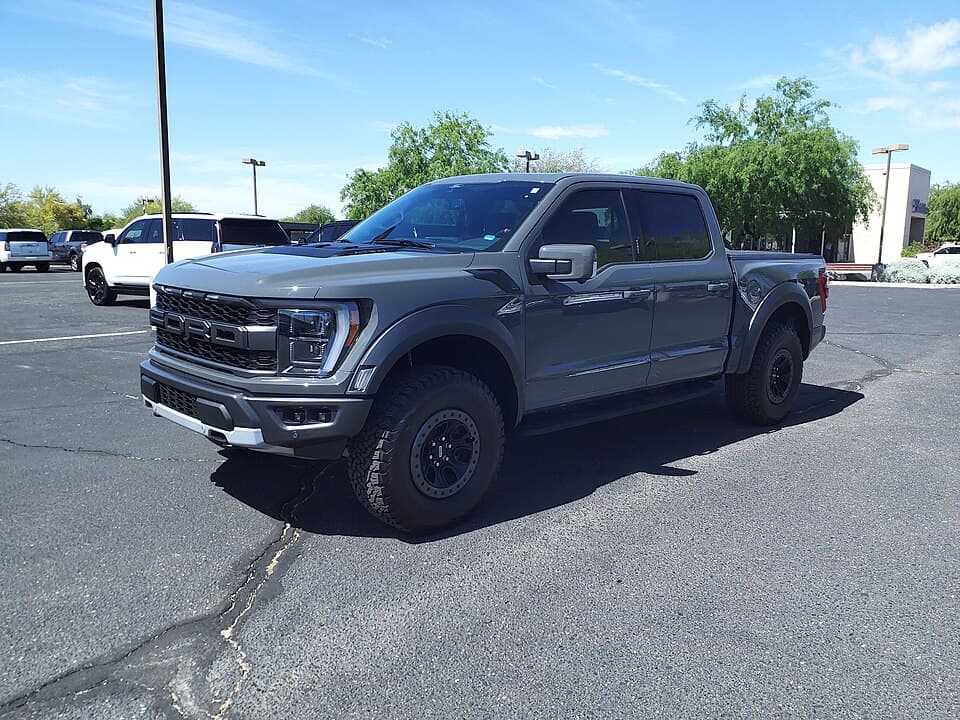
A used Raptor can look perfect on CarFax and still be hiding a $3,000 transmission problem or a cam phaser rattle the seller knows exactly how to mask with a warm engine. The only way to find out what you're actually buying is to put hands on the truck cold, underneath it, and on a real test drive, in that order, before you talk numbers. This checklist walks through all three, plus the paperwork that tells you what the truck has actually been through.
This is a generic walkthrough that applies across generations. For the specific failure points and price ranges tied to a given truck, use the generation-specific guides: the Gen 1 Raptor buying guide, the Gen 2 Raptor buying guide, the Gen 3 Raptor buying guide, and the Raptor R buying guide. Read this one first to know what to look at, then read the one for your truck to know what it means when you find it.
Before you touch the truck: set up the inspection right
Ask the seller to have the truck cold when you arrive. Not "started ten minutes ago," actually cold, hood-closed-overnight cold. A warm engine hides a cold-start rattle, a rough idle, and a transmission shudder that only shows up on the first few shifts. If a seller insists on warming it up before you get there, that is itself a data point.
Bring a flashlight, a phone to record video underneath, and a OBD2 reader if you have one. A cheap reader will show pending codes a seller cleared before listing the truck, which is more common than you'd think.
Walkaround: what to check before you ever open the hood
Start at a distance. Look at ride height side to side and front to rear. A Raptor that sits noticeably lower on one corner, or rides higher in front than Ford specced it, has either been in something or has a spring or shock issue. Compare against photos of a stock truck of the same generation if you're not sure what's normal.
Check tire wear across all four corners, not just tread depth. Cupping on the front tires can point to worn front end components; on a Bronco Raptor specifically, uneven front wear alongside a clunk over bumps is worth checking against the known ball joint and sway bar link failure points before you assume it's just old tires. Mismatched tire brands or dates on the same axle usually means a repair, not a rotation.
Look at the shocks themselves. Every generation runs Fox internally, and oil residue on the shock body or a wet shaft is not normal wear, it's a leak. Check the common Fox shock leak symptoms and what they cost to fix so you know what you're looking at and what it's worth negotiating off the price. On a Gen 3, confirm whether the truck has the Live Valve electronically adjustable shocks and check the Live Valve suspension explainer for what a bad shock looks like on that system specifically, since diagnosis differs from the older passive Fox units.
Walk the body panels for mismatched paint, overspray on trim, or panel gaps that aren't even. Check the bed rails and tailgate for scrapes consistent with a bed cover or chase rack mount, and ask what's actually bolted on versus what's been removed. A truck that had an aftermarket front bumper or a winch mount and has since been put back to stock often has drilled holes, rewired grounds, or a bumper support that's been cut, none of which shows up in a casual look.
Check the frame rails and rocker panels for rust if you're looking at a truck that spent time in a road salt state. Surface surface rust on hardware is normal and not a dealbreaker on any generation; rust bubbling through the frame rail paint or around the rear leaf spring hangers is a different problem and worth walking away from on an otherwise clean deal.
Under the truck: what a lift won't show you from standing
If the seller won't let you get the truck on a lift or at least on ramps, treat that as a red flag, not a quirk. You need to see the skid plates, the transfer case, the front differential, and the leaf spring hangers, none of which are visible standing next to the truck.
Check for fluid at the front differential seal and the transfer case seal. A damp residue that hasn't dripped is often fine; an active drip means a seal job, and labor on these is more about access than parts cost.
Look at the integrated wheel end (IWE) vacuum lines running to the front hubs. These are vacuum-actuated and prone to failure across generations, and a grinding noise at low speed in 4x4 is the classic symptom. Read why the IWE grinds and what it costs to fix before you drive the truck so you know what to listen for during the 4x4 engagement test later.
Check the rear leaf springs for an add-a-leaf pack or aftermarket shocks that don't match the front. This isn't automatically bad, plenty of owners run a Deaver add-a-leaf pack for payload, but it tells you the truck has been modified for towing or hauling, and you want that story from the seller directly rather than discovering it yourself.
Look at the exhaust and downpipes for aftermarket replacement parts and for any sign of heat damage or loose clamps nearby, particularly on a modified EcoBoost where boost has been raised.
The test drive: this is where most problems actually surface
Start the truck cold and stand outside the engine bay for the first thirty seconds. A rattle on cold start that clears up as oil pressure builds is the textbook description of cam phaser wear on the 3.5 EcoBoost used in Gen 2 and some Gen 3 trucks. Read the full breakdown of cam phaser rattle and every fix ranked by cost so you know roughly what you're negotiating against if you hear it, since the repair ranges from a software update to a full timing component replacement depending on severity.
Idle the truck for a minute and watch the exhaust for white smoke that doesn't clear, and listen for anything beyond normal turbo spool hiss.
Drive it through every gear, not just up to highway speed and back. The 10R80 10-speed automatic used across Gen 2, Gen 3, and the Raptor R is known for a harsh 1-2 shift and a shudder under light throttle in certain conditions. Some of this is addressed by a transmission fluid and relearn procedure, some of it is a torque converter problem. Read what actually fixes the 10R80 shudder before the test drive so you recognize it as a real finding and not road noise.
Engage and disengage 4x4 at a stop and at low speed, in both 4H and 4A/4L if the truck offers it. Listen for the grinding noise associated with a failing IWE mentioned above, and confirm the 4x4 light on the dash actually matches what the transfer case is doing, since a mismatch there is itself diagnostic.
Brake hard once, safely, from moderate speed. These are 6,000-plus pound trucks and the pedal should feel firm, not spongy, with no pull to one side. A soft pedal on a truck with claimed low mileage is worth asking about directly.
On a Gen 1 (2010-2014), pay attention to a rough idle or a misfire code, since the early 6.2L V8 has a documented spark plug blowout issue where the plug can work itself loose from the head under boost and heat cycling. It is a known, well-documented failure, not a rumor, and it is worth checking for before you buy rather than after.
Paperwork: what to ask for and what it tells you
Pull the VIN and check recall completion status directly with a dealer or through Ford's own lookup, not just what the seller tells you. Recalls are free repairs Ford is obligated to perform regardless of who owns the truck; a seller who says "I never got around to it" has handed you a bill or a trip to the dealer, and you should price that in. For a sense of what's actually been issued across generations, see the full recall history by generation.
Ask directly about water crossings and off-road use, and don't take a clean-looking interior as proof of a soft life. Water intrusion damage often shows up in connectors and wiring harnesses long before it shows up as a smell or a stain, and it is expensive to fully diagnose after the fact. If the seller mentions dune running, rock trails, or regular water crossings, check the real wading depth numbers and what water actually ruins so you know what kind of damage to specifically rule out, and budget for a transmission fluid and differential fluid inspection regardless of what the seller claims.
Ask for maintenance records specifically covering oil changes, transmission fluid service, and spark plug changes if it's an EcoBoost truck. The spark plug change interval and cost is short enough on these engines that a truck with no plug service history at 60,000-plus miles is a truck you should assume needs that service immediately, and that's a real cost to fold into your offer.
Get a full modification history in writing: tune, intake, exhaust, suspension, wheels and tires, bumpers, winch. This matters for two reasons. First, some modifications affect your ability to claim a warranty repair, since Ford can deny a powertrain claim if it can show the modification caused the failure, though routine unrelated items are generally still covered. Second, a tune on an EcoBoost truck changes what you should expect from the 10R80 and from the turbos under hard acceleration, and you want to know whether a given noise or hesitation is a stock-truck problem or a tune-related one. If the truck has had a tune and is running larger tires, check whether a retune was done after the tire change, since a truck tuned for stock tires and then fitted with 37s often drives worse than stock, not better.
Weighing the priorities for your region and use case
None of this has a single universal order of importance. A truck that spent its life in Michigan or Ontario needs a harder look at frame and brake line rust than a truck from Arizona ever will. A truck that's clearly seen regular dune time, consistent with use at a place like Glamis or Silver Lake, needs a harder look at sand intrusion in the IWE vacuum lines, the air intake, and the diff breathers than a truck that's never left pavement. A truck that regularly forded water, intentionally or not, needs a harder look at connectors, wiring harnesses, and transmission fluid condition than mileage alone would suggest.
Weight these checks against what you know about where the truck actually lived and what it actually did, not against a fixed checklist order. Ask the seller directly, and treat a vague answer about location or use history the same way you'd treat a vague answer about an accident.
The short version
- Inspect cold, on a lift if at all possible, and drive through every gear and both 4x4 engagement states before you make an offer.
- Listen for cold-start rattle (cam phasers), grinding in 4x4 (IWE), and shudder on light throttle (10R80), and price any of them against the generation-specific repair guides linked above rather than guessing.
- Confirm recall completion by VIN directly, get a written modification history, and ask pointedly about water crossings and off-road use regardless of how clean the interior looks.
- Weight salt, sand, and water exposure against your specific truck's history rather than applying one fixed priority list; then go read the buying guide for your exact generation before you sign anything.
Deal alert
Shopping for one? Get new listings first
We sweep US dealer inventory and send you new Raptors matching your search — real listings, real asking prices, no spam.