Buying a Used Gen 1 Raptor: The Full Inspection Checklist
A clean Gen 1 runs $28,000-45,000 in 2026, but frame rust and the 6.2L cam phaser rattle are the two checks that actually move the price. Here is every inspection item, what it costs to fix, and when to walk and buy a Gen 2 instead.
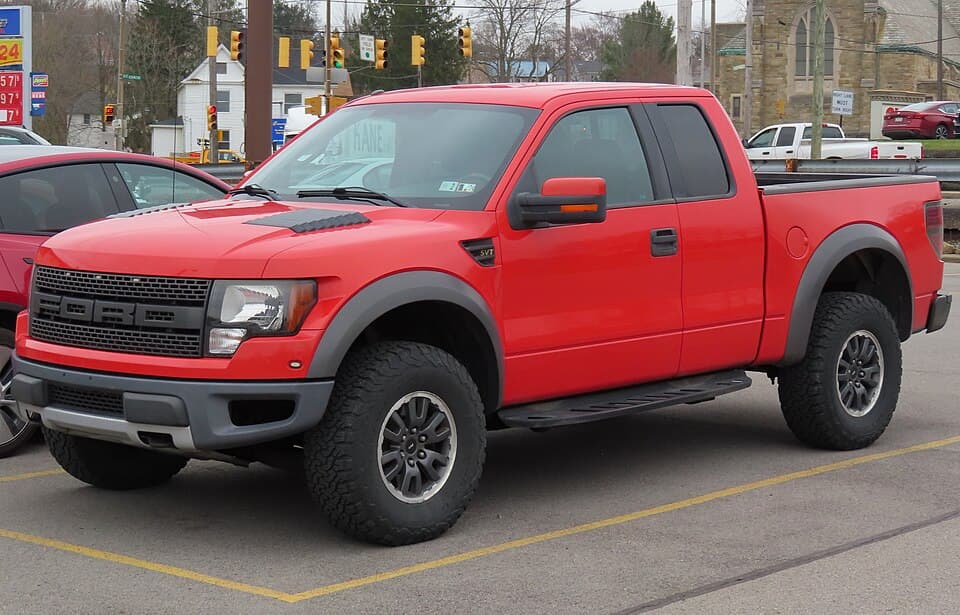
A clean 2010-2014 Gen 1 Raptor runs $28,000-45,000 in 2026, and the number moves fast on two things: whether the frame is clean and whether the cam phasers have been dealt with. Avoid the 2010 model year unless you've confirmed the 6.2L V8 under the hood, not the 310 hp 5.4L it launched with. The two items that kill deals here are frame rust and a cold-start phaser rattle, both checkable in under ten minutes before you talk price.
| Inspection item | What you're looking for | Walk-away sign | Fix cost if it's there |
|---|---|---|---|
| Frame and rear-quarter rust | Scale on frame rails at the rear shock mounts, bubbling above rear wheel arches | Flaking rust you can scrape off with a fingernail, or any perforation | $800-2,500, more if body panels are rotted through |
| 6.2L cam phaser rattle | A 5-10 second diesel-like rattle on a stone-cold start, then quiet | Rattle that runs past 10 seconds or comes back at idle | $2,200-4,000 |
| IWE grinding | Grind or growl from the front hubs engaging 4WD at walking pace | Grinding that continues after a few engagements, not just the first cold one | $180 DIY parts / $700-1,100 at a shop |
| Frame straightness and bent components | Straight frame rails, even bump stop wear, uncracked shock mounts | Visibly bent frame horns, one-sided bump stop wear, hairline cracks at shock towers | Often a walk, not a fix; straightening a jumped frame rarely pencils |
| Rear leaf sag | Even ride height at both rear fenders | More than an inch of difference side to side | $650-1,400 installed |
| 6R80 transmission shudder | Smooth power at 40-50 mph, clean 1-2 shift when cold | Steady vibration under light throttle or a hard clunk into second | $400 fluid service / $1,800-2,600 for a converter |
2010 vs 2011-2014: the engine that actually matters
The 2010 Raptor launched with the 5.4L 3-valve Triton, a 310 hp engine that was never enough truck for the suspension Ford bolted under it. The 6.2L V8 arrived mid-year as an option and became standard for 2011. A 2010 with the 5.4 should not be priced like a 6.2 truck, and sellers routinely blur that line because the badge on the tailgate says the same thing either way.
Confirming which engine you're looking at takes thirty seconds: pop the hood and look at the intake manifold, not the window sticker. The 6.2 is a big, boxy Boss V8; the 5.4 is a smaller 3-valve Triton like what's in a base F-150. If a 2010 seller can't tell you which engine is in the truck, treat the asking price as a 5.4 price until you've looked yourself.
2012 and later: the Torsen cutoff
Starting in 2012, Ford added a Torsen front limited-slip differential, a front camera, and HID headlamps. The Torsen is the change that matters for how the truck drives: it changes how the front end pulls itself out of soft sand and off-camber ruts. If you're cross-shopping a 2011 against a 2012, that's the line worth crossing, and worth a real premium.
2013 brought an interior refresh with MyFord Touch and the first SVT Special Edition package, and that same screen is where the electronics complaints start. MyFord Touch on 2013-2014 trucks can freeze on start or register touches nobody made; a reflash fixes most of it free, and a bad APIM module runs $600-900. Minor next to what's coming below, but factor it in if you're deciding between a 2012 and a 2013 at similar money.
Frame and bed rust: the inspection that only applies to this truck
Gen 1 is the only Raptor generation with a steel body. Every generation after it moved to aluminum, so frame and rear-quarter rust is a Gen 1-specific problem you don't need to check on a Gen 2 or Gen 3.
Get under the bed and look at the frame rails at the rear shock mounts. Salt-belt trucks scale here first: a chalky, flaking rust you can often scrape off with a fingernail if it's surface-level, or push a screwdriver through if it isn't. Check above the rear wheel arches too, where bubbling paint means the panel is rotting from the inside out.
Surface treatment, a media blast and coating, runs $800-2,500. Actual perforation, where the metal is gone, is a bodyshop conversation, not a weekend project. If you're shopping a truck that's spent its life in a salt state, this single check should set your opening offer more than anything else on the truck.
The 6.2L cam phaser rattle: the cold-start test that costs nothing
This is the other deal-killer, and it's underpriced right now because most sellers and buyers mistake it for "old truck noise."
The test: the engine has to be stone cold, meaning it hasn't run in several hours, ideally overnight. Start it yourself. Listen for a five-to-ten-second diesel-like rattle from the front of the engine that goes away once oil pressure builds. That's a cam phaser losing its ability to hold oil pressure at startup. It shows up more past 90,000 miles across the whole 2010-2014 range, and it does not fix itself. Ignore it and it becomes a chain-and-guide job at a much higher bill.
Budget $2,200-4,000 for phasers, tensioners, chains, guides, and a PCM reflash if you hear it. If a seller warmed the truck up before you arrived, that's not a coincidence. Ask directly, and if the answer is evasive, assume the rattle is there and negotiate like it is.
IWE grinding: the cheap one, if you catch it early
The IWE (integrated wheel end, the vacuum actuator that locks the front hubs into 4WD) fails on every Gen 1 built, 2010-2014, at some point. It shows up as a grinding or growling noise from the front hubs when you shift into 4WD, usually worse in cold or wet weather.
Test it yourself: engage 4WD at walking pace in a parking lot and listen. This is the one item here where DIY is genuinely cheap, about $180 in parts for the vacuum check valve, lines, solenoid, and both wheel-end actuators, versus $700-1,100 at a shop. It's a real inspection item but not a reason to walk unless it's been ignored long enough to damage something downstream. For the full breakdown of causes and fix paths, read why your IWE is grinding and what it costs.
Jumped-truck tells
Gen 1 owners used these trucks the way Ford advertised them, so a meaningful number of used Gen 1s have been jumped, hard, more than once. That's not automatically disqualifying, but it changes what you should pay.
Look for a rippled or creased bed floor and cab corners, meaning the truck landed hard enough to deform the structure, not just settle on soft suspension. Check bump stop wear on both sides: heavier wear on one side suggests landings that weren't square. Look at the frame at the rear shock mounts again, this time for a bend or a crack radiating from the mount, not rust, since a cracked mount is a weld repair at best and a frame-replacement conversation at worst.
None of this is automatic grounds to walk. A jumped truck that's been maintained since is still a truck. One with no suspension work since needs $2,000-4,000 in shocks and bushings before you drive it hard again.
Paperwork that matters
Ask for service records for diff fluid changes, front and rear, and transfer case fluid. A 15-year-old truck with no service history is a project wearing a clean paint job, priced that way regardless of how good the panels look.
Raw mileage matters less than people think. A well-maintained 120,000-mile truck with documented diff services and a phaser job already done can beat a 60,000-mile truck that's sat for years with dry seals and stale fluid. Mileage here is a rough proxy for wear, not a substitute for records. For more on how mileage and age interact on these trucks, see how long do Ford Raptors actually last.
Price negotiation by condition tier
A documented truck, diff and fluid records, phaser work done or clearly priced in, clean frame, sits at the top of the $28,000-45,000 range. That's the truck you pay close to asking for.
A truck with no records but no obvious rattle or rust sits in the middle, and every unchecked box (records, cold start, frame) is worth pushing the offer down, not walking away over. A truck with an audible phaser rattle and any visible frame scale should be priced like it needs $3,000-6,500 in near-term work, because it does, and that number should come off the ask.
When to walk and buy a Gen 2 instead
Walk from a Gen 1 if the frame has actual perforation, not just scale, or if the seller won't let you cold-start it or get under the bed. Those aren't negotiating positions; that's a truck telling you no.
If you keep running into rusty frames in your area, or a properly sorted Gen 1 is pricing out near $40,000 anyway, cross-shop a Gen 2 instead. Gen 2 runs $38,000-58,000, has an aluminum body with no rust problem to inspect for, and its own cam phaser issue is better understood and more consistently priced into the market already. For the full comparison across every generation, read the best Ford Raptor year to buy in 2026. A Gen 1 is still the cheapest way into the badge, but cheapest and cheapest-to-own aren't the same question, and the frame under the bed is the difference.
Owner questions
- How do I check for the 6.2L cam phaser rattle before buying a Gen 1 Raptor?
- The engine must be stone cold, meaning it hasn't run in several hours, ideally overnight. Start it yourself and listen for a five-to-ten-second diesel-like rattle from the front of the engine that goes away once oil pressure builds. If it runs past 10 seconds or returns at idle, walk away. Budget $2,200-4,000 for phasers, tensioners, chains, guides, and a PCM reflash.
- What's the difference between a 2010 Raptor and a 2011-2014 Raptor?
- The 2010 Raptor launched with the 5.4L 3-valve Triton, a 310 hp engine, before the 6.2L V8 arrived mid-year as an option and became standard for 2011. A 2010 with the 5.4 shouldn't be priced like a 6.2 truck. Check by popping the hood: the 6.2 is a big, boxy Boss V8, while the 5.4 is a smaller 3-valve Triton like a base F-150's.
- How much does frame rust repair cost on a Gen 1 Raptor?
- Surface treatment, a media blast and coating, runs $800-2,500, more if body panels are rotted through. Look at frame rails at the rear shock mounts and above rear wheel arches for bubbling paint. Flaking rust you can scrape off with a fingernail or any perforation is a walk-away sign, since actual perforation is a bodyshop conversation, not a weekend project.
- What's a fair price range for a used Gen 1 Ford Raptor in 2026?
- A clean 2010-2014 Gen 1 Raptor runs $28,000-45,000 in 2026, with the number moving fast on frame cleanliness and cam phaser status. A documented truck with diff/fluid records, phaser work done, and a clean frame sits at the top of that range. A truck with an audible rattle and visible frame scale should have $3,000-6,500 in near-term work deducted from the ask.
- What does IWE grinding mean on a Ford Raptor and how much does it cost to fix?
- IWE stands for integrated wheel end, the vacuum actuator that locks the front hubs into 4WD, and it fails on every Gen 1 built, 2010-2014, at some point, showing up as grinding or growling when shifting into 4WD at walking pace. It's the cheap fix here: about $180 in DIY parts (vacuum check valve, lines, solenoid, wheel-end actuators) versus $700-1,100 at a shop.
Deal alert
Shopping for one? Get new listings first
We sweep US dealer inventory and send you new Raptors matching your search — real listings, real asking prices, no spam.