Raptor Water Crossings: Real Wading Depth and What Water Actually Ruins
Ford does not publish a wading depth for the F-150 Raptor, and the honest limit is set by the air intake, the axle vents, and the electronics long before the body looks deep. Here is where the vulnerable points sit, how to cross moving water, and what a drowned truck costs.
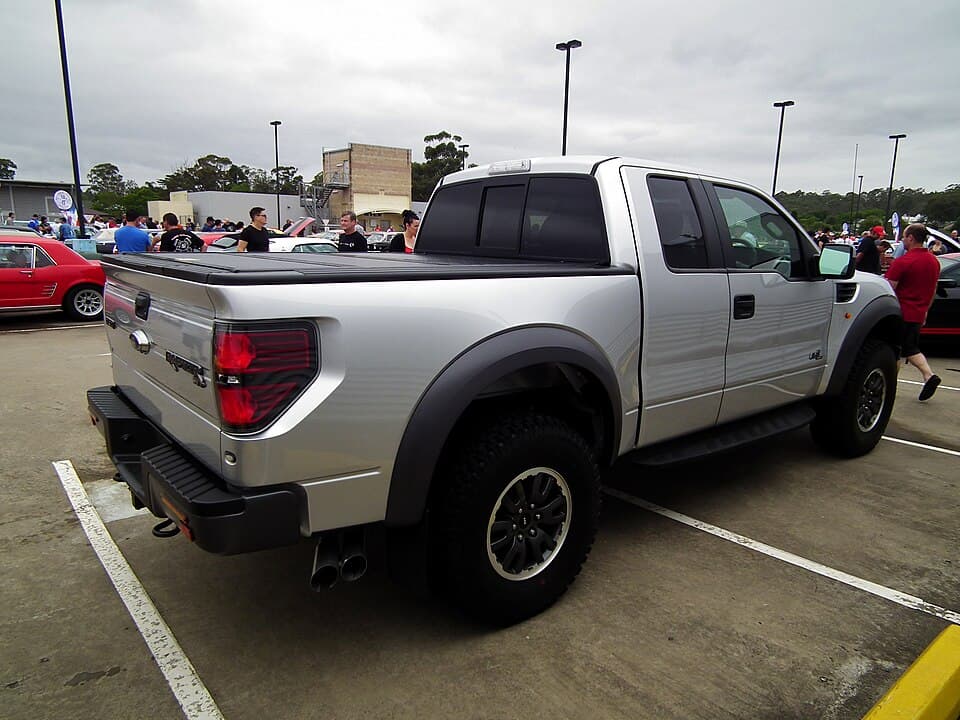
Ford has never published a wading depth for the F-150 Raptor, in any generation. That is not an oversight. It means the real limit is not a number Ford is willing to defend in court, it is set by where the air intake, the axle breathers, and the electrical connectors physically sit on your specific truck. The honest answer to "how deep can a Raptor go" is: shallower than the fender flares suggest, and it depends more on current than depth.
The Ranger Raptor is the exception. Ford's global spec sheet for the international-market Ranger Raptor lists a wading depth figure around 850mm (roughly 33 inches), though that number applies to the global truck under Ford's own test conditions, not necessarily to every market-spec change, so confirm the current owner's manual for your build year before you treat it as gospel. The F-150 Raptor, Raptor R, and Bronco Raptor get no such figure, published or implied.
Why Ford does not publish a number for the F-150 Raptor
Publishing a wading depth is a promise. It means Ford tested a specific truck at a specific depth, in specific conditions, and is willing to stand behind the claim in a warranty dispute. The F-150 Raptor's air intake sits low in the front fender, its wiring harnesses and connectors are not sealed to a marine standard, and real-world crossings vary too much in current, bottom composition, and depth for a single number to mean anything. Ford would rather say nothing than say something a lawyer can hold up next to a drowned engine.
That silence does not mean "don't cross water." It means you need to reason from the parts, not from a spec sheet.
The three things that actually fail
Intake hydrolock: the one that ends the truck
The air intake inlet on the F-150 Raptor draws from inside the front fender, well below the hood line and, on many builds, close to headlight height. Water does not need to reach the windshield to reach the intake. If the engine pulls water instead of air on an intake stroke, a liquid does not compress the way air does, and something in the bottom end gives. That is hydrolock, and it is the worst-case failure from any water crossing.
The result is usually a bent connecting rod, sometimes multiple rods, sometimes a cracked piston or a bent valve if the timing lines up wrong. The engine underneath varies a lot by generation: the Gen 1 (2010-2014) ran a 6.2L naturally aspirated V8, the Gen 2 (2017-2020) and Gen 3 (2021-present) run the twin-turbo 3.5L EcoBoost, and the Raptor R runs the supercharged 5.2L V8. Hydrolock damage patterns differ by engine (a supercharged or turbocharged engine can hydrolock at a lower intake volume than a naturally aspirated one, since boost is trying to force more air, and more of whatever else is in the tract, into the cylinder), but the outcome on any of them is the same category of repair: pulling the engine, checking every rod and piston, and rebuilding or replacing whatever bent.
Budget $8,000-15,000 for a full engine replacement or teardown-and-rebuild on any of these engines, and that range swings hard depending on whether the shop can source a reman long block versus machining the original, and on how many cylinders actually took water. Some shops will try to talk you into a partial repair (pull the affected cylinder head, check for bent valves, hone if the bore survived) and that can land lower, but nobody quotes that with confidence until the engine is apart and they can see what actually bent. On a Raptor R, expect the top of that range or beyond given the cost of the supercharged long block itself; get a shop quote with your VIN rather than trusting any number here as exact.
This is not a warranty repair. Hydrolock from a water crossing is driver-caused damage in Ford's eyes and in your insurer's eyes, full stop.
IWE vacuum intrusion: the slow, cheaper failure
The IWE (integrated wheel end, the vacuum-actuated system that locks and unlocks the front hubs for 4WD) lives on the front axle housings of Gen 1 and Gen 2 F-150 Raptors, and it is not sealed against submersion. Water pressure at even a foot or two of depth can push past the actuator seals and into the vacuum lines, and once water gets into that system it shows up later as a grinding or growling noise from the front hubs, usually when you shift in and out of 4WD.
This is a much cheaper failure than hydrolock, but it is common enough after water exposure that it is worth checking every time. The full breakdown of symptoms, diagnosis, and repair cost is in the site's IWE grinding article, and it is required reading before you plan a wet trail day on a Gen 1 or Gen 2 truck. Ford has made changes to front-end hardware across generations, and the exact IWE setup on a Gen 3 truck may differ from earlier trucks; if you own a Gen 3, confirm with your dealer or the current service literature whether this specific failure point still applies to your build, and check the vacuum system after a deep crossing either way, since it is not rated for submersion on any generation.
Axle and diff breathers, and connectors
The front and rear differentials, and the 10R80 10-speed automatic transmission, all vent through small breather fittings that let pressure equalize as fluid heats up. Submerge the axle housing past that breather and you can pull water in as the housing cools after the crossing, the same way a straw draws liquid up when you release pressure at the top. This is a slower, quieter failure than hydrolock: no bang, no stall, just fluid that looks milky or has a higher water content than it should weeks later, and bearings that start eating themselves from contamination.
Wiring connectors at the front differential, the transfer case, and along the frame rails are weather-resistant, not waterproof. Repeated submersion degrades the seals over years even if nothing fails on day one.
Moving water versus standing water
Standing water is the easier problem: you can see the depth, it is not pushing on the truck, and if you walked it first you know exactly what you are driving into. Moving water is a different threat entirely. A foot of moving water can float a truck this size or push it sideways into a hole you did not walk. Current also constantly refreshes the water pressure against seals and vents that a one-time dunk in standing water would not stress as hard.
Walk the crossing before you drive it, every time you do not already know the bottom. Depth changes fast in creek beds and wash crossings, and the sandy or rocky bottom that looked firm from the truck can be soft enough to bury an axle. If you cannot walk it (current too strong, terrain not safe on foot), that is the truck telling you not to drive it either.
How to actually cross water in a Raptor
- Walk it first if current and safety allow. Check depth at the deepest point and feel the bottom for soft spots.
- Cross at an angle to any current, not straight across, so the water's push does not shove you sideways into deeper water.
- Keep a steady bow wave, not a stop. A moving vehicle pushes a wave in front of it that lowers the effective water level around the front of the truck by a few inches. Stopping mid-crossing lets that wave collapse back onto the intake and undoes the benefit.
- Low range, low steady RPM, no throttle stabs. Sudden RPM changes can suck water into the intake harder if the inlet is submerged or splashing.
- Do not follow another vehicle's wake through the same line if you can help it. The wave off a truck ahead of you raises the water level right where your intake sits.
What to check after any crossing deeper than the axles
- Front hub operation. Cycle 4WD in and out and listen for new grinding, particularly on a Gen 1 or Gen 2 truck, per the IWE article above.
- Diff and transfer case fluid color, if you have any reason to suspect submersion past the breathers. Milky or gray fluid means water got in.
- Engine oil for a rising level or milky color in the days after, a slower hydrolock-adjacent sign if a small amount of water got past the intake without a full lock event.
- Any new electrical faults, dash warnings, or hesitant shifting.
On diff fluid specifically: if you cross water regularly (weekend trail use, not a one-time flooded road), change front and rear diff fluid at the next service regardless of mileage, and treat it as cheap insurance, roughly $150-300 per axle as an estimate depending on shop labor rates and fluid spec. If you have any doubt after a single deep crossing, checking fluid color costs you nothing and finding water early is a lot cheaper than finding it after a bearing fails.
The insurance angle, briefly
Water damage from an intentional off-road crossing is not the same claim as storm flood damage, and insurers know the difference. A modified truck (lift, bigger tires, aftermarket intake) crossing water on a trail is generally treated as driver decision-making, not a covered peril, and most standard policies exclude damage from driving into water you should have recognized as a hazard. If you run trails like Sand Hollow or wash crossings regularly, talk to your agent about what your policy actually excludes before you assume a hydrolocked engine is covered. Most owners find out the hard way that it is not.
The short version
- Ford publishes no wading depth for the F-150 Raptor, Raptor R, or Bronco Raptor. The Ranger Raptor's global figure (roughly 850mm) does not transfer to those trucks.
- Intake hydrolock is the failure that ends engines, roughly $8,000-15,000 as an estimate and not a warranty repair, whether it happens to a Gen 1's 6.2L V8, a Gen 2 or Gen 3's 3.5L EcoBoost, or a Raptor R's supercharged 5.2L. IWE vacuum intrusion (Gen 1/Gen 2) and diff breather contamination are cheaper, slower failures worth checking after every deep crossing.
- Walk the crossing, cross at an angle to current, keep a steady bow wave, and never stop mid-crossing.
- Check hub operation and fluid color after any crossing deeper than the axles, and do not assume your insurance covers what happens if you guess wrong.
Owner questions
- What is the wading depth for the F-150 Raptor?
- Ford has never published one for any generation. The real limit is set by where the air intake, axle breathers, and electrical connectors physically sit on your truck. Only the Ranger Raptor has a published figure, around 850mm (roughly 33 inches) on Ford's global spec sheet, and that doesn't transfer to the F-150 Raptor, Raptor R, or Bronco Raptor.
- How much does it cost to fix a hydrolocked Raptor engine?
- Budget $8,000-15,000 for a full engine replacement or teardown-and-rebuild, depending on whether the shop sources a reman long block versus machining the original, and how many cylinders took water. A Raptor R likely hits the top of that range or beyond given its supercharged 5.2L long block cost. This is driver-caused damage, not a warranty repair.
- Why is my Gen 1 or Gen 2 Raptor's front hub grinding after a water crossing?
- It's likely IWE (integrated wheel end) vacuum intrusion. The IWE lives on the front axle housings of Gen 1 and Gen 2 F-150 Raptors and isn't sealed against submersion; water pressure at even a foot or two of depth can push past actuator seals into vacuum lines, later causing grinding or growling when shifting in and out of 4WD.
- How much does it cost to change diff fluid after regular water crossings?
- Roughly $150-300 per axle as an estimate, depending on shop labor rates and fluid spec. If you cross water regularly, change front and rear diff fluid at the next service regardless of mileage as cheap insurance, since milky or gray fluid indicates water got past the breather fittings.
- Will insurance cover hydrolock damage from driving through a water crossing on a trail?
- Most standard policies exclude damage from driving into water you should have recognized as a hazard. A modified truck crossing water on a trail like Sand Hollow is generally treated as driver decision-making, not a covered peril, so most owners find out the hard way that a hydrolocked engine isn't covered.
Deal alert
Shopping for one? Get new listings first
We sweep US dealer inventory and send you new Raptors matching your search — real listings, real asking prices, no spam.