Gen 1 Raptor Spark Plug Blowout: What It Is and What It Costs to Fix
Ford's 5.4L and 6.2L V8s carry a well-known reputation for ejecting spark plugs under load, and Gen 1 Raptor owners still ask about it. Here's what actually causes it, how to spot it early, and what the repair really costs.
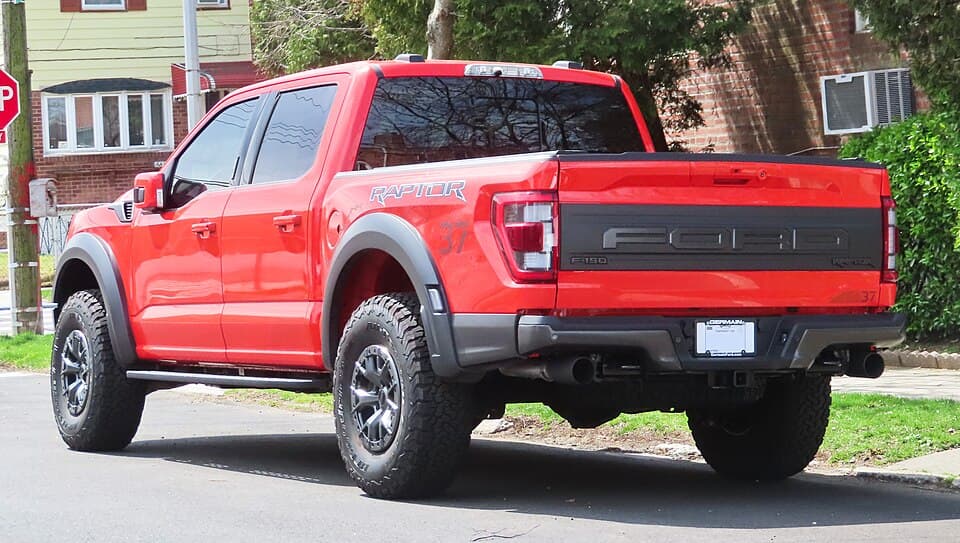
Ford's 5.4L and 6.2L V8s used a cylinder head design with shallow spark plug thread engagement (roughly half the thread depth you'd see on a conventional head), and under sustained boost or heat cycling those threads can strip, letting the plug's compressed gases push it partway or all the way out. On a Gen 1 Raptor that means either the 5.4L Triton or the 6.2L Boss, depending on which model year and build you're looking at, and the fix ranges from a single-cylinder thread repair costing a few hundred dollars to a head replacement running well over $2,000 depending on how much damage the ejecting plug did on its way out.
This is not a Raptor-specific defect. It traces back to a Ford modular V8 head design that goes back to the 5.4L Triton trucks of the mid-2000s. Whether the 6.2L Boss that eventually took over the Raptor lineup carries the same exposure is genuinely unsettled, and we'll walk through why below instead of guessing at a number.
What's actually happening in the head
The spark plug hole in these heads is drilled with less thread length than a conventional design, and the plug sits in a long, narrow well surrounded by aluminum that heats and cools with every cycle. Under load, cylinder pressure spikes and the head expands. With limited thread contact, the aluminum threads can gall or strip, and instead of the plug staying clamped in place, cylinder pressure starts working it loose. It either backs out enough to leak exhaust gas and unburned fuel past the seat, or in the worst cases it comes out of the head entirely, plug boot and all, while the engine is running.
Owners and shops who deal with this a lot report it happening more often on cylinders that run hotter and see more repeated heat cycling, which on a V8 often points to the rear bank near the firewall. That is a pattern reported anecdotally by people who see a lot of these repairs, not a documented per-cylinder failure statistic, so treat it as something to watch for rather than a rule to plan around.
Symptoms: what you'll actually hear and feel
- A hissing or ticking noise from under the hood, most noticeable at idle or under light throttle, that gets louder as the plug backs further out and more compression escapes past the threads.
- A sudden, sharp misfire on one cylinder, often with a check engine light and a rough idle that wasn't there ten minutes ago.
- A loud pop or bang, sometimes described as a small explosion, at the moment the plug fully ejects. This can happen at speed or at idle.
- A noticeable loss of power, since you're now running on seven cylinders with one plug either loose in its well or gone.
- In the worst cases, physical damage to the ignition coil, coil boot, or nearby wiring harness where the ejected plug or hot exhaust gas hits it on the way out.
If you catch it at the hissing stage, you likely have a straightforward repair. Keep driving on a fully ejected plug and you risk carbon and debris entering the cylinder, which turns a simple insert job into head work.
Diagnosis: where shops get it wrong
A misfire code and a rough idle on a 5.4L or 6.2L Ford V8 gets read as a coil pack or a bad plug by a lot of general shops, and they'll sell you a coil and a plug swap that does nothing because the actual problem is the threads in the head, not the parts screwed into them. Pull the coil and look at the plug well before you approve any work. If the plug is sitting proud of the head, canted at an angle, or you can wiggle it by hand, that's thread failure, not a bad coil.
A shop that has done this repair before will pull the plug, inspect the threads with a bore scope or a dental mirror, and tell you within a few minutes whether you're looking at a thread-insert job or something worse. A shop that hasn't seen it before will chase ignition parts first and waste your money and your time.
Repair options, ranked by cost
1. Thread insert repair, done in the vehicle. This is the standard fix when the threads are stripped but the surrounding head casting is intact. A shop drills out the damaged threads, taps the hole to accept an insert (thread-repair inserts of this type are commonly sold under brand names like Heli-Coil, though there are other proprietary systems used for the same job), and installs a new plug into the insert. On most V8s this can be done with the head still on the truck if access is good enough, though the rear bank on some F-150 V8 layouts is tighter and may need extra time to reach. Shops typically quote a few hours of labor for a single-cylinder repair done in place, so budget roughly $300-700 depending on your region and whether it's one plug or the shop finds a second cylinder starting to go while they're in there. These are estimates; get a written quote before approving work.
2. Multiple cylinders repaired at once. If one plug backed out, it's worth checking the rest, especially on the rear bank. Shops that see this often will recommend inspecting or preemptively repairing all eight while they have you in the bay, since labor overlaps and you're already paying for the diagnostic time. This runs higher than a single-cylinder fix but still well under head replacement, roughly $600-1,200 for a full-engine inspection and repair pass, again varying by shop and region.
3. Cylinder head removal and repair or replacement. If the plug ejected hard enough to crack the boss around the spark plug hole, damage the casting, or send debris into the cylinder and damage a piston or valve, an insert won't hold and you're into head work: pulling the head, having it machined or replaced, and reassembling with new gaskets. On a 5.4L or 6.2L Ford V8 this is a substantial job. Shops we've talked to describe it as easily a full day or more of labor plus parts, and total bills of $1,800-3,500 or more are realistic depending on whether one head or both need attention and whether the shop finds additional damage once it's apart. Get a written estimate before approving anything at this level, and ask specifically whether they're reusing your existing head or sourcing a replacement, since that changes both price and turnaround.
| Repair path | Labor estimate | Rough cost range | When it applies |
|---|---|---|---|
| Single-cylinder thread insert | a few hours | $300-700 | Threads stripped, head casting intact, caught early |
| Multi-cylinder insert pass | varies, often done together | $600-1,200 | One plug ejected, others showing early signs |
| Head removal/replacement | a full day or more | $1,800-3,500+ | Casting damage, debris in cylinder, or insert repair failed |
These are shop-quote ranges, not fixed prices, and they swing with regional labor rates and whether you're at a dealer or an independent shop that specializes in this repair. An independent shop that does a lot of these will usually beat a dealer on the insert repair. For head replacement, labor time is similar either way, so the swing is mostly parts sourcing and markup.
Does the 6.2L Boss have the same problem as the 5.4L Triton
Be careful about what you read online here, including the exact model years each engine was available. The 5.4L Triton opened the Gen 1 Raptor's run and the 6.2L Boss eventually became the truck's engine, but the 5.4L-to-6.2L switch was not a clean single model-year cutover, the two engines overlapped in availability for part of that transition. If you need the exact production split for a specific truck, confirm it against the door tag and build sheet for that VIN rather than trusting a written year range, including ours. The 2011 Raptor specs and problems page and 2013 Raptor specs and problems page both cover year-specific engine and options detail worth cross-checking against your truck's build date.
The 5.4L Triton's spark plug ejection issue is extremely well documented across the wider Ford truck and Expedition community going back to the mid-2000s, and it's one of the most talked-about failure modes on that engine family. The 6.2L Boss shares some lineage with Ford's modular V8 family, and owners of 6.2L trucks do report the same hissing-then-misfire pattern. But there is no published, verifiable rate comparing how often this happens on the 6.2L versus the 5.4L, and nobody has run a failure-rate study worth quoting on either engine in the Raptor specifically. Anyone who gives you a specific percentage for either engine is guessing or repeating someone else's guess. Treat both engines as exposed to this failure mode. Don't assume the newer 6.2L is immune just because it came later, and don't assume it fails at the same rate as the 5.4L either. Nobody has the data to say either way.
If you're deciding between the two engines for a Gen 1 purchase, spark plug ejection risk is one factor among several worth weighing, alongside towing capacity, fuel economy, and parts availability. The Gen 1 5.4 vs 6.2 buying guide covers the rest of that tradeoff in more depth.
There is no NHTSA recall tied to this issue on either engine. Ford has, at various points, published technical service bulletins covering the repair procedure for this type of thread failure on its modular V8s, but a TSB is a documented repair procedure a dealer follows, not a free repair. Whether Ford covers it under warranty or extends goodwill depends entirely on your truck's mileage, warranty status, and how the service writer at your specific dealer feels about it that day. If your Gen 1 Raptor is somehow still inside its original powertrain warranty window, unlikely at this point in the truck's life but worth confirming with the VIN, this would fall under powertrain coverage. Outside of warranty, you're paying out of pocket at the ranges above.
What to check before you buy a Gen 1
If you're shopping a used Gen 1 Raptor with either engine, start it cold, let it idle, and listen closely near the firewall and each valve cover for any hiss under load that isn't there at idle. Rev it and listen again. A seller who has had a plug repaired should be able to tell you which cylinder and when. If they can't answer that question at all, treat it as an unknown and price accordingly. The 2011 and 2013 specs and problems pages linked above cover year-specific context worth checking against the VIN and build date you're looking at, including which engine actually came in that particular truck.
The short version
- The shallow spark plug threads in Ford's 5.4L and 6.2L V8 heads can strip under load, letting a plug back out or eject entirely. The Gen 1 Raptor was built with both engines across its production run, with the 6.2L Boss eventually replacing the 5.4L Triton, and both engines are reported to have this exposure.
- Watch for hissing under the hood, a sudden single-cylinder misfire, or a loud pop followed by a loss of power. Catch it at the hissing stage if you can.
- A thread insert repair runs roughly $300-700 per cylinder; full head work if the casting or cylinder is damaged runs $1,800-3,500 or more. Treat these as ranges, not quotes, until a shop with your truck in the bay gives you a number.
- There is no recall for this, and warranty coverage depends entirely on your truck's status. Get the VIN checked before assuming anything is free.
- Nobody has a verified, published failure rate for the 6.2L Boss versus the 5.4L Triton on this specific issue, and nobody has a clean single-year cutover between the two engines either. Confirm your truck's actual engine and build date off the door tag, not a forum year range, including ours.
Deal alert
Shopping for one? Get new listings first
We sweep US dealer inventory and send you new Raptors matching your search — real listings, real asking prices, no spam.