Raptor Spark Plugs: Change Interval, Cost, and Why Boost Eats Them
A boosted 3.5 EcoBoost is harder on plugs than a naturally aspirated V8, and a tired set shows up as cold-start stumble and misfire counts long before a check-engine light. Here is the real interval by generation, the gap that matters, and what a shop charges.
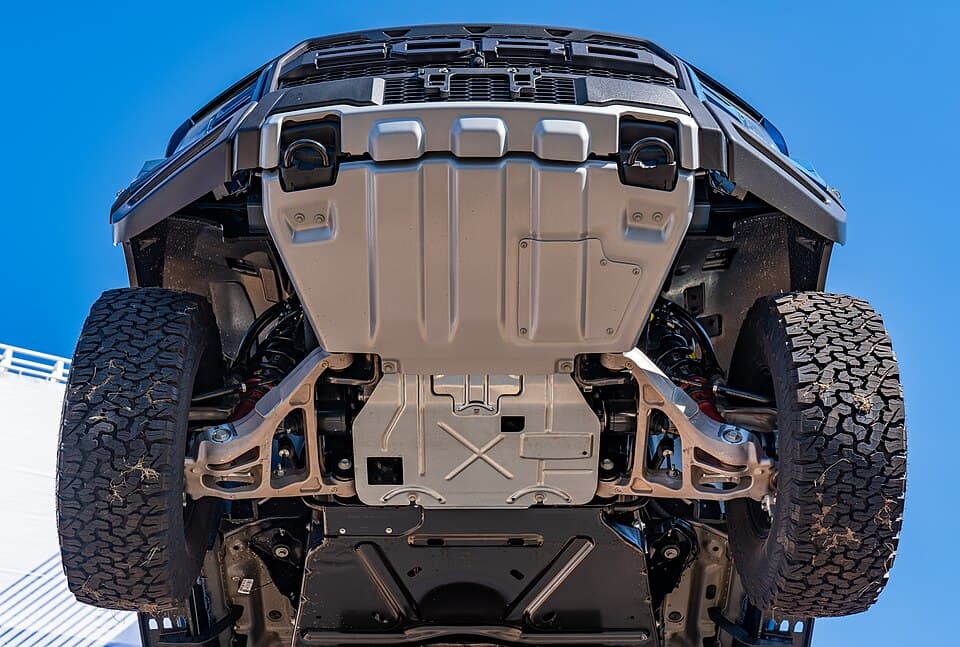
A worn set of spark plugs on the 3.5-liter EcoBoost shows up as a cold-start stumble and a rough idle for the first few seconds before it smooths out, then later as misfire counts and fuel trim drift that a shop finds on a scan tool before the check-engine light ever comes on. Ford's published maintenance schedule for the EcoBoost lists a long plug interval, but that number was written with a naturally aspirated mindset, not for an engine running significant boost through the same electrode gap. Owners running the truck stock, and especially owners running a tune, report changing plugs well before Ford's number and wishing they had done it sooner.
Why boost eats plugs faster than a naturally aspirated engine
A spark plug's gap is where the spark jumps a small air space to ignite the fuel-air mixture. Under boost, that air is denser and under more pressure, so the spark has to work harder to jump the same gap. That extra work erodes the electrode faster than it would in a low-compression NA V8, and it also means a gap that was fine at 60,000 miles starts causing misfires sooner than the same gap would in an unboosted engine.
This is true of every generation of the 3.5-liter EcoBoost Raptor, from the 2017-2020 Gen 2 through the current Gen 3, and it is truer still on a tuned truck running more boost than the factory calibration. We are not going to hand you a gap spec here, because the correct number depends on the exact plug part number Ford specifies for your model year, and the workshop manual is the only place that number should come from. Torque the plug and set the gap to whatever the current Ford workshop manual for your model year calls out, not a number you saw in a forum post, including this one.
What worn plugs actually feel like
Owners describe the same handful of symptoms across generations:
- A stumble or brief rough patch for the first two or three seconds after a cold start, smoothing out once the engine catches up.
- A flat spot or hesitation under hard acceleration, especially right as boost comes on, which owners often first notice while towing or hauling.
- Misfire counts logged on a scan tool during a routine service, sometimes on one or two cylinders specifically, before any warning light appears.
- Fuel trim drift, meaning the engine computer is adding or pulling fuel to compensate for a cylinder that is not firing cleanly, which a shop will see as a number on the scan tool long before the driver feels anything dramatic.
None of that requires a check-engine light to be a real problem. By the time the light comes on, you have likely been driving on a marginal set of plugs for a while. If a scan tool throws a specific fault code around a misfire or fuel trim complaint, do not assume it is a documented, Raptor-specific plug code just because you saw it mentioned somewhere. Treat it like any misfire-adjacent code: pull the freeze frame data and let a shop trace the actual cause rather than guessing from the code number alone.
For the fuller list of what actually goes wrong on this engine across the years, the site's own 3.5 EcoBoost problems by year breakdown is worth reading alongside this one. If the truck is also using oil or building up in the intake, that is usually a separate issue covered in the carbon buildup piece, not a plug problem.
Real interval by generation
| Truck | Engine | Stock/mild interval | Tuned interval |
|---|---|---|---|
| Gen 1 SVT Raptor (2010-2014) | 5.4L or 6.2L V8 | Standard V8 iridium interval, see the Gen 1 section below | N/A, rarely tuned for plugs |
| Gen 2 Raptor (2017-2020) | 3.5L EcoBoost | Earlier than Ford's published number; many owners target roughly 40,000-60,000 miles as a practical range, an estimate based on owner experience, not a Ford spec | Roughly 20,000-35,000 miles is a common owner-reported range on tuned trucks, an estimate, not a spec |
| Gen 3 Raptor (2021-present) | 3.5L HO EcoBoost | Same logic as Gen 2, confirm the exact factory interval against your owner's manual | Same shortened range as Gen 2 tuned trucks, as an estimate |
| Raptor R (2023-present) | 5.2L supercharged V8 | Different plug and different wear pattern than the EcoBoost, follow Ford's V8 schedule for this engine | N/A for most owners |
| Ranger Raptor (2024-present, US) | 3.0L twin-turbo EcoBoost V6 | Follow the factory schedule for now; the engine has not been in the field long enough for a reliable early-interval consensus | Not enough tuned-truck data yet to publish a range |
| Bronco Raptor (2022-present) | 3.0L twin-turbo EcoBoost V6 | Same as Ranger Raptor, factory schedule until more field data accumulates | Not enough tuned-truck data yet to publish a range |
Treat every number above as a range built from owner experience, not a Ford-published spec. Ford's own document is the only source for the official interval, and in practice it runs longer than what boosted-engine owners are doing. If you tow regularly, run higher boost from a tune, or notice any of the cold-start or misfire symptoms above, lean toward the shorter end of these ranges regardless of mileage.
What a tune does to this math
Any tune that changes boost, timing, or air-fuel targets puts more load through the same six plugs, which is why tuned trucks are the ones reporting shortened plug life most consistently. If you already put 37-inch tires on the truck and picked up a tune to compensate for the taller gearing, as covered in the tune-after-37s piece, budget for plugs on a shorter cycle than a stock truck. A tune shop worth using will tell you this up front instead of letting you find out with a misfire on the highway.
DIY difficulty and what a shop charges
This is the part that surprises people who have changed plugs on other trucks. The 3.5L EcoBoost buries all six plugs under the coil packs, and on the Gen 2 and Gen 3 trucks the rear bank sits close enough to the firewall that some shops pull the plenum or intake components to get real access, particularly on the passenger-side rear cylinders. This is not a 20-minute job with a ratchet and an extension.
Shops typically quote this in the range of 4-6 hours of labor, and parts plus labor commonly lands in the $500-900 range as a broad estimate, varying by region, shop, and whether anything breaks loose on the way out, which happens on plugs that have been in for 80,000+ miles. A plug that snaps or a coil boot that tears on removal adds time and cost. If you are inside your Ford powertrain warranty period, routine spark plug replacement is a maintenance item Ford does not cover as a warranty repair, though a documented factory defect causing early misfire is a different conversation with your dealer, and coverage there varies by build date and by what the dealer is willing to argue on your behalf.
DIYers with some experience can do this job in a home garage, but budget realistic time, a full weekend afternoon is not unusual the first time, and expect to buy a longer extension, a swivel socket, and possibly a boot puller to get the rear plugs out cleanly. If you strip a thread reaching for the last one, you have turned a modest job into a much bigger one.
Gen 1: a completely different plug story
The Gen 1 SVT Raptor (2010-2014) is not an EcoBoost truck, and this whole boost-erosion conversation does not apply to it the same way. The 2010 Raptor launched with the 5.4L V8 as the base engine, with the 6.2L V8 offered as an option during that same model year. By the 2011 model year, the 6.2L had become the standard engine through the end of Gen 1 production in 2014. We are not going to pin the exact point within 2010 production when 6.2L availability began, because that changeover detail is not documented precisely enough to state with confidence.
Both the 5.4L and 6.2L are naturally aspirated V8s with a longer, more conventional plug interval than the EcoBoost. These engines are not putting boost pressure across the electrode gap, so the failure mode that drives EcoBoost owners to shorten their interval largely does not exist here. Follow the factory interval in the Ford workshop manual for your specific 5.4L or 6.2L model year, and do not apply any of the EcoBoost numbers above to a Gen 1 truck. If you are shopping a Gen 1 and want the full inspection list beyond plugs, the Gen 1 buying guide covers what actually needs checking on these trucks.
The short version
- The EcoBoost's boosted cylinders erode spark plug electrodes faster than a naturally aspirated V8 would, and Ford's published interval runs longer than what most boosted or tuned owners are actually doing.
- Watch for a cold-start stumble, a hesitation under boost, and misfire or fuel trim numbers on a scan tool, all of which show up before a check-engine light.
- Tuned Gen 2 and Gen 3 trucks are shortening the interval the most, an owner-reported range worth planning around rather than a fixed Ford spec.
- Budget 4-6 hours of labor and roughly $500-900 at most shops, an estimate that swings with region and shop, because the plugs sit under the coil packs and the rear bank is tight to reach.
- Gen 1 5.4L and 6.2L V8 trucks (2010-2014) do not share this problem. Follow the standard V8 interval in your Ford workshop manual instead, and note that the 6.2L was available alongside the 5.4L from the 2010 model year onward, not introduced later.
Owner questions
- How often should I really change spark plugs on my EcoBoost Raptor instead of following Ford's schedule?
- For a stock or mildly modified Gen 2 or Gen 3 3.5L EcoBoost, owners target roughly 40,000-60,000 miles as a practical range, earlier than Ford's published number. On a tuned truck, that shrinks to roughly 20,000-35,000 miles. Both are owner-reported estimates, not Ford specs, so lean toward the shorter end if you tow or run higher boost.
- How much does it cost to replace spark plugs on a 3.5L EcoBoost Raptor?
- Shops typically quote 4-6 hours of labor, with parts plus labor commonly landing in the $500-900 range as a broad estimate. Costs vary by region and shop, and can rise if a plug snaps or a coil boot tears during removal, which happens more often on plugs left in for 80,000+ miles.
- Why do spark plugs wear out faster on a turbocharged engine like the Raptor's EcoBoost?
- Under boost, the air crossing the plug's electrode gap is denser and under more pressure, so the spark has to work harder to jump that same gap. That extra work erodes the electrode faster than in a naturally aspirated V8, meaning a gap fine at 60,000 miles on an NA engine can start misfiring sooner on a boosted 3.5L EcoBoost.
- What symptoms show up before a check-engine light if my Raptor's spark plugs are worn?
- Watch for a cold-start stumble or rough patch lasting two or three seconds, a hesitation right as boost comes on during hard acceleration or towing, misfire counts on one or two cylinders logged during routine scans, and fuel trim drift the shop sees on a scan tool. All of these can appear well before any warning light illuminates.
- Do the Gen 1 SVT Raptor's 5.4L and 6.2L V8 engines need spark plugs changed as often as the EcoBoost?
- No. The naturally aspirated 5.4L and 6.2L V8s in the 2010-2014 Gen 1 Raptor aren't pushing boost pressure across the electrode gap, so they don't share the EcoBoost's accelerated erosion problem. Follow the standard V8 interval in the Ford workshop manual for your specific model year rather than applying any EcoBoost-derived mileage numbers.
Deal alert
Shopping for one? Get new listings first
We sweep US dealer inventory and send you new Raptors matching your search — real listings, real asking prices, no spam.