Buying a Used Gen 2 Raptor: What to Check Before You Pay
Clean Gen 2 trucks run $38,000-58,000 and a documented 2018 is the value pick, but two checks decide the deal: the cold-start phaser rattle and coolant-in-oil from the internal water pump. We cover both tests in detail plus the 10R80 shift behavior, tune honesty, and negotiating by condition.
Gear in this article
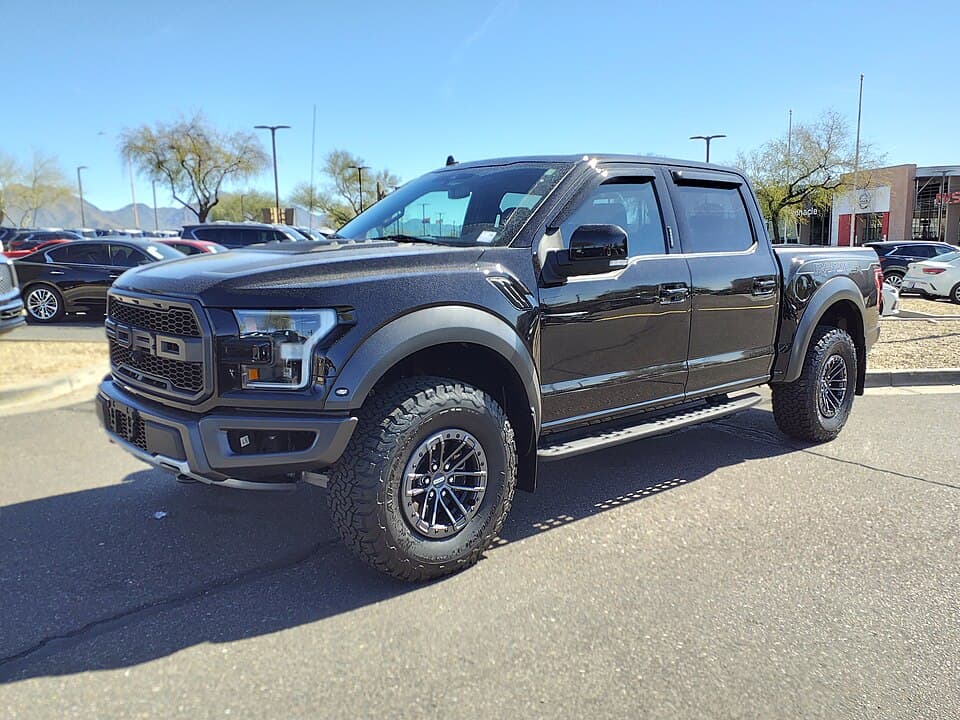
Clean Gen 2 Raptors run $38,000-58,000 right now, and a well-documented 2018 Ford Raptor is usually the cheapest way in, mechanically identical to the 2017 launch truck without the first-year premium. Two checks decide almost everything before you talk price: cold start it yourself and listen for a five-to-ten-second phaser rattle, and pull the dipstick for milky, coolant-contaminated oil from the internal water pump. Everything else here is detail work around those two.
The fast version, then the reasoning behind each line.
| Inspection item | What you're looking for | Walk-away sign | Fix cost |
|---|---|---|---|
| Cold start, engine off overnight | A rattle for the first 5-10 seconds, then quiet | Rattle that continues past 10-15 seconds or never fully quiets | $2,400-4,800 |
| Dipstick and oil cap | Clean oil, no residue | Milky or mayonnaise-colored oil on the stick or cap | $1,900-3,200 |
| 40-50 mph part-throttle drive | Smooth, steady cruise | A light, steady vibration that feels like tire balance but isn't | $0 reflash / $1,400-2,400 |
| IWE / 4WD engage | Clean, silent engagement | Grinding or growling from the front hubs | $600-1,000 |
| Tune history | Seller admits it plainly, or truck reads stock on your own scan | Denial that doesn't match what your scan tool shows | Varies, walk or discount hard |
| Bed floor, bump stops, control arm mounts | Flat bed, square bump stops | Rippled bed floor, hourglassed bump stops | Not a repair, a negotiating point |
The cold-start phaser test, done right
The cam phaser rattle is the defining issue on this generation, worst on 2017-2018, and every serious buyer needs to hear it in person before they hand over money. A phaser is the variable valve timing unit bolted to the front of each camshaft, and on the 3.5 HO EcoBoost the early units lose oil pressure fast enough on a stone-cold start that the timing chain slaps for several seconds before pressure catches up.
Do this test cold, not warmed-up-in-the-driveway cold: the truck needs to have sat overnight, engine off, with zero warm-up laps from the seller beforehand. A seller who insists on starting it themselves "so you don't flood it" does not want you to hear something. Listen for a metallic rattle, five to ten seconds, from the front of the engine, then quiet as oil pressure builds. A rattle past 10-15 seconds, or one that never fully quiets, means the phasers, tensioners, chains and guides are further along than a reflash alone will fix.
Budget $2,400-4,800 at a dealer for the full repair: updated phasers, tensioners, chains, guides, and a PCM reflash. Anything less is a temporary fix, and a shop quoting just a reflash without touching the hardware is quoting a truck that rattles again in six months. For the full cost breakdown by repair path, read the Gen 2 cam phaser rattle guide before you make an offer. This issue is priced into the market: a seller who knows what they have already knocked money off, and one who doesn't is still asking retail for a truck that needs four grand of work.
The water pump check: pull the dipstick before anything else
The other four-figure repair here is quieter and easier to miss. The water pump on the 3.5 EcoBoost is chain-driven inside the front timing cover, and past 80,000 miles the internal seal starts to fail. Coolant then gets into the oil instead of leaking onto the driveway where you'd notice it. Often no puddle, no warning light, until the damage is done.
Pull the dipstick and check the oil cap yourself. Milky or mayonnaise-colored residue on either one means coolant is in the oil, full stop. A history of coolant top-offs with no visible leak anywhere in the bay is the other tell. The fix means pulling the front cover and replacing the pump, the seals, and the oil. Budget $1,900-3,200, more if the truck ran any length of time on contaminated oil, since that can mean bearing wear on top of the pump itself.
2017-2018 vs. 2019-2020: what the extra money actually buys
There isn't a year to flatly avoid here. The failure modes above are consistent 2017-2020; what changes is mileage, documentation, and two features.
2019-2020 trucks added Fox 3.0 Live Valve electronically controlled shocks and Trail Control, off-road cruise control for rock and mud. Live Valve is a genuine improvement on washboard and the highway, not a gimmick, and it's worth paying up for if you actually drive dirt regularly. If you're buying this truck to commute and tow a boat twice a year, it's not why you should pay a premium; the 2017-2018 Fox 3.0 internal-bypass shocks do that job fine.
On a 2019 or 2020, cycle through the drive modes before you sign anything and watch for a suspension or AdvanceTrac warning on the cluster. Live Valve trucks throw a dash message when a ride-height sensor faults, and the dampers default to one fixed setting. It's a $300-700 sensor fix, not a dealbreaker, but it's a feature you're paying extra for and should confirm actually works.
The 10R80 on the test drive: what a harsh shift and a shudder feel like
The 10R80 ten-speed on 2017-2019 trucks has two behaviors worth driving for specifically, not just noticing if they show up. Drive it at 40 to 50 mph on light, steady throttle for a full two minutes. Converter shudder shows up in exactly that window, a light steady vibration that feels like a tire balance issue but isn't, and it will not show up on a five-minute loop around the block.
Separately, feel for a clunk into second and third gear while the transmission is still cold. A TSB (technical service bulletin, a documented Ford repair procedure) reflash solves a real share of these complaints at no cost if the truck is still under warranty. When the reflash doesn't hold, the next step is a valve body or solenoid body, running $1,400-2,400. For which recalibrations stick and which trucks needed hardware anyway, see 10R80 harsh 1-2 shift and torque converter shudder.
IWE, tune honesty, and carbon buildup: the rest of the pre-purchase list
The IWE (integrated wheel end, the vacuum actuator that locks the front hubs) fails the same way it does on Gen 1: grinding or growling from the front hubs on 4WD engage, worse in cold and wet weather. Budget $600-1,000 for the check valve, vacuum lines, solenoid, and both actuators as a set. Doing one piece at a time is how people pay for this fix twice.
Ask directly whether the truck has ever been tuned, and get a scan with your own reader before you talk price, not after. Flash counters do not reset, so a returned-to-stock truck is fine if the seller says so upfront. One who denies a tune and gets caught by your own scan tool is telling you what else they're not mentioning. An undocumented tune with unknown history is a walk or a hard discount, not a footnote: you have no way to know what boost or timing that engine has actually seen.
Carbon buildup on direct-injection engines is real, but keep it in perspective: it's a maintenance item on the 3.5 EcoBoost, not a Gen-2-specific crisis, and it shows up gradually as a rough idle rather than a sudden failure. A walnut-blast cleaning runs a few hundred dollars and is normal service past 60,000-80,000 miles, not a red flag on its own. For the full year-by-year failure list, see 3.5 EcoBoost problems by year.
37s and heavy mods cut both ways. A documented 37 Package or aftermarket 37-inch setup with matched gearing is a value add if you want that truck anyway. Mods with no receipts or an obvious jump history (rippled bed floor, hourglassed bump stops) mean the truck was run hard without the maintenance to match. That changes the offer, not necessarily a reason to walk.
Service records and negotiating by condition
Ask for service records before you ask about mileage. A 90,000-mile truck with full records and the phaser work done can be a better buy than a 60,000-mile truck with no paperwork and an evasive seller. Records that matter document phaser or water pump work, transmission reflashes, and IWE service, the four-figure items this guide covers.
Negotiate by condition tier, not by year alone. A truck with documented phaser and water pump work, a clean scan, and service records supports asking price. A truck that passes the cold-start and dipstick tests but has no paperwork is a $1,000-2,000 discount to cover the unknown. A truck that fails either test is a $2,500-5,000 discount at minimum, or a walk if the seller won't move. Still deciding between a Gen 2 and another generation entirely? The full year-by-year comparison is in the best Ford Raptor year to buy in 2026.
These price ranges are current at time of writing and move by region and season. Confirm against live listings before you make an offer, and get a PPI (pre-purchase inspection) from a shop that has actually seen a Gen 2 Raptor before, not just a generic F-150.
The short version
- Market price, 2026: $38,000-58,000, with a documented 2018 the value pick.
- The two checks that decide everything: cold-start phaser rattle, and coolant-in-oil on the dipstick.
- Worth paying up for: 2019-2020 Live Valve and Trail Control, if you actually run dirt.
- Non-negotiable: an honest answer on tune history, backed by your own scan.
- Walk or discount hard: a denied tune your scanner disproves, or a rattle that never quiets.
Owner questions
- How can I tell if a used Gen 2 Raptor has the cam phaser problem before buying?
- Do a cold start after the truck has sat overnight with the engine off, no warm-up from the seller. Listen for a metallic rattle from the front of the engine for five to ten seconds that then quiets as oil pressure builds. A rattle past 10-15 seconds, or one that never fully quiets, means phasers, tensioners, chains and guides are worn, costing $2,400-4,800 to fix properly.
- What does milky oil on the dipstick mean on a Gen 2 Raptor?
- It means the chain-driven internal water pump's seal has failed and coolant is leaking into the oil instead of onto the driveway, often with no puddle or warning light. Milky or mayonnaise-colored residue on the dipstick or oil cap confirms it. The fix requires pulling the front timing cover to replace the pump, seals, and oil, budgeted at $1,900-3,200, more if bearing wear occurred.
- Is the 2019-2020 Raptor worth paying more for than a 2017-2018?
- Only if you actually drive dirt regularly. 2019-2020 trucks add Fox 3.0 Live Valve electronically controlled shocks and Trail Control, a genuine improvement on washboard and highway driving. If you mostly commute and tow occasionally, the 2017-2018 Fox 3.0 internal-bypass shocks do the job fine, and a documented 2018 is generally the cheapest, mechanically identical way into a Gen 2.
- What transmission issues should I test drive for on a Gen 2 Raptor?
- Drive the 10R80 ten-speed at 40-50 mph on light, steady throttle for a full two minutes to check for torque converter shudder, a light vibration that mimics a tire balance issue but won't appear on a short loop. Also feel for a clunk into second and third gear while cold. A free TSB reflash sometimes fixes it; otherwise a valve or solenoid body runs $1,400-2,400.
- How much should I discount the price if a used Raptor fails inspection or has no records?
- A truck with no paperwork but that passes the cold-start and dipstick tests warrants a $1,000-2,000 discount to cover the unknown. One that fails either the phaser rattle or the coolant-in-oil test justifies a $2,500-5,000 discount at minimum, or walking away if the seller won't negotiate. Full records showing phaser, water pump, and IWE work support paying closer to asking price.
Deal alert
Shopping for one? Get new listings first
We sweep US dealer inventory and send you new Raptors matching your search — real listings, real asking prices, no spam.