Ford Raptor Recalls: Every Generation, What Was Actually Fixed
Recall notices sound scary but most get closed out with a free dealer fix in an afternoon — the question is which ones actually matter before you buy. This is the generation-by-generation recall record, what triggered each campaign, and what to check on a used truck.
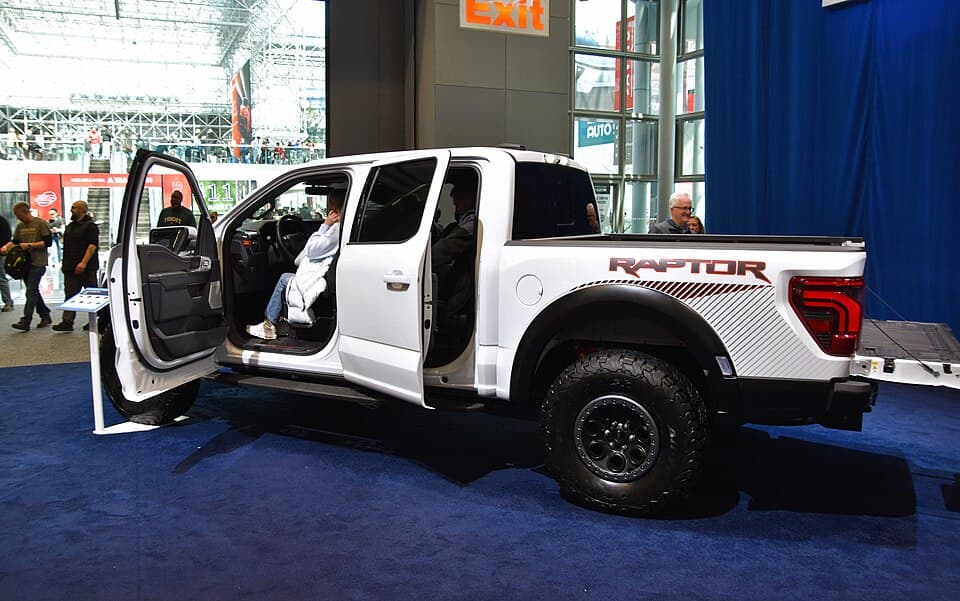
Ford has never issued a recall that applies to the word "Raptor" as a nameplate. Every recall on these trucks is tied to a VIN range and a build-date window on the regular F-150, Ranger, or Bronco assembly line, and the Raptor gets swept in (or excluded) based on when and where your specific truck was built, not because it says Raptor on the fender. That is the single most important thing to understand before you go hunting for "Raptor recalls" online: you check by VIN, not by trim, and the tool for that is the free lookup at NHTSA.gov or Ford's own owner site, not a forum thread.
The good news is that most recalls that do catch a Raptor close out with a free dealer visit measured in an hour or an afternoon, not a rebuild. The bad news is that recall history gets treated too casually by private sellers, and an open, unresolved recall on a used truck you are about to buy is a real, fixable problem you should make the seller or the dealer close out before you hand over money.
Recall versus TSB: the distinction owners actually confuse
A recall is a safety issue. It is opened by Ford or ordered by NHTSA (the National Highway Traffic Safety Administration), it is tied to a specific safety defect or a failure to meet a federal safety standard, and the fix is free for as long as the recall stays open, regardless of mileage or who owns the truck. Ford has to notify every registered owner by mail. There is no time limit tied to your factory warranty. If your truck has an open recall, the dealer fixes it at no charge even if the truck is 12 years old and out of warranty.
A TSB (technical service bulletin) is different. It is Ford telling its own dealer network "here is the diagnostic procedure and the fix for a known problem," but it is not a safety defect and it is not mandatory. Ford does not have to notify you, and you do not get a free fix just because a TSB exists for your build. Whether a shop applies a TSB free of charge depends on your warranty status, mileage, and, sometimes, goodwill (a courtesy repair Ford is not obligated to make, decided case by case). The cam phaser rattle on the Gen 2 EcoBoost, the 10R80 harsh 1-2 shift, and the carbon buildup owners see on high-mileage EcoBoost engines are all TSB territory, not recall territory. If you want the repair paths and real costs for those, we cover them separately: see the Gen 2 cam phaser writeup, the 10R80 shift and shudder piece, and the EcoBoost carbon buildup explainer.
The practical difference for a buyer: an open recall is a red flag you can force closed for free before you sign anything. A known TSB pattern is a negotiating point on price, but nobody owes you a free fix for it once the truck is out of warranty.
How to actually check before you buy
Before you look at anything else on a used Raptor, get the VIN and run it two places:
- NHTSA's VIN lookup tool, which pulls every open, unrepaired recall tied to that specific vehicle, across every manufacturer campaign ever issued against it.
- Ford's owner recall lookup, which shows the same data plus scheduling information if you plan to book the repair through a Ford dealer.
If either tool shows an open recall, that is not a reason to walk away by itself. It is a reason to make the seller get it closed out before the deal, or to negotiate the price down by a fair estimate of the dealer's no-charge repair slot inconvenience (usually just your time, since the part and labor are free). A dealer will not charge you to close an open recall no matter how old the truck is.
This step matters more the older the truck. A Gen 1 SVT Raptor (2010-2014) has had over a decade to accumulate campaigns across the whole F-150 platform it shares its chassis and drivetrain with. A late Gen 3 Raptor or a Raptor R is young enough that its recall history, if any exists at all, will be short and easy to review in five minutes.
What kinds of recalls actually hit these platforms
Speaking generally, and this is true across nearly every full-size truck platform, not uniquely a Raptor issue: F-150-platform recalls over the last 15 years have clustered around a handful of systems. Door latches that could allow a door to open unexpectedly. Seatbelt components. Fuel system parts under the hood that raised fire-risk concerns on certain build dates. Rearview camera software that displayed a delayed or frozen image. Steering and driveline hardware on specific build ranges.
Whether any specific one of those campaigns included your exact Raptor, and what its actual fix was, is precisely the kind of thing you should not trust to memory, a forum post, or a general "F-150 recalls" article, ours included. Pull it by VIN. What we can tell you with confidence is how these fixes typically break down once you are standing at the service desk:
Software reflash. If the recall remedy is a reprogram of a control module (powertrain control module, body control module, whatever system triggered the campaign), you are usually in and out within an hour, sometimes done while you wait, and no parts are on backorder because there are no parts.
Physical part replacement. If the fix involves a bracket, a seal, a harness section, a latch mechanism, or anything with a part number, budget for the dealer to need the part in stock before they can even book you. That can mean scheduling weeks out on a slow-moving campaign, and the appointment itself running from under an hour to most of a day depending on what has to come apart to get at it. Ask the service writer directly how long your specific campaign takes; they will know because they have already done a few.
Neither path should ever cost you money for parts or labor while the recall is open. If a service advisor tries to bill you for a component tied to an open recall campaign, that is a billing error worth pushing back on, not a legitimate charge.
Generation by generation, what to expect
Gen 1 SVT Raptor (2010-2014). The oldest trucks on the road, and the ones most likely to be carrying one or more closed-out campaigns in their history by now. Check the VIN regardless of what the seller tells you; a truck this age has usually had every open recall closed years ago, but "usually" is not "always," especially with trucks that changed hands privately and never got the mail. For the rest of what actually breaks on these at this mileage, see the used Gen 1 buying guide and the writeup on 5.4 versus 6.2 which one to buy.
Gen 2 Raptor (2017-2020). More recent, sold in higher volume, and the generation most owners are shopping right now in the $35,000-46,000 range depending on model year. Same rule applies: VIN lookup before you look at anything else. For the ownership picture beyond recalls, the per-year breakdowns for 2017, 2018, 2019, and 2020 cover the known TSB patterns, and the used Gen 2 buying guide walks the full inspection checklist.
Gen 3 Raptor (2021-present). Young enough that recall history should be short. Check anyway, since a 2021 or 2022 truck has had a few years to accumulate a campaign or two. The 2021, 2022, 2023, and 2024 year-by-year pages and the used Gen 3 buying guide cover warranty math and what actually breaks, separate from recall status.
Raptor R (2023-present). Same platform, same recall mechanics as Gen 3, run through the supercharged 5.2L V8 instead. Newest trucks on this list, shortest recall history to review. Check the VIN, then read the used Raptor R buying guide before you spend six figures.
Ranger Raptor and Bronco Raptor. Both are newer nameplates on different platforms than the F-150, and both have thinner recall histories simply because they have not been on sale as long. Treat any claim of an established recall pattern on either truck with skepticism until you have verified it yourself by VIN; there is not yet enough time in service to talk about a track record with confidence. The Bronco Raptor front-end clunk that owners report is a mechanical wear item, not a recall, and it is covered separately.
Does an open recall hurt resale or trade-in value?
Yes, in a practical sense, even though Ford does not report recall status to the credit bureaus or title. A dealer running a trade-in appraisal will pull the VIN and see the open campaign, and it becomes a line item they use to justify a lower offer, since they now have to schedule the repair before they can sell the truck retail. Private buyers who do their homework will do the same thing. The fix costs you nothing to have Ford perform, so the smart move before you sell or trade a Raptor of any generation is to close out every open recall first. It costs you an afternoon and gets you a cleaner VIN report to hand the next owner or the appraiser.
The short version
- A recall is a mandatory, free, safety-driven fix ordered against a VIN range; a TSB is an optional repair procedure Ford is not obligated to perform for free once you are out of warranty.
- Check any Raptor, Gen 1 through Raptor R, plus Ranger Raptor and Bronco Raptor, by VIN at NHTSA.gov or Ford's owner recall site before you buy. Trim name does not determine recall eligibility, build date and VIN range do.
- Software-reflash recalls are usually an hour at the dealer; part-replacement recalls can mean a longer wait for parts and most of a day in the shop, and neither should cost you a dollar.
- Close out any open recall before you sell or trade in a Raptor. It is free to you and it is the first thing a dealer's appraisal or a careful private buyer will check.
Deal alert
Shopping for one? Get new listings first
We sweep US dealer inventory and send you new Raptors matching your search — real listings, real asking prices, no spam.