Buying a Used Gen 3 Raptor: Warranty Math and What to Check
A used Gen 3 Raptor is a warranty-math problem more than a year-math one, and a 2022 inside its powertrain window is the practical sweet spot over an identical 2021. This guide works the coverage math, shows how to verify the 37 Performance Package against the door sticker, and covers the checks a PPI should catch.
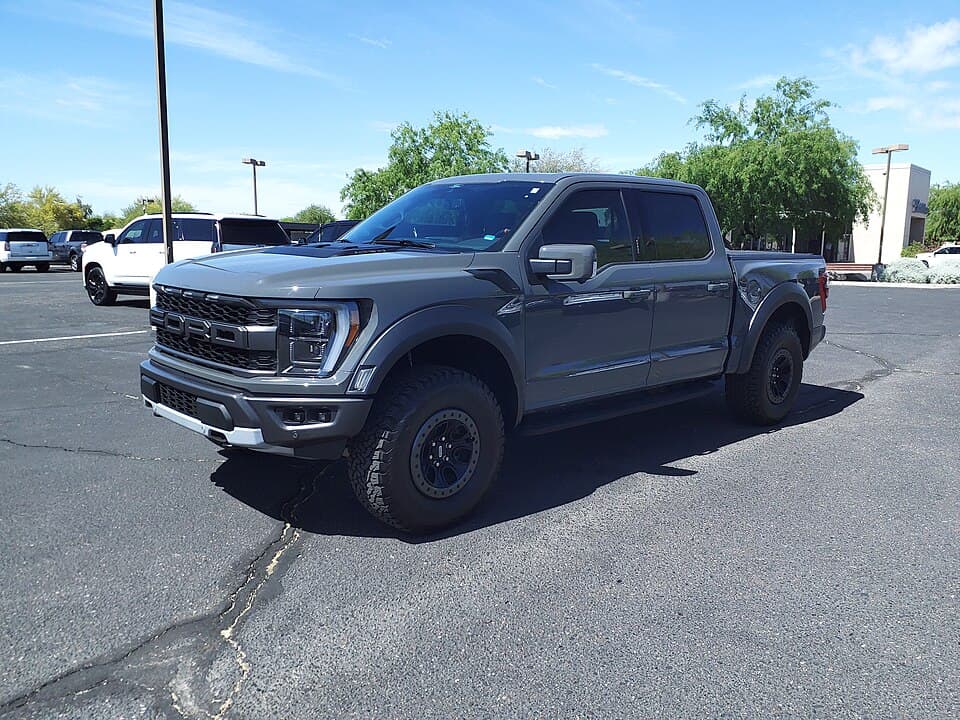
The used Gen 3 Raptor play is warranty math, not year math. A 2022 still inside its 5-year/60,000-mile powertrain window is the sweet spot: same truck as 2021, one year further into depreciation, and enough coverage left to matter if the cam phasers act up. Before you pay a dollar more for the 37 Performance Package, confirm it against the door sticker, not the listing. And if you are being quoted 2024-and-later refresh money, make sure you are actually buying the refresh truck.
Here is the fast version, then the reasoning.
| Year | What changed | Used-market note | Check specifically |
|---|---|---|---|
| 2021 | Launch year: five-link coil rear replaces leaves, Fox 3.1 Live Valve, factory 37 Package available | Oldest Gen 3, closest to the end of its powertrain warranty | Confirm remaining coverage against the in-service date, not the model year |
| 2022 | Carryover, no mechanical changes, new colors, better 37 Package allocation | The practical sweet spot: identical truck to 2021, more warranty life left | Same phaser and Watt's link checks as 2021, plus verify the 37 Package by wheel and tire spec |
| 2023 | Carryover, Raptor R joins the lineup above it, trim shuffles | Priced close to 2022, sometimes shopped like a "new enough" truck to justify a premium it has not earned | Do not let a seller charge refresh-adjacent money for a pre-refresh truck |
| 2024+ | Mid-cycle refresh: new front end, revised Fox 3.1 tuning, 12-inch digital cluster and 12-inch SYNC 4 screen, Trail Turn Assist | Different price tier entirely, still close to new-truck money | Verify the front-end styling and the screens in person; a "2024" ad photo is not proof |
Why warranty math beats year math
Ford's powertrain warranty runs 5 years or 60,000 miles from the in-service date on the window sticker, whichever comes first, and it transfers to a used buyer within that same window. That in-service date is not the model year: a 2022 built in summer 2021 and delivered to its first owner that fall carries a late-2021 in-service date.
Work it as an example. A 2022 Raptor delivered new in October 2022 is a little under four years into its 5-year clock today, so it likely has roughly a year of powertrain coverage left, assuming it is under 60,000 miles. A 2021 delivered the same month a year earlier is already at or past its window. That single year is the whole argument for paying more for a 2022 over a 2021, since the two trucks are otherwise carryover-identical. See the full year-by-year breakdown if you are also weighing Gen 1 and Gen 2 against a Gen 3.
Do not take the seller's word on the in-service date. Get the VIN and call a Ford dealer's service department, who can pull the actual warranty start date and remaining coverage off Ford's system.
2021 vs 2022 vs 2023 vs 2024+: what actually changed
Gen 3 launched in 2021 with the biggest structural change in Raptor history: a five-link coil rear with a 24-inch Watt's link, replacing the leaf springs every prior Raptor ran. That, plus Fox 3.1 Live Valve shocks and a factory 37 Performance Package, is why this truck rides and tows differently from anything before it.
2022 is carryover, mechanically identical to 2021, with new paint and better 37 Package allocation after a rough launch year. 2023 is also carryover, though the Raptor R joining the lineup above it reshuffled trim and equipment groups. None of that changes what you are buying used: same engine, same suspension, same electronics generation.
2024 is where it actually changes. The refresh brought a new front end with Ford block lettering, revised Fox 3.1 tuning with added compression zones, a 12-inch digital cluster paired with a 12-inch SYNC 4 screen, and Trail Turn Assist. If a listing is priced like a refresh truck, the front end and both screens should match. A 2023 with a detail job and a hopeful price is not a 2024.
Verifying the 37 Performance Package the right way
The 37 Package is beadlock-capable forged wheels wrapped in 37x12.50R17 BFGoodrich All-Terrain KO2s, the one option on this generation that changes what the truck can actually do off-road. It is not just "a truck with 37s on it." Plenty of sellers bolt 37s onto a standard 35-inch-package truck and let the ad copy do the rest.
Check the wheels, not the tire size alone: forged, beadlock-capable, factory-fitment for the package. Cross-reference the build sheet or window sticker code, and if the seller does not have one, walk the VIN through a Ford dealer before paying 37-Package money for a 35 truck on bigger rubber.
The phaser noise is smaller on Gen 3, and often still under warranty
The cam phaser rattle that defines Gen 2's reputation carried over to Gen 3, just quieter and less frequent. It shows up mainly on 2021 and 2022 trucks: a cold, dry, five-to-ten-second rattle from the front of the engine on a stone-cold start that goes away as it warms up. Ford's fix is updated phaser hardware and a reflash, and a real share of these repairs land inside the powertrain warranty, which is the whole reason the math above matters before you write an offer. Out of pocket, budget $2,600-5,000; under warranty, it costs nothing but the appointment. For the full pattern across every EcoBoost Raptor generation, see the 3.5 EcoBoost problems guide by year.
Watt's link and rear clunk: the five-minute test
Drive the truck over a speed bump or a driveway apron at walking pace with the windows down. A clunk or squeak from under the bed is the Watt's link and trailing arm bushings, loudest on trucks that tow or haul regularly. Retorquing the hardware at ride height resolves a real share of these for around $150; bushings run $500-900 if that does not kill it. Either way, it is a negotiating point, not a reason to walk.
Five-link rear inspection after hard use
The coil rear rides better than any leaf-spring Raptor ever did, but it is not maintenance-free, and a truck with real desert miles shows it differently than a commuter truck does. Cycle every drive mode and watch for a suspension warning message: a Live Valve fault means a ride-height sensor, a link, or occasionally the module itself, and it tells you the truck has been in deep dust or deep water, not just driven hard. Budget $350-800 for the repair. Also check ride height at both rear fenders for uneven sag, and expect worn Watt's link bushings sooner on a truck that tows or hauls regularly.
Jumped-truck tells on a truck this new
A three-year-old Raptor should not have been jumped hard enough to hurt, but plenty have been. Inspect the front skid plate, the valance, and the lower A-arms. Rock strikes and scuffs on the skid plate are normal. A bent A-arm, a creased valance, or fresh undercoating right where the skid plate bolts up are signs of real impact speed, not a rock crawl. Check the SYNC update history too: a truck that has never taken an over-the-air update has either sat unused or has a module problem worth asking about.
Why Gen 3 depreciation is slower, and what to do with that
Gen 3 has not depreciated the way Gen 2 did at the same age, so do not expect the discount a three-year-old Gen 2 would get you. That is not a reason to overpay, it is a reason to negotiate on documented condition and warranty math instead of an old depreciation curve that does not apply here. A truck with a clean phaser history, a verified 37 Package, and real remaining powertrain coverage is worth paying closer to ask for; a truck missing all three should still come down, reputation or not. For where current asking prices land across the lineup, see what a Ford Raptor actually costs right now. Varies, call for current listings.
When the same money should buy a Raptor R or a Bronco Raptor instead
If the used Gen 3 you are looking at is creeping toward Raptor R money on a loaded trim and low miles, stop and cross-shop the R directly instead of paying near-R price for the standard truck. And if the number on the table is closer to a Bronco Raptor's used price than a base Gen 3's, that is a genuinely different truck with a different rear suspension and a different failure list, not just a smaller badge. The honest version of that comparison is here, worth reading before you assume the F-150 badge is the right answer at that price.
The short version
- The sweet spot is a 2022, mechanically identical to 2021 but with more powertrain warranty left. Work the in-service date, not the model year.
- Verify the 37 Package by the wheels and tire size, and confirm it against the door sticker or build sheet, not the listing description.
- 2024 and later is a different price tier. Confirm the front end and both screens in person before you pay refresh money.
- Cold start it, speed-bump it, and cycle every drive mode before you talk price. All three cost you nothing and each one is a real negotiating point if something shows up.
- Gen 3 has not depreciated like Gen 2 did, so negotiate on documented condition and remaining warranty, not on an old depreciation curve that does not apply here.
- These price ranges are current at time of writing and move by region and season. Confirm against live listings before you make an offer.
Owner questions
- Should I buy a 2021 or 2022 used Gen 3 Raptor?
- The 2022 is the sweet spot. It's mechanically identical to the 2021 (same five-link coil rear, Fox 3.1 Live Valve shocks, and available 37 Package), but it's one year further from its 5-year/60,000-mile powertrain warranty expiration. A 2021 delivered the same month a year earlier is already at or past its window, while a 2022 delivered in October 2022 still has roughly a year of coverage left today.
- How much does the Gen 3 Raptor cam phaser fix cost?
- Out of pocket, budget $2,600-5,000 for updated phaser hardware and a reflash; under warranty it costs nothing but the appointment. The rattle shows up mainly on 2021 and 2022 trucks as a cold, dry, five-to-ten-second noise from the front of the engine on a stone-cold start that fades as it warms up, and a real share of these repairs land inside the powertrain warranty.
- How do I verify a used Raptor actually has the factory 37 Performance Package?
- Check the wheels, not just tire size: the 37 Package uses beadlock-capable forged wheels wrapped in 37x12.50R17 BFGoodrich All-Terrain KO2 tires. Cross-reference the build sheet or window sticker code, since sellers sometimes bolt 37s onto a standard 35-inch-package truck. If there's no paperwork, walk the VIN through a Ford dealer before paying 37-Package money for a 35 truck on bigger rubber.
- What does the rear clunk on a Gen 3 Raptor mean and what does it cost to fix?
- A clunk or squeak from under the bed on a speed bump points to the Watt's link and trailing arm bushings, loudest on trucks that tow or haul regularly. Retorquing the hardware at ride height resolves a real share of these for around $150; if that doesn't fix it, bushings run $500-900. It's a negotiating point, not a reason to walk away from the truck.
- What actually changed in the 2024 Ford Raptor refresh?
- The 2024 refresh brought a new front end with Ford block lettering, revised Fox 3.1 shock tuning with added compression zones, a 12-inch digital cluster paired with a 12-inch SYNC 4 screen, and Trail Turn Assist. Since 2021-2023 are carryover trucks with the same engine, suspension, and electronics generation, you should verify the front end and both screens in person before paying refresh-tier money.
Deal alert
Shopping for one? Get new listings first
We sweep US dealer inventory and send you new Raptors matching your search — real listings, real asking prices, no spam.