Bronco Raptor Front-End Clunk: Ball Joints, Sway Bar Links, or Something Worse
Three different noises get lumped under "front end clunk" on the Bronco Raptor and only one of them is a warranty claim. This is how to tell them apart before you pay a diagnostic fee twice.
Gear in this article
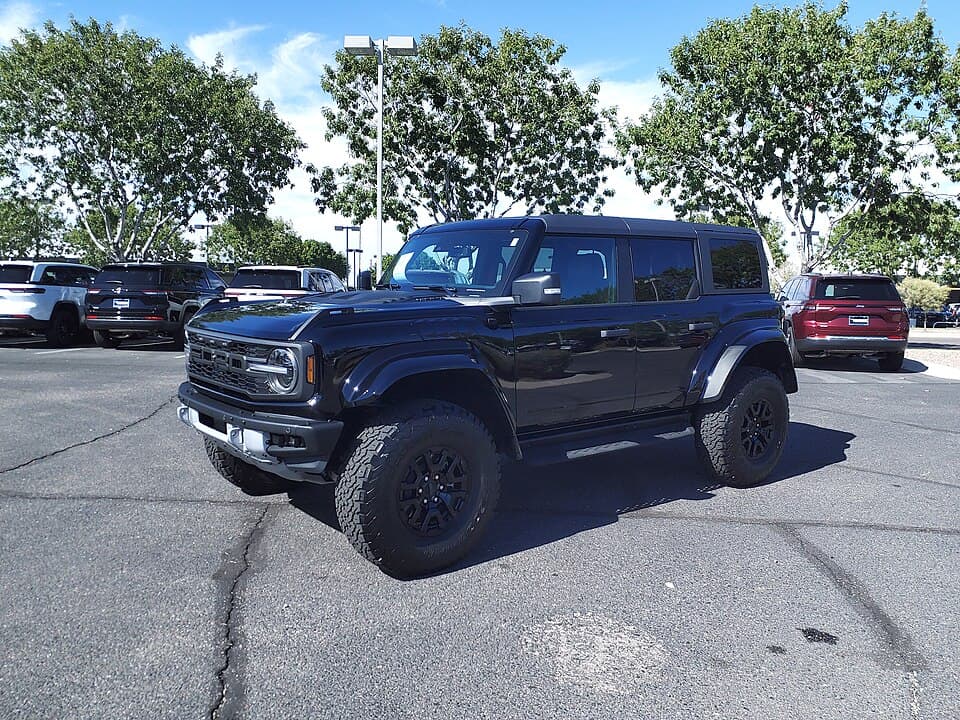
Three noises get called "front end clunk" on a Bronco Raptor, and only one of them is worth a warranty claim. If it is a single knock over a speed bump or sharp dip, that is the upper ball joint or control arm bushing, and Ford's powertrain and base warranty on a 2022+ truck may cover it depending on mileage and how the dealer writes it up. If it is a rattly clunk on rebound over washboard, that is more likely a sway bar end link or a loose skid plate bolt, and that is a $150-400 fix you should not let a dealer diagnostic-fee you for twice. If it is a metallic double-tap under hard steering input at low speed, get the front end on a lift before you drive it again.
The three noises, and how to tell them apart in your driveway
Owners lump all of this under "clunk" because that is what it sounds like from the driver's seat. From under the truck, they are different failures with different fixes.
Noise 1: A single thunk over a bump, dip, or driveway transition. This is the one to take seriously. It shows up as a clunk you feel through the steering wheel, sometimes paired with steering that feels slightly loose on center. This is the known upper ball joint and control arm wear issue on the Bronco Raptor, and it can start as early as 20,000 to 40,000 miles on trucks that see real trail use or a lot of 37-inch tire load through the wide track.
Noise 2: A rattly clunk that repeats over washboard or chatter bumps, not a single hit. This is almost always a sway bar end link, a loose skid plate bolt, or a heat shield working itself free. It sounds worse than it is and it is cheap to fix.
Noise 3: A sharp metallic double-tap when you turn the wheel at parking lot speed, especially with weight on the front end. This is the one that means stop driving it and get it inspected before your next trail day. It can point to a failing CV joint, a loose front locker actuator bolt, or in rare cases a control arm bushing that has fully let go rather than just worn.
The driveway test
- With the truck on level ground, grab each front tire at 12 and 6 o'clock and rock it in and out. Play here is the upper ball joint telling you it is done. This is the same check we tell used-truck shoppers to do before they buy one.
- Have someone gently rock the truck nose to tail while you have a hand on each end link and each skid plate bolt. Movement or a tick there is noise 2, not noise 1.
- With the truck stopped and the wheel turned lock to lock slowly, listen for a sharp tap rather than a smooth turn. That is noise 3, and it is the one that gets a lift appointment, not a Saturday in the driveway.
Why the Bronco Raptor front end is a different animal than an F-150 Raptor
This matters because the fix path is different, not just the parts. The Bronco Raptor runs a fully independent front suspension with upper and lower control arms and a Dana 44 AdvanTEK front axle, part of the HOSS 4.0 suspension system with Fox 3.1 Live Valve internal bypass shocks. An F-150 Raptor, Gen 2 or Gen 3, uses a similar independent front architecture but on a longer-wheelbase truck with different control arm geometry and different loads through the ball joints.
The Bronco Raptor's control arms sit under a truck that is 85.7 inches wide with a track width 8.6 inches wider than a base Bronco, riding on factory 37s. That width and tire size load the upper ball joint harder than anything Ford put under an F-150 Raptor, which is why this specific wear item shows up on the Bronco Raptor's known-problem list and not, in the same way, on the Gen 3 F-150 Raptor's. If you cross-shop the two trucks, that is a real mechanical difference, not just a badge difference, and it is worth reading how the two compare before you decide between them.
Which one is a warranty claim
Ford's base bumper-to-bumper warranty on a 2022 or newer Bronco Raptor runs 3 years/36,000 miles, and premature ball joint or control arm failure inside that window is a legitimate warranty claim in most cases, since it is a suspension component failing well short of a normal wear interval. The powertrain warranty (5 years/60,000 miles) does not cover suspension parts, so once you are past the bumper-to-bumper window, you are paying out of pocket or hoping for goodwill, which is entirely at Ford's discretion and not something you can demand.
Sway bar end links and loose fasteners are wear-and-tear and installation items. They are not a warranty claim past the first few thousand miles, and most dealers will tell you that correctly, which is one reason it is worth diagnosing noise 2 yourself before you pay someone to tell you it is a $200 part.
The double-tap steering noise is the one where you want documentation. If it turns out to be a CV joint or a control arm bushing that failed rather than just wore, get the dealer's diagnostic writeup in hand before you decide whether to push for warranty or goodwill coverage.
What a dealer diagnostic fee costs and how to avoid paying it twice
Most Ford dealers charge a diagnostic fee to put a truck on a lift and confirm a noise, and that fee typically gets waived or rolled into the repair if the shop finds something covered under warranty. Call ahead and ask what happens if they find nothing, or find a wear item that is not covered. Some dealers roll the fee forward into any future covered repair; some do not.
The way owners pay this fee twice: they get the noise diagnosed as "front end clunk, cause undetermined," pay for a repair that turns out to be the wrong one (an end link, say, when the real problem was the ball joint), and then have to pay for a second diagnostic visit when the real noise comes back. Do the driveway test above before you go in, and describe the specific noise and when it happens, not just "clunk." A tech who hears "single thunk over dips, steering feels loose" goes straight to the ball joint. A tech who hears "clunk" starts from zero.
Parts and labor by cause
| Cause | Parts and labor estimate | Warranty status |
|---|---|---|
| Upper ball joint / control arm wear | $700-1,800, replacing the arm as an assembly | Covered if inside the 3yr/36k bumper-to-bumper window; wear item after |
| Sway bar end link / loose fastener | $150-400, usually under 1 hour labor | Not a warranty item past early miles |
| CV joint or failed bushing (double-tap under steering) | $800-2,200 depending on which joint and whether the axle comes out | Case by case, get it documented |
These are shop estimates and they swing by region and by whether the dealer replaces the whole control arm assembly or a serviceable joint. Aftermarket upper control arms with a serviceable ball joint, like the Camburg Race Spec uniball units, are a common upgrade path once you are paying out of pocket anyway, since they let you replace just the joint next time instead of the whole arm. That said, Camburg's application list runs Gen 2/Gen 3 F-150 Raptor control arm geometry, so confirm fitment for the Bronco Raptor's independent front suspension before ordering rather than assuming cross-compatibility.
The short version
- A single thunk over bumps with loose-feeling steering is the upper ball joint or control arm, it is a known Bronco Raptor wear item, and it may be covered under the 3yr/36,000-mile bumper-to-bumper warranty.
- A repeating rattle over washboard is almost always a sway bar end link or loose fastener, it is cheap, and it is not a warranty claim.
- A sharp metallic tap when you turn the wheel at low speed means get it on a lift before your next trail day, and get the dealer's written diagnosis before you decide whether to push for goodwill.
- Describe the exact noise and when it happens before you book the diagnostic appointment. That is how you avoid paying the fee twice.
Owner questions
- Why does my Bronco Raptor make a single thunk noise over bumps and dips?
- That's the known upper ball joint and control arm wear issue on the Bronco Raptor, which can start as early as 20,000 to 40,000 miles on trucks with real trail use or heavy load from factory 37-inch tires. It often pairs with steering that feels slightly loose on center. Replacement runs $700-1,800, and it's covered if inside the 3yr/36k bumper-to-bumper warranty.
- Is a rattly clunk over washboard roads covered under Ford's warranty?
- No. A rattly clunk repeating over washboard or chatter bumps is almost always a sway bar end link, loose skid plate bolt, or a heat shield working itself free. It's a $150-400 fix under an hour of labor, but it's considered wear-and-tear and not a warranty claim past the first few thousand miles.
- Why does the Bronco Raptor have ball joint problems that the F-150 Raptor doesn't?
- The Bronco Raptor is 85.7 inches wide with a track width 8.6 inches wider than a base Bronco, riding on factory 37s, which loads the upper ball joint harder than anything under an F-150 Raptor. Both trucks use independent front suspension, but the Bronco Raptor's Dana 44 AdvanTEK axle and control arm geometry face different loads than the longer-wheelbase F-150 Raptor.
- What does it mean if my Bronco Raptor makes a metallic double-tap sound when turning the wheel at low speed?
- A sharp metallic double-tap when turning the wheel at parking lot speed, especially with weight on the front end, means you should stop driving and get it inspected before your next trail day. It can point to a failing CV joint, a loose front locker actuator bolt, or a control arm bushing that has fully failed. Repair costs run $800-2,200 depending on the joint.
- How do I avoid paying a Ford dealer's diagnostic fee twice for a front end clunk?
- Do the driveway tests yourself first, then describe the specific noise and when it happens rather than just saying 'clunk.' Owners get charged twice when a vague 'cause undetermined' diagnosis leads to fixing the wrong thing, like an end link when the real issue was the ball joint. Call ahead too, since some dealers roll the fee into future covered repairs and some don't.
Deal alert
Shopping for one? Get new listings first
We sweep US dealer inventory and send you new Raptors matching your search — real listings, real asking prices, no spam.