Ford Raptor vs Toyota Tundra TRD Pro: Which High-Performance Truck Actually Wins
Both trucks promise desert-ready suspension and a factory warranty, but they get there in very different ways. Here's how they actually compare on capability, cost, and reliability reputation once the spec sheets are put aside.
Gear in this article
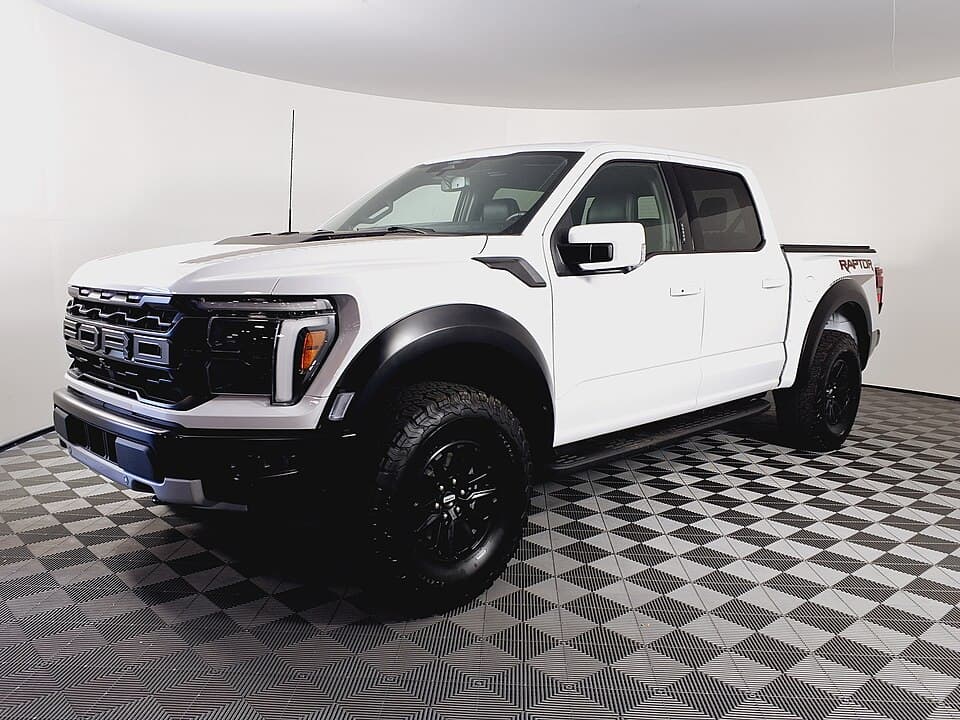
The short version, up front: if you spend most of your time at 60-plus mph over whoops and washboard, the Raptor's Live Valve suspension is the more sophisticated system, and the way it actively adjusts damping at each corner is a real engineering difference, not marketing language. If you want the truck with the stronger long-term reliability reputation, Toyota's name carries real weight, though "Toyota" and "TRD Pro" are not the same claim and the TRD Pro's specific issue history deserves its own look before you assume it is trouble-free. Both trucks are genuinely capable off-road and both carry real factory warranties. Which one wins depends on which of those two sentences matters more to you.
Suspension: Fox Live Valve versus Fox internal-bypass
Both trucks run Fox shocks, and that is roughly where the similarity ends.
The Gen 3 F-150 Raptor uses Fox Live Valve shocks, an electronically controlled damping system that reads wheel speed, steering angle, and body motion many times per second and adjusts compression damping independently at each corner. It is not a driver-selectable stiff-or-soft toggle. The system is deciding, corner by corner, how much damping you need right now, softening the front-right over a sharp bump while the rear stays firm through a turn. We cover how the logic actually works, what fails on it, and what a shock replacement costs in the Gen 3 Live Valve suspension breakdown. The Raptor R carries the same Live Valve architecture.
Older Raptors did not run this system. The Gen 1 SVT Raptor (2010-2014) ran passive Fox external-bypass shocks, no electronics, just well-tuned valving with separate bypass zones for low-speed and high-speed damping. Gen 2 (2017-2020) moved to Fox internal-bypass shocks, still fully passive.
The Tundra TRD Pro and Tacoma TRD Pro use TRD-tuned Fox internal-bypass shocks, passive dampers with no electronic control module. Internal-bypass shocks use tuned zones inside the shock body so damping firms up progressively as the shock compresses further, giving a softer ride over small bumps and more resistance near the end of travel. It is a proven, simpler design with fewer failure points, because there is no wiring harness, no control module, and no valve actuator to fail.
That simplicity cuts both ways. A passive shock, however well tuned, cannot change its damping curve mid-corner the way Live Valve does. We have not seen a published back-to-back instrumented comparison between a Live Valve Raptor and a TRD Pro Fox setup, so treat this as an engineering distinction rather than a scored test: only one of these two systems is actively re-tuning itself corner by corner while you are still in the air. If you want to see how much shock tuning alone changes behavior independent of any electronics, our King 3.0 vs Fox 3.0 vs ICON Vision 2.5 test is a useful reference even though it is a Gen 2 aftermarket comparison, not a factory one.
Powertrains: what's actually under the hood, by generation
Ford's Raptor lineup has run three genuinely different engine families, and getting the generation right matters here.
The Gen 1 SVT Raptor (2010-2014) was naturally aspirated V8 power, no turbos at all: a 5.4L V8 for the 2010 model year, then a 6.2L V8 from 2011 through 2014. If you are deciding between those two Gen 1 engines specifically, we break that down in Gen 1 Raptor: 5.4 vs 6.2, and Which One to Actually Buy. Gen 2 (2017-2020) and Gen 3 (2021-present) both run a twin-turbo 3.5L EcoBoost V6, though the Gen 3 version is tuned differently and rated higher than the Gen 2 unit. The Raptor R breaks from the EcoBoost approach entirely with a supercharged 5.2L V8, a genuinely different engine from the rest of the lineup that we detail separately in the Raptor R engine explainer. The Bronco Raptor and the US-market Ranger Raptor both use a twin-turbo 3.0L EcoBoost V6, a smaller displacement version of the same turbocharged philosophy, not a four-cylinder.
Toyota's TRD Pro trucks (Tundra and Tacoma) offer an iForce Max hybrid powertrain option on top of the standard turbocharged engine, pairing a turbocharged V6 with an electric motor and battery pack for a torque-fill effect off the line and at low RPM, along with a fuel economy bump over the non-hybrid engine. It is a fundamentally different approach to making power than Ford's turbo-only strategy: Toyota is layering electric assist onto a smaller gas engine, Ford is relying on turbo boost and, on the Raptor R, a supercharger on top of that.
Neither approach is objectively better on paper. What matters more in practice is that exact horsepower, torque, and 0-60 figures move by model year and trim on both trucks, so treat any number you have seen quoted from memory, including anything you read here a year from now, as something to re-verify against the current window sticker before you buy. For Raptor-specific 0-60 figures by generation, we track those in the Raptor 0-60 database.
Payload and towing: do not trust a spec sheet from memory
This is the category where buyers get burned the most, because both Ford and Toyota adjust payload and towing figures by trim, bed length, and options package nearly every model year, and a "Raptor tows 8,000 lbs" claim you saw on a forum a few years ago may not apply to the truck sitting on the lot today.
For the Raptor side, we keep current, generation-specific numbers in two dedicated pages rather than restating them here: the Raptor payload guide covers what each generation can actually carry in the bed and cab combined, and the Raptor towing capacity guide breaks down real tow ratings by generation and trim. Both numbers on a Raptor tend to run lower than a comparably priced work-truck F-150, because of the added weight of the wide-track suspension and hardware, and that tradeoff is deliberate.
Toyota publishes payload and tow ratings for the TRD Pro trim separately from base Tundra and Tacoma trims, and those numbers also move by model year and whether you spec the iForce Max hybrid powertrain, since the battery pack adds weight that eats into payload. Pull the current-year Toyota configurator numbers directly before you compare; do not carry over a figure from a review of last year's truck, including this one.
Pricing: as-tested cost, not sticker price
As-tested Raptor pricing varies enormously by generation, trim, and options, and we track it in detail in How Much Is a Ford Raptor? 2026 Prices for Every Model. For context from our own used-market data: a 2023 Raptor R currently averages roughly $102,300 across live listings, climbing to roughly $137,900 for 2026 models, while a standard F-150 (non-Raptor trims averaged in) runs from the mid-$30,000s for a 2017 up to roughly $91,900 for a 2026. Raptor trims sit well above those F-150 averages when new, and depreciation curves differ sharply by generation, which we cover in the Raptor depreciation breakdown.
Toyota TRD Pro pricing needs to be checked at the time you are actually reading this, full stop. Toyota reshuffles trim content and pricing on the Tundra and Tacoma TRD Pro line most model years, and the iForce Max hybrid option carries its own premium that has moved since it launched. Do not trust a number pulled from an old review, including this one a year from now. Check the current Toyota configurator with the model year you are actually cross-shopping.
Reliability reputation: neither truck is trouble-free
Toyota's broader reliability reputation is real and earned across decades of Tacoma and Tundra ownership data, but "Toyota" and "TRD Pro" are not interchangeable claims. The TRD Pro package adds specific hardware, the Fox shocks, unique wheels, skid plating, that a base Tundra or Tacoma does not have, and any TRD-Pro-specific complaint pattern should be checked against the NHTSA complaint database and Toyota-specific owner forums for the exact model year in question rather than assumed clean just because the badge says Toyota. If you are cross-shopping a specific model year, pull the NHTSA data for that model year before you sign.
The Raptor's known issues are better documented publicly, largely because the platform has been out longer and the EcoBoost engine family has a long service history. Two problems show up consistently enough to be worth knowing before you buy:
- Cam phaser rattle on the Gen 2 3.5L EcoBoost, a cold-start rattle from the variable valve timing units up front, with fixes ranging from a phaser-tune reflash to a full phaser and timing chain replacement. We rank every fix by cost in the cam phaser rattle guide.
- 10R80 transmission shudder, a harsh 1-2 shift or torque-converter shudder reported on Raptors using the 10-speed 10R80 automatic. Diagnosis and real fix paths, including which repairs fall under Ford's TSB process versus paid out-of-pocket work, are in the 10R80 shudder writeup.
Ford's powertrain warranty on new Raptors runs 5 years/60,000 miles, covering the engine, transmission, and drivetrain against defects, but a TSB (technical service bulletin, a documented repair procedure Ford issues to dealers) is not a promise of free work. If your truck is out of warranty, you pay for the TSB repair like any other job unless Ford's goodwill program, which is discretionary and not owed, decides to help. Toyota's standard powertrain warranty on the Tundra and Tacoma TRD Pro runs on a comparable timeline; confirm the exact terms for your specific model year before assuming coverage on either truck.
Which one actually wins
There is no single winner here, and pretending there is would be dishonest to both trucks.
For high-speed desert running, the Raptor's Live Valve suspension is the more sophisticated system, and the fact that it is actively re-tuning damping at each corner in real time is a real mechanical advantage over a passive shock, however well the TRD Pro's Fox tune is dialed in. If that is your primary use case, get seat time in both before deciding, but expect the Raptor to have the edge for most drivers running rough, inconsistent terrain at speed. Trails like Johnson Valley or Glamis are exactly where that gap shows up.
For long-term daily-driver reliability, Toyota's broader reputation and the simpler, electronics-light TRD Pro suspension design both work in its favor, though "Toyota reliable" is not a substitute for checking NHTSA complaint data on the specific TRD Pro model year and powertrain you are buying. The Raptor's known EcoBoost and 10R80 issues are real, documented, and often expensive to fix out of warranty, but they are also well understood at this point, with established repair paths and cost ranges you can plan around.
If you are still deciding between Raptor generations before you even get to the Toyota comparison, our Gen 2 vs Gen 3 buying guide and the best Raptor year to buy in 2026 are the next two pages to read.
Deal alert
Shopping for one? Get new listings first
We sweep US dealer inventory and send you new Raptors matching your search — real listings, real asking prices, no spam.