Gen 2 vs Gen 3 Ford Raptor: Which Generation Should You Actually Buy
Both generations share the 3.5L EcoBoost badge but differ in suspension tech, reliability history, and price today. This is a head-to-head for someone cross-shopping a used Gen 2 against a newer Gen 3 with a real budget in mind.
Gear in this article
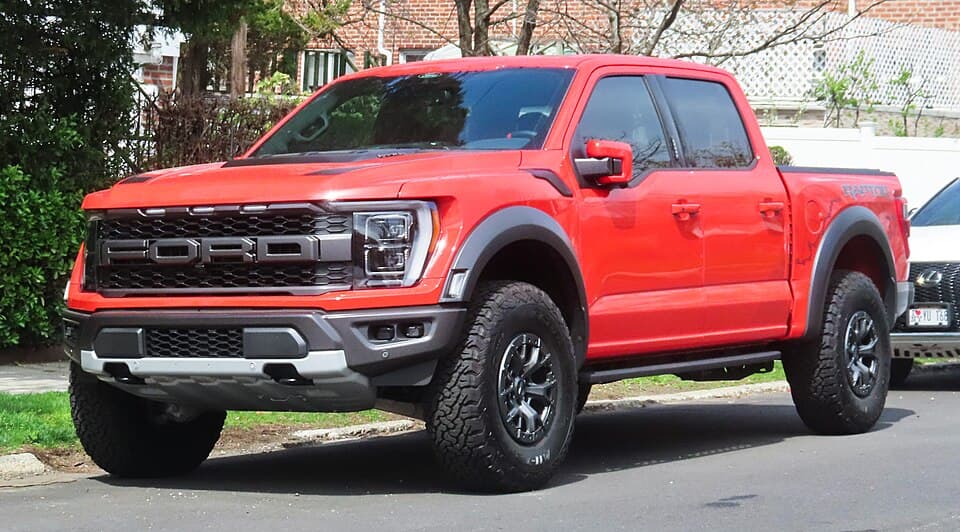
The short answer: a used Gen 2 Raptor (roughly 2017-2020) gets you into the truck for tens of thousands less than a Gen 3 (roughly 2021-2024), but you inherit a specific list of known failure points and an older infotainment and safety package. A Gen 3 costs more up front, carries more factory warranty, and adds Fox Live Valve suspension that the Gen 2 never had. Neither generation is the wrong answer, but they are answers to different questions.
A quick note before any of this matters: "Gen 2" and "Gen 3" are not terms Ford uses in a brochure. They are shorthand the owner community settled on to separate the second-generation F-150 Raptor (2017-2020, built on the P552 platform) from the third-generation truck (2021-2024, built on the P702 platform). Ford's own literature just calls both of them "F-150 Raptor." You will also see people call the engine the "3.5" as shorthand for the 3.5L EcoBoost V6 that both generations share, but the actual output numbers changed between them and even within a generation, so do not assume a specific horsepower figure is the same across every model year. If you need the exact number for a given year, check the site's own breakdown of Ford Raptor engines by generation rather than trusting a number floating around a forum.
For the exact year-by-year cutoffs and what changed inside each one, the Gen 2 generation page and Gen 3 generation page are the reference. This piece is the head-to-head, not the spec sheet.
Drivetrain and suspension: what actually changed
Both generations run a version of the 3.5L EcoBoost V6 paired with a 10-speed automatic transmission (Ford's 10R80 on Gen 2, a revised version carried into Gen 3), a twin-turbo V6 that makes real torque low in the rev range and works well for the kind of desert-speed running these trucks are built for. The Gen 3 EcoBoost got updates to the turbos and internals, and Ford quotes higher output on the newer truck, but again, get the exact figures from the engines by generation breakdown before you repeat a number to anyone.
The bigger functional difference is suspension. Gen 2 runs Fox 3.0 internal bypass shocks with position-sensitive damping, which was itself a jump over the Gen 1 truck. It is a good, proven setup and the aftermarket has a decade of experience tuning around it.
Gen 3 introduced Fox Live Valve shocks, a suspension system that reads terrain input dozens of times a second and adjusts damping electronically instead of relying purely on the shock's internal valving. It is a genuinely different piece of hardware, and it changes both how the truck rides and how you have to think about repairing it, since a failed sensor or module is not the same job as swapping a shock. The mechanism, what it actually does over whoops, and what it costs to modify or replace is covered in full in the Gen 3 Live Valve suspension explainer. If you are planning to run big desert miles and want shocks that adapt without you touching a dial, that is the Gen 3's real argument. If you would rather run a known quantity that any suspension shop in the country has already tuned, that is the Gen 2's argument, and it is also why guys building for Johnson Valley or long-travel dune runs at Silver Lake still buy Gen 2 trucks specifically to swap in King 3.0 coilovers or Fox 3.0 internal bypass shocks without fighting an electronic damping system to do it.
Known reliability issues by generation
This is where the used-Raptor conversation actually lives, and it is worth being specific instead of vague.
The Gen 2's best-known issue is cam phaser rattle, a cold-start knock caused by the variable valve timing units on the front of each camshaft losing oil pressure and clattering before oil fills the phaser. It shows up mostly on 2017-2019 trucks and is well enough understood at this point that there is a full cost-ranked repair breakdown at Gen 2 cam phaser rattle: every fix, ranked by cost. It is not universal and it is not a death sentence, but budget for it mentally when you are pricing a Gen 2, especially an earlier one with unknown oil-change history.
Beyond phasers, both generations have their own patterns of turbo issues, carbon buildup on the intake valves (a symptom of direct injection, not something unique to Ford), IWE (integrated wheel end, the vacuum actuator that locks the front hubs into 4WD) failures, and 10-speed transmission complaints ranging from a harsh 1-2 shift to torque converter shudder. The full year-by-year rundown of what actually fails on the 3.5 EcoBoost, broken out by model year across both generations, is at 3.5 EcoBoost problems by year. Read that before you commit to a specific model year, not just a generation, because failure patterns do not spread evenly across four or five years of production.
The practical read: Gen 2 trucks are now old enough and common enough that most of their failure modes are documented, priced, and often already fixed by a previous owner. Gen 3 trucks are newer, so there is less long-term data, but they are also more likely to still be under Ford's 5-year/60,000-mile powertrain warranty depending on in-service date and mileage, which changes the math on who eats a $3,000-5,000 transmission or turbo bill.
What each generation actually costs right now
Raptor pricing does not sit still, and any dollar figure you read is a snapshot. Using the site's own live listing averages as a baseline: a 2017 F-150 (not Raptor-specific, but the closest published reference point) averages around $35,000, climbing to roughly $42,600 for a 2019 and $46,400 for a 2020 Ford Raptor. Move into Gen 3 territory and 2021 F-150 pricing jumps to roughly $60,400, with a 2022 Ford Raptor near $63,100 and 2023 near $69,600. Raptor trims run well above the general F-150 average, so treat these as directional evidence of the size of the generational price step, not as the actual Raptor sticker you will pay.
The real-world gap between a clean Gen 2 and an entry Gen 3 typically runs into the tens of thousands of dollars, and that gap is not static. It depends on mileage, region, trim (SuperCab versus SuperCrew), and how the used market is trending the month you are shopping. For the actual depreciation curve, generation against generation, with the caveats about how it is calculated, go to Ford Raptor depreciation by generation. Check current listings against that curve before you make an offer; do not anchor to a number from an old thread or an old version of this article.
Which one to actually buy
| Gen 2 (2017-2020) | Gen 3 (2021-2024) | |
|---|---|---|
| Upfront cost | Lower, often by tens of thousands | Higher, but more truck left on the warranty clock |
| Suspension | Fox 3.0 internal bypass, well understood by the aftermarket | Fox Live Valve, adaptive, newer failure modes still being documented |
| Known issues | Cam phaser rattle, IWE, carbon buildup, 10-speed quirks, mostly documented | Same EcoBoost family issues, less long-term data, updated hardware in places |
| Best for | Builders who want to modify suspension and drivetrain their own way | Buyers who want current tech and warranty coverage over a known price break |
If your budget is fixed and you plan to run 37s, King or Fox coilovers, and spend real money on the suspension anyway, a Gen 2 gets you into that build for less money, and the phaser issue is cheap enough to inspect for and often already resolved on a well-kept truck. Start your inspection from the used Gen 2 buying guide, which walks the actual pre-purchase checklist instead of just the highlights.
If you want the truck mostly stock, want Ford's warranty backing the transmission and turbos for a few more years, and the Live Valve suspension's adaptive damping is worth the premium to you over shocks you would tune yourself anyway, buy the Gen 3 and budget accordingly. Run the used Gen 3 buying guide before you sign anything, since it covers the warranty math specifically.
The short version
- Gen 2 (2017-2020) and Gen 3 (2021-2024) are community naming, not Ford's, and both run a version of the 3.5L EcoBoost, though output and internals differ by year.
- Gen 3 adds Fox Live Valve adaptive suspension; Gen 2 runs Fox 3.0 internal bypass shocks that the aftermarket knows cold.
- Gen 2's headline issue is cam phaser rattle, well documented and priced; both generations share EcoBoost-family wear items worth checking against the year-by-year problem list.
- The price gap between generations is real and currently runs into the tens of thousands, but check live listings against the site's depreciation data before you set a budget.
- Buy the Gen 2 if you are modifying the suspension anyway and want the price break; buy the Gen 3 if you want warranty coverage and the adaptive suspension as-is.
Owner questions
- What's the main suspension difference between Gen 2 and Gen 3 Raptors?
- Gen 2 (2017-2020) runs Fox 3.0 internal bypass shocks with position-sensitive damping, a proven setup the aftermarket has tuned for a decade. Gen 3 (2021-2024) introduced Fox Live Valve shocks, which read terrain input dozens of times a second and adjust damping electronically, changing both ride quality and how repairs work when a sensor or module fails.
- What is cam phaser rattle and which Raptors have it?
- Cam phaser rattle is a cold-start knock on Gen 2 trucks caused by variable valve timing units on the front of each camshaft losing oil pressure and clattering before oil fills the phaser. It shows up mostly on 2017-2019 trucks, isn't universal, and is well-documented enough that a full cost-ranked repair breakdown exists for it.
- How much more does a Gen 3 Raptor cost compared to a Gen 2?
- Using F-150 pricing as a directional baseline, 2019 averages around $42,600 and 2020 around $46,400, while 2021 jumps to roughly $60,400, 2022 near $63,100, and 2023 near $69,600. The real-world gap between a clean Gen 2 and entry Gen 3 typically runs into the tens of thousands of dollars, varying by mileage, region, and trim.
- What warranty coverage do Gen 3 Raptors still have that Gen 2 doesn't?
- Gen 3 trucks are more likely to still be under Ford's 5-year/60,000-mile powertrain warranty depending on in-service date and mileage, which matters since it changes who eats a $3,000-5,000 transmission or turbo bill. Gen 2 trucks, being older, have largely exhausted this coverage and rely on documented, already-fixed issues instead.
- Should I buy a Gen 2 or Gen 3 Raptor if I plan to modify the suspension myself?
- Buy a Gen 2 (2017-2020). It uses Fox 3.0 internal bypass shocks that are a known quantity any suspension shop has already tuned, making it easier to swap in King 3.0 coilovers or Fox 3.0 internal bypass shocks for builds like Johnson Valley or Silver Lake runs, without fighting the Gen 3's electronic Live Valve damping system.
Deal alert
Shopping for one? Get new listings first
We sweep US dealer inventory and send you new Raptors matching your search — real listings, real asking prices, no spam.