Ford Raptor vs F-150 Lightning: Gas Performance Truck or Electric Torque?
One is a factory off-road missile with a turbocharged V6 or supercharged V8, the other is an electric F-150 with instant torque and no low-range gearing. This is a real cross-shop for buyers who want a capable, quick F-150 and haven't decided if electric changes the calculus.
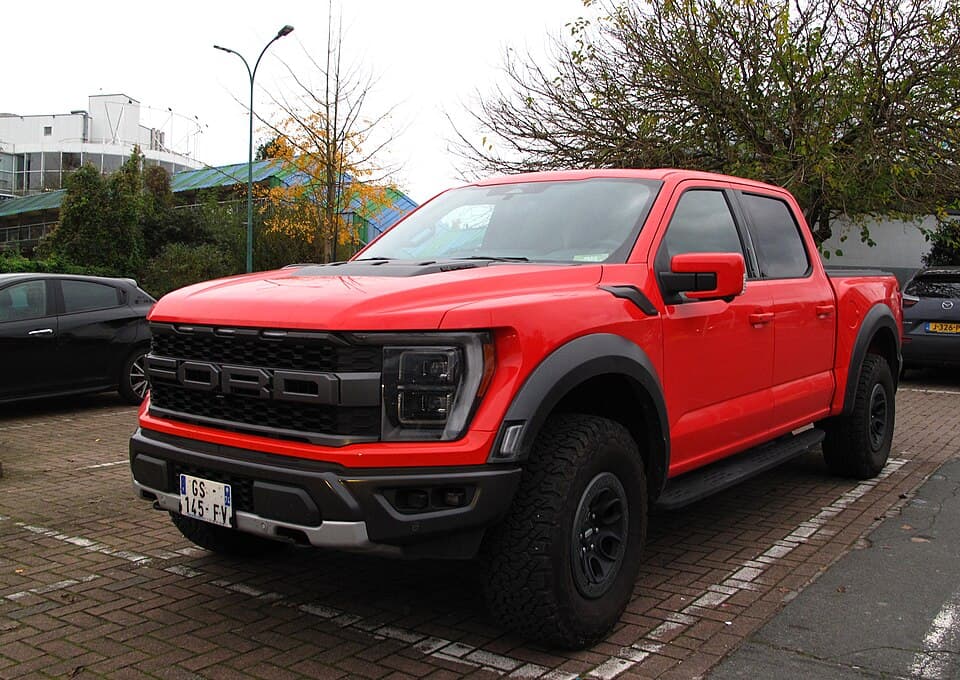
The short answer: if off-road capability is the reason you want a Raptor, the Lightning does not replace it, because Ford does not build a Lightning trim with the Raptor's long-travel suspension, locking front differential, or 37-inch tire package. If what you actually want is a quick, capable F-150 for pavement and light trail work with low running costs, the Lightning is a legitimate cross-shop, and for a lot of buyers it is the better truck.
These two exist to answer different questions. The Raptor is a factory desert truck. The Lightning is an electric work truck with a quick-off-the-line powertrain bolted in. They overlap on paper (both are quick, both are F-150s) and diverge everywhere that matters once you leave pavement.
What each truck actually is
The Gen 2 and Gen 3 Raptor, and the Raptor R, are built around long-travel front and rear suspension, Fox or Live Valve shocks with real wheel travel, a locking rear differential, and on some trims a locking front diff and 37-inch tire package. The powertrain is a turbocharged 3.5L EcoBoost V6 across most Raptor trims, or the supercharged 5.2L V8 in the Raptor R. For the full rundown on what changed generation to generation, see our breakdown of every Raptor engine across every generation, and for the Raptor R specifically, the 5.2 supercharged V8 explained.
The Lightning is sold in Pro, XLT, Lariat, and Platinum trims. None of them get a Raptor-equivalent suspension package. There is no long-travel front end, no Fox or Live Valve shock option, and no locking front differential available on any Lightning trim. The Lightning's front suspension uses the same independent front suspension architecture as other F-150 trims, tuned for on-road ride and payload duty rather than off-road wheel travel, and Ford has never offered a long-travel kit for it. Most Lightning trims come with a locking rear differential, which helps traction on loose surfaces, but the exact standard equipment can shift by model year and trim, so confirm it on the window sticker of the specific truck you're looking at rather than assuming every configuration has it. Either way, a rear locker alone is a long way from a Raptor's locker package plus the suspension travel to actually use it. If you are cross-shopping these two for whoops, rock crawling, or high-speed desert running, stop here: the Lightning is not built for that job, and Ford has never marketed it that way.
The powertrain difference that actually changes how you drive
A gas Raptor builds boost, has a transmission shifting through gears, and has an engine note you can read the whole way through a power band. The Lightning drives nothing like that. There is no shifting at all, and the electric motors put down most of their torque almost immediately from a stop, which feels different from even a quick-spooling turbo engine like the 3.5 EcoBoost, which still has to build boost before it hits peak output. That near-instant low-speed torque is why the Lightning feels so quick in town regardless of where its actual 0-60 number lands. There is no low-range gearing on the Lightning at all, which matters less for straight-line acceleration and more for crawling: a Raptor in low range with a locking diff can walk down a technical grade at idle speed in a way the Lightning's single-speed drive units cannot replicate.
For Raptor horsepower, torque, and 0-60 numbers by generation, we keep those current on our 0-60 numbers page rather than restating them here.
Range, towing, and the number nobody should quote as fixed
This is where the Lightning's story gets complicated. Unloaded, around-town range on the extended-range battery is reasonable for daily use. Tow a trailer or load the bed heavy and that range drops hard. Ford's own testing and independent outlets have both reported significant range loss while towing, but the exact percentage depends on trim, battery pack, trailer weight, speed, and temperature, and we are not going to hand you a single number here that will look wrong in six months when Ford updates the pack or the EPA re-tests. Check current EPA towing range figures and Ford's published data for the specific model year and trim you are looking at before you plan a tow trip around it.
What that means in practice: a Lightning towing a trailer or hauling a loaded bed on a long highway stretch will need to stop and charge more often, and DC fast charging adds real time to a trip that a gas truck does not have. A Raptor's gas range barely changes towing versus not towing, outside of the expected mpg hit; it is just worse mpg, not a trip-planning problem. For the Raptor's real-world fuel numbers, see what Raptor owners actually get for mpg, and for towing capacity by generation, see our towing numbers page.
Where this actually bites: remote trail runs
If your plan involves driving two hours to a trailhead, running a desert wash or a dune field for a day, and driving home, the Lightning adds a variable the Raptor does not have: where is the nearest fast charger, and is it working. Places like Glamis, Johnson Valley, or St. Anthony Sand Dunes are not exactly lined with charging infrastructure, and running the battery down hard in deep sand or technical terrain, then needing enough charge left to get back to a charger, is a real planning problem a gas tank does not create. A jerry can fixes a gas truck's range anxiety for a few dollars. There is no equivalent for an EV truck away from the grid.
Cost comparison: fuel, electricity, and home charging
| Gas Raptor (3.5 EcoBoost) | F-150 Lightning | |
|---|---|---|
| Fuel cost per mile | Higher, varies with gas prices and driving style | Lower per mile on home electricity, but rises fast on DC fast charging |
| Home infrastructure | None needed beyond a driveway | Level 2 home charger install, estimate $1,000-2,500 installed, depending on panel capacity and run length |
| Trip refueling | Any gas station, a few minutes | DC fast charger required for speed, availability varies badly by region |
| Towing cost per mile | Drops with trailer, range barely changes | Drops more, and remaining range drops too |
The home charger install cost is the one buyers underestimate. If your electrical panel needs an upgrade to support a Level 2 charger, that number climbs past the low end fast, and it is a cost the Raptor buyer never has to think about.
Used market pricing: what we actually track
Our own prices data tracks F-150 listings as one blended line across all trims and powertrains, gas and Lightning together, so we cannot pull a clean Lightning-only average out of it without misrepresenting the number. The 2023 model-year F-150 average across all trims in our live listings runs roughly $67,100, but that figure includes everything from a base XL to a loaded Lightning Platinum, so it tells you almost nothing about what a specific used Lightning trim actually costs. What it is useful for: a reference point showing the 2023 Raptor R average of roughly $98,500 sits well above the general F-150 market regardless of powertrain. If you are cross-shopping a used Lightning against a used Raptor, get the VIN-specific price with battery pack and trim called out from the dealer, because the blended average will mislead you either direction.
The honest verdict by use case
Weekend desert runner who actually goes off-road: buy the gas truck. A Gen 2 or Gen 3 Raptor, or a Raptor R if your budget stretches that far, has the suspension travel, the locking diffs, and the tire package the Lightning does not offer in any trim. The Lightning is not a worse choice here because it is slower off the line; it is a worse choice because Ford has not built the off-road hardware into it. If you are deciding between a Raptor and a regular F-150 Tremor for mixed use rather than against a Lightning, that comparison is worth reading separately.
Daily driver who occasionally tows a smaller trailer and never goes off-road: the Lightning is a real contender. Lower running cost per mile on home electricity, strong low-speed torque delivery for in-town driving, and an instant-torque feel that a lot of owners prefer once they get used to it. The towing range hit matters less if your trips are short and you can charge at home before and after, rather than running long highway tow legs between unknown chargers.
Long-distance tower, even occasionally: this is the Lightning's weak spot. If you tow a travel trailer or a car hauler more than a couple hundred miles at a stretch, the range loss while towing combined with charging stop time adds real hours to a trip that a gas Raptor does not add. Gas towing capability by generation, including payload and GCWR context, is covered on our towing numbers page.
The short version
- The Lightning has no Raptor-equivalent off-road trim: no long-travel Fox or Live Valve suspension, no locking front differential, no 37-inch tire package. This is not a true off-road comparison.
- Towing cuts Lightning range significantly, the exact percentage varies by trim and conditions, confirm current EPA and Ford figures for your specific build before planning a tow trip.
- Running costs favor the Lightning for home-charged daily driving and short tows; favor the gas Raptor for long tows, remote trail runs, and any terrain where charging infrastructure does not exist.
- Buy the gas Raptor if off-road capability is the actual reason you want one. Cross-shop the Lightning only if you want a quick, efficient F-150 for pavement and light-duty towing.
Deal alert
Shopping for one? Get new listings first
We sweep US dealer inventory and send you new Raptors matching your search — real listings, real asking prices, no spam.