Ford Raptor Depreciation: What It Actually Loses, By Generation
A Raptor holds value better than most half-tons but the curve is not flat, and buying one year later can save five figures for the same truck. Here is where the money actually goes.
Gear in this article
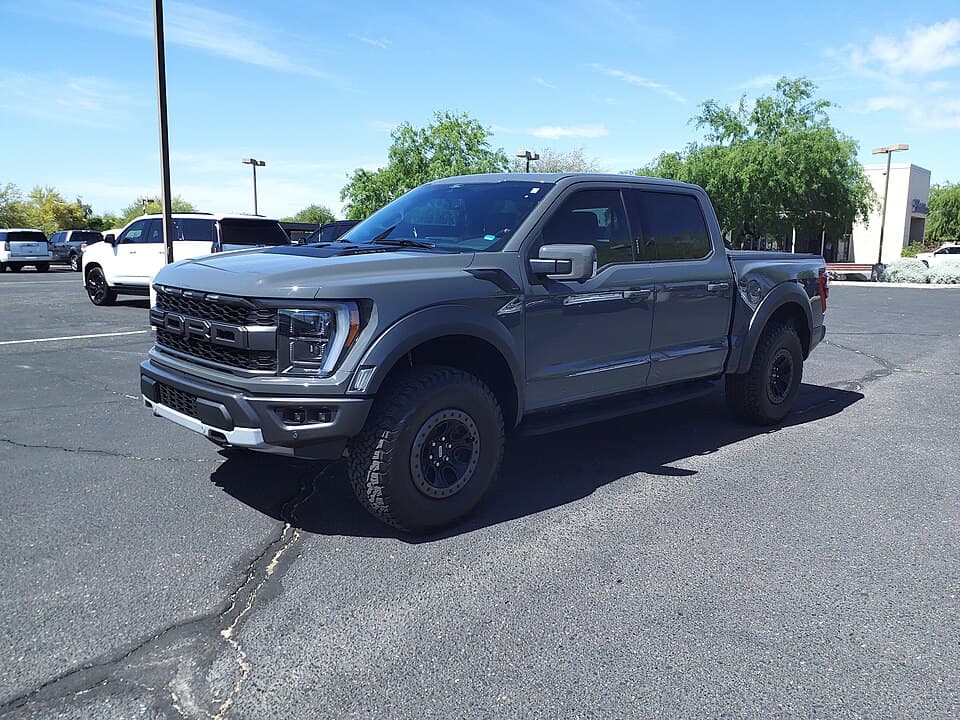
A Ford Raptor loses most of its value in the first 12 to 18 months on the road, and the curve goes close to flat for years after that. That means the cheapest way to own one, dollar for dollar, is to let someone else eat the first-year loss and buy the truck once it is 3-5 years old. On the Raptor R specifically, waiting even a single model year has recently meant a real five-figure difference in what the next owner pays for a functionally identical truck. On the standard Raptor the year-over-year gap is smaller and less consistent, but the shape is the same: buy the truck that already took the hit.
That is the whole shape of it. The rest is where the money actually goes, generation by generation, and why a Raptor R and a clean Gen 1 do not follow the same script as everything else in the lineup.
Why the first year costs the most
Every new truck loses value the moment it is titled, and a loaded Raptor is no exception. But on this platform, how big that first-year loss is depends heavily on which truck you mean.
The clearest example is the Raptor R. The site's live listing averages show 2023 trucks running around $102,300, 2024 around $115,500, 2025 around $127,700, and 2026 around $137,900. Worked backwards, the gap between a 2024 Raptor R and a 2025 was roughly $12,150, and between a 2025 and a 2026 it was roughly $10,240, both comfortably into five-figure territory. Part of that is simple scarcity, not pure depreciation: Raptor R production is low, demand for the supercharged 5.2L V8 stays ahead of supply, and used prices track that rather than the usual new-truck curve. Either way, a buyer willing to take a one-year-old Raptor R over a new one is skipping a genuine five-figure premium.
The standard F-150 Raptor does not move quite that fast. The site's data tracks F-150 pricing across every trim, not Raptor alone, so these numbers are a directional read on the platform rather than a Raptor-exclusive curve, and that caveat applies every time an "f150" figure is used below. With that said, the pattern still lines up with what dealers and owners describe: 2025-model-year F-150s average around $86,000 and 2026 trucks average around $91,900, a gap of roughly $5,900. That is real money, but it is a fraction of what the Raptor R shows over the same one-year jump.
After that first-year drop, the curve bends hard on the standard truck. A 2020-model-year average sits around $46,400 and a 2019 around $42,600, a gap of roughly $3,800 for a full model year, smaller than what the newest trucks are currently showing. That is normal: depreciation on this platform is front-loaded, heaviest in the first one to two years and gradual after that.
The depreciation curve by generation
None of what follows is a precise percentage, and nobody should treat it as one. Market data moves with region, mileage, trim mix, and how many low-mile trucks happen to be listed in a given month. What follows is direction and rough magnitude from the site's own live averages (F-150 pricing across trims unless noted as Raptor R specific), read as a curve, not a formula.
Gen 1 (2010-2014)
Gen 1 covers two different engines, and that matters for depreciation more than most buyers expect. The 2010 SVT Raptor ran Ford's 5.4L Triton V8; the 6.2L V8 arrived starting with the 2011 model year and ran through 2014. The 6.2L trucks are the ones collectors and enthusiasts chase, and that demand shows up in asking prices for clean, low-mile examples.
Gen 1 trucks are old enough now that they have mostly stopped depreciating in the normal sense. A clean, low-mile SVT Raptor, especially a 6.2L, is closer to a collector truck than a used truck, and prices on the best examples have been flat to rising for a few years rather than sliding. A rough, high-mile Gen 1 of either engine still depreciates like any 10-plus-year-old truck, where mechanical condition and mileage matter more than model year at this point. Anyone shopping this generation should read the Gen 1 buying guide before anything else, because on these trucks the inspection outcome moves the price more than the calendar does.
Gen 2 (2017-2020, 3.5L EcoBoost)
This is the generation with the clearest, steadiest curve in the data. Using the site's F-150 averages: 2017 sits around $35,000, 2018 around $39,300, 2019 around $42,600, and 2020 around $46,400. Year to year that works out to roughly $3,300 to $4,300 per model year, a gradual climb rather than a cliff, which tells you Gen 2 depreciation smooths out once you are past the first couple of years. The practical read: a 2018 and a 2019 are close enough in price that condition and mileage should decide which one you buy, not the model year badge. The Gen 2 buying guide covers the inspection points, including the cam phaser rattle that shows up on early trucks and the 10R80 shift quality issues that matter more on higher-mile examples.
Gen 3 (2021-present, 3.5L EcoBoost)
Gen 3 is where the first-year hit shows up most clearly, and the climb between years is not even. Using the site's F-150 averages: 2021 sits around $60,400, 2022 around $63,100 (a gap of roughly $2,700), 2023 around $69,600 (up roughly $6,500), 2024 around $76,300 (up roughly $6,700), and 2025 around $86,000 (up roughly $9,750, the biggest single-year jump in the Gen 3 data). That acceleration cuts both ways: new Gen 3 trucks cost more to begin with, but a one or two-year-old example has already shed a meaningful chunk of that new-truck premium while still carrying most of its factory powertrain warranty. That combination, warranty coverage plus a truck no longer priced like new, is why the 2022-2023 window tends to get recommended as the value buy in this generation. The Gen 3 buying guide walks through the warranty math in more detail.
Raptor R and the Gen 1 exception
The Raptor R does not track the regular F-150 Raptor curve at all. As above, its live averages run from roughly $102,300 in 2023 to $137,900 in 2026, climbing by five-figure amounts nearly every year. Part of that is scarcity: Raptor R production numbers are much lower than the standard Raptor's, and demand keeps ahead of supply even on trucks a year or two old. The same scarcity logic explains why a genuinely clean, low-mile Gen 1, particularly a 6.2L, holds or gains value instead of sliding: there are not many left that have not been off-roaded hard, and the ones that were babied get bought as much for what they are as for what they cost to drive. For what the R actually costs to run once you own it, see what a Raptor R actually costs to own.
Mileage and modifications: what actually moves resale
High mileage costs more on a Raptor than on a plain F-150, because buyers shopping this truck are usually shopping for the off-road hardware, not just the cab and bed, and they assume miles on a Raptor include miles off pavement. A truck with 80,000 easy highway miles tends to sell better than one with 40,000 mixed miles and visible trail rash, even though the odometer says otherwise. There is no clean multiplier to quote here, it is a private-party negotiation every time, but budget on losing more per mile than a comparable F-150 XLT would.
Modifications are close to a wash at best and a discount at worst for most buyers. A set of King 3.0 coilovers or a Whipple supercharger upgrade cost real money to install, but the buyer pool for a heavily built truck is smaller than the buyer pool for a stock one, and most private buyers will not pay dollar for dollar for parts they did not choose. The exception is tasteful, reversible work done with quality parts and documentation: a tune with the stock file kept on hand, a bumper swap that did not touch wiring harnesses, tires that are close to new. Wheel and tire packages like 37s can help if they are still fresh and the buyer wants that look, but do not expect to recoup the labor. If resale is a real consideration, the honest advice is to build less than you want and keep the receipts.
Where the practical buy-point sits
Putting the curves together: the biggest single-year loss on every version of this truck happens between "new" and "one year old," and on the Raptor R that gap alone is currently running into five figures. After that, Gen 2 depreciates gradually and evenly, Gen 3 depreciates unevenly but with a bigger recent jump, and Raptor R and pristine Gen 1 trucks largely sidestep the conversation because demand outruns supply.
For most buyers that means the best value sits on a truck that is 3-5 years old: old enough that the first owner has already paid for the steepest part of the curve, young enough that it is not yet fighting the wear-and-tear discount that hits trucks past 80,000-100,000 miles. Right now that points at the tail end of Gen 2 (2019-2020) or the early Gen 3 trucks (2022-2023), depending on whether the shopper wants a lower price or more warranty coverage left on the clock. The best year to buy in 2026 breaks that comparison down truck for truck, and the cost of ownership numbers fill in what happens to the budget after the purchase price is settled.
The short version
- The steepest depreciation happens in year one; after that the curve flattens noticeably, though the size of that first-year loss varies a lot by truck.
- On the Raptor R, buying one model year older has recently saved five figures; on the standard F-150 Raptor the recent one-year gap runs closer to $5,900 to $9,750 depending on the years compared.
- Gen 2 (2017-2020) depreciates gradually and evenly, roughly $3,300-4,300 per model year in current F-150 averages.
- Gen 3 (2021-present) shows an accelerating gap between model years, which makes a 1-2 year old example a bigger relative discount than it looks at first glance.
- Raptor R and clean Gen 1 trucks, especially 2011-2014 6.2L examples, do not follow the curve; scarcity keeps their values climbing or flat.
- High miles and heavy, non-reversible modifications both cost more at resale than most owners expect; a stock or lightly modified 3-5 year old truck is the value buy right now.
Owner questions
- How much does a Ford Raptor R lose in value between model years?
- Live listing averages show 2023 Raptor R trucks around $102,300, 2024 around $115,500, 2025 around $127,700, and 2026 around $137,900. That works out to roughly $12,150 between 2024 and 2025, and roughly $10,240 between 2025 and 2026 — a genuine five-figure gap for buying just one model year older.
- What's the first-year depreciation hit on a standard F-150 Raptor compared to the Raptor R?
- F-150 averages (across trims) show 2025 trucks around $86,000 and 2026 around $91,900, a gap of roughly $5,900. That's real money but far smaller than the Raptor R, where 2024-to-2025 alone dropped roughly $12,150 — the standard truck's year-over-year loss is a fraction of the R's.
- How does Gen 2 Raptor (2017-2020) depreciation compare across model years?
- Gen 2 depreciates gradually: F-150 averages run about $35,000 for 2017, $39,300 for 2018, $42,600 for 2019, and $46,400 for 2020. That's roughly $3,300 to $4,300 per model year, a steady climb rather than a cliff, meaning a 2018 and 2019 are close enough that condition and mileage should decide which to buy.
- Is the depreciation curve on a Gen 3 Raptor (2021-present) even year to year?
- No, it accelerates. F-150 averages show 2021 around $60,400, 2022 around $63,100 (+$2,700), 2023 around $69,600 (+$6,500), 2024 around $76,300 (+$6,700), and 2025 around $86,000 (+$9,750) — the biggest single-year jump in the Gen 3 data, making the 2022-2023 window a common value pick.
- What's the best age or generation of Raptor to buy for value right now?
- A truck 3-5 years old is the sweet spot, since the first owner already absorbed the steepest early loss but mileage hasn't yet hit the 80,000-100,000 mile wear discount. Right now that points to late Gen 2 (2019-2020) or early Gen 3 (2022-2023), depending on whether you want lower price or more remaining factory warranty.
Deal alert
Shopping for one? Get new listings first
We sweep US dealer inventory and send you new Raptors matching your search — real listings, real asking prices, no spam.