Ford Raptor vs Ram Power Wagon: Desert Truck vs Rock Crawler
The Raptor and Power Wagon both wear an off-road badge, but one is built to fly across whoops and the other to crawl over boulders on a locked solid axle. This comparison breaks down the real mechanical differences, price gap, and use cases to show which truck actually fits your terrain.
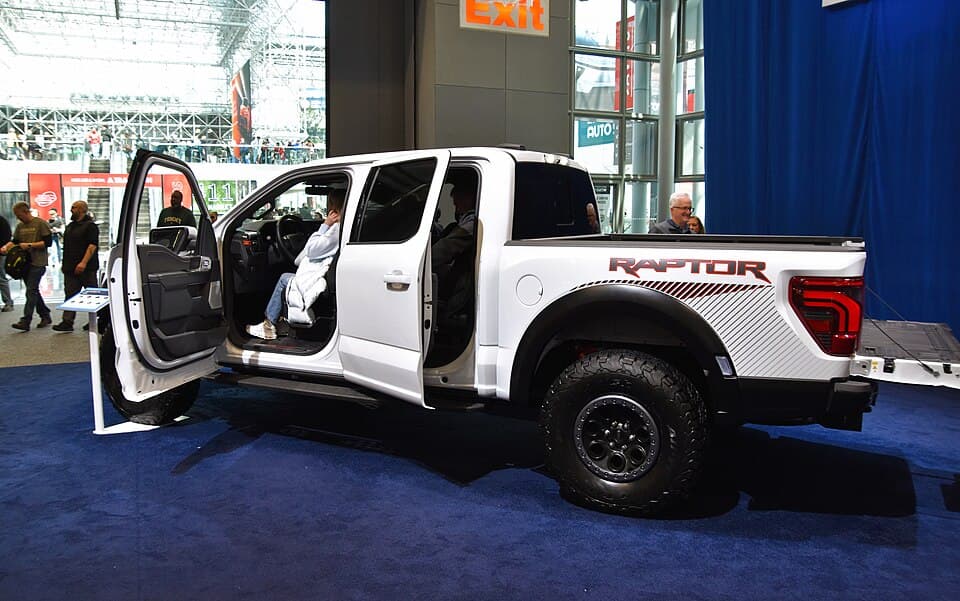
The short answer: if your off-roading means boulders, ledges, and winching up a trail with a name like a horror movie, the Power Wagon wins that fight every time. If it means whoops, washboard, and keeping 70 mph across open desert, the Raptor is the only one of the two built for it. They are not actually competing for the same buyer, and the spec sheets explain why.
Ram built the Power Wagon on the 2500 heavy-duty frame and gave it a solid front axle, factory-locking front and rear differentials, and an electronic front sway-bar disconnect. Ford built the Raptor on the F-150 half-ton platform with independent front suspension (IFS) and some of the longest-travel coilovers sold on a factory truck. Those are two different trucks solving two different problems, and neither one is quietly better at the other's job.
Solid axle versus IFS: what you're actually buying
The Power Wagon's front axle is a solid beam, the same basic layout as a Jeep Wrangler Rubicon or a dedicated rock crawler, just scaled to a three-quarter-ton truck. Both wheels are connected by a single housing, so when the sway bar is disconnected (a button on the dash fires an actuator that unlocks it), the axle can articulate hard, one tire climbing a ledge while the other drops into a hole, without the chassis twisting. Add a factory front locker to the standard rear locker and you have a truck that can put power to a wheel in the air, on a rock shelf, in mud, wherever grip actually exists. That is the entire design brief: low speed, high traction, maximum articulation.
The Raptor's IFS setup is the opposite philosophy. Each front wheel moves independently on its own control arms and coilover, which means the suspension can cycle fast without transmitting shock into the frame or the other wheel. That is what lets a Raptor hit a whoop section or a rough wash at 60-80 mph without the front end getting knocked sideways. The tradeoff is articulation: IFS will never flex a wheel up a vertical ledge the way a solid axle does, and the Raptor has no factory front locker on any generation. Gen 2 and Gen 3 trucks do get an electronic locking rear differential, which helps in sand and mud, but it is not a substitute for a locked front axle when you are stuck nose-up on a rock.
Put them side by side on the same obstacle and the result is not close in either direction. Put a Power Wagon in Glamis and it will struggle to keep up in the whoops with a chassis that was never tuned for high-speed compression cycles. Put a Raptor on a rock ledge that wants front-axle articulation and locked-front traction and it runs out of suspension travel and traction options the Power Wagon still has in reserve.
Platform difference: half-ton versus three-quarter-ton
This is the part people miss when they shop these trucks as a pair. The Power Wagon is a Ram 2500, a heavy-duty platform with the frame, axles, and drivetrain hardware to match. The Raptor, across every generation from the original Gen 1 SVT Raptor through the current Gen 3, rides on the F-150 half-ton chassis. That single fact explains almost every other difference between them: ride quality, unsprung weight, how each truck handles a ledge versus a whoop, and how each one tows and hauls.
Because the two trucks sit on different weight classes, do not lean on remembered payload or towing numbers for either one, they vary by cab configuration, bed length, and model year and the gap has narrowed and widened at different points in each truck's history. For the Raptor specifically, check the real published figures by generation on Ford Raptor towing capacity: every generation, real numbers and Ford Raptor payload: what it can actually carry rather than trusting a number from a comparison article. The short version directionally: a heavy-duty platform like the Power Wagon's generally has more payload and towing margin on paper than a half-ton Raptor, but neither truck is bought primarily to tow, and both give up some of that margin to the suspension and weight that make them good off-road in the first place.
Price gap: confirm it before you believe anyone's number
MSRP on both trucks moves year to year and by trim, so treat any number here as a snapshot, not a fact to build a purchase decision on. Based on this site's own used-market tracking, a 2024 F-150 platform truck (non-Raptor) averages in the low $70,000s, and Raptor pricing specifically climbs well past that once you're in Raptor R territory, where 2024 models are averaging around $111,000 on the used market and 2025s around $125,000. The Power Wagon has historically priced below a Raptor R and closer to a standard Raptor, but Ram's pricing and trim structure change often enough that the only honest move is to pull current MSRP from Ford's and Ram's build-and-price tools the same week you're shopping. Do not shop off a number from this article or any other.
What you can say with confidence: you are not choosing between two prices in the same neighborhood by accident. Both trucks carry a real premium over a work-truck version of the same platform, and both ask you to justify that premium with how you'll actually use the truck.
Daily driving and ride comfort
The Raptor's coilover-tuned IFS rides more like a lifted sports truck than a truck with a locked solid axle up front. On pavement, that difference matters every single day: less unsprung weight, more predictable steering, less of the darting-over-expansion-joints feel that a solid front axle can have at highway speed. The real-world cost of owning one daily, fuel economy, tire wear, maintenance intervals, is covered in detail in daily driving a Raptor: what it actually costs, and most of what applies there is a function of the IFS and the half-ton platform, not something a Power Wagon owner will experience the same way.
The Power Wagon's solid front axle is a known quantity on pavement too, heavy-duty trucks have been shipping that layout for decades, but it will never match an independent front end for on-road composure, and nobody buys a Power Wagon expecting it to. That's the honest tradeoff: the same hardware that makes it a rock crawler also makes it a stiffer, more deliberate daily drive.
Suspension tuning: Raptor's live valve system
Gen 3 Raptors (2024-present) ship with live valve suspension, electronically adjustable Fox dampers that change compression and rebound in real time based on drive mode and what the truck senses underneath it. That system is specifically tuned for desert running, soaking up high-speed whoops and washboard without the driver touching a knob. Nobody has published a controlled side-by-side damping or speed comparison between a live-valve Gen 3 Raptor and a Power Wagon's twin-tube shocks on the same obstacle, so take any claim that one is objectively "smoother" or "faster" over rough ground with real skepticism, that test does not exist in any dataset we trust. What is not in question is that they're tuned for different jobs: the Raptor's system is reading terrain to manage high-speed compression events, while the Power Wagon's hardware (locker, sway-bar disconnect, axle articulation) is built around low-speed traction and flex, not damper response.
Which one actually fits your terrain
| Ram Power Wagon | Ford Raptor | |
|---|---|---|
| Platform | Ram 2500 (heavy-duty) | F-150 (half-ton) |
| Front suspension | Solid axle, factory locker | Independent, long-travel coilover |
| Best at | Rock ledges, articulation, winching | Whoops, washboard, high-speed desert |
| Weak point | High-speed rough terrain | Front-axle articulation, no front locker |
If your typical weekend looks like Rausch Creek or Moab, ledges, rock gardens, and situations where a winch is part of the plan, not a backup plan, the Power Wagon's front locker and axle articulation will get you through obstacles a Raptor cannot touch stock. If your truck is going to spend its weekends at Glamis, Silver Lake, or anywhere whoops and sand define the terrain, the Raptor's long-travel IFS and (on Gen 3) live-valve tuning are doing exactly what they were built to do, and a solid-axle truck will beat itself apart trying to keep pace.
The short version
- The Power Wagon's solid front axle, dual locking differentials, and sway-bar disconnect make it the better rock crawler and winching rig, full stop.
- The Raptor's independent front suspension and long-travel coilovers make it the better high-speed desert truck, and nothing about the Power Wagon's hardware changes that.
- They sit on different platforms, Ram 2500 heavy-duty versus F-150 half-ton, so payload, towing, and price all need to be checked against current numbers before you buy, not pulled from memory or a forum post.
- Buy based on the terrain you actually run, not the badge. A Power Wagon on dune runs and a stock Raptor on rock ledges will both disappoint their owners for the same reason: wrong tool, right truck.
Deal alert
Shopping for one? Get new listings first
We sweep US dealer inventory and send you new Raptors matching your search — real listings, real asking prices, no spam.