Gen 3 Raptor Live Valve Shocks: Failure Symptoms and What They Cost to Fix
Fox's Live Valve suspension is one of the Gen 3 Raptor's headline features, but owners have reported ride-quality glitches and warning lights tied to it. This looks at what actually goes wrong, what repairs run, and whether it should worry a buyer.
Gear in this article
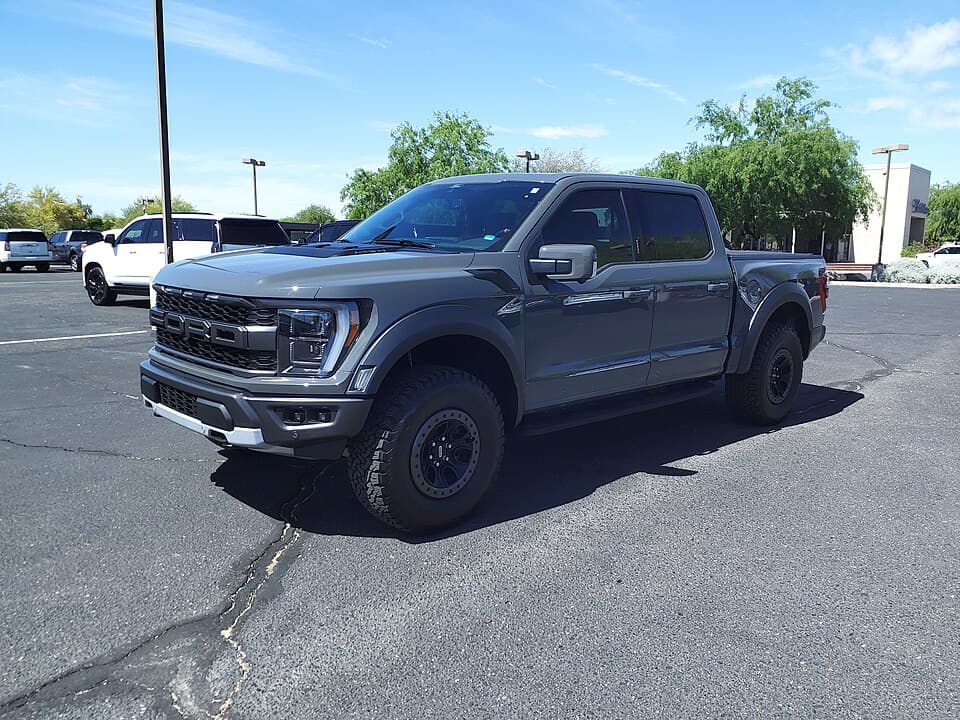
Live Valve failures on a Gen 3 Raptor are, so far, warning-light and ride-mode glitches rather than a documented pattern of shock hardware dying. The most common owner complaint is a suspension fault message on the dash paired with the shocks defaulting to a fixed, harsher damping state. Nobody, including us, has a verified failure rate to quote. Check NHTSA.gov and Ford's TSB database with your own VIN before you assume anything below applies to your build date.
Here is what we can say with confidence, what is still just forum noise, and what it actually costs if yours does it.
What Live Valve does, briefly
The Gen 3 Raptor's Fox Live Valve suspension uses electronically controlled internal valving that adjusts damping stiffness in milliseconds, reading wheel speed, body motion, and steering input to pick a damping rate for each corner independently. It is not a coilover you adjust with a knob. It is a shock body with a solenoid, a wiring harness, and a control module talking to the truck's other sensors in real time. If you want the full mechanism breakdown, that is covered start to finish on the linked explainer. This piece is about what happens when it does not work right, not how it works when it does.
What owners are reporting
Treat everything in this section as anecdotal. These are patterns showing up across Gen 3 owner forums and social groups on the current-generation F-150 Raptor, not a confirmed defect rate from Ford or NHTSA.
- A suspension warning light on the dash, sometimes paired with a message about reduced ride control, sometimes with no message at all beyond an icon.
- The truck getting stuck in a harsh setting, as if it is running in Baja mode at all times regardless of the drive mode selected. Owners describe it as feeling like the dampers went to full stiff and stayed there.
- A soft, wallowy ride that is the opposite problem, where the shocks seem to lose the ability to firm up under load or at speed.
- Intermittent behavior tied to cold starts, where the fault clears itself after the truck warms up or after a key cycle, which makes it maddening to diagnose and even more maddening to reproduce at a dealer.
- A handful of reports of water intrusion at the wiring connector near the shock, which is a plausible failure mode for any electronically actuated shock that lives in the wheel well, but again, nobody has published numbers.
None of this is unique to trucks with big tires or lift kits. It is being reported on stock-height, stock-tire Gen 3 trucks too, which points toward wiring, connectors, or software rather than the shock body itself being overwhelmed. That is our read, not a confirmed root cause.
How a shop diagnoses it
A dealer or an independent shop with access to Ford's diagnostic software (IDS or the newer FDRS platform) will start the same way every time:
- Pull codes. The Live Valve system logs its own fault codes separate from the standard OBD-II codes, and those will point to a specific corner, a specific circuit, or a communication fault with the suspension control module.
- Check the wiring harness and connectors at each shock, looking for chafing, corrosion, or a connector that is not fully seated. This is the cheap fix if it is the actual cause.
- Check for a software update. Ford issues calibration updates for the suspension control module through TSBs from time to time, and a fault that looks like a hardware failure can sometimes be a known software issue that a reflash resolves. A TSB is a documented repair procedure, not a recall and not automatic free money. Ask your service writer directly whether an open TSB applies to your VIN and build date.
- Isolate a bad shock if the wiring and software check out clean. This means testing the solenoid at the shock itself, which usually means pulling it or at minimum disconnecting it and reading actuation independently.
Where shops get this wrong: swapping a shock before ruling out the wiring and the software. A Live Valve shock is expensive enough that a shop billing hourly has an incentive to move fast to the parts-replacement answer instead of chasing a loose connector. If a service advisor jumps straight to "you need a new shock" without showing you a fault code tied specifically to the shock circuit, ask them to show their work.
What it costs
We are not going to hand you a fake number here. Live Valve shock assemblies are dealer-sourced, electronically actuated units, and pricing has moved around since launch as parts supply has caught up with demand. Call your dealer's parts department with your VIN for a real quote, and get a second quote if the first one seems high.
What we can tell you honestly:
- A single Live Valve shock, parts only, has been reported by owners paying out of pocket at roughly $1,500-3,000 per corner depending on whether it is a front or rear unit and which dealer is pricing it. That range comes from scattered owner-reported invoices, not a published Ford price list, and it is wide enough that you should treat it as a starting point for a conversation, not a number to plan a budget around.
- Labor to replace one shock is a straightforward suspension remove-and-replace job, typically 1-2 hours per corner as an estimate, but ask the shop for their actual quoted hours, since this varies by shop and by whether other components need to come off to get at it.
- A wiring or connector repair, if that turns out to be the actual fault, is a fraction of that cost, often under an hour of labor plus a cheap part.
- A software reflash under a TSB is typically a no-charge or low-cost visit if it is diagnosed correctly and the truck is in warranty, since the labor is billed to Ford rather than to you.
The spread between "it was a connector" and "it was a shock" is enormous, which is exactly why the diagnostic order above matters. Do not let anyone quote you a shock replacement before they have shown you a code that isolates it to the shock.
Can you just swap to non-Live-Valve shocks?
Mechanically, aftermarket coilovers exist that would physically bolt to a Gen 3 chassis, but this is not a plug-and-play swap the way it might be on an older truck. The Gen 3's ride height sensors, traction control calibration, and drive mode logic all expect a Live Valve shock reporting back to the control module. Pull that out and put in a passive shock like a King remote-reservoir coilover kit or a Fox 3.0 Internal Bypass Shock, and you are likely to throw persistent fault codes even if the ride itself is fine, because the truck still expects a signal that is no longer there.
Our King vs. Fox vs. ICON whoops test is a genuinely useful reference for how these shocks perform against each other, but it was run on a Gen 2 Raptor, which has a conventional passive-shock suspension with no electronic control module in the loop. None of that test's install process, cost, or fault-handling applies directly to a Gen 3. If you are chasing whoops performance on a Gen 2, that data is solid. If you are trying to decide whether to delete Live Valve on a Gen 3, it does not answer that question, and as of this writing there is no widely documented, clean aftermarket path to do it without tripping the truck's own electronics.
For most Gen 3 owners with a Live Valve complaint, the realistic paths are: fix it under warranty, fix it out of pocket with a genuine Ford part, or live with the fault light while you decide. Ripping the system out is not the practical answer it would be on an older truck.
What Ford's warranty covers
The Gen 3 Raptor's 3.5 EcoBoost is under Ford's standard powertrain warranty (5 years/60,000 miles), and the suspension system, including Live Valve components, falls under Ford's bumper-to-bumper coverage (3 years/36,000 miles) rather than the longer powertrain term. If your truck is within that window and the fault is a manufacturing or component defect, the repair should be covered at no charge, parts and labor.
Outside 36,000 miles, you are looking at an extended service contract if you bought one, or paying out of pocket. This is exactly the scenario an extended warranty is priced around: a low-probability, high-cost electronic component on a truck most owners keep well past three years. Whether that math works in your favor is a real question with real numbers behind it, and we broke it down separately in our piece on whether a Ford Raptor extended warranty is worth it. Read that before you say yes to a dealer's finance office.
Goodwill repairs past warranty are discretionary. Ford does not owe you a free shock at 45,000 miles just because the truck is expensive. Some owners report getting goodwill assistance on early-production trucks; that is a conversation with your dealer's service manager, not a guarantee.
Is this a dealbreaker for a Gen 3 purchase?
No, and here is the actual reasoning rather than just an answer. The severity of a Live Valve fault, based on what is currently being reported, is an annoyance and a warranty visit, not a safety failure or a stranded truck. The suspension defaults to a fixed damping rate rather than failing open or losing control. That is a bad ride for however long it takes to get into a service bay, not a dangerous one.
The likelihood is the part nobody can honestly quantify yet. The Gen 3 F-150 Raptor only reached the market starting with the 2024 model year, so there is not yet a multi-year sample of high-mileage trucks to draw a real failure curve from. What exists right now is scattered forum reports, not a pattern with numbers behind it. For a broader look at pricing and which model year makes the most sense to buy, see our breakdown of the best Raptor year to buy.
If you are shopping a used Gen 3, this is worth a specific pre-purchase check: cycle through drive modes with the truck running, watch for a suspension warning light, and if the truck has been in for any suspension-related service, ask to see the paperwork. Our used Gen 3 buying guide covers the rest of the pre-purchase checklist and the warranty math that goes with it in more depth.
The short version
- Reported Live Valve problems on the Gen 3 Raptor are dashboard warning lights and stuck or harsh ride behavior, documented so far only as owner-forum reports, not a confirmed defect rate.
- Diagnosis should go wiring and software first, shock replacement last. Do not accept a shock quote without a fault code that isolates it to that corner.
- Owner-reported out-of-pocket shock costs run roughly $1,500-3,000 per corner, parts only, but get a current quote with your VIN rather than trusting any number off a forum, including this one.
- It is a real risk to budget for past the 3-year/36,000-mile bumper-to-bumper window, but the severity so far looks like an inconvenience, not a safety issue, and should not by itself keep you out of a Gen 3.
Deal alert
Shopping for one? Get new listings first
We sweep US dealer inventory and send you new Raptors matching your search — real listings, real asking prices, no spam.