Ford Raptor Towing Capacity: Every Generation, Real Numbers
The Gen 3 Raptor tops out at 8,200 lbs, and every generation before it tows less than a regular F-150 for the same reason: suspension, not power. Here is the real number for every Raptor, Raptor R, Ranger Raptor, and Bronco Raptor Ford has built, plus what payload actually looks like once you add armor.
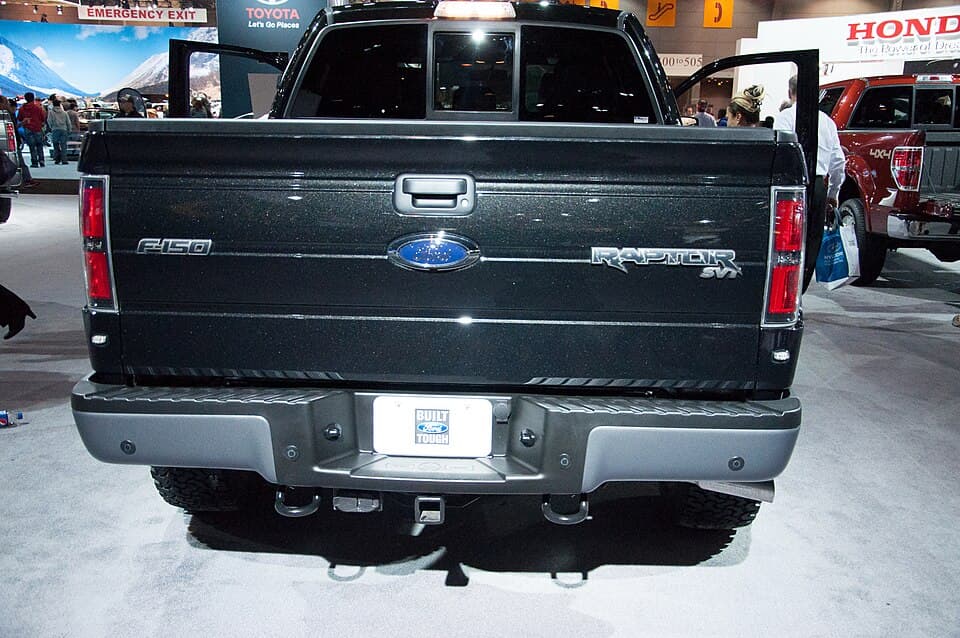
A Gen 3 F-150 Raptor tows up to 8,200 lbs, the highest factory rating of any Raptor except the Raptor R's 8,700 lbs. Gen 2 (2017-2020) tops out at 8,000 lbs, Gen 1 (2010-2014) runs 6,000-8,000 lbs depending on cab, Ranger Raptor sits around 5,500 lbs, and Bronco Raptor is rated at 4,500 lbs. None of these match a regular F-150's 14,000-lb ceiling, and the reason is the suspension, not the engine.
Every generation, side by side
| Generation | Years | Max towing | Max payload | Hitch notes |
|---|---|---|---|---|
| SVT Raptor (Gen 1) | 2010-2014 | 6,000 lbs (SuperCab), 8,000 lbs (SuperCrew, 2011+) | 930-1,030 lbs by cab | 2-in receiver; the 8,000-lb number only applies to the SuperCrew |
| F-150 Raptor (Gen 2) | 2017-2020 | 6,000 lbs (SuperCab), 8,000 lbs (SuperCrew) | 1,000-1,200 lbs by cab | Same SuperCab/SuperCrew split as Gen 1 |
| F-150 Raptor (Gen 3) | 2021-present | 8,200 lbs | Roughly 1,400 lbs, less with 37 Performance Package | SuperCrew only; weight-distributing hitch recommended above ~5,000 lbs |
| Raptor R | 2023-present | 8,700 lbs | Roughly 1,400 lbs | Same frame and hitch as Gen 3; the tow bump is engine output, not chassis rating |
| Ranger Raptor | 2024-present | Roughly 5,500 lbs (US, 3.0L EcoBoost) | Roughly 1,400 lbs | Mid-size frame; check your window sticker, US spec differs from other markets |
| Bronco Raptor | 2022-present | 4,500 lbs with the Raptor Tow Package | Roughly 1,100 lbs | 450-lb tongue weight limit; lowest tow rating of any Raptor-badged vehicle |
These are Ford's advertised max ratings under ideal conditions: driver only, no other cargo, correct hitch and wiring. Your actual number drops the moment you add passengers, gear, or a bed full of recovery equipment. Confirm your specific truck's numbers against the door-jamb sticker or your window sticker before you hook up anything close to the max.
Why a Raptor tows less than a regular F-150
This is the part that trips people up. The Gen 3 Raptor's 3.5L High-Output EcoBoost makes 450 hp and 510 lb-ft, more of both than the 400-hp 3.5L EcoBoost in a Lariat or Platinum F-150 that tows up to 14,000 lbs with the Max Trailer Tow package. More power, less tow rating. The engine was never the limit.
The limit is the suspension. A Raptor runs long-travel Fox shocks and softer spring rates tuned to soak up whoops and G-outs at speed in the desert, not to carry static tongue weight on the highway. Ford's SAE J2807 tow testing accounts for suspension geometry, braking, and handling stability under load, not just how much torque the engine can put down. A softer, longer-travel rear end simply cannot carry and control the same trailer weight as a leaf-sprung or heavy-duty-coil work truck rear end, no matter what the motor is rated for.
Curb weight eats into it too. Skid plates, a wider track, 35-37-in tires, and the Fox dampers themselves add weight the regular F-150 does not carry, and that weight comes straight out of the gap between curb weight and GVWR, which is exactly where payload and tow capacity live.
What sag and trailer behavior actually feel like
Hook a trailer with real tongue weight to a Raptor and the rear end squats noticeably more than it would on a Lariat with the same hitch weight, because the spring rate is softer by design. Headlights aim up, the truck feels light on the front axle under braking, and the ride gets busier at speed instead of smoothing out. This is normal for the suspension tune, not a sign something is broken, but it means you should run a weight-distributing hitch well before you hit the numbers where a regular F-150 owner would still be running weight-carrying only. Budget for the WD hitch as part of the cost of towing anything over roughly half the max rating, not as an optional upgrade.
What owners actually tow
Almost nobody runs a Raptor at its max-rated trailer weight, and the truck is not really built for that use case. What shows up in practice: a single UTV or side-by-side on a tandem trailer, a small enclosed cargo trailer for gear, jet skis, dirt bikes, or a light travel trailer under about 5,000 lbs for weekend trips. Toy haulers and dual-axle car trailers push into territory where the soft rear suspension and the payload math both start working against you, even if the number on the door sticker technically allows it.
Payload gotchas once you start modding
Every pound of aftermarket armor comes straight out of payload, and payload is already the tightest number on the truck. A steel front bumper with a winch, rock sliders, and a rear bumper can add 200-500 lbs depending on what you buy, and that weight is sitting on the truck before you load a single passenger, a cooler, or a hitch. A built Gen 3 Raptor with a full armor package, four adults, and camping gear can be close to its GVWR before a trailer ever gets hooked up. Tongue weight, typically 10-15% of trailer weight, then comes out of whatever payload is left. Weigh your truck loaded the way you actually drive it, at a CAT scale, before you assume the factory payload number still applies to your build.
Raptor R, Ranger Raptor, Bronco Raptor: read the badge, not the family name
The Raptor R has the highest tow rating in the lineup at 8,700 lbs, but that comes from the supercharged 5.2L V8's extra output, not a stronger frame or suspension than the standard Gen 3. Payload is roughly the same as a regular Gen 3 Raptor, so do not assume the R's power translates into more usable capacity for gear and passengers.
The Ranger Raptor is a mid-size truck built on a smaller frame, and its US-spec 3.0L EcoBoost rating lands around 5,500 lbs, well under both the full-size Raptor and under the regular Ranger's own tow package. The Bronco Raptor is lower still at 4,500 lbs with the factory Raptor Tow Package, the lowest number of any Raptor-badged vehicle Ford sells, because it is an SUV chassis wearing off-road hardware, not a truck frame.
When the honest answer is buy a different truck
If you need to regularly tow a travel trailer over roughly 6,000 lbs, a car hauler, or anything that puts you near a Raptor's max rating on a normal basis, a Raptor is the wrong truck regardless of generation. A Lariat or Platinum F-150 with the Max Trailer Tow package rates up to 14,000 lbs on a stiffer, tow-tuned suspension built for exactly that job, and it will tow that trailer with less drama and less wear on parts that are expensive to replace on a Raptor. The Raptor's suspension is a desert-running tool first. Towing near the max is something it can do occasionally, not something it is the right choice to do often.
The short version
- Gen 3 F-150 Raptor tows up to 8,200 lbs; Raptor R tops the lineup at 8,700 lbs.
- Gen 1 and Gen 2 split by cab: 6,000 lbs SuperCab, 8,000 lbs SuperCrew.
- Ranger Raptor is roughly 5,500 lbs and Bronco Raptor is 4,500 lbs, both well under the full-size trucks.
- The lower rating versus a regular F-150 comes from the long-travel suspension tune, not the engine.
- Armor and other mods eat directly into payload; weigh your truck loaded before you trust the factory number.
- If you tow heavy and often, a Max Trailer Tow F-150 or a heavier-duty truck is the honest answer, not a Raptor.
Owner questions
- 1st gen Raptor towing capacity
- The Gen 1 SVT Raptor (2010-2014) tows 6,000 lbs in SuperCab form, or 8,000 lbs in SuperCrew form starting in 2011. It uses a 2-in receiver, and payload runs 930-1,030 lbs depending on cab. The 8,000-lb figure only applies to the SuperCrew, not the SuperCab.
- Ford Raptor towing capacity by year
- Gen 1 (2010-2014): 6,000 lbs SuperCab, 8,000 lbs SuperCrew. Gen 2 (2017-2020): same 6,000/8,000 split. Gen 3 (2021-present): 8,200 lbs, SuperCrew only. Raptor R (2023-present): 8,700 lbs. Ranger Raptor (2024-present): roughly 5,500 lbs. Bronco Raptor (2022-present): 4,500 lbs with the Raptor Tow Package.
- Why does the Ford Raptor tow less than a regular F-150 despite having more power?
- The Gen 3 Raptor's 3.5L High-Output EcoBoost makes 450 hp and 510 lb-ft, more than the 400-hp 3.5L EcoBoost in a Lariat or Platinum that tows up to 14,000 lbs with Max Trailer Tow. The limit is the suspension: long-travel Fox shocks and softer spring rates aren't tuned to carry static tongue weight like a leaf-sprung work-truck rear end.
- How much can a Raptor R tow compared to a standard Gen 3 Raptor?
- The Raptor R tows up to 8,700 lbs, the highest in the lineup, versus 8,200 lbs for the standard Gen 3. That extra capacity comes from the supercharged 5.2L V8's output, not a stronger frame or suspension. Payload is roughly the same as a regular Gen 3, around 1,400 lbs, so power doesn't translate into more usable capacity.
- What's the towing capacity of the Bronco Raptor and Ranger Raptor?
- The Bronco Raptor is rated at 4,500 lbs with the factory Raptor Tow Package and a 450-lb tongue weight limit, the lowest of any Raptor-badged vehicle. The Ranger Raptor, on its mid-size frame with the US-spec 3.0L EcoBoost, lands around 5,500 lbs, well under both the full-size Raptor and the regular Ranger's own tow package.
Deal alert
Shopping for one? Get new listings first
We sweep US dealer inventory and send you new Raptors matching your search — real listings, real asking prices, no spam.