Raptor R Engine: The Supercharged 5.2L V8, Explained
The Predator makes 700 hp in 2023 and 720 hp from 2024 on, and the bump came from calibration and intake work, not new hardware. Here is what the 5.2 supercharged V8 actually shares with the GT500, what it costs to keep fed, and where it wears differently than a stock Raptor.
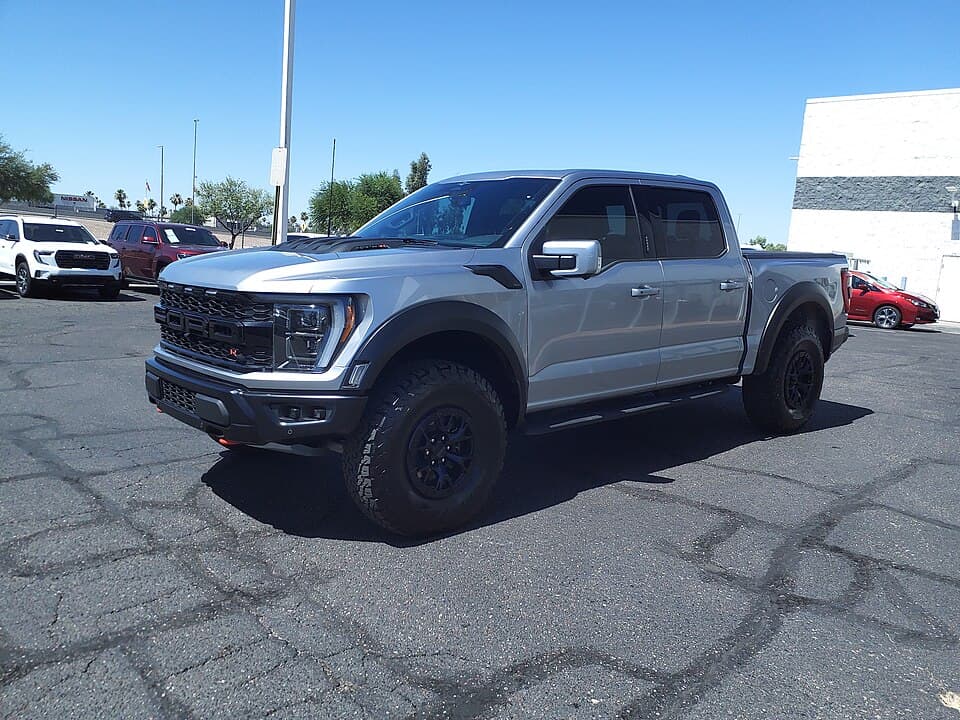
The F-150 Raptor R runs a 5.2L supercharged V8 rated at 700 horsepower and 640 lb-ft for the 2023 model year, and 720 horsepower with the same 640 lb-ft starting in 2024. Ford calls it the Predator, the same engine family that powers the Mustang Shelby GT500, and the extra 20 horsepower for 2024 came from a recalibration and reduced air-intake restriction, not a hardware change. This is the most powerful gas engine Ford has ever put in a pickup, and it changes the ownership math on the F-150 Raptor R in ways worth understanding before you sign for one.
What the Predator actually is
The 5.2L Predator is a supercharged, cross-plane-crank V8 built on Ford's Modular architecture. It is related to the GT500's engine but not identical to it. Ford's Special Vehicle Team retuned the Raptor R version for low-end torque and truck duty rather than high-rpm track power, which is the opposite problem the GT500 team was solving. The two engines share their basic architecture and a lot of engineering DNA, but the calibration, the supercharger pulley, the oil pan, the exhaust manifolds, and the air intake are all specific to the truck. Do not assume a part number carries over from the Mustang without checking it against the Raptor R's own parts catalog first.
One detail worth knowing if you have read Mustang engine threads: the Predator uses a cross-plane crankshaft, not the flat-plane crank in the naturally aspirated Voodoo engine from the old GT350. The flat-plane, high-revving character people associate with that generation of Shelby engines is a different engine entirely. The Predator is a boosted, torque-focused V8 by design, which is exactly what a 6,000-plus lb truck needs more of than top-end rpm.
The 2.65L Eaton TVS supercharger
Power comes from a 2.65-liter Eaton TVS (Twin Vortices Series) roots-type supercharger sitting on top of the engine, feeding boosted air into both banks. It is the same basic supercharger family Ford has used across its supercharged V8s for years, sized up for this application. The blower is the reason the Predator makes strong torque low in the rpm range instead of needing to spin hard to make power, which is the trait that actually matters for towing, launching in sand, and pulling a 37" tire out of a wheel-spin situation without waiting on boost.
700 hp in 2023, 720 hp from 2024: what changed
Ford launched the Raptor R for the 2023 model year at 700 hp and 640 lb-ft, enough to beat the Ram TRX's Hellcat-based 702-hp figure that had held the segment record. For 2024, Ford bumped the rating to 720 hp with torque unchanged at 640 lb-ft, which puts the R at a tested 0-60 of 3.6-3.9 seconds. Ford's own explanation is a new engine calibration paired with reduced air-inlet losses, changes to how air gets from outside the truck to the filter box, not a bigger supercharger, a different pulley ratio, or new internals. If you own a 2023 truck, there is no factory-supported way to get the 2024 rating without the updated calibration and the intake-path changes Ford made, and we would not assume a generic tuner file replicates it safely. Confirm any claimed power gain against a dyno chart, not a spec sheet.
Raptor R spec sheet
| Spec | 2023 Raptor R | 2024+ Raptor R |
|---|---|---|
| Engine | 5.2L supercharged V8 (Predator) | 5.2L supercharged V8 (Predator) |
| Supercharger | 2.65L Eaton TVS | 2.65L Eaton TVS |
| Horsepower | 700 hp | 720 hp |
| Torque | 640 lb-ft | 640 lb-ft |
| Transmission | 10R80 10-speed automatic | 10R80 10-speed automatic |
| Fuel requirement | Premium (91 octane minimum recommended) | Premium (91 octane minimum recommended) |
| Real-world fuel economy | Roughly 10-13 mpg mixed | Roughly 10-13 mpg mixed |
Torque figures and the fuel-requirement note come from Ford's published specs; treat the mpg row as an owner-reported estimate, not an EPA number, since it varies with driving style and terrain.
The 10R80 behind it
The Raptor R uses the same 10R80 10-speed automatic found across the rest of the F-150 Raptor lineup, not a unique transmission built for the extra power. Ford strengthened internal components for the higher torque load, but the case, gear ratios, and shift logic are shared with the Gen 3 Raptor's 3.5L EcoBoost application. If you are cross-shopping and already know the 10R80's harsh 1-2 shift and torque converter shudder complaints from the EcoBoost trucks, know that the same transmission family, not a Raptor R exclusive part, is behind the supercharged V8 too.
Real-world fuel economy and fuel requirement
The Predator requires premium fuel, and Ford's recommendation is 91 octane or higher. Running regular is not advisable on a supercharged engine tuned around premium's knock resistance; expect the PCM to pull timing and lose power if you do it regularly. On real-world mileage, owners report roughly 10-13 mpg in mixed driving, worse if you spend meaningful time in sand or off-throttle wheelspin, and somewhat better on a highway-heavy tank. That is a wide range and it is meant to be, since terrain and driving style move it more than almost anything else about this truck. Our full cost-of-ownership breakdown walks through what that fuel bill actually adds up to over five years next to a standard Gen 3 Raptor.
What actually costs more to maintain
The Predator does not have a published list of failure modes unique to it the way the 3.5 EcoBoost does, and it is too new and too low-volume for owners to have built the kind of failure history the EcoBoost has after a decade on the road. What owners do report consistently is wear-item stress from running a heavier, more powerful truck harder:
- Supercharger belt chirp. A light chirp or squeal from the supercharger belt under load or on a cold start is a reported nuisance on some trucks. It is generally a belt tension or idler pulley issue rather than a supercharger failure, and it is worth having checked before it turns into a slipping belt. Budget for a belt and pulley inspection if you hear it, and do not assume it will fix itself.
- Heat soak on repeated hard pulls. Stacking multiple hard runs back to back, the kind of driving this truck invites in the desert, can heat-soak the intercooler and supercharger enough to see a temporary power pull as the PCM protects the engine. This is normal thermal management, not a defect, but it means the truck is not built to run flat-out lap after lap without a cooldown.
- Driveline stress on 37s. The Raptor R already rides on 37" tires from the factory, and 700-plus hp through a heavy tire and driveline shows up as accelerated wear on U-joints, half-shafts, and the front differential compared to a lighter-tired truck making less power. If you are stepping up tire size further, budget for driveline inspections more often than you would on a standard Raptor.
- Brakes work harder. A truck this heavy making this much power stops harder and more often than a Gen 3 EcoBoost Raptor driven the same way, and front pads wear faster as a result.
None of this is unique to a poorly built engine. It is the cost of running a supercharged V8 the way this truck is built to be run, and it tracks with what we found modeling the Raptor R's full ownership costs against a Gen 3 Raptor.
Maintenance cost versus the 3.5 EcoBoost
The 5.2 Predator and the 3.5L EcoBoost run on the same Ford-specified full synthetic oil and the same oil-life-monitor-based interval; there is no published difference in oil service scheduling between them, so confirm the exact grade and interval in the current Ford workshop manual for your model year rather than assuming. Where the two engines diverge is everything downstream of the engine itself: tires, brakes, and fuel, all of which run higher on the Raptor R because the truck is heavier, more powerful, and rides on a larger tire from the factory. The Predator does not carry the EcoBoost's well-documented cam phaser and turbo wastegate rattle problems, because it is a naturally boosted, supercharged design without the same phaser and turbo hardware at issue on the EcoBoost. That is a genuine advantage for the Raptor R, even though its other running costs land higher overall.
Is the extra power worth it
That is a cost-and-use question more than an engine question, and it depends on what you are cross-shopping. If you are deciding between a standard Raptor and stepping up to the R, our Raptor vs. Raptor R breakdown covers the tradeoff on price, capability, and daily livability. If you are weighing the Raptor R against the Ram TRX or the Chevy/GMC-based Rho, our honest verdict on all three puts the engines and the ownership costs side by side. And if you already own an R and want the exhaust note to match the power figure, the MBRP cat-back exhaust built for the Raptor R is one of the more commonly installed mods on this specific truck.
The short version
- The 5.2L supercharged Predator V8 makes 700 hp/640 lb-ft in the 2023 Raptor R and 720 hp/640 lb-ft from 2024 on, the gain coming from calibration and intake-airflow changes, not new hardware.
- It shares its architecture with the Mustang Shelby GT500's engine but runs a different pulley, calibration, oil pan, exhaust manifolds, and intake tuned for truck duty and low-end torque.
- The 2.65L Eaton TVS supercharger and the 10R80 10-speed automatic are the same core hardware families used elsewhere in Ford's lineup, not Raptor R exclusives.
- Expect roughly 10-13 mpg on premium fuel, plus faster brake, tire, and driveline wear than a standard Gen 3 Raptor, and keep an ear out for supercharger belt chirp.
Owner questions
- Raptor R horsepower specs
- The 2023 F-150 Raptor R's 5.2L supercharged Predator V8 is rated at 700 horsepower and 640 lb-ft of torque. For 2024 and later, Ford raised output to 720 horsepower while torque stayed unchanged at 640 lb-ft, thanks to a new engine calibration and reduced air-intake restriction rather than new hardware.
- How much horsepower does a Raptor R have?
- It depends on the model year: the 2023 Raptor R makes 700 horsepower and 640 lb-ft of torque, while the 2024+ Raptor R makes 720 horsepower with the same 640 lb-ft. The extra 20 hp came from recalibration and reduced air-intake restriction, not a supercharger or hardware change.
- What supercharger does the Raptor R use?
- The Raptor R's Predator V8 uses a 2.65-liter Eaton TVS (Twin Vortices Series) roots-type supercharger sitting atop the engine feeding both banks. It's the same basic supercharger family Ford has used across its supercharged V8s for years, sized for this application, and it's why the engine makes strong torque low in the rpm range.
- What real-world gas mileage does the Raptor R get?
- Owners report roughly 10-13 mpg in mixed driving, with figures worse when spending meaningful time in sand or off-throttle wheelspin, and somewhat better on a highway-heavy tank. The Predator requires premium fuel, with Ford recommending 91 octane or higher; running regular isn't advisable since the PCM may pull timing and lose power.
- Is the Raptor R engine related to the Shelby GT500?
- Yes, the 5.2L Predator shares its basic architecture with the Mustang Shelby GT500's engine, both using a cross-plane-crank design (not the flat-plane Voodoo from the old GT350). However, the calibration, supercharger pulley, oil pan, exhaust manifolds, and air intake are all specific to the truck, retuned for low-end torque rather than high-rpm track power.
Deal alert
Shopping for one? Get new listings first
We sweep US dealer inventory and send you new Raptors matching your search — real listings, real asking prices, no spam.