Gen 1 Raptor Common Problems (2010-2014): The Full List
Comprehensive list of known issues for the first-generation Ford Raptor (2010-2014), including symptoms, affected years, and repair costs.
Gear in this article
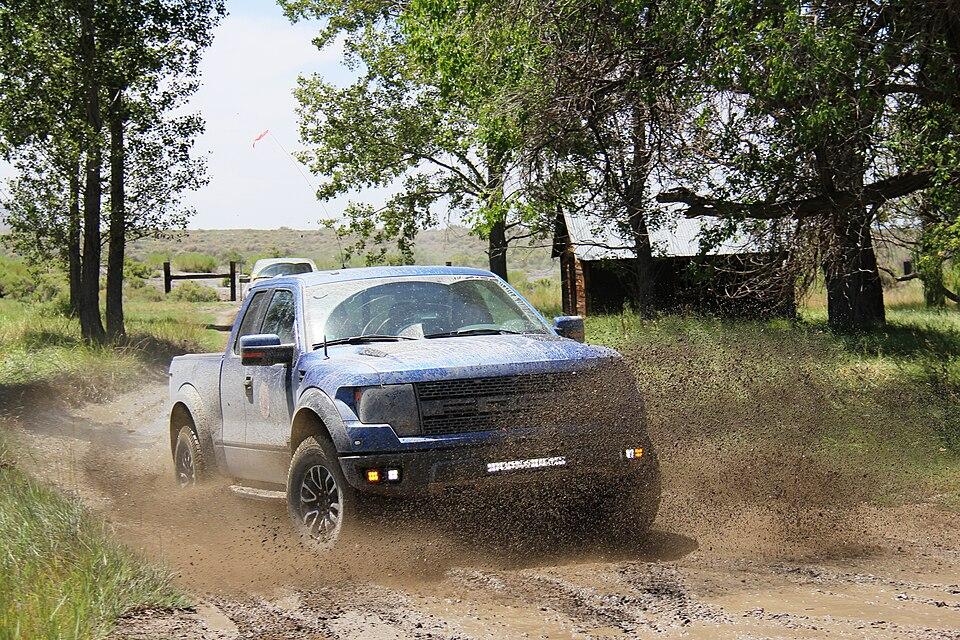
The 5.4L 2010 Raptor and the 6.2L 2010-2014 Raptor fail differently, and the 6R80 transmission, the IWE (integrated wheel end, the vacuum actuator that locks the front hubs), the rear leaf springs, and the frame itself are the parts most likely to cost you real money. None of this is exotic. It is a 15-year-old truck with known wear points, and most of them are diagnosable before you buy or cheap to fix once you know what you are looking at.
This is the reference list for the first-generation Raptor, model years 2010 through 2014, built on the SVT platform before Ford moved to the aluminum-body F-150 that underpinned the Gen 2 Raptor starting in 2017. If you are cross-shopping, start with the gen-1 hub page for specs and model-year changes, and if you are deciding between the two 2010 engines, read Gen 1 Raptor: 5.4 vs 6.2, and Which One to Actually Buy before you look at anything else on this list.
Spark plug issues on the 2010 5.4L
The 2010 Raptor could be ordered with either the 5.4L Triton V8 or the 6.2L Boss V8, depending on build date, and only the 5.4L carries the spark plug risk this site tracks closely. Ford's 5.4L Triton belongs to a modular V8 family with a widely reported history of spark plug problems across other Ford and Lincoln applications. Whether the 6.2L Boss shares any of that exposure is unsettled, and we are not going to claim it does or does not here. If you own or are shopping a 2010 5.4L truck, read Gen 1 Raptor Spark Plug Blowout: What It Is and What It Costs to Fix before you touch the plugs or buy the truck. A known service history on this specific engine tells you almost everything you need to know about your exposure.
6.2L cold-start rattle
Symptom: a five to ten second diesel-like rattle from the front of the engine on a stone-cold start that goes away once the engine warms up.
Affected years: 2010-2014 on 6.2L-equipped trucks specifically. Early-build 2010 trucks with the 5.4L are not part of this issue; see the 5.4 vs 6.2 guide above for how to tell which engine a given 2010 truck actually has. Owners report the rattle more often on trucks past roughly 90,000 miles, though nobody has published failure-rate data worth quoting, and this site's own Gen 1 hub data lists it the same way: owner-reported, not lab-confirmed.
We are not going to assign this to a specific internal component beyond calling it a cold-cranking noise at the front of the engine, because that is not a settled question. What we can tell you is how to check for it: start the truck from dead cold yourself, first thing in the morning, before a seller or a dealer has a chance to warm it up. If you hear the rattle, get a shop to scope it before you buy. If it is already present and getting louder season over season, budget for a teardown; shops quote this kind of top-end noise work at roughly $2,200-4,000, and that number swings hard depending on what they find once the front cover is off.
Frame and rear-quarter rust in salt states
Symptom: scale on the frame rails near the rear shock mounts, and bubbling paint above the rear wheel arches.
Affected years: 2010-2014, salt-belt trucks specifically. A Gen 1 that spent its life in Arizona or Texas is a different inspection than one that wintered in Michigan or Ontario.
Fix path depends on severity. Surface scale gets media blasted, treated, and coated; budget roughly $800-1,500. Actual perforation at the rear shock mounts or structural frame sections is a bodyshop job, and the price climbs past $2,500 fast, sometimes to the point where the truck is not worth saving. Walk the frame rails with a flashlight and a screwdriver before you pay for anything. This is covered in depth in Ford Raptor Frame Rust: What to Check Before You Buy.
IWE actuator grinding on 4WD engage
Symptom: grinding or growling from the front hubs when shifting into 4WD, or a sudden bark under throttle in cold, wet weather.
Affected years: 2010-2014, all of them. This is not a build-date issue, it is wear on a vacuum system that every Gen 1 has.
The IWE uses engine vacuum to pull the front hub actuators in and out of engagement. Lines crack, the check valve fails, and the actuator itself wears. Full walkthrough with cost breakdown is at Why Your IWE Is Grinding and What It Costs to Fix. Parts alone run roughly $150-250 if you do it yourself with basic hand tools, depending on whether you buy OE or aftermarket; a shop doing both sides, lines, and the solenoid will land somewhere around $700-1,100, and that range depends heavily on local labor rates, so call around.
Exhaust manifold stud failure
Symptom: a tick at cold start that fades once the manifold heats up and seals, getting louder each winter until a stud snaps outright.
Affected years: 2010-2014.
This is a known weak point on the 5.4L and 6.2L both, and it is one of those jobs where the labor is the expense, not the parts. Broken studs that snap off flush with the head need to be extracted carefully, sometimes with a trip to a machine shop if a stud breaks below the surface. Budget $600-1,600, with the range driven mostly by how clean the extraction goes and whether a shop needs to work around the firewall side of the manifold.
Rear leaf sag and axle wrap
Symptom: the rear sits low, the truck squats hard under throttle, and hard impacts send a shudder through the floor. Axle wrap is the rear axle twisting under torque until the leaf springs let go and snap it back.
Affected years: 2010-2014, worse on trucks with desert mileage or heavy bed loads.
The factory leaf pack sags with age and use, and once it does, axle wrap gets worse under hard acceleration or in whoops. A common fix is an add-a-leaf kit from a spring shop, such as the Deaver add-a-leaf pack, paired with new shackles and U-bolts. Installed cost runs roughly $650-1,400 depending on the shop and whether the shackles and bushings need replacing too. Measure ride height at both rear fenders before you buy a used truck; uneven sag on one side usually means a spring has set or a shackle bushing has failed, not just general wear.
6R80 torque converter shudder and harsh 1-2 shifts
Symptom: a steady vibration at 40 to 50 mph under light throttle, and a hard clunk shifting into second gear when the transmission is cold.
Affected years: 2010-2014. The 6R80 is a six-speed automatic used across a lot of Ford's lineup in this era, and Gen 1 Raptors see similar converter and shift-quality complaints as other 6R80 applications.
Start cheap: a full fluid exchange and a valve body inspection, budget roughly $400 for fluid and labor. If the shudder persists after that, the torque converter itself is likely worn and needs replacement, which runs roughly $1,800-2,600 depending on the shop and whether other internals need attention while it is apart. Full detail on symptoms and the fix order is at Ford Raptor 6R80 Transmission Problems: What Gen 1 Owners Actually Run Into.
Fox 2.5 shock seal weep and heat fade
Symptom: oil film down the shock body, a rear end that packs up in repeated whoops, and a truck that feels wooden after ten minutes of hard dirt running.
Typical onset: owners commonly report it in the 40,000-60,000 mile range, though this varies a lot with how the truck has actually been used.
The factory Fox 2.5 shocks are good units but they are wear items, not lifetime parts, especially on a truck that saw real off-road use. A rebuild with new seals, oil, and a nitrogen charge runs roughly $700-1,200 for the set. If you run the truck aggressively, this is also the point to consider a revalve while everything is apart, or stepping up to a bypass shock if you are planning bigger terrain; see the comparison in King 3.0 vs Fox 3.0 vs ICON 3.0 VS CDCV: The Whoops Test for how the aftermarket options stack up, though that test was run on Gen 2 trucks and shock mounting differs by generation. Full replacement with a quality aftermarket set runs $2,400 and up depending on the kit.
MyFord Touch freeze and ghost touch
Symptom: a black screen on startup, unresponsive taps, or the screen registering touches nobody made.
MyFord Touch was optional across parts of the Gen 1 run, and exactly which model years and trims got it depends on build date and options list, not model year alone, so check your truck's actual infotainment system rather than assume. Owners report the freeze and ghost-touch symptoms most on later-build trucks running MyFord Touch, loosely associated with 2013-2014, but treat that as a correlation, not a hard cutoff.
Start with a software update to the latest APIM (the module that runs the infotainment system) software, which costs nothing but a dealer visit or a flash at an independent shop. If the glitching persists after the update, the APIM module itself needs replacement; budget roughly $600-900.
Front wheel bearing wear on bigger tires
Symptom: a speed-dependent hum that changes pitch when you sway the truck side to side, worse on tires larger than 35 inches.
Affected years: 2010-2014, accelerated by desert use and anyone running 37s.
Replace hub assemblies in pairs, not one at a time; budget roughly $450-900 per axle. If you are planning a tire upgrade on a Gen 1, read How Much Does It Cost to Put 37s on a Gen 2 Raptor? for a sense of what the install and alignment side costs, though wheel bearing wear rates will differ by generation and mileage.
What to check before you pay for a used Gen 1
- Start it from stone cold yourself. The cold-start rattle only shows up in the first ten seconds, and a seller who pre-warms the truck is hiding exactly that.
- Confirm 6.2L versus 5.4L on any 2010 model. The badge does not tell you; check the intake manifold or ask for the window sticker. The documented spark plug history is tied to the 5.4L; whether the 6.2L shares it is unsettled.
- Engage 4WD at walking pace in a parking lot, full lock. IWE grind shows up immediately at low speed.
- Measure rear ride height at both fenders. Uneven sag means tired leaves, and possibly a wrapped axle already.
- Run a hand down every shock body and shaft. Oil film means seals are going. Pitting on the shaft means they will fail again soon even after a rebuild.
- Pull the front skid and inspect the diff and control arm bushings. Torn bushings and a weeping front diff mean the truck has actually been run hard, which is not automatically bad, but you need to price accordingly.
- Get under the bed and inspect the frame at the rear shock mounts. Salt-state trucks scale here first; trucks that have been jumped hard crack here.
- Ask for spark plug and coolant service records, especially on a 5.4L. A 15-year-old truck with no service history is a project wearing clean paint.
- Check the bed floor and cab corners for impact damage. These trucks got run hard in the desert. A rippled bed floor means repeated hard landings, not a single bad day.
For the full walkthrough with photos and a printable checklist, see Buying a Used Gen 1 Raptor: The Full Inspection Checklist.
What to fix before you add anything
If you just bought one of these trucks, spend money here first, before wheels, tires, or a lift:
- IWE actuator and check-valve kit
- Shock rebuild or replacement if seals are weeping
- Fresh fluids front to back, including the 6R80
Budget roughly $900-2,000 total depending on what the previous owner already addressed. None of this is exciting, all of it is what keeps the truck from becoming a bigger bill in six months.
The short version
The 2010 5.4L carries a real spark plug risk tied to Ford's broader modular V8 history, though exactly how that risk compares across applications is not something anyone has published hard numbers on. The 6.2L's cold-start rattle is real and owner-reported but not confirmed to a specific mechanical cause. The IWE, the 6R80, the rear leaf springs, and the frame on salt-belt trucks are the next things that will cost you money on any 2010-2014 Raptor, and most of them are checkable in a 20-minute parking-lot inspection before you sign anything. Budget a few thousand dollars in deferred maintenance on top of the purchase price for a truck with unknown service history, and walk away from anything with active frame rot at the rear shock mounts.
Deal alert
Shopping for one? Get new listings first
We sweep US dealer inventory and send you new Raptors matching your search — real listings, real asking prices, no spam.