How Much Does It Cost to Put 37s on a Gen 2 Raptor?
Fitment without a lift is possible but tight, and the real number depends on whether you keep the stock wheel or go wider. We priced four builds from a trim-and-tune budget setup to a full fender and suspension package.
Gear in this article
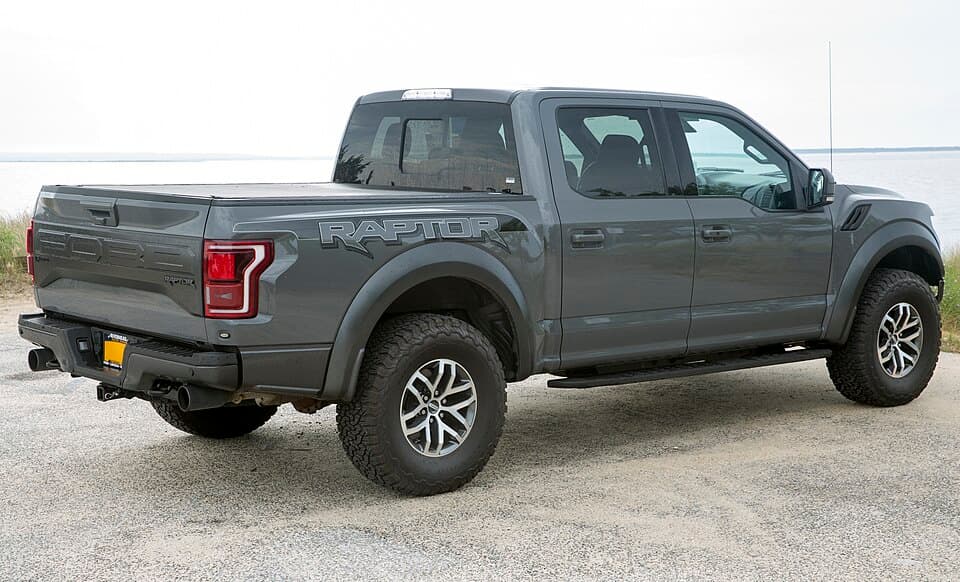
The realistic all-in number for putting 37s on a 2017-2020 Gen 2 F-150 Raptor runs from about $2,600 on the low end (stock wheels, tires only, no suspension work) to $15,000 or more if you are adding coilovers, control arms, and real fender trimming to make room. Most owners land in the $5,000-9,000 range once tires, wheels, mounting, alignment, and a tune are all accounted for. The fitment itself is doable without a lift, but it is tight, and whether you keep the stock wheel or go wider changes the bill more than any other single decision.
Why fitment is tight without a lift
The stock tire on a Gen 2 Raptor is a 315/70R17, which measures out to 34.6 inches, so a 37-inch tire is only about 2.4 inches taller, or 1.2 inches more radius per corner. That sounds small. It is not small at full steering lock.
The rub point owners actually describe is the front tire chewing into the inner fender liner, worst in reverse, when the wheel is turned to full lock and the tire swings forward and outward at the same time it compresses. A handful of owners also report light contact with the front lower control arm or the plastic fender liner at full compression on a hard landing, though that shows up more on trucks that also carry a wider wheel.
Trimming means one of two things depending on how far you push it: a plastic inner fender liner trim, which most shops do in under an hour, or a real cut into the sheet metal fender lip on trucks running a wider wheel and more aggressive backspacing. Keep the tire close to stock width and you are usually looking at liner trim only. Push the wheel out for more aggressive fitment and you are looking at a cut fender or a flare.
Wheel offset and backspacing, and why going wider changes the cost
Backspacing is the distance from the wheel's mounting surface to the back edge of the rim. More backspacing tucks the tire in toward the truck; less backspacing (or more positive offset difference from stock) pushes it out toward the fender lip.
Keep the stock 17-inch wheel and mount a 37 in a similar section width to the factory KO2, and you are not fighting a width problem, only a diameter problem. That is why Build 1 below works on stock wheels at all.
Go wider for more sidewall support or a beadlock, like a Method 305 NV or a Method 701 beadlock, and the tire moves outboard. That clears the front upper control arm and reduces the reverse-lock rub, but it puts the tread closer to the fender lip and increases the odds you are trimming sheet metal instead of plastic. Wider wheels also mean new TPMS sensors more often, since the stock sensors do not always transfer cleanly to a different bead profile, and they change the alignment shop's job slightly because the scrub radius shifts.
The four builds, priced line by line
| Build | Tires and wheels | Suspension and trim | All-in range |
|---|---|---|---|
| 1. Trim-and-tune budget | Stock wheels, new tires | Liner trim, no tune | $2,600 - 4,000 |
| 2. Tires, wheels, tune | New wheels and tires | Liner trim, tune | $4,900 - 7,000 |
| 3. Suspension-supported | New wheels and tires | Rear leaf pack, bump stops, tune | $7,000 - 10,500 |
| 4. Full fender and suspension | New wheels and tires | Coilovers, control arms, fender work, tune | $11,000 - 16,500 |
Build 1: trim-and-tune, stock wheels. A set of BFGoodrich KO2 37s mounted on the factory 17-inch wheels runs about $1,950-2,550 for the set of five. Add mount and balance (budget $150-300), a TPMS relearn or a couple of replacement sensors ($50-200), an alignment ($150-250), and liner trim (a shop typically bills this at $150-400, or you do it yourself with a utility knife and a Sunday afternoon). No suspension work, no tune. That lands around $2,600-4,000, and it is the cheapest real path to 37s on this truck.
Build 2: tires, wheels, and a tune. Swap to BFGoodrich KO3 37s, which have a stiffer sidewall aimed at higher-speed off-road use, and a set of Method 305 NV wheels. Tires run $2,050-2,650, wheels $1,500-2,100. Mounting, balancing, TPMS, and alignment together run $450-800. Trim work is still likely even with the new wheel, another $150-400. A 93-octane tune at $700-1,000 handles the speedometer recalibration and picks up 60-90 hp on the 3.5 EcoBoost while it is at it. Total: roughly $4,900-7,000.
Build 3: tires, wheels, and rear suspension support. Same tires and wheels as Build 2, plus the rear end catching up to the added rotating mass and ride height change. A Deaver add-a-leaf pack runs $480-780 in parts, and installed with new U-bolts and shackles most shops quote $900-1,600. Add Foutz progressive bump stops at $380-550 installed, since 37s reduce the buffer to the bump stop and this is cheap insurance against a harsh bottom-out. Tune stays the same $700-1,000. Total: $7,000-10,500.
Build 4: full fender and suspension package. This is the build for someone planning King 3.0s later or already running long-travel. Tires and wheels stay similar to Build 3. Swap in Icon 2.5 VS coilovers at $1,900-2,700 installed, or step up to King 2.5 remote reservoir coilovers at $3,200-4,600 if you are also thinking about desert speed. Add Camburg uniball upper control arms at $1,350-1,850 once the coilover is already extending travel past what the stock rubber-bushed arm handles cleanly. Rear leaf pack and bump stops carry over from Build 3. Real fender trimming or a flare kit to clear the wider stance is genuinely a shop-by-shop labor quote, budget $500-1,500 for the cutting and finishing work depending on how clean you want it. All-in: $11,000-16,500.
What this does to your speedometer, gear ratio, and warranty status
The Gen 2 runs 4.10 gears regardless of trim, and a 37 does not usually justify a regear on this truck the way it might on a Gen 1 with a smaller factory tire. What it does need is a speedometer recalibration, because the truck is still counting revolutions and reporting them as if the tire were 34.6 inches. Every build above needs this step even if you skip the tune entirely, since a handheld recalibration tool or a tuner can both handle it. We cover which one makes sense in Do You Need a Tune After 37s?, and the short version is: recalibration alone does not require a performance tune, but if you are already flashing the ECU for power, do the speedo correction in the same session.
Fuel economy, braking, and the factory warranty
Fuel economy drops. The Gen 2's EPA combined rating is 16 mpg, and owners running 37s report a real-world hit of roughly 1-3 mpg, worse if the tune adds boost you are using. Nobody has published a controlled number worth quoting, so treat that as an estimate and expect the low end of your tank range to move.
Braking distances open up. A 37 is heavier and has more rotating mass than the stock 34.6-inch KO2, and that unsprung weight works against the factory brakes on every stop, not just panic stops. There is no published test figure for this truck at this tire size, so budget for it as a feel change, not a number.
On warranty: swapping tires and wheels alone, even to 37s, is not something Ford can point to for denying an unrelated warranty claim, and it carries no listed warranty risk in our mod database. A tune is different. Flashing the ECU is the fastest way to give a dealer grounds to deny a powertrain claim if the failure is anywhere near the drivetrain, and dealers can see tune history in the module. If you are still inside Ford's powertrain warranty and you are not sure the truck is otherwise sound, read the phaser and water pump risks in the Gen 2 known-problem list before you flash anything.
The short version
- Stock-wheel tires only: $2,600-4,000, the cheapest real path to 37s.
- New wheels plus a tune: $4,900-7,000, the most common build.
- Add rear leaf and bump stop support: $7,000-10,500.
- Full coilover and control arm package with fender work: $11,000-16,500.
- Keep the stock wheel width and you are trimming plastic. Go wider and you are trimming sheet metal.
- Recalibrate the speedometer regardless of whether you tune for power. A tune adds warranty risk; the tires and wheels alone do not.
Owner questions
- How much does it cost to put 37s on a 2017-2020 Gen 2 F-150 Raptor?
- The realistic all-in range runs from about $2,600 on the low end (stock wheels, tires only, no suspension work) to $15,000 or more with coilovers, control arms, and fender trimming. Most owners land in the $5,000-9,000 range once tires, wheels, mounting, alignment, and a tune are accounted for.
- Can you fit 37-inch tires on a Gen 2 Raptor without a lift?
- Yes, fitment is doable without a lift since the stock 315/70R17 tire measures 34.6 inches, making a 37 only about 2.4 inches taller (1.2 inches more radius per corner). It's tight though, and the front tire can chew into the inner fender liner at full steering lock, especially in reverse.
- What's the cheapest way to run 37s on a Gen 2 Raptor?
- Build 1, the trim-and-tune budget option, uses stock 17-inch wheels with BFGoodrich KO2 37s (about $1,950-2,550 for five), plus mount/balance ($150-300), TPMS ($50-200), alignment ($150-250), and liner trim ($150-400). No suspension work or tune needed, landing around $2,600-4,000 total.
- Do I need to regear or tune my Gen 2 Raptor after installing 37s?
- The Gen 2 runs 4.10 gears regardless of trim, and a 37 doesn't usually justify a regear on this truck. However, every build needs a speedometer recalibration since the truck still counts revolutions as if the tire were 34.6 inches; this can be done via a handheld tool or a tuner without requiring a full performance tune.
- Will putting 37s on my Gen 2 Raptor void the factory warranty?
- Swapping tires and wheels alone, even to 37s, isn't something Ford can point to for denying an unrelated warranty claim and carries no listed warranty risk. A tune is different: flashing the ECU is the fastest way to give a dealer grounds to deny a powertrain claim if the failure is anywhere near the drivetrain, since dealers can see tune history in the module.
Deal alert
Shopping for one? Get new listings first
We sweep US dealer inventory and send you new Raptors matching your search — real listings, real asking prices, no spam.