Ranger Raptor Common Problems: What Owners Actually Report
The most reported issues with the Ranger Raptor are fuel range and rear axle skip on washboard. Carbon buildup and boost faults are watch items from other EcoBoost engines, not observed problems on this truck yet.
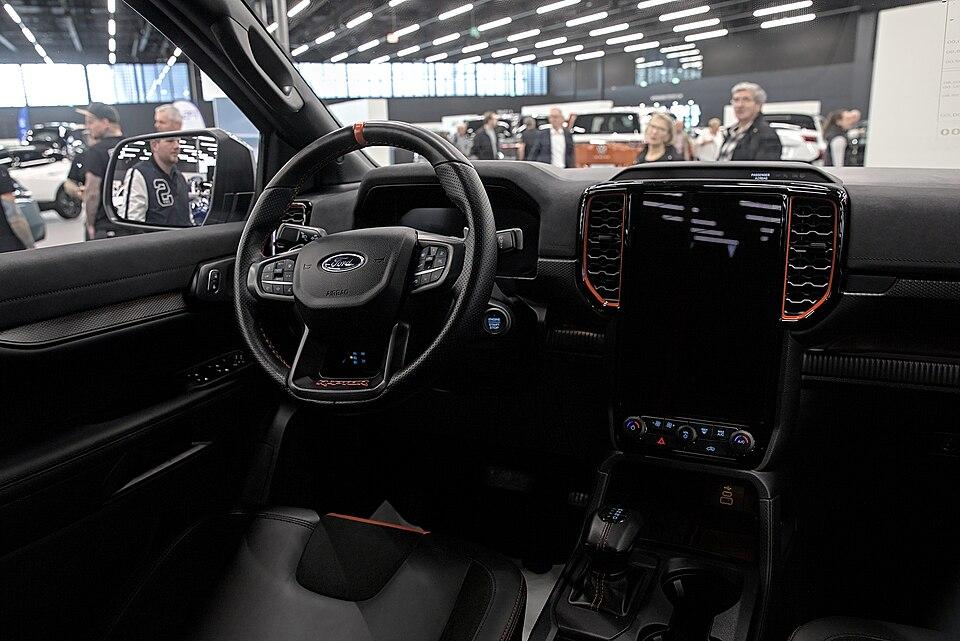
The short version up front: Ranger Raptor owners most commonly report a small fuel tank (20.3 gal on Ford's 2024 spec sheet, 20 gal for 2025-2026) that works out to roughly 340 miles at the EPA's 17 mpg combined, and drops fast off-road, a rear axle that can step sideways on washboard surfaces when the bed is empty, and two watch items that are not yet observed problems on this truck: intake valve carbon buildup and turbo boost-control faults, both seen on other EcoBoost engines. None of these are catastrophic, and none of them should scare off a buyer, but all of them cost real money or change how you pack the truck.
This covers the global-spec Ranger Raptor sold in the US starting with the 2024 model year, powered by the 3.0L twin-turbo EcoBoost V6 (405 hp, 430 lb-ft per Ford's spec sheets). It is the only engine Ford offers in the US Ranger Raptor. Ford has not sold an earlier US-market Ranger Raptor, so every item below applies to 2024-2025 trucks unless noted.
Fuel range is short, and there is no fix for it
The Ranger Raptor runs a smaller tank than you would expect on a truck this size, Ford lists 20.3 gallons on its 2024 spec sheet and 20 gallons for 2025-2026, and at the EPA's 17 mpg combined that is roughly 340 miles on paper, a figure that swings with tire choice, elevation, and whether the bed is loaded. That drops hard once you add sand, low range, or a loaded bed. Towing or running soft terrain can push you into planning fuel stops the way you would on a dirt bike trip.
There is no mechanical fix for this. The tank is what it is. Owners who run remote trips carry a bed-mounted fuel container and treat range math as part of trip planning, not an afterthought. A basic auxiliary fuel can setup runs roughly $150-450 depending on capacity and mounting hardware, and prices vary by brand and whether you need a bed-rack mount to carry it securely. If you are cross-shopping this against a full-size truck for exactly this reason, the Ranger Raptor vs F-150 Raptor comparison is worth reading before you commit to either one.
Rear axle skip on washboard roads
The symptom
Owners describe the rear end "stepping" or skipping sideways on corrugated dirt and washboard surfaces, mostly when the bed is empty. It is unsettling at speed and shows up most on hardpack desert roads and graded fire roads, not pavement.
Why it happens
The Ranger Raptor runs coil springs at the rear instead of the leaf springs on the base Ranger, which is part of why the ride is better loaded or on rough terrain but can feel light and darty unloaded. An empty bed means less weight pressing the rear tires into the surface, so the suspension has less to work with absorbing each hit before the next one arrives.
The fix
The cheapest fix costs nothing: adding weight to the bed (a couple of sandbags, a full tank of gas and gear, call it roughly 150-250 pounds as a starting point) settles it noticeably for most owners. If you want it solved regardless of load, a rear shock revalve by a suspension shop quoted to this truck specifically runs roughly $800-1,500, and that range swings hard depending on local labor rates and whether the shop is revalving the stock shocks or swapping in aftermarket units. Suspension parts built for the full-size F-150 Raptor are not sized or valved for a Ranger Raptor rear end, so do not assume cross-platform parts bolt on. Talk to a shop that has actually revalved Ranger Raptor shocks before you order anything.
Watch item: intake valve carbon buildup
This is not unique to the Ranger Raptor. Any direct-injection engine builds carbon on the backs of the intake valves over time because, unlike port injection, there is no fuel wash keeping the valves clean. It is the same physics that affects the 3.5L EcoBoost in full-size Raptors, covered in more detail in our EcoBoost carbon buildup piece, just on a different direct-injected EcoBoost V6 here.
Symptom
Rough cold idle, intermittent misfire codes, and a flat spot in throttle response. This has not yet been observed on the Ranger Raptor, there is no NHTSA complaint pattern for it, and nobody has published a mileage figure for this engine worth quoting. Treat it as a watch item seen on other direct-injection EcoBoost engines. Ford's own sheets also differ on the fuel system: the 2024 sheet lists port plus direct injection, the 2025 and 2026 sheets list direct injection.
Fix
Walnut blasting the intake valves (a media-blasting process that physically removes the carbon without pulling the heads) is the standard repair once it is bad enough to cause misfires. Shops typically quote this in the $500-900 range, and it swings with regional labor rates and whether the shop has to pull the intake manifold to get at the valves on this engine. Some owners install a catch can ahead of the intake to slow future buildup by trapping oil vapor before it hits the valves, running roughly $180-350 installed. A catch can will not undo existing buildup, it just slows the rate going forward.
Watch item: turbo-related faults and limp mode
Symptom
A sudden loss of power accompanied by the truck entering limp mode (a reduced-power safety state). It often clears after a restart, then comes back days or weeks later.
Diagnosis
The 3.0L EcoBoost V6 in the Ranger Raptor runs twin turbos. This is not yet an observed pattern on the Ranger Raptor; on other twin-turbo EcoBoost engines this symptom usually points to a boost control component (a wastegate actuator or boost solenoid) on one of the two turbos rather than turbo failure itself. A proper scan tool pull of stored and pending codes is the only reliable way to tell which component and which bank is at fault, so do not let a shop guess and start swapping parts. Budget roughly $400-900 for diagnosis and part replacement, and the range depends heavily on which component needs replacing and how much teardown it takes to reach it on this engine.
What Ford covers
If the truck is within Ford's powertrain warranty, this kind of failure should be a warranty repair with no cost beyond your deductible, if any. Confirm your specific coverage term and current mileage with a dealer using your VIN rather than assuming a number here. Ask the service advisor directly whether there is a published repair procedure (a TSB, which is a documented fix, not a guarantee of free work) covering this symptom on your build date. If the truck is out of warranty, goodwill repair assistance is entirely at Ford's discretion and should never be assumed going in.
Tire size and fitment limits you more than you'd think
The Ranger Raptor ships on 33-inch tires, and stepping up to 35s is not a bolt-on job the way it can be on a full-size Raptor. Fender liner trimming, bump stop adjustment, and in some cases a leveling kit are all part of getting 35s to clear without rubbing. Total cost for a proper 35-inch setup, including tires, runs roughly $900-2,600 depending on wheel choice and how much trimming and suspension work is involved. For most owners who are not chasing a specific look, staying on the stock-size 33-inch all-terrain the truck ships with is the simpler and cheaper path, since factory-fitted tires are not a product you need to shop for. If you are weighing the upsize decision in detail, 35s vs 37s on a Raptor: Every Tradeoff, Measured covers the full-size truck case, but the clearance logic (liner contact, bump steer, gearing effects) carries over conceptually even though the Ranger's numbers are smaller across the board.
SYNC 4A lag and CarPlay dropouts
Symptom
A noticeably slow touchscreen on cold starts, and wireless Apple CarPlay or Android Auto disconnecting mid-drive, reconnecting a few seconds later.
Fix
Over-the-air software updates have resolved this for a meaningful share of owners reporting it, based on owner forum reports rather than any published fix rate. If it persists after updates, switching to a wired CarPlay connection is a free workaround. If the module itself is at fault, dealer replacement is the fallback, and that is a parts-plus-labor job worth getting a written quote on rather than assuming a number, since module and labor pricing varies by dealer and by what diagnostic work preceded it. Most owners who report this issue never get to that point.
Front bash plate surface rust
The front skid plate shows surface rust within a season of regular off-road or wet-weather use on some trucks, per owner reports. It is cosmetic rather than structural at the surface-rust stage, but it is also avoidable. Stripping the factory coating, priming, and applying a proper chassis coating or bedliner-style finish runs roughly $60-300 in materials for a DIY job, or more if you pay a shop to do it. Owners building out protection further often look at a complete Ranger Raptor-specific skid package rather than just recoating the factory piece. F-150 Raptor skid kits are a different platform, so do not order one of those and hope it bolts on.
The 5-foot bed is genuinely small
This is less a "problem" than a design tradeoff worth knowing before you buy: the short bed limits what you can haul without a bed extender or rack. If you are deciding whether the Ranger Raptor's size works for your use case at all, read Is the Ranger Raptor Actually Big Enough? before you shop. A bed extender or cargo rack adds roughly $200-1,600 depending on how much capability you add and whether you go with a basic extender or a full rack system.
What to check if you're buying one used
- Cycle the electronic locking rear differential and confirm it engages and disengages cleanly.
- Inspect the front bash plate and rear diff cover for rust depth and impact damage, not just surface discoloration.
- Check tire size against the build sheet; larger tires installed without matching suspension work can mean hidden rubbing or liner damage.
- Scan for stored and pending codes, even if the check engine light is off.
- Cold-idle the engine and listen for roughness consistent with carbon buildup.
- If possible, drive it on a washboard surface with an empty bed to feel for rear axle skip.
- Confirm SYNC software is current.
- Check tow hitch wiring and connectors for corrosion if the truck has towed anything.
For a full walkthrough of this process, see the Used Ranger Raptor Buying Guide.
The short version
- Fuel range (roughly 340 miles on paper: about 20 gal at 17 mpg combined) and the 5-foot bed are design limits, not defects. Plan around them rather than expecting a fix.
- Rear axle skip on washboard is real but manageable: load the bed, or budget roughly $800-1,500 for a shop-quoted revalve done by someone who works on this platform specifically.
- Carbon buildup and turbo-related limp mode faults are watch items from other EcoBoost engines, not observed Ranger Raptor problems yet. Both have known repair paths, roughly $500-900 and $400-900 respectively, and the turbo fault may fall under Ford's powertrain warranty depending on mileage and build date. Confirm coverage with a dealer using your VIN rather than assuming it.
- None of these issues are severe enough to avoid the truck. They are the known costs of ownership, and now you know roughly what to budget for them.
Deal alert
Shopping for one? Get new listings first
We sweep US dealer inventory and send you new Raptors matching your search — real listings, real asking prices, no spam.