Raptor R Common Problems: What to Watch on the 5.2L Truck
Discover the common issues with the F-150 Raptor R, including supercharger heat soak, fuel economy, and brake wear. Learn how to address these problems.
Gear in this article
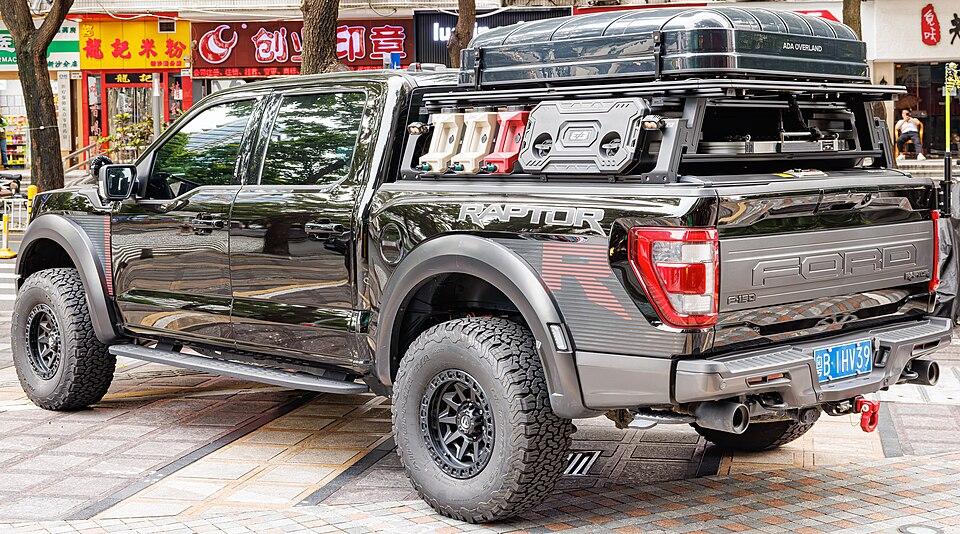
Ford's Raptor R has one job: put a supercharged 5.2L V8 that Ford rates at 700 horsepower and 640 lb-ft through a truck that weighs roughly 6,000 lb on 37-inch tires, and it does that job well. For more on how that engine is built, see the Raptor R engine explainer. The problems owners actually run into are mostly wear items that come due faster than they would on a regular F-150, not design defects: brakes, tires, and a supercharger that heat-soaks if you lean on it. None of this is scary, but all of it costs real money, and you should know the numbers before you sign.
This guide covers the 2023-2026 Raptor R, the model years built as of this writing. If you're cross-shopping the standard twin-turbo truck, see the Gen 3 Raptor common problems list instead, since the Raptor R's issues are almost entirely driven by the extra weight of the supercharger and the extra heat of the boost, not by anything shared with the EcoBoost trucks.
Supercharger heat soak on repeated full-throttle runs
The complaint sounds like this: first pull feels like 700 hp, second pull feels strong, third and fourth pull on the same stretch of road or the same dyno session feel noticeably softer. That is heat soak, not a fault code and not a failing part. The supercharger compresses intake air, which heats it, and the intercooler and the air-to-liquid heat exchanger that cools the supercharger's coolant loop both have a finite capacity to shed that heat before the engine computer pulls timing to protect itself.
This shows up most in temperatures above roughly 90-95 degrees F, and it is worse in stop-and-go pulls (drag strip style) than in one long highway run where airflow keeps the heat exchanger working. It affects 2023-2026 Raptor R trucks generally, since it's a function of how much heat the factory supercharger and cooling system can shed under repeated hard load, not a bad batch of trucks.
There is no warranty claim here because nothing is broken. Your options:
- Let it cool between pulls. Free. A few minutes of idle or light driving between hard runs lets the heat exchanger catch up.
- Upgrade the heat exchanger and intercooler, paired with a tune. Shops quote this as roughly a half-day to a full day of labor depending on the parts chosen, and total cost including the tune typically lands in the $2,200-3,500 range, as an estimate that swings on which cooling components you pick and which tuner you use. Some owners chasing more than cooling headroom step up to a larger aftermarket unit like the Whipple Gen 6 3.8L Supercharger Upgrade, which is a different project (and a different budget) than simply fixing heat soak, since it replaces the factory blower rather than just improving how it's cooled.
If you track the truck or run it hard in the desert heat repeatedly in a single session, the cooling upgrade is worth it. If your hardest use is one stoplight pull a week, letting it cool is the honest answer and costs nothing.
Real-world fuel economy, and why there's no fix
Owners report 10-13 mpg in mixed and spirited driving, which lines up with what you'd expect from a supercharged V8 pushing a 6,000-plus lb truck with 37-inch tires through the air. The 36-gallon tank gets you roughly 300 miles of range in that window, and that drops under 250 miles in soft sand where the engine is working harder at lower speed.
This is not a defect. It is the truck. For a full breakdown of what the Raptor R costs to run beyond fuel, see what a Raptor R actually costs to own. If you're deciding between the Raptor R and the standard twin-turbo Raptor, the mileage gap is one of the bigger arguments in that debate, covered in Raptor vs Raptor R: what the extra money actually buys. The only "fix" is to carry extra fuel on long desert days and budget for it, the same as any supercharged full-size truck.
Front brake wear
Front pads on a 2023-2026 Raptor R can wear down in 18,000-25,000 miles depending on how the truck is driven, which is quick relative to a standard F-150 and a direct consequence of the truck's weight and the fact that most owners who buy a 700-hp truck occasionally use all of it. Towing or regular canyon-road driving pushes wear toward the lower end of that range.
Replacement is pads and rotors together most of the time, since rotors on a truck this heavy rarely outlast a second pad set. Budget $600-1,400 per axle, an estimate that depends on whether you go OE Ford parts or a performance pad-and-rotor combination, and on whether a shop does the work or you do it yourself. Aftermarket pad compounds built for towing and canyon use hold up better than stock-spec pads if you drive the truck hard regularly. For more on upgrade paths, see Raptor brake upgrades: what actually helps a 6,000-lb truck.
37-inch KO2 tire wear rate
The factory BFGoodrich KO2 37x12.50R17 tires on the 2023-2026 Raptor R commonly wear out in 20,000-25,000 miles, even with disciplined rotation, because a 37-inch all-terrain carrying a heavy, high-powered truck is never going to last like a highway tire on a light truck. Rotating every 5,000 miles and keeping the alignment in spec slows this down but does not solve it.
A full set of five (four plus the spare, since Raptors run a matching spare) runs roughly $2,000-2,800, an estimate that depends on where you buy and whether you stick with the stock KO2 or step to something with a different wear rating. If you want an alternative tire with different wear characteristics, see the comparison in best tires for a Ford Raptor.
Rear driveline stress from hard launches
Owners who launch hard repeatedly, especially at the drag strip or from stoplights, report a clunk on throttle transition and driveshaft vibration developing over time on 2023-2026 trucks. This is the driveline absorbing repeated shock loading, and the usual culprits are worn U-joints or a driveshaft that's taken enough abuse to need replacement.
Diagnosis means inspecting U-joints for play and checking the driveshaft for wear at the slip yoke. Repair cost ranges $500-1,600 depending on whether it's a U-joint replacement or a full driveshaft swap. If you track or drag race the truck regularly, periodic inspection here is cheap insurance against a bigger failure.
Supercharger belt chirp and idler noise
A chirp on cold start or at low rpm that fades as the engine warms up points to the supercharger drive belt or an idler pulley, not the supercharger itself. This is a wear item, not a structural problem, on 2023-2026 trucks. Replacing the belt and idler pulley runs roughly $200-600 in parts and labor, and it's a straightforward fix that doesn't require pulling the supercharger.
Watt's link bushing clunk
A rear-end clunk over low-speed bumps on 2023-2026 Raptor R trucks often traces to the Watt's link bushings (the rear suspension's lateral-location linkage) working loose or wearing out, the same basic issue that shows up on the standard Gen 3 Raptor. Retorquing the link at ride height sometimes quiets it; if the bushings themselves are worn, replacement runs an estimated $150-900 depending on whether it's a bushing kit or the full link assembly.
Windshield chips and cracks
The 37-inch tires throw rocks, and the Raptor R's large, steeply raked windshield catches more of them than a standard truck's glass does. This isn't a defect, it's geometry and tire size. Repair a chip immediately, before it spreads, for roughly $120. A full replacement with ADAS camera recalibration (required because the windshield houses the forward-facing camera for driver-assist features) runs an estimated $900-1,500.
Live Valve sensor faults
Some 2023-2026 owners see a suspension warning light with the adaptive dampers locking into a single mode. This usually traces to a ride-height sensor or linkage issue rather than the damper itself. Replacing the sensor or link and recalibrating the system runs an estimated $350-800. For the full mechanics of how the system works and what else can go wrong with it, see Gen 3 Live Valve suspension explained and Gen 3 Raptor Live Valve shock failures, both of which apply to the Raptor R's shared suspension architecture.
What Ford's warranty actually covers
The Raptor R carries Ford's standard 3-year/36,000-mile bumper-to-bumper and 5-year/60,000-mile powertrain warranty. Brake pads, rotors, and tires are wear items excluded from both. The supercharger and its drive components are covered under powertrain if something actually fails internally, but heat soak under hard use is not a failure, it's the system doing what it's designed to do under load, and Ford won't treat it as a warranty claim. If you've modified the supercharger or tuned the ECU, know that doing so can affect what a dealer is willing to cover on anything downstream of that change; coverage calls on modified trucks vary by dealer, so get specifics with your VIN before you assume anything.
The short version
- Brakes and tires wear faster than on a regular F-150 because the truck is heavier and faster. Budget roughly $600-1,400 per axle for brakes and $2,000-2,800 for a tire set, more often than you would on a non-R truck.
- Supercharger heat soak on repeated hard pulls is normal, not a defect. Let it cool, or budget roughly $2,200-3,500 for a cooling upgrade and tune if you track the truck regularly.
- 10-13 mpg and roughly 300 miles of range is the truck's nature, not a problem to fix. Carry extra fuel in the desert.
- Everything else on this list (belt chirp, Watt's link clunk, Live Valve faults, windshield chips) is a known wear item with a defined fix and a modest cost, not a reason to walk away from the truck.
Deal alert
Shopping for one? Get new listings first
We sweep US dealer inventory and send you new Raptors matching your search — real listings, real asking prices, no spam.