Ford Raptor vs Ram 1500 TRX: The Comparison That Still Matters Used
Ram discontinued the TRX, but both trucks sit on the used market at similar money and buyers still cross-shop them constantly. Here's how they actually compare now that one of them is out of production.
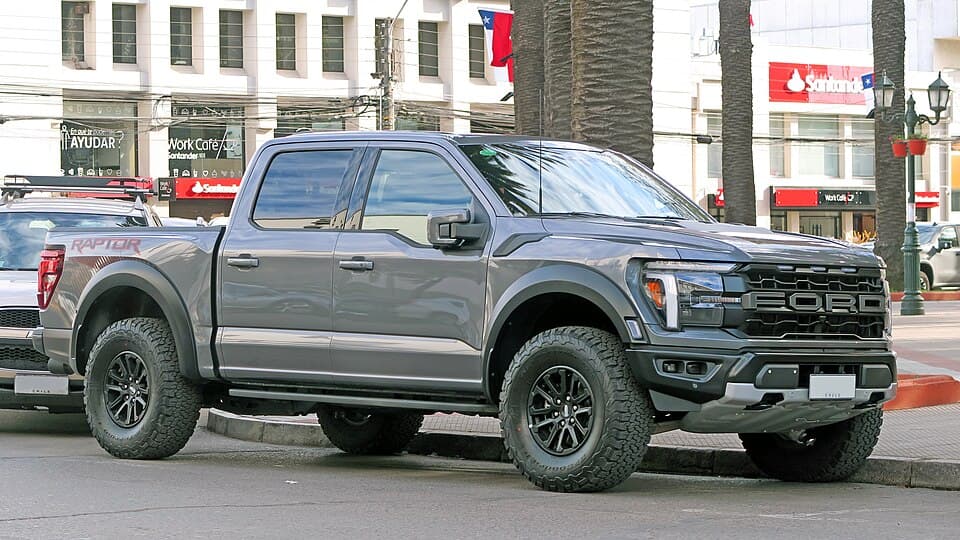
Ram ended TRX production, and Ford kept building Raptor. That single fact now drives almost everything else in this comparison: the Raptor is a truck with a future parts supply and an active warranty pipeline, while the TRX is a truck you buy knowing Stellantis is not making another one. Used prices for the two overlap in the $70,000-130,000 band depending on year and trim, which is exactly why people keep cross-shopping them even though only one is still on a dealer lot.
Before you treat "TRX is dead" as gospel, confirm the exact final model year against a current Ram or Stellantis statement, not against a forum post or this paragraph. Production timelines for discontinued models get repeated as fact long after the actual cutoff, and it changes which model years you should even be looking at on the used market.
Ram Ended TRX Production, Ford Did Not
Stellantis pulled the plug on the TRX, and the widely reported reason was regulatory and platform strategy, not a recall or a defect. What matters for a buyer is simpler: there will be no new TRX to compare against, no updated model year to wait for, and no factory refresh coming to fix anything Ram never got around to fixing. Every TRX on the used market is a fixed, finite population.
Ford's Raptor lineup keeps moving. The Gen 3 F-150 Raptor is in current production, the Raptor R sits above it as the factory halo, and Ford has added the Ranger Raptor and Bronco Raptor to the family on top of that. If you buy a Raptor today, you are buying into a platform Ford is still actively supporting with parts, tunes, and technical service bulletins. If you buy a TRX, you are buying the last of something.
Engine Character: Twin-Turbo V6 vs Blown Hemi V8 vs the Raptor R's Supercharged 5.2
This is where the two trucks feel the most different, and it has nothing to do with which one is "better."
The standard Raptor (Gen 2 and Gen 3) runs a 3.5-liter twin-turbo EcoBoost V6. Ford has published output in the neighborhood of 450 horsepower and 510 lb-ft, though you should check the exact current figure for your specific model year rather than trust a repeated number, since Ford has made small revisions across the run. It is a turbocharged engine with turbocharged manners: quiet low in the rev range, a little lag before the boost comes on, then a hard pull that keeps building.
The TRX ran a supercharged 6.2-liter Hemi V8, the same family as the Hellcat-based engines, and Ram advertised it in the neighborhood of 700 horsepower and comparable torque. Again, confirm the exact number before you quote it to anyone, because supercharged Hemi ratings have shifted slightly across model years and trims. What is not in dispute is the character: a supercharger has no lag. Power comes on the instant you ask for it, and it comes with a whine most owners either love or eventually get numb to.
If you want the closest thing Ford builds to the TRX's personality, that is the Raptor R and its supercharged 5.2-liter Predator V8, which you can read about in detail on our breakdown of the Raptor R's supercharged 5.2. It is the Ford that actually competes with the TRX on raw output and induction feel, not the standard EcoBoost truck. Cross-shopping a base Raptor against a TRX is really cross-shopping two different power philosophies. Cross-shopping a Raptor R against a TRX is cross-shopping two supercharged V8s that were built to answer each other.
On-Road Manners and Daily Usability
The TRX is a wide, heavy half-ton built around a supercharged V8, and it drives like one: strong highway passing power, a firm but controlled ride on the factory Bilstein Black Hawk e2 shocks, and fuel economy that punishes you for enjoying any of it. Real-world mileage in the low teens is normal, and that is consistent with what any supercharged half-ton V8 returns.
The Raptor's daily character depends heavily on which one you are talking about. A Gen 2 or Gen 3 EcoBoost Raptor is lighter over the front axle than a TRX, which shows up in steering feel and in how the truck settles on the highway. The Raptor R adds weight back with the supercharged V8, but Ford's Live Valve adaptive suspension keeps the ride from getting punishing. We cover what actually shows up in a Raptor owner's monthly costs, fuel, tires, maintenance, in our Raptor daily driving cost breakdown, and most of the same logic (tire wear, fuel burn, brake life) applies directionally to the TRX even without site-specific data on that truck.
Reliability Reputation: What We Actually Know, and What We Do Not
Be honest with yourself about what a "reliability comparison" between these two trucks actually is right now: one side has data, the other side has reputation.
Raptor Central has published detailed breakdowns of the Raptor's known failure points across generations: the Gen 2 cam phaser rattle, the 10R80 transmission's harsh 1-2 shift and torque converter shudder, and the IWE grinding that shows up on the front axle. None of that makes the Raptor a bad truck, it makes it a documented one. You can walk into a used Gen 2 purchase knowing exactly what to inspect.
We do not have that same body of first-party data on the TRX. Owners report the usual list of supercharged Hemi concerns, lifter and valvetrain wear on the broader Hemi family has a documented history on other applications, and some TRX owners report suspension and electronic issues, but nobody has published a TRX-specific failure-rate number worth quoting, and neither have we. Treat any confident claim about "TRX reliability" you read online, including implied claims elsewhere on this site, as reputation, not data, until someone actually publishes the numbers.
Used Pricing Since TRX Production Ended
Raptor R pricing on the used market has been climbing, not falling, which is unusual for a truck that is not exotic or limited-run. Current live listings on this site put the 2023 Raptor R averaging roughly $100,000, climbing to around $113,000 for 2024, and above $127,000 for 2025 model year trucks. That is appreciation-adjacent behavior for a mainstream factory truck, driven mostly by demand outpacing the limited number Ford builds each year. For the full generation-by-generation picture on the standard Raptor, including where the steepest early depreciation happens, see our Raptor depreciation breakdown by generation.
TRX pricing needs a different kind of caution. Because production has ended, the used TRX market behaves less like a normal depreciation curve and more like a finite-supply collectible curve, prices can hold flat or even firm up on clean, low-mile trucks precisely because nobody is building a replacement. We do not have live TRX listing data to quote here, so pull current listings yourself before you anchor on a number, and weight recent sold prices over asking prices, since discontinued-model listings tend to run optimistic.
Parts and Support Risk of Buying a Discontinued Platform
This is the part of the comparison that gets skipped in most head-to-heads, and it is the one that matters most three years from now.
A Raptor, in any generation, is still backed by an active Ford parts and service pipeline. Technical service bulletins keep getting issued, dealer techs keep seeing the trucks, and the aftermarket keeps building for a platform with a future.
A TRX is backed by whatever Stellantis decides to keep stocking for a discontinued model. That does not mean parts dry up overnight, Ram will support the TRX for years under normal parts-availability obligations, but the long-term trajectory for a discontinued high-output platform is thinner support, slower-arriving parts on obscure failures, and an aftermarket that eventually stops developing new products for a truck it cannot sell more of. That risk is real and it compounds the longer you plan to keep the truck.
Which Buyer Should Buy Which Truck
| Buyer profile | Better fit |
|---|---|
| Wants immediate, no-lag power and does not mind the fuel bill | Ram TRX |
| Plans to keep the truck 8+ years and wants ongoing parts and dealer support | Ford Raptor (any current generation) |
| Wants the closest Ford answer to TRX-level power | Raptor R |
| Values documented, searchable failure data before buying used | Ford Raptor (see the Gen 2 and Gen 3 buying guides) |
| Wants a discontinued-platform truck as a long-term hold, accepts the support tradeoff | Ram TRX |
For a deeper three-way breakdown that also brings in the Ram 1500 RHO, read our Raptor R vs TRX vs RHO verdict.
The short version
- Ram ended TRX production; confirm the exact final model year yourself before treating it as settled, since it affects which used model years exist to shop.
- The Raptor's twin-turbo V6 and the Raptor R's supercharged 5.2 feel different from the TRX's supercharged 6.2 Hemi, and exact output numbers should be confirmed against current published specs, not memory.
- The Raptor has documented, site-published failure points; the TRX does not have comparable first-party data anywhere, treat any confident TRX reliability claim as reputation until proven otherwise.
- Raptor R used pricing has been climbing on live listings; TRX pricing should be pulled fresh since it now behaves like a finite-supply market.
- Buy the Raptor if you want ongoing factory support for the long haul. Buy the TRX only if you have made peace with owning a platform Stellantis will not build again.
Deal alert
Shopping for one? Get new listings first
We sweep US dealer inventory and send you new Raptors matching your search — real listings, real asking prices, no spam.