Daily Driving a Raptor: What It Actually Costs and What Wears On You
Plenty of people buy a Raptor as a daily and love it. Plenty sell within a year over parking, fuel and tire bills. Here is the honest ledger before you commit.
Gear in this article
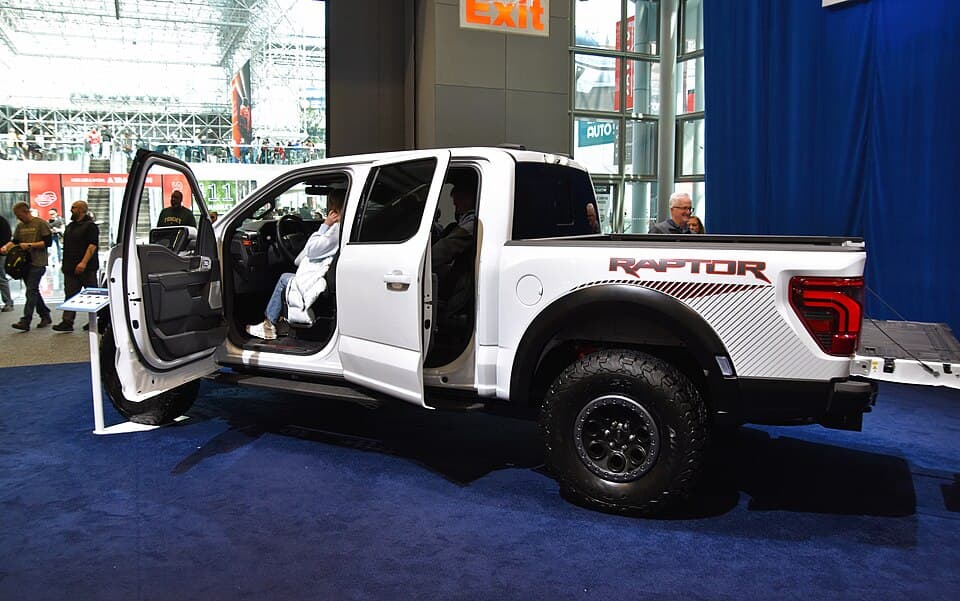
Buy a Raptor to daily and you will spend real money on premium fuel, wear through off-road-biased tires faster than a standard highway tire, and hunt for a wider parking spot every single day. None of that is a surprise to owners who did the math first. The ones who sell within a year are almost always the ones who did not.
This is not an argument against daily driving a Raptor. Plenty of owners do it happily for years. It is the ledger nobody hands you at the dealership.
The width problem is a parking problem, not a driving problem
A Gen 2 or Gen 3 Raptor is noticeably wider than a regular F-150, not because of the cab but because of the fender flares that cover the wider track and off-road tires. On the highway you will not notice it. In a parking garage built for regular trucks, at a drive-thru window, or in a single-car garage with shelving on one wall, you will notice it every time.
The specific failure points owners report:
- Parking garages with height and width clearance bars built for sedans and crossovers. You will take up a spot and a half whether you want to or not, and some structures with tight ramp turns are genuinely hard to navigate.
- Drive-thrus, especially older fast food locations with narrow lanes. You can usually make it, but you will be closer to the mirror-folding point than you expect.
- Home garages. A Raptor fits in most two-car garages, but if you also need to open both doors, work around the truck, or park a second vehicle beside it, measure before you assume. Mirrors fold, the flares do not.
This is a bigger daily-life adjustment than horsepower or ride height for most new owners, and it is the complaint that shows up first in owner threads, before fuel and before tires.
Fuel: what it actually costs to fill and drive
Ford recommends premium gasoline for peak output on the 3.5-liter EcoBoost twin-turbo V6 in the Gen 2 and Gen 3, and on the supercharged 5.2-liter V8 in the Raptor R. It is not a hard requirement in the way some sports cars demand it, but running regular will cost you some power and, on the EcoBoost, some efficiency, since the engine pulls timing when it does not see the octane it wants. Most owners run premium and budget accordingly.
Real-world mpg on these trucks lands well below the window sticker once you are driving a lifted truck on 35s or 37s with an aggressive tread pattern pushing air. We cover the full spread by generation and by tire size in Ford Raptor MPG: What Owners Actually Get, and that is the number to check against your actual commute before you buy, not the EPA sticker.
At a rough 55-65 mile daily round trip, the fuel bill difference between a Raptor and a regular half-ton truck adds up over a year. It is not the line item that kills the ownership experience by itself, but paired with tires, it is real money every month.
Tire cost and wear rate on 35s and 37s
This is the daily-driver cost that catches people off guard, because it is not a one-time purchase, it is a recurring one.
Off-road-biased tires on a heavy, high-power truck wear faster than a standard highway tire, and the more aggressive the tread, the faster it goes. Stock Gen 2 Raptors ride on 35s from the factory; a lot of owners step up to 37s for looks and clearance. How many miles you actually get out of a set varies hard by tire model, alignment, rotation discipline, and how much of your driving is highway versus stop-and-go city miles, which is why we would rather point you to the tread-by-tread comparison than guess a single number here: 35s vs 37s on a Raptor: Every Tradeoff, Measured breaks down wear, ride, and cost by tire size and pattern.
What we can say plainly: a set of 37s like the BFGoodrich KO2 or the more off-road-oriented Nitto Ridge Grappler is not cheap to replace, and if you are daily driving on pavement five days a week, you are burning tread life on commute miles that never see dirt. A more aggressive, softer-compound mud-terrain tread will generally give up tread life sooner than a highway-biased all-terrain in the same size, but pin that against your own tire choice, not a forum number. If you went to 37s for a build, How Much Does It Cost to Put 37s on a Gen 2 Raptor? has the full install and alignment cost breakdown, and it is worth reading before you commit to the size if daily driving is the primary use case, not weekend trail runs.
Ride quality, road noise, and what the tires are doing
The Raptor's factory suspension, whether it is the Fox 2.5 or 3.0 dampers on earlier trucks or the Live Valve system on later Gen 3 trucks, is tuned for high-speed desert compression, not for isolating pavement seams and expansion joints at 35 mph. On smooth interstate it rides comfortably, arguably better than a standard F-150 over rough pavement because the long-travel suspension soaks up what a stiffer setup would transmit. On broken city streets and potholed secondary roads, it is busier than a standard half-ton, and you feel the unsprung mass of those big tires and wheels more than you would on a base truck.
The tires contribute meaningfully to what you hear in the cabin. An aggressive all-terrain or mud-terrain tread hums at highway speed, and that hum gets louder as the tire wears unevenly, which off-road tires are somewhat prone to doing if alignment and rotation intervals slip. It is not unbearable, and most owners tune it out within a few weeks, but if you are coming from a quiet crossover or a standard cab truck on all-seasons, the road noise is a real adjustment, not a myth.
What actually makes it a good daily
The complaints above are real, but so is the appeal, and it is worth being honest about why owners keep these trucks as dailies for years.
Visibility is genuinely good. The seating position is high, the hood is short relative to the cab, and sightlines around the truck are better than a lot of modern trucks with high beltlines and small rear glass.
Ride comfort on rough pavement is a real advantage, not a marketing line. If your daily commute includes bad roads, frost heaves, or a lot of gravel and dirt driveways, the long-travel suspension is working in your favor every day, not just on weekends.
All-weather traction from the factory off-road tires and standard four-wheel drive is a legitimate benefit in snow, mud, and loose gravel that a two-wheel-drive daily does not have. Owners in the Snowbelt and rural areas report this as one of the biggest daily-life upgrades over whatever they drove before, though nobody has published a real slip-and-slide comparison worth quoting a number from.
Interior comfort on later trucks, especially with options like heated and ventilated seats, a reasonable infotainment stack, and enough rear seat room in the SuperCrew, holds up fine to five-day-a-week use. This is a comfortable place to sit for an hour-long commute.
Who should not daily one
If you park in a tight garage or a downtown structure with a low clearance bar and no alternative, think hard before committing to a Raptor as a daily. The width problem does not go away with familiarity.
If your commute is 90 percent highway at a steady speed with no dirt, no snow, and no rough pavement, you are paying for capability you are not using and eating tire and fuel costs for a truck doing a sedan's job.
If you are fuel-cost sensitive and drive 20,000-plus miles a year, run the math in Ford Raptor MPG: What Owners Actually Get against your actual mileage before you sign, not after.
And if you are cross-shopping a Ranger Raptor specifically because you want Raptor capability in a smaller daily footprint, that is a reasonable instinct, though it comes with its own size tradeoffs worth reading in Is the Ranger Raptor Actually Big Enough? before you assume smaller solves everything.
The short version
- Width is the daily complaint that surprises new owners most, worse than fuel or tires in practice. Measure your garage and know your parking situation before you buy.
- Fuel costs run higher than a standard F-150, both from the premium recommendation and from real-world mpg that lands well below the window sticker, especially on 35s or larger.
- Tires are the recurring cost that catches people off guard. Aggressive tread on a heavy truck wears faster than a highway tire, and exactly how much faster depends on the tire model and how you drive it, not a single mileage number anyone can promise you.
- Ride quality and visibility are genuine strengths, especially on rough roads and in bad weather, and are the reasons most owners who stick with it as a daily are glad they did.
- If your daily life is mostly smooth highway with no snow, no dirt, and a tight parking garage, you are paying Raptor money for a use case it was not built for.
Owner questions
- Does the Ford Raptor require premium gasoline?
- Ford recommends premium gasoline for peak output on the 3.5-liter EcoBoost twin-turbo V6 in the Gen 2 and Gen 3 Raptor, and on the supercharged 5.2-liter V8 in the Raptor R. It's not a hard requirement, but running regular costs some power and, on the EcoBoost, some efficiency as the engine pulls timing without the octane it wants.
- Why do new Raptor owners get surprised by parking issues?
- A Gen 2 or Gen 3 Raptor is noticeably wider than a regular F-150 due to fender flares covering the wider track and off-road tires. This causes problems in parking garages with height and width clearance bars, narrow older drive-thru lanes, and home garages where mirrors fold but the flares do not.
- How much faster do 35s or 37s wear compared to standard tires, and what brands are mentioned?
- Off-road-biased tires wear faster than standard highway tires, with more aggressive tread wearing faster still. A set of 37s like the BFGoodrich KO2 or the more off-road-oriented Nitto Ridge Grappler isn't cheap to replace, and daily pavement commuting burns tread life that never sees dirt, though exact mileage varies by tire model and driving habits.
- What suspension does the Raptor use and how does it ride on daily commutes?
- The Raptor uses Fox 2.5 or 3.0 dampers on earlier trucks or the Live Valve system on later Gen 3 trucks, tuned for high-speed desert compression rather than pavement seams. It rides comfortably on smooth interstate, arguably better than a standard F-150 over rough pavement, but feels busier on broken city streets and potholed secondary roads.
- Who should think twice before daily driving a Raptor?
- Anyone parking in a tight garage or downtown structure with a low clearance bar and no alternative should think hard, since the width problem doesn't go away with familiarity. Also, if your commute is 90 percent steady highway with no dirt, snow, or rough pavement, or you drive 20,000-plus miles a year, you're paying for capability and fuel/tire costs you aren't using.
Deal alert
Shopping for one? Get new listings first
We sweep US dealer inventory and send you new Raptors matching your search — real listings, real asking prices, no spam.