3.5 EcoBoost Problems by Year: What Actually Fails on a Raptor
Cam phasers, wastegate rattle, an internal water pump that can dump coolant into the oil, and spark plugs that get harder to service the longer you wait: that is the real list on a 3.5L EcoBoost Raptor. Here is which years get hit, what each fix costs, and which forum complaints are not real problems at all.
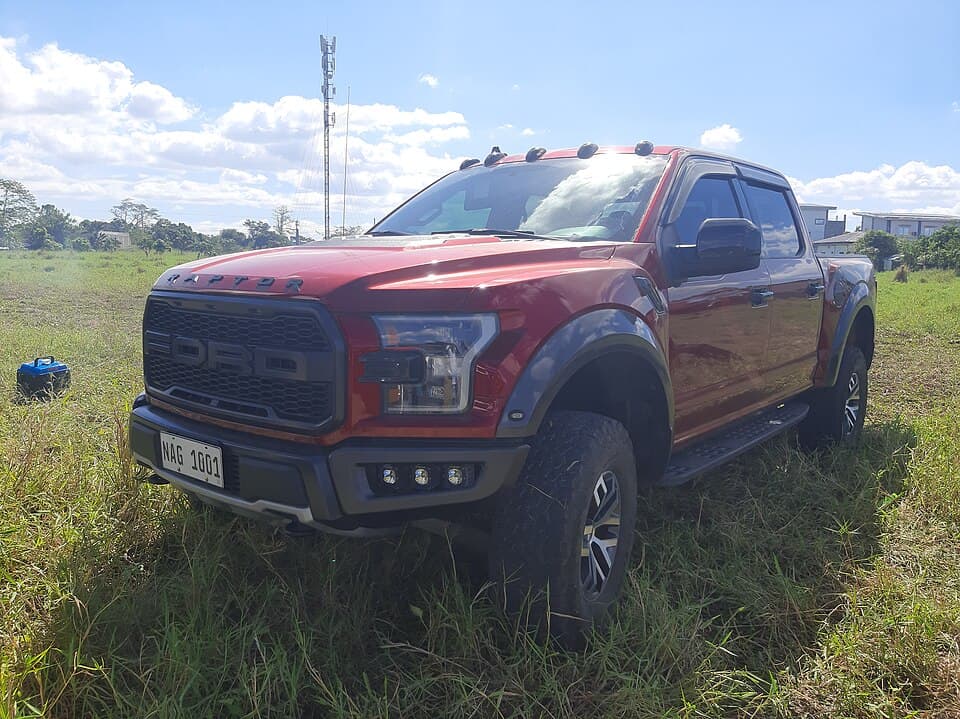
On a 3.5L EcoBoost Raptor, four problems cause nearly every real complaint: cam phaser rattle (2017-2020, worst on 2017-2018), turbo wastegate rattle (2017-2020), internal water pump failure leaking coolant into the oil (all years), and spark plug and ignition risk past 100,000 miles (all years). Everything else owners argue about online is mostly noise by comparison.
| Problem | Affected years | Symptom | Typical cost |
|---|---|---|---|
| Cam phaser rattle | 2017-2020, worst on 2017-2018 | Loud metallic rattle for the first 3-8 seconds of a cold start, gone once warm | $1,800-3,000 independent, $2,400-4,800 dealer |
| Turbo wastegate rattle | 2017-2020, reported less often on 2021+ | Light, tinny chatter at idle or light throttle, warm or cold | $500-1,000 per side, actuator only |
| Internal water pump failure | All years, reported at higher mileage on Gen 3 too | Coolant mixing into the oil (a milky film on the cap or dipstick), coolant loss with no puddle under the truck | $1,500-2,800 |
| Spark plug / ignition service | All years, risk climbs past 100,000 miles | Misfire codes, rough idle, or a plug that seizes and breaks on removal | $300-600 routine, $1,200 or more if a plug breaks |
Gen 2 versus Gen 3: what actually changed
The Gen 2 F-150 Raptor ran the 3.5L High-Output EcoBoost from 2017 through 2020, with the deepest owner history to draw on. The Gen 3 F-150 Raptor, 2021-present, carries the same displacement and dual-injection architecture, rated the same 450 horsepower and 510 lb-ft, with revised turbos and updated calibration.
Ford does not publish a before-and-after parts list for the timing cover, so treat any claim that Gen 3 "fixed" the cam phaser problem as unproven, not false. Reported phaser complaints are thinner on 2021+ trucks so far, but those trucks are only three to five years old, and the Gen 2 failure mode often did not show up until well past 60,000-80,000 miles. Inspect a Gen 3 the same way you would a Gen 2, just with a shorter track record.
Cam phaser rattle, still the headline problem
This is the single most common complaint on the Gen 2 3.5 EcoBoost, and we already wrote the long version: every fix ranked by cost. Short version: a cold-start-only metallic rattle from the front of the engine, worst on 2017-2018 trucks, present through 2020, covered under Ford's 5-year/60,000-mile powertrain warranty if you are still inside it, and a $1,800-3,000 independent-shop job or $2,400-4,800 dealer job if you are not. Do not pay for a PCM reflash alone and call it fixed. Worn phaser vanes do not un-wear.
Turbo wastegate rattle is not the same noise
Owners mix this up with cam phaser rattle constantly. Wastegate rattle is a lighter, tinnier chatter you hear at idle or light throttle, not just on a cold start, and it tracks with the turbos rather than the front-center of the block. It shows up on the same 2017-2020 trucks and less often on 2021+ engines. It is also cheaper: a single wastegate actuator runs roughly $500-1,000 parts and labor, a bolt-on part rather than an engine teardown. If a shop quotes cam-phaser money for a noise that sounds like this, get a second listen before you approve the job.
Internal water pump failure
This is the failure mode that gets the least attention online relative to how expensive it is. The 3.5 EcoBoost's water pump is not a bolt-on accessory driven by a belt. It is mounted inside the engine, driven off the timing chain behind the same front cover where the cam phasers live, and cooled by engine coolant rather than sitting out in the airflow. When the internal seal wears, coolant does not drip on your driveway, it leaks directly into the oil.
The tell is a milky, coffee-with-too-much-creamer film on the oil fill cap or the dipstick, sometimes paired with coolant that keeps disappearing from the reservoir with no visible external leak anywhere. Caught early, this is an inconvenience. Ignored, diluted oil stops lubricating properly and you are looking at bearing wear on top of the water pump repair. This has been reported across Gen 2 trucks and is showing up on high-mileage Gen 3 examples as well, so treat it as an every-year risk rather than a specific-model-year one.
Because the pump sits behind the same timing cover as the phasers, budget similarly: $1,500-2,800 at a shop, and it swings with labor rate and whether the cover has to come off around anything else that has already failed. If you are already paying for the timing cover off for a phaser job, this is the moment to have the shop inspect the water pump and replace it preemptively rather than pay for the same labor twice a year apart.
Spark plugs and ignition on a twin-turbo engine
Ford specs the 3.5 EcoBoost's platinum plugs for roughly 100,000 miles under normal driving, same as most modern V6s. The complication is where they sit: on a twin-turbo engine, the plugs and coil boots live close to turbo heat and behind more plumbing, so a routine plug job runs longer at a shop than on a simpler engine. Budget $300-600 for a full set done on schedule.
The real risk is on a truck well past that interval. Ford's own service literature warns technicians about plugs on high-mileage EcoBoost engines that have seized in the head, where a routine removal can snap the plug and leave part of it in the cylinder. That turns a $400 maintenance item into a job north of $1,200 that may involve a helicoil repair or cylinder head work in a bad case. If you are buying a used Gen 2 or Gen 3 and cannot confirm the plugs were done on schedule, budget for that service immediately.
Carbon buildup: the exception that proves the rule
If you have read anything about direct-injection engines fouling their intake valves, you might expect the same here. It largely does not happen, and we wrote the full explanation why: carbon buildup on the EcoBoost, what it actually does. Short version: the 3.5 runs port injection alongside direct injection, and the port injectors wash the residue off the back of the intake valve on every stroke, the exact thing that bakes onto valves on direct-injection-only engines like the Ranger Raptor and Bronco Raptor's 3.0L. Do not pay a shop to "prevent" a problem this engine does not really have.
Oil dilution, the honest read
Cold-climate owners running mostly short trips have reported oil level creeping up and smelling faintly of fuel on some 3.5 EcoBoost builds, a byproduct of fuel not fully vaporizing during a cold start. Ford has issued calibration updates on certain builds, mostly reported in cold-weather markets, though coverage depends on your specific build date. Mixed cold-and-highway driving with occasional dipstick checks is manageable. Nothing but short cold trips, ask your dealer by VIN and stay ahead of oil changes.
What is not a real problem
A stock EcoBoost whistles on spool-up and makes turbo noise under load. That is how the engine sounds, not a symptom. Condensation dripping from the intercooler or A/C lines after a humid drive looks alarming under the truck and is not a coolant or oil leak. And the broader forum claim that the 3.5 EcoBoost is fundamentally fragile does not hold up against the documented failure list above, which is narrow, well understood, and largely maintenance-manageable.
Two more noises owners blame on the engine that are not the engine at all: a grinding sound shifting into 4WD is the IWE, not the engine, and a light shudder holding 40-50 mph is the 10R80 transmission, not the engine. Both get chased as EcoBoost problems by owners who assume every noise on a Raptor traces back to the same part.
Maintenance that actually prevents the expensive ones
Stay on the correct oil spec and interval, do not stretch it on a turbocharged engine. Do the spark plugs before 100,000 miles, not after. If a shop is already inside the timing cover for a phaser job, have them check the water pump at the same time. And if you hear a rattle, record it on a cold start and get it identified by symptom first, since phaser rattle, wastegate rattle, and timing chain slap all get confused with each other constantly.
When a used-truck buyer should walk
A cold-start rattle with no documented phaser repair on a 2017-2018 truck is real money off the price, not a dealbreaker, price it several thousand dollars down. A milky dipstick or a coolant reservoir losing level with no visible leak is a harder pass unless the price drops enough to cover a full water pump job plus an oil service to flush contaminated oil. A truck past 100,000 miles with no documented plug service, stacked on either of those, is worth walking away from rather than negotiating around.
The short version
- The real list is four problems: cam phaser rattle (2017-2020, worst on 2017-2018), turbo wastegate rattle, internal water pump failure into the oil, and spark plug service risk past 100,000 miles.
- Gen 3 (2021+) looks better on phaser complaints so far, but the truck is too young to call the problem solved.
- Carbon buildup and turbo whistle are the two things owners worry about that are not real problems on this specific engine.
- Budget $1,500-2,800 for a water pump, $300-600 for plugs done on schedule, and treat a milky dipstick on a used truck as a bigger red flag than a cold-start rattle.
Owner questions
- 3.5 EcoBoost problems to know about
- Four problems cause nearly every real complaint: cam phaser rattle (2017-2020, worst on 2017-2018), turbo wastegate rattle (2017-2020), internal water pump failure leaking coolant into the oil (all years), and spark plug/ignition risk past 100,000 miles (all years). Everything else owners argue about online is mostly noise by comparison.
- How much does it cost to fix cam phaser rattle on a Raptor's 3.5 EcoBoost?
- A cold-start-only metallic rattle from the front of the engine, worst on 2017-2018 trucks and present through 2020, runs $1,800-3,000 at an independent shop or $2,400-4,800 at a dealer. It's covered under Ford's 5-year/60,000-mile powertrain warranty if you're still inside it.
- What does internal water pump failure look like on the 3.5 EcoBoost, and what does it cost?
- The internal water pump is driven off the timing chain behind the timing cover, so failure leaks coolant into the oil rather than dripping externally. The tell is a milky film on the oil fill cap or dipstick, plus coolant disappearing with no visible leak. Repair runs $1,500-2,800, and it's reported across all years, including high-mileage Gen 3 trucks.
- How do I tell cam phaser rattle apart from turbo wastegate rattle?
- Cam phaser rattle is a loud metallic rattle only for the first 3-8 seconds of a cold start, gone once warm. Wastegate rattle is lighter and tinnier, heard at idle or light throttle whether warm or cold, and tracks with the turbos rather than the front-center of the block. Wastegate fixes run $500-1,000 per side versus $1,800-4,800 for phasers.
- Is carbon buildup a real problem on the Raptor's 3.5 EcoBoost engine?
- No. It largely does not happen because the 3.5 runs port injection alongside direct injection, and the port injectors wash residue off the back of the intake valve on every stroke. That's the same buildup that bakes onto valves on direct-injection-only engines like the Ranger Raptor and Bronco Raptor's 3.0L.
Deal alert
Shopping for one? Get new listings first
We sweep US dealer inventory and send you new Raptors matching your search — real listings, real asking prices, no spam.