2020 Ford Raptor: Specs, Problems, and What to Pay
The 2020 Raptor is the last leaf-spring Raptor and the most sorted year of Gen 2, running $48,000-58,000 today. We cover the late-production phaser update, what carried over from 2019, and why this year tops the generation price band.
Gear in this article
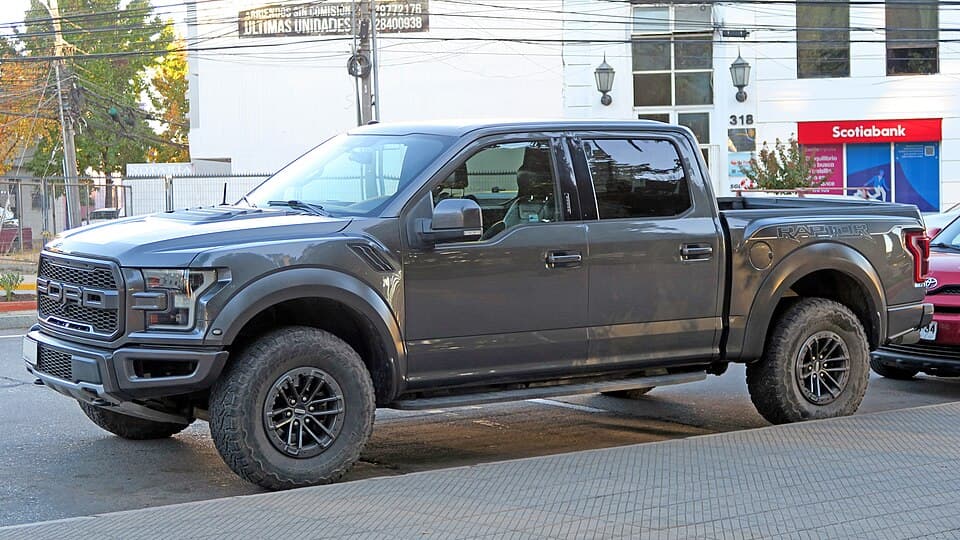
The 2020 F-150 Raptor is the final model year of Gen 2 and the most sorted-out truck the generation built: same 450 hp 3.5L High-Output EcoBoost and 10R80 ten-speed as every Gen 2, Fox 3.0 Live Valve shocks and Trail Control carried over from 2019, a third-round cam phaser design that cuts the cold-start rattle rate hard without erasing it, and the last Raptor built with a leaf-sprung rear axle before Gen 3 moved to a five-link coil setup in 2021. Clean 2020s run roughly $48,000-58,000 in 2026, the top of the wider Gen 2 price band, and that premium buys the most refined version of a truck Ford spent four model years fixing in place.
Here are the numbers, then the reasoning.
| Spec | 2020 F-150 Raptor |
|---|---|
| Engine | 3.5L High-Output EcoBoost V6, twin-turbo |
| Power | 450 hp @ 5,000 rpm |
| Torque | 510 lb-ft @ 3,500 rpm |
| Transmission | 10R80 ten-speed automatic |
| Shocks | Fox 3.0 Live Valve, electronically controlled (standard since 2019) |
| Suspension travel | 13.0 in front / 13.9 in rear |
| Rear suspension | Leaf springs, the last Raptor built this way; Gen 3 moves to a five-link coil |
| Cab configs | SuperCab (2-door, rear-hinged half doors) and SuperCrew (4-door) |
| Payload / towing | ~1,200 lb / 8,000 lb |
| Curb weight | ~5,700 lb (SuperCrew); SuperCab is lighter by a couple hundred pounds |
| EPA fuel economy | 15 city / 18 hwy / 16 combined |
| 0-60 mph | ~5.1 sec |
What was actually new in 2020
Nothing under the skin. The 450 hp 3.5 HO EcoBoost, the 10R80, the Fox 3.0 Live Valve shocks, and the 13.0/13.9-inch suspension travel all carried over unchanged from 2019. What changed was the tech and options list. Adaptive cruise control, lane-keeping assist, and pre-collision assist with automatic emergency braking moved out of the standalone Raptor Technology Package, which Ford dropped, and into the Mid (801A) and Luxury (802A) equipment packages instead. FordPass Connect, the smartphone app for remote start and vehicle status, became standard across the lineup. Four new paint colors arrived: Rapid Red, Lead Foot, Star White, and Iconic Silver, alongside a new black appearance package for buyers who wanted the badges and trim blacked out from the factory instead of wrapped.
None of that moves a used-market price the way an engine change would, but it matters if you want adaptive cruise and lane-keeping without digging through build sheets to confirm the option box was checked. On a 2020, more of that equipment ships standard rather than as an add-on.
The last leaf-spring Raptor
Every Gen 2 Raptor, 2017 through 2020, runs a leaf-sprung rear axle, the same basic layout that traces back to Gen 1. When Gen 3 launched for 2021, Ford replaced it with a five-link coil rear, a change that reshaped ride quality everywhere from washboard trails to the highway. That makes the 2020 the last Raptor you can buy with the leaf-sprung setup, for better or worse. Leaf springs handle sustained payload and towing more predictably than a coil rear tuned for a truck this heavy, and they're a known quantity for the aftermarket, meaning parts like a Deaver or Icon add-a-leaf pack to fight axle squat are well-proven on this exact truck. What they don't do as well is ride compliant over small, sharp hits at speed, which is where the Gen 3 coil rear pulls ahead. Neither setup is wrong. If ride quality on a washboard road matters more to you than payload consistency, that's a real reason to look at Gen 3 instead of paying top dollar for the last leaf-sprung truck.
The cam phaser question on a 2020: much better, not zero
The cam phaser rattle (the variable valve timing unit bolted to the front of each camshaft, and on this engine, the part most likely to wear loose enough to clatter at cold start) defined the early Gen 2 years, worst on 2017-2018. By 2020 the part had gone through a second redesign, and most parts built from late 2019 production onward carry it. That cuts the incidence rate sharply on 2020 trucks. It does not take it to zero. A 2020 built early in the model year, off a late-2019 production run, can still carry earlier hardware, and even the improved design isn't a guarantee against every failure mode that causes phaser wear.
Cold start every 2020 you look at the same way you would a 2017: the truck needs to have sat overnight with the engine off, no warm-up laps from the seller first. Listen for a metallic rattle in the first five to ten seconds that quiets as oil pressure builds. A rattle that runs past 10-15 seconds, or never fully quiets, means the same $2,400-4,800 dealer repair applies regardless of model year. Treat the model year as a reason to expect a clean cold start, not as a reason to skip listening for one. For the full cost breakdown by repair path, read the Gen 2 cam phaser rattle guide before you make an offer.
Live Valve and Trail Control: what the extra features actually do
Fox 3.0 Live Valve shocks read the road through accelerometers and adjust damping electronically, tens of times per second, instead of relying on the fixed valving of the 2017-2018 internal-bypass shocks. On washboard and rutted trail it's a genuine improvement, not a marketing line, and it shows up on the highway too, where the ride firms up slightly at speed and softens back down around town. Trail Control, off-road cruise control that manages throttle and brake at a set speed over rock and mud so the driver can focus on steering, arrived the same year and is standard on every 2019-2020 truck.
Both features are worth paying for if you actually run dirt regularly. If your use case is a highway commute and towing a boat twice a year, the 2017-2018 shocks do that job fine, and there's no mechanical reason to pay a premium for Live Valve you'll rarely load hard enough to notice. On a 2019 or 2020, cycle through every drive mode before you sign anything and watch the cluster for a suspension or AdvanceTrac warning; a faulted ride-height sensor drops Live Valve into one fixed damping setting until it's fixed, a $300-700 repair, not a dealbreaker but a feature you're paying for that should demonstrably work.
Other issues that show up regardless of year
The water pump on the 3.5 EcoBoost is chain-driven inside the front timing cover, and past 80,000 miles the internal seal can fail, putting coolant into the oil with no visible leak in the bay. Most 2020s haven't crossed that mileage yet, but pull the dipstick anyway; a low-mile truck that's covered hard highway miles towing can get there faster than the odometer suggests. Budget $1,900-3,200 if you find milky residue on the stick or cap.
The 10R80 can show a harsh 1-2 shift or a light torque converter shudder around 40-50 mph on light throttle. This shows up less on 2020 trucks than on 2017-2019, since most of the fix already shipped from the factory, but drive a full two minutes at that speed before you rule it out. A TSB (technical service bulletin, a documented Ford repair procedure) reflash solves most remaining cases at no cost under warranty; when it doesn't hold, a valve body runs $1,400-2,400. IWE (integrated wheel end, the vacuum actuator that locks the front hubs) grinding on 4WD engagement and axle wrap under hard throttle on the leaf-sprung rear are both present across the whole Gen 2 run, 2020 included, and neither is a dealbreaker at this price point, but both are real negotiating points.
What a 2020 actually costs in 2026
Clean 2020 Raptors run $48,000-58,000 today, the top of the $38,000-58,000 Gen 2 price band, and the reasons stack up: the newest miles in the generation, standard Live Valve and Trail Control, the lowest cam phaser incidence of any Gen 2 year, and the last model year before Gen 3 arrived with a different rear suspension entirely. A documented 2020 with full service records and a clean cold start supports the top of that range. One with unconfirmed phaser status or gaps in the maintenance history should price several thousand below it, the same discount logic that applies to any Gen 2 year. These ranges move by region and season, so confirm against live listings before you make an offer. For the fuller inspection walkthrough across the whole generation, the Gen 2 buying guide covers the cold-start and dipstick tests in more depth than fits here, and if the 8,000 lb tow rating matters to your decision, towing capacity across every Raptor generation puts the number in context against Gen 1 and Gen 3.
2020 versus 2019: buy on documentation, not the extra tech
Ford made no mechanical changes between 2019 and 2020. Same engine, same transmission, same shocks, same suspension travel. The differences are the standard driver-assist tech, FordPass Connect, and the incremental phaser hardware improvement described above. None of that is worth chasing at a meaningful premium if a well-documented 2019 with the phaser work already confirmed and lower miles is sitting next to a 2020 asking several thousand more. If the money is close and both trucks check out on a cold start and a dipstick, take the 2020 for the standard tech and the marginally better phaser odds. If the 2019 has the stronger paper trail and the better price, take the 2019; you aren't giving up anything mechanical to do it. For how this generation stacks against Gen 1 and Gen 3 on value, the best Ford Raptor year to buy in 2026 walks through the full comparison.
Who should buy a 2020 today
A 2020 makes sense if you want the most sorted-out Gen 2 built, you'll actually use Live Valve and Trail Control off-road, and you're buying the last leaf-sprung Raptor on purpose rather than by accident before Gen 3's coil rear takes over. It's a worse buy if budget is the deciding factor and a documented 2018 at several thousand dollars less checks the same phaser and water pump boxes, or if what you actually want is the Gen 3 coil rear ride and you're paying Gen 2 top-of-band money for a truck that can't deliver it. Cold start it, pull the dipstick, cycle the drive modes, and let the paperwork and the cold-start test set the number, not the fact that it's the last year of the run.
Owner questions
- What changed on the 2020 Ford Raptor?
- Nothing under the skin. The 450 hp 3.5L HO EcoBoost, 10R80 ten-speed, Fox 3.0 Live Valve shocks, and 13.0/13.9-inch travel carried over from 2019. Ford dropped the standalone Technology Package and folded adaptive cruise and lane-keeping into the 801A and 802A packages, made FordPass Connect standard, and added four paint colors.
- How much does a 2020 Raptor cost in 2026?
- Clean 2020s run roughly $48,000-58,000, the top of the Gen 2 price band. The live market block on this page shows the current listing count, median price, and typical range.
- Does the 2020 Raptor have the cam phaser problem?
- Much less than 2017-2018, but not zero. The 2020 carries a third-round phaser design that cuts the cold-start rattle rate hard. Cold start it yourself before you talk price.
- Is the 2020 the last leaf-spring Raptor?
- Yes. The 2020 is the final Gen 2 model year and the last Raptor built with a leaf-sprung rear axle. Gen 3 moved to a five-link coil rear for 2021.
- How fast is a 2020 Raptor 0-60?
- About 5.1 seconds in instrumented testing, with 450 hp and 510 lb-ft on tap.
Deal alert
Shopping for one? Get new listings first
We sweep US dealer inventory and send you new Raptors matching your search — real listings, real asking prices, no spam.