Running Little Sahara in a Raptor: What to Know Before You Go
Little Sahara's open dune field rewards horsepower and punishes low tire pressure management, and a stock Raptor behaves differently here than it does at Johnson Valley or Glamis. We cover technique, gear, and whether stock tires are good enough for a decent day.
Gear in this article
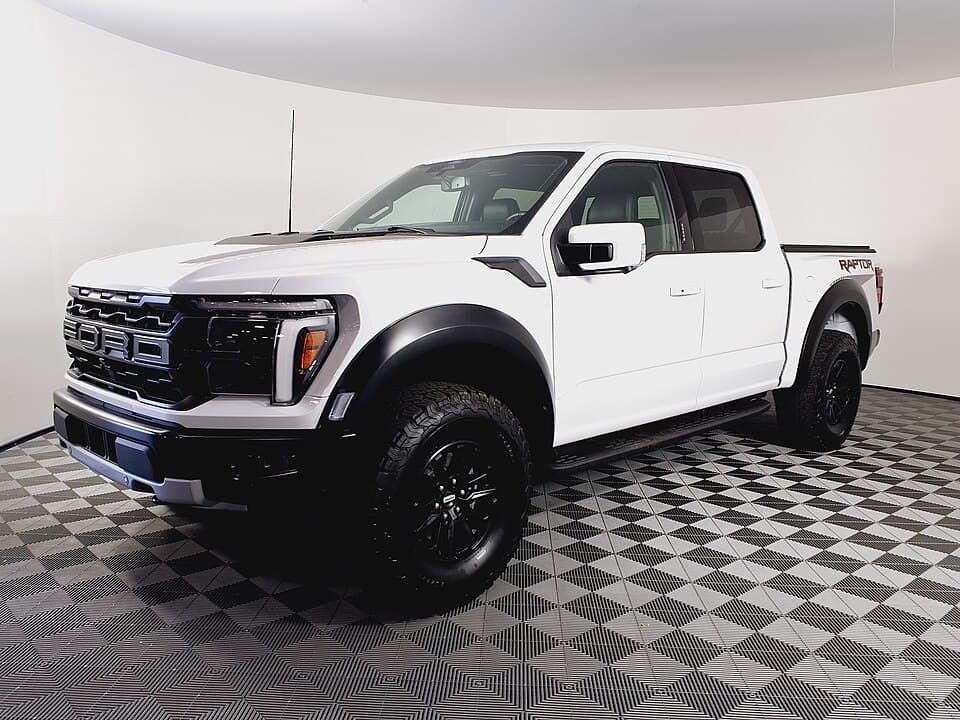
A stock Raptor runs fine at Little Sahara, but the dune field punishes a driver who treats it like Johnson Valley with sand on top. Stock tire pressure, stock throttle habits, and a stock traction strategy all need to change the moment you leave the staging area. The short version: air down more than you think, carry more fuel than you think, and know that horsepower and factory tire size matter here in a way they do not at a rock trail.
Little Sahara sits in west-central Utah and splits into distinct zones, the most relevant being the open dune field where you can run wide open with no fixed line, and areas with posted flag-height rules because of blind crests and crossing traffic. That mix is what makes it feel different from a wash-and-whoops trail. You are not picking a line through obstacles, you are managing momentum and flotation across a surface that changes grip from one dune face to the next.
How Little Sahara is different from Johnson Valley or Glamis
Johnson Valley is rock, hardpack, and graded trail with the occasional sand wash. Your Raptor's suspension travel and ground clearance do the work there, and tire pressure is a secondary concern. Little Sahara flips that. Clearance barely matters because there is nothing to hit; flotation and momentum matter because the sand will swallow a tire that is too hard and too narrow before you feel it happening.
Glamis is the closer comparison, both are big open dune systems where horsepower and tire pressure do most of the talking. The difference owners report is texture: Glamis tends to have more consistently soft, fine sand across the whole field, while Little Sahara mixes softer dune faces with firmer, more packed stretches, especially near the campgrounds and staging areas. That inconsistency is what catches people. You air down for soft sand, then hit a hard-packed section at the same pressure and get a harsher, more nervous ride than you expected, or you stay firm for the packed sections and bog the second you hit a soft face.
Tire pressure: a range, not a number
There is no single correct PSI for sand, and anyone who gives you one exact number without asking what truck, what tire, and what load you are running is guessing. The general pattern owners and sand-event regulars use: drop meaningfully below your door-placard highway pressure to widen the tire's contact patch and let it float on top of the sand instead of digging in. How far you go depends on your tire's sidewall stiffness, your truck's weight, and how aggressive the sand is that day. Start conservative, air down further if you are still pushing sand and bogging, and air back up in steps if the ride gets vague or the sidewalls feel like they are folding under cornering load.
Two things matter more than the exact number:
- Air back up before pavement. This is not optional. Driving any real distance on a paved road at sand pressure overheats and can destroy a tire, stock or aftermarket, in a matter of miles. Carry a compressor and budget time for it at the exit. The ARB Twin Onboard Air Compressor is the common answer for trucks that air down regularly; a cheap 12V inflator will leave you waiting a long time to bring four 33s, 35s, or 37s back to highway pressure.
- Know your tire's limit before you commit to a number. A tire with a softer sidewall, like most dedicated A/T or dune-oriented tires, tolerates more air-down than a stiffer highway-terrain casing. If you run beadlocks, like Method 701s, you have more room to go low without worrying about unseating the bead, which standard wheels do not give you.
Do you need 37s, or will stock tires get you through a decent day
This depends heavily on which Raptor you own, and the factory tire size has changed by generation in a way a lot of owners get wrong.
The Gen 1 (2010-2014) and Gen 2 (2017-2020) F-150 Raptor both shipped standard on a 35-inch class tire, LT315/70R17, so those trucks already carry real flotation off the showroom floor. Later Gen 2 model years also offered a 37 Performance Package that stepped up to a 37-inch tire on beadlock-capable wheels.
The Gen 3 F-150 Raptor (2021-present) changed that: the standard truck ships on a smaller 33-inch tire, LT285/70R17, not a 35. If you want 37s on a Gen 3, you need the factory 37 Performance Package or an aftermarket swap, the tradeoffs of which are covered in 35s vs 37s on a Raptor: Every Tradeoff, Measured. That matters directly at Little Sahara, a base Gen 3 on its factory 33s has noticeably less contact patch to work with in soft sand than a Gen 1 or Gen 2 on factory 35s, so it needs more conservative, careful pressure management to get the same flotation.
The Raptor R ships from the factory with the 37 Performance Package tire as standard equipment rather than an option, so an R owner starts this trip with more flotation than a base Gen 3 owner and roughly the same as a 37-package Gen 2. Confirm your own tire size off the door placard or window sticker rather than assuming based on model year, Ford has changed Raptor tire specs more than once across trims and packages.
The Ranger Raptor runs a factory tire in the 33-inch class sized for its chassis, in line with the base Gen 3 F-150's tire, and the Bronco Raptor ships standard on a 37-inch BFGoodrich all-terrain tire. Check your own build sheet rather than assuming based on badge alone, trim-to-trim variation is real on every one of these trucks.
A careful driver on factory tires, whether that is 35s on a Gen 1 or Gen 2, 33s on a base Gen 3, or 37s on a Raptor R or Bronco Raptor, will get through Little Sahara's open dune field without drama, provided you air down properly and do not try to climb the steepest faces at low speed. Where the smaller factory 33 struggles more than the 35 or 37 is flotation on the softest sand and traction on steep pitches when you lose momentum partway up a dune. A stock-tired truck that bogs on a climb will dig in fast, because the factory tire's contact patch and tread design are tuned for all-around use, not maximum float.
Larger tires help here more than almost anywhere else you will take the truck, because sand performance is largely about contact patch and the tire's ability to stay on top of the surface rather than cut into it. That said, going up a tire size on a standard Raptor is not free. It adds rotating mass, which can actually hurt acceleration out of soft sand unless you have the power and gearing to match, and most 37 setups need a corrected tune to avoid speedometer error and transmission shift-point problems. For most standard Raptor owners planning a single annual dune trip, a properly aired-down set of factory tires does the job. If you are building a truck specifically for sand, the upgrade is worth it, but go in knowing it is a tire and tune decision together, not just a tire decision.
Required safety gear, and why you must check current rules yourself
Little Sahara requires a safety whip flag on most vehicles operating in the dune areas, the idea being that a tall flag makes you visible to other riders and drivers over blind dune crests where closing speed can be high and reaction time is short. Flag height and mounting requirements get enforced and adjusted by the BLM office that manages the area, and they do change. Do not rely on last year's forum post, your buddy's truck, or this article for the exact height spec. Check the current official BLM Little Sahara page before you go, and confirm it again if it has been more than a season since your last trip. A citation out there costs you a fine; getting T-boned at a blind crossing because your flag was too short to be seen costs a lot more.
Beyond the flag, run a real recovery setup. Sand recovery boards, a shovel, and a way to air up are not optional extras at a dune field, they are the difference between a bad afternoon and calling for a tow. If you are running a winch for other trips, know that soft sand gives a winch almost nothing to anchor to, so your recovery plan here should center on traction boards and a buddy vehicle, not a winch line to a dead man anchor you do not have time to dig.
Crowds, fuel range, and other things that bite people
Little Sahara gets busy on holiday weekends, and anecdotally the open dune areas get noticeably more crowded and more chaotic with inexperienced riders during those peaks. If you have a choice, a non-holiday weekend gives you more room to actually drive and less risk of a surprise vehicle over a blind crest. This is a general pattern reported by regulars, not a guarantee, conditions and crowd size vary year to year.
Fuel range deserves more respect than most first-timers give it. Running in soft sand at low gear and high RPM burns fuel noticeably faster than highway driving or even moderate trail use, and a Raptor's real-world mpg already runs on the thirsty side, something covered in detail in Ford Raptor MPG: What Owners Actually Get. Plan your fuel budget assuming a materially worse number than your highway average, keep an actual topped-off tank before you hit the dunes, and do not assume the nearest gas station is close once you are deep in the field.
What stock ground clearance handles fine, and where owners get stuck
Stock ground clearance is a non-issue at Little Sahara. There are no rock ledges or departure-angle problems here; the dune field will not high-center you the way a rutted rock trail will. Where owners get stuck is almost always a traction and momentum problem, not a clearance problem: losing speed on a climb and sinking the rear tires, turning too sharply at low speed on a soft face, or airing down too conservatively and still pushing sand like a plow.
The fix in every case is the same. Keep momentum up on climbs, plan your line before you commit so you are not making sharp steering inputs mid-dune, and air down enough that the tire is actually floating rather than digging. A stock Raptor with correct tire pressure and a driver who respects momentum will out-perform a lifted, larger-tired truck driven by someone who treats sand like it is dirt.
The short version
- Air down meaningfully below highway pressure for the dune field, more than you would at a rock trail, and always air back up before pavement to avoid destroying a tire on the drive home.
- Tire size varies a lot by generation: Gen 1 and Gen 2 Raptors ship on factory 35s, the base Gen 3 ships on a smaller 33-inch tire, and the Raptor R and Bronco Raptor already come standard on 37s. Confirm yours off the door placard, do not assume.
- Going up a tire size genuinely helps float and climb ability but adds a tune requirement and rotating mass to weigh against the gain, detailed in 35s vs 37s on a Raptor.
- Verify the current whip flag height and visibility requirement on the official BLM Little Sahara page before you go, rules get enforced and do change.
- Budget worse fuel economy than your highway number, carry a real recovery kit, and expect holiday weekends to be noticeably busier than a random Tuesday.
Deal alert
Shopping for one? Get new listings first
We sweep US dealer inventory and send you new Raptors matching your search — real listings, real asking prices, no spam.