What a Ford Raptor Actually Costs to Own Per Year
Fuel, insurance, maintenance, and tires run $6,000 to $10,000 a year on a Gen 2 or Gen 3 daily driver, and insurance and tires are the two lines that catch new owners off guard. We built a five-year model, generation by generation, showing where depreciation fits in.
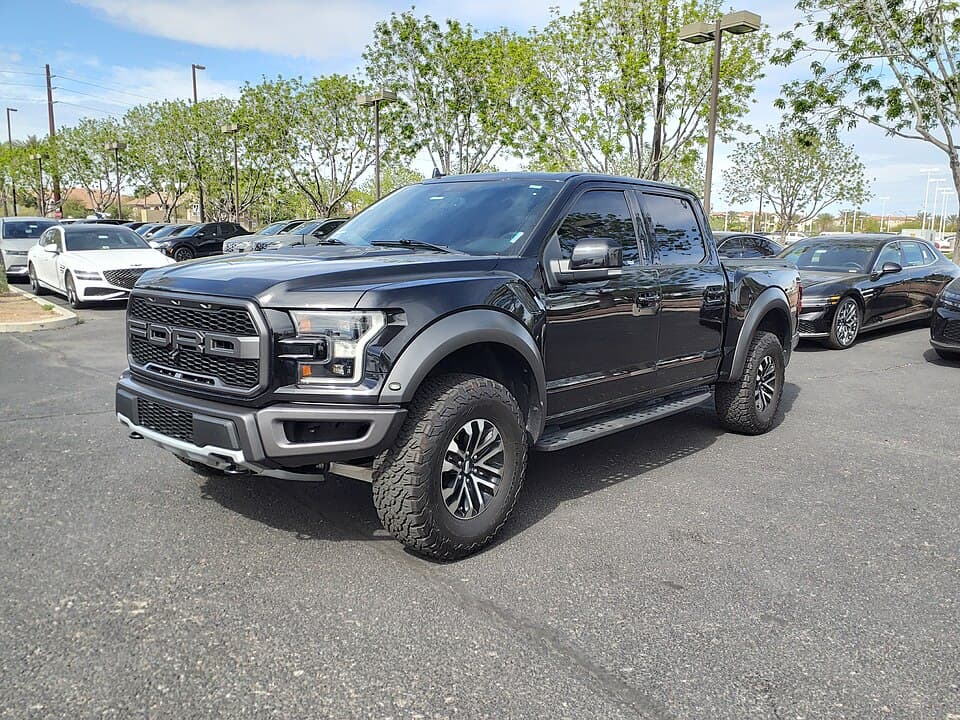
A Gen 2 or Gen 3 F-150 Raptor driven as a daily costs somewhere between $6,000 and $10,000 a year to run, fuel, insurance, maintenance, and tires combined. The two lines that catch new owners off guard: insurance, which quotes higher for reasons that have nothing to do with reliability, and tires, which wear out faster than most owners expect.
Everything below is a range, not a quote. Your state, your age, your driving record, and your dealer move every number here, sometimes by a lot.
| Cost line | Annual range | What moves it |
|---|---|---|
| Fuel | $2,900-3,900 | real-world mpg (13-16 mixed), local fuel price, premium versus regular |
| Insurance | $1,800-3,600 | age, driving record, state, full coverage versus liability only |
| Maintenance | $700-1,500 | routine service, plus a budget line for known wear items |
| Tires | $500-900 | tire life on stock 35s versus the 37 Performance Package |
| Total, all-in | $6,000-9,900 | how hard the truck is driven and where you live |
How we built this model
This is the standard Gen 2 or Gen 3 F-150 Raptor, the 3.5L EcoBoost truck most people mean when they say "Raptor." Pricing the supercharged Raptor R instead? That math runs meaningfully worse across almost every line; see our Raptor R cost of ownership breakdown. We assumed 12,000 miles a year, mixed daily driving with regular trips to dirt, and stock 35-inch tires unless noted. Fuel prices move by region, so every figure here is a deliberate range, not sloppy math.
Fuel: the real mpg, not the window sticker
The window sticker says 16 mpg combined for a 3.5L EcoBoost Raptor. Owners report 13-16 mpg in real mixed driving, the number to budget from. At 12,000 miles a year and roughly 14.5 mpg, that's about 827 gallons, or roughly $3,500 a year on premium at an assumed $4.25 a gallon. Ford recommends 91 octane for rated output and tow rating, but running 87 for daily commuting is fine on this engine and saves real money if you're not towing or working the truck hard. For the full mpg breakdown, and what tanks it further, 37s, a tune, a loaded rack, see our Ford Raptor mpg guide.
Insurance: why it quotes higher than you expect
Insurance is the line that surprises people who have only ever insured a regular F-150. A Raptor quotes higher for three real reasons: full-size pickups sit near the top of national theft-rate tables and a widebody Raptor is a specific target; repairs cost more, since aluminum panels, the twin-turbo engine, and specialty suspension parts all price out higher than stock F-150 sheet metal; and insurers often code the Raptor's output and off-road hardware under a performance classification with its own rate table, separate from a base F-150 XLT.
What you actually pay swings hard by age, record, and state. A driver in their 20s, or anyone with a recent at-fault claim, should budget $3,200-4,800 a year for full coverage. A driver in their 30s through 50s with a clean record more typically sees $1,800-2,800 a year. Liability only, which most lenders won't let you carry on a financed truck, runs less than either range. Call your own agent with your VIN and driving record; a number from a forum thread is not a quote for you.
Maintenance: what the twin-turbo actually needs, and what it costs
Routine maintenance on the 3.5L EcoBoost isn't exotic, but it isn't cheap either. The engine takes full synthetic 5W-30 on the oil-life monitor's interval, and a dealer or specialty shop typically charges $180-260 per service, depending on region and whether they use Ford-spec synthetic or a comparable aftermarket oil. Confirm the exact interval and oil grade in the current Ford workshop manual for your model year rather than trusting a sticker on the windshield.
Beyond oil, budget for front and rear differential and transfer case fluid changes on Ford's severe-duty interval if the truck sees regular off-road use, each roughly $150-250 per service, typically done every other year. Add it up and routine maintenance on a well-kept EcoBoost Raptor runs $700-1,500 a year, more if you're setting money aside for the wear-item repairs covered below.
Tires: the other line that surprises people
Tires are the second surprise. Stock 35-inch BFGoodrich KO2s last 30,000-40,000 miles with disciplined rotation, shorter if you're regularly on dirt or heavy on the throttle, and a full set of five, including the spare, runs roughly $1,400-1,900. At 12,000 miles a year that's a new set every 2.5 to 3.3 years, or call it $500-700 a year amortized.
Step up to the 37 Performance Package and the math worsens on both ends: the 37s wear faster, closer to 25,000-35,000 miles, and cost more per set, roughly $2,000-2,800, pushing the annualized line to $700-900 a year. Neither number is a defect; it's what a heavy, high-torque 4x4 on an aggressive all-terrain tire costs to keep shod.
The wear items that vary by generation
The routine numbers above assume nothing has gone wrong, and that assumption depends heavily on which generation you're driving. Gen 2 Raptors (2017-2020) carry a well-known cam phaser rattle and an internal water pump wear item, both concentrated past 80,000-90,000 miles. Our full breakdown of every phaser fix ranked by cost runs $1,800-3,000 at an independent shop or $2,400-4,800 at a dealer for the complete repair. That isn't an annual cost, it's a one-time event most Gen 2 owners hit somewhere in the ownership window, and it belongs in your budget as a line you're saving toward, not a surprise.
Gen 3 carries the same architecture with running changes that have reduced, not eliminated, the phaser issue, and the water pump concern still applies. For the full mileage picture by generation, see how long Ford Raptors actually last.
Depreciation: the biggest line item, and less brutal than you'd think on a Gen 3
Depreciation is the cost most owners never put a number on, and it's usually the largest one in the whole model. A well-optioned Gen 3 Raptor, roughly $85,000-89,000 with the 37 Performance Package, isn't immune to depreciation, but it has held its value unusually well for a truck at this price point. Strong demand and tight allocation through most of the Gen 3 cycle mean a 5-year-old, 60,000-mile Gen 3 realistically retains 60-70 percent of its original price, an estimate, since there isn't enough resale history yet for a hard number. That still works out to roughly $25,000-34,000 lost in value over five years, more than every other line in this article combined, it just spreads out silently instead of showing up on a bill.
Gen 2 tells the other half of the story. Those trucks depreciated hard early on, which is exactly why clean used Gen 2s now sell for $38,000-58,000, per our current Ford Raptor pricing breakdown. Buy a well-sorted used Gen 2 today and someone else already absorbed most of that hit; your own five-year depreciation shrinks to a few thousand dollars instead of tens of thousands.
The five-year worked example
Run the numbers out five years on a new Gen 3 Raptor driven 12,000 miles a year:
| Cost line | 5-year total (est.) |
|---|---|
| Fuel | $14,500-19,500 |
| Insurance | $9,000-18,000 |
| Maintenance | $3,500-7,500 |
| Tires | $2,500-4,500 |
| Depreciation | $25,000-34,000 |
| Five-year total | $54,500-83,500 |
That's a wide range on purpose, reflecting a genuinely wide spread of drivers, ages, states, and insurance histories. What it shows clearly: depreciation and insurance, the two costs with no wrench turned and no gallon pumped, make up close to half the total.
Is a Ford Raptor actually worth it
Asked plainly: yes, if you're buying it for what it does and can absorb the cost without financing stress, and no, if you're cross-shopping it against a regular F-150 on cost alone. A Raptor is not a cheap truck to run; the fuel, tire, and insurance lines above are real, recurring, and higher than a standard F-150 in every case.
What the math doesn't capture is what owners actually pay for: a factory-tuned long-travel suspension and locking front and rear differentials that make the truck genuinely capable off-road, not just wide fenders on a work truck, plus a Gen 3 resale value that has held up better than most vehicles at this price point. If that's why you're buying it, the annual number above is the price of admission, not a red flag. If you're buying it mainly to commute and occasionally see dirt, the math argues for a regular F-150 and a rental for the trips that actually need the capability.
The short version
- A Gen 2 or Gen 3 Raptor driven as a daily runs roughly $6,000-10,000 a year in fuel, insurance, maintenance, and tires, before depreciation.
- Insurance and tires are the two lines that catch new owners off guard; budget $1,800-3,600 and $500-900 a year respectively, and expect both to vary hard by state, age, and record.
- Depreciation is the single biggest cost, roughly $25,000-34,000 over five years on a new Gen 3, though it has held up better than most trucks at this price.
- Buying used Gen 2 sidesteps most of that depreciation hit; the tradeoff is budgeting for the phaser and water pump repair most of those trucks eventually need.
- If you're weighing the supercharged Raptor R instead, its costs run meaningfully higher across nearly every line; see our full Raptor R cost breakdown before you decide.
Owner questions
- Ford Raptor cost of ownership breakdown
- A Gen 2 or Gen 3 F-150 Raptor costs roughly $6,000-9,900 a year, combining fuel ($2,900-3,900), insurance ($1,800-3,600), maintenance ($700-1,500), and tires ($500-900). This assumes 12,000 miles a year, mixed daily driving with dirt trips, and stock 35-inch tires. Depreciation adds another $25,000-34,000 over five years on a new Gen 3, the largest single cost line.
- How much should I budget for Ford Raptor insurance?
- Budget $1,800-2,800 a year for full coverage if you're in your 30s-50s with a clean record, or $3,200-4,800 if you're in your 20s or have a recent at-fault claim. Rates run higher than a regular F-150 due to theft rates, pricier aluminum-panel and turbo repairs, and insurers coding the Raptor under a separate performance classification.
- What real-world mpg does the Ford Raptor get and what does fuel cost per year?
- Despite a 16 mpg combined window sticker, owners report 13-16 mpg in real mixed driving. At 12,000 miles a year and about 14.5 mpg, that's roughly 827 gallons, costing about $3,500 a year on premium at an assumed $4.25/gallon, though running 87 octane for daily commuting is fine if you're not towing.
- How often do Ford Raptor tires need replacing and what do they cost?
- Stock 35-inch BFGoodrich KO2s last 30,000-40,000 miles with disciplined rotation, and a full set of five including the spare runs $1,400-1,900, amortizing to $500-700 a year. The 37 Performance Package wears faster, 25,000-35,000 miles, and costs $2,000-2,800 per set, pushing the annual line to $700-900.
- What major repair should Gen 2 Ford Raptor owners budget for?
- Gen 2 Raptors (2017-2020) commonly develop a cam phaser rattle and internal water pump wear, typically past 80,000-90,000 miles. The complete phaser repair runs $1,800-3,000 at an independent shop or $2,400-4,800 at a dealer. It's a one-time expense most Gen 2 owners eventually hit, not an annual cost, so it should be saved toward rather than treated as a surprise.
Deal alert
Shopping for one? Get new listings first
We sweep US dealer inventory and send you new Raptors matching your search — real listings, real asking prices, no spam.