Every Ford Raptor Compared: F-150, Raptor R, Ranger, and Bronco Raptor
Compare the F-150 Raptor, Raptor R, Ranger Raptor, and Bronco Raptor. Find out which Raptor is best for you based on specs, performance, and price.
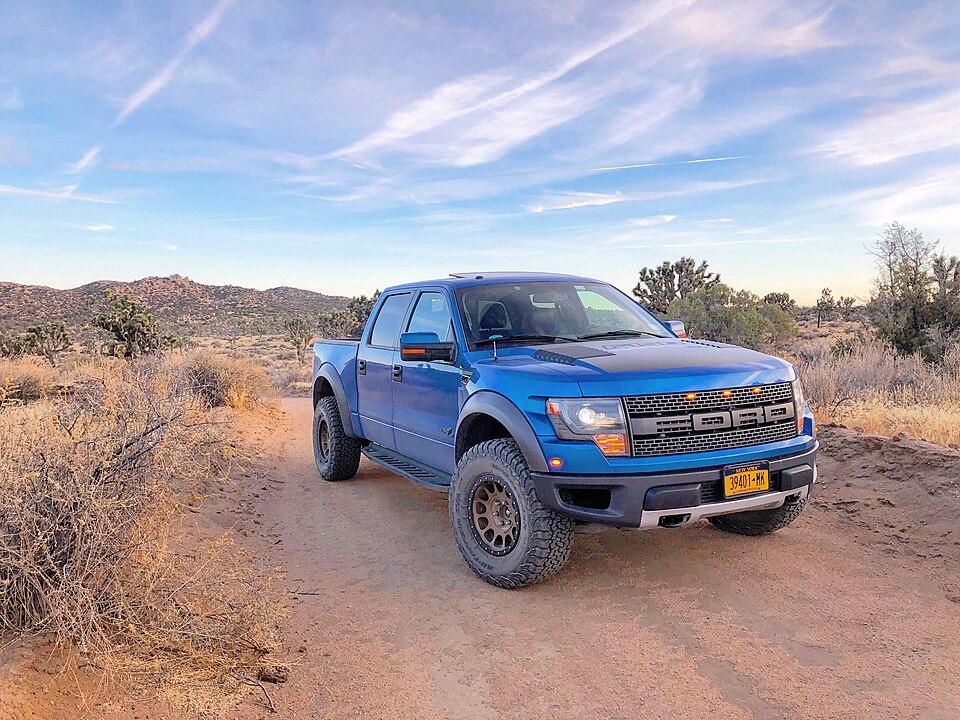
Every Raptor is a different answer to a different question. The Gen 3 F-150 Raptor is the baseline for most buyers: a full-size desert truck with 450 hp, five-link coil rear suspension, and a 2026 used-market average around $91,821 for the 2026 model year. The Raptor R adds a supercharged 5.2L V8 for people who want 720 hp and don't care what it costs to keep. The Ranger Raptor is the one that fits in a normal garage. The Bronco Raptor is the one you buy to go over things, not around them. Below is every generation and model side by side, with real prices, not brochure numbers.
The comparison table
| Model | Engine | Horsepower / Torque | Ground Clearance | 2026 Avg Used Price |
|---|---|---|---|---|
| F-150 Raptor Gen 1 (2010-2014) | 6.2L V8, naturally aspirated | 411 hp / 434 lb-ft | 9.8 in | not tracked in this data set |
| F-150 Raptor Gen 2 (2017-2020) | 3.5L High-Output EcoBoost V6, twin-turbo | 450 hp @ 5,000 / 510 lb-ft @ 3,500 | 11.5 in | $34,009 (2017) to $44,667 (2020) |
| F-150 Raptor Gen 3 (2021-present) | 3.5L High-Output EcoBoost V6, twin-turbo | 450 hp @ 5,850 / 510 lb-ft @ 3,000 | 12.0 in (35s) / 13.1 in (37s) | $58,678 (2021) to $91,821 (2026) |
| F-150 Raptor R (2023-present) | 5.2L supercharged V8 | 720 hp @ 6,650 / torque figure not published with a peak rpm by Ford | 13.1 in | $97,342 (2023) to $140,981 (2026) |
| Ranger Raptor (2024-present) | 3.0L EcoBoost V6, twin-turbo | 405 hp / 430 lb-ft (estimate; confirm against the current Ford spec sheet for your model year) | 10.7 in | $51,843 (2024) to $61,949 (2026) |
| Bronco Raptor (2022-present) | 3.0L EcoBoost V6, twin-turbo | 418 hp / 440 lb-ft (estimate; confirm against the current Ford spec sheet for your model year) | 13.1 in | $62,905 (2022) to $87,978 (2026) |
A note on the power figures: the Gen 2 and Gen 3 3.5 EcoBoost share the same 450 hp / 510 lb-ft rating on paper, but Ford moved the horsepower peak from 5,000 rpm on Gen 2 to 5,850 rpm on Gen 3, and moved the torque peak down from 3,500 rpm to 3,000 rpm. That is a real difference in how the engine wants to be driven, not a rounding error. The Gen 1 6.2L V8, by contrast, made its 411 hp at 5,500 rpm with no turbo lag to manage at all, which is part of why some owners still prefer it for towing feel even though it is down on peak numbers.
F-150 Raptor: which generation actually fits you
Gen 1 (2010-2014): the one for people who don't want a turbo
The 6.2L Boss V8 is naturally aspirated, which means no cam phaser rattle, no turbo failure risk, and a power delivery that does not depend on boost building. It also means less power and worse fuel economy than anything that came after it. The 6R80 six-speed automatic is a known quantity at this point, though it has its own failure modes worth knowing before you buy, covered in the Gen 1 6R80 transmission problems guide. Ground clearance tops out at 9.8 inches and suspension travel is noticeably shorter than later trucks, so a Gen 1 on 35s rides tighter in the whoops than a Gen 2 or Gen 3 on the same tire. If you are cross-shopping a 5.4 versus the 6.2 within Gen 1 itself, that split is its own decision, covered separately in Gen 1 Raptor: 5.4 vs 6.2.
Gen 2 (2017-2020): the value pick, with a known engine issue to budget around
This is where the EcoBoost V6 replaced the V8, aluminum body panels dropped curb weight, and the 10R80 ten-speed automatic replaced the old six-speed. Suspension travel grew to 13.0 in front and 13.9 in rear, and ground clearance went to 11.5 inches. The real story on a used Gen 2 is the cam phaser rattle that shows up on cold starts on the early 3.5 EcoBoost, which has a fix path ranked by cost in the Gen 2 cam phaser guide. Budget for that conversation before you buy, not after. At $34,009 to $44,667 across the 2017-2020 window in this site's live listing average, a Gen 2 is the cheapest way into a modern-platform Raptor, and it is the truck most owners are pricing 37s and King 3.0s onto, a build priced out in the cost of putting 37s on a Gen 2.
Gen 3 (2021-present): the current truck, at a current price
Gen 3 moved to a five-link coil rear suspension (Gen 1 and Gen 2 both ran leaf springs out back), pushed suspension travel to 14.0 in front and 15.0 in rear, and introduced the 37 Performance Package with factory 37-inch tires and 13.1 inches of ground clearance. The 2026 model year averages $91,821 used across more than 2,500 live listings, which tells you this generation has not started depreciating in any meaningful way yet. If you are deciding between a well-kept Gen 2 and an entry Gen 3, that tradeoff (warranty coverage versus purchase price) is worked through in Gen 2 vs Gen 3: which generation to actually buy.
Raptor R: what the extra money actually buys
The Raptor R swaps the EcoBoost V6 for a supercharged 5.2L V8 making 720 hp at 6,650 rpm. Ford has not published a torque peak rpm for this engine alongside the horsepower figure, so treat any number you see quoting a torque peak rpm as unverified until you check the current Ford media spec sheet for your model year. The 10R80 automatic gets heavy-duty internals to handle the extra torque, and ground clearance matches the Gen 3 37 package at 13.1 inches.
Pricing moved fast on this truck. The 2026 model year averages $140,981 used, up from $97,342 for 2023, the truck's first year. That is a lot of money chasing a limited number of trucks, and it means a Raptor R holds value in a way the standard Raptor does not have to. Before you write that check, read what the ownership costs actually look like beyond the purchase price in what a Raptor R actually costs to own, and if you are cross-shopping against the obvious competition, Raptor R vs TRX vs RHO lays out where each truck actually wins.
Ranger Raptor: the one that fits in your garage
The Ranger Raptor runs a 3.0L EcoBoost V6, a smaller-displacement turbo six than the full-size truck's 3.5L, with output in the mid-400 hp range (confirm the exact current-year figure against the Ford spec sheet, since Ford has adjusted Ranger Raptor output between model years). It rides on noticeably shorter suspension travel than any F-150 Raptor, around 10.7 inches at the front, which matches its mission: this is the Raptor for someone who wants Raptor suspension tuning and attitude without a nearly 6,000-lb curb weight and without parking it in a space built for a half-ton.
At $51,843 to $61,949 across the 2024-2026 range tracked here, it is also the cheapest door into the lineup by a wide margin. The size question is the one buyers actually struggle with, and it gets a direct answer in is the Ranger Raptor actually big enough. If you are deciding between this and the full-size truck specifically, Ranger Raptor vs F-150 Raptor is built for exactly that decision.
Bronco Raptor: the off-road SUV, not the desert runner
The Bronco Raptor shares its 3.0L EcoBoost V6 with the Ranger Raptor platform family, tuned slightly differently, and it is the only Raptor with no published payload rating in Ford's own materials, since it is built and marketed as an SUV, not a hauler. Towing tops out around 4,500 lb, the lowest number in this whole lineup. What it has instead is 13.1 inches of ground clearance matching the Raptor R and the 37 Package Gen 3, plus approach, breakover, and departure angles built for rock crawling rather than whoops running.
Used pricing runs $62,905 (2022) to $87,978 (2026), putting it close to a loaded Gen 3 F-150 Raptor in dollars for a very different truck. That exact matchup, same money, different mission, is the subject of Gen 3 vs Bronco Raptor: same money, different truck. If your real cross-shop is against a Wrangler Rubicon 392, that comparison lives at Bronco Raptor vs Jeep Wrangler Rubicon 392.
Who each Raptor is actually for
- Gen 1 F-150 Raptor: buyers who want a V8 with no turbo to worry about and will accept shorter suspension travel and less power for it.
- Gen 2 F-150 Raptor: the value play. Modern platform, EcoBoost power, lowest entry price in the full-size lineup, with a known cam phaser issue to budget around.
- Gen 3 F-150 Raptor: buyers who want the current coil-rear platform, the longest suspension travel of any non-R F-150 Raptor, and are willing to pay 2026 prices for it.
- Raptor R: buyers who have decided 450 hp is not enough and have priced out what 720 hp actually costs to insure, fuel, and maintain.
- Ranger Raptor: buyers who want Raptor suspension and attitude in a truck that fits a normal garage and a normal budget.
- Bronco Raptor: buyers whose terrain is rocks and trails, not dunes and whoops, and who do not need a bed.
The short version
- The Gen 3 F-150 Raptor is the default full-size pick today; Gen 2 is the budget full-size pick if you accept the cam phaser conversation.
- The Raptor R is a 720 hp truck priced like one, averaging $140,981 used for 2026; buy it because you want the engine, not because you need the capability.
- The Ranger Raptor is the cheapest, smallest way into the lineup, starting around $51,843 used for a 2024.
- The Bronco Raptor is priced near a Gen 3 F-150 Raptor but built for a completely different job: rock terrain and SUV angles, not payload and towing.
Deal alert
Shopping for one? Get new listings first
We sweep US dealer inventory and send you new Raptors matching your search — real listings, real asking prices, no spam.