Ranger Raptor vs Bronco Raptor: Same 3.0L V6, Very Different Trucks
Both use Ford's 3.0L twin-turbo V6, but the Bronco Raptor makes 418 hp on 37s and Fox 3.1 shocks, while the Ranger Raptor makes 405 hp on 33s with a bed and a higher tow rating. Here is the spec-by-spec split and who each one fits.
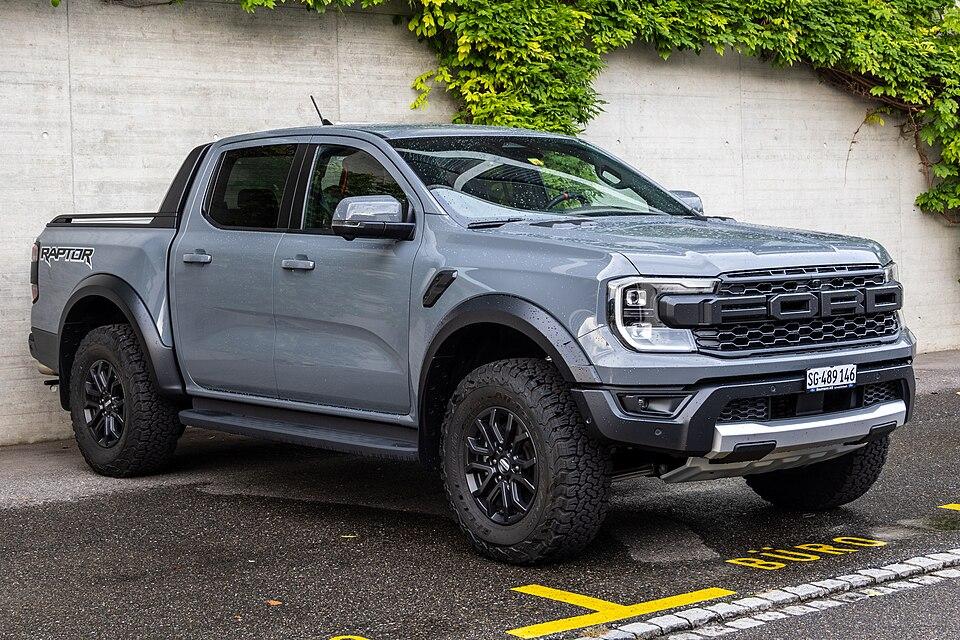
Ford's 3.0L twin-turbo EcoBoost V6 makes 405 hp and 430 lb-ft in the Ranger Raptor and 418 hp and 440 lb-ft in the Bronco Raptor, the same basic engine tuned two different ways for two different jobs. The Bronco Raptor is the wider, taller, 37-inch-tire rock crawler built to clear obstacles the Ranger never sees; the Ranger Raptor is the desert-tuned pickup with a bed, a 5,510 lb tow rating, and a starting price tens of thousands lower. If you need a bed or you tow a trailer, this decision is already made for you. If you need width, articulation, and 13 inches of ground clearance, it is also already made for you. The interesting part is how differently Ford tuned the same engine to get there.
The spec-by-spec split
| Spec | Ranger Raptor | Bronco Raptor |
|---|---|---|
| Engine | 3.0L EcoBoost V6, twin-turbo | 3.0L EcoBoost V6, twin-turbo |
| Power | 405 hp @ 5,750 rpm | 418 hp @ 5,750 rpm |
| Torque | 430 lb-ft | 440 lb-ft @ 3,600 rpm |
| Tires | 33-in LT285/70R17 | 37x12.50R17 |
| Front shocks | Fox 2.5 Live Valve | Fox 3.1 Live Valve |
| Lockers | Front and rear electronic | Front and rear electronic |
| Towing | 5,510 lb | 4,500 lb |
| EPA combined | 17 mpg | 15 mpg |
| Ground clearance | 10.7 in | 13.1 in |
| Approach/breakover/departure | 33.0 / 24.2 / 26.4 deg | 47.2 / 30.8 / 40.5 deg |
| 0-60 | 5.3-5.8 sec (published tests) | ~5.7 sec (site estimate) |
| Starting MSRP | $56,070 | ~$92,000 (site estimate) |
Same engine, different tune
Both trucks run the 3.0L EcoBoost, but Ford did not just copy the calibration across. The Bronco Raptor's 418 hp and 440 lb-ft beat the Ranger's 405 hp and 430 lb-ft by a meaningful margin for the same displacement and turbo layout, and the torque curves land differently too. Ford's 2026 Ranger technical specifications list the Ranger Raptor's peak torque at 4,500 rpm, while the Bronco Raptor's 440 lb-ft peaks earlier, at 3,600 rpm. That earlier peak matters more than the horsepower gap for low-speed rock crawling, where you want torque on tap right off idle rather than up near redline. The Ranger's tune, by contrast, is built around sustained desert speed, not crawling, so Ford left more of the curve higher in the rev range.
Neither engine shares parts with the Raptor R's supercharged 5.2L V8, and neither one should be cross-shopped against it on power. This is a 3.0L-versus-3.0L conversation, and the gap between these two trucks is entirely about calibration and what is bolted underneath.
Tires, shocks, and lockers: the real divide
The 33-inch LT285/70R17 all-terrains on the Ranger Raptor and the 37x12.50R17 tires standard on the Bronco Raptor are not a minor trim difference, they are the reason the rest of the spec sheet looks the way it does. Bigger tires need more suspension travel to use, which is why the Bronco Raptor runs Fox 3.1 Live Valve shocks with remote reservoirs and internal bypass tuning, while the Ranger runs the smaller-bodied Fox 2.5 Live Valve units. Both trucks get electronic locking differentials front and rear, which is the one place they are functionally identical. Lock both axles on either truck and you have the same traction tool, just deployed on a chassis built for a different kind of obstacle.
If you are deciding between 33s and bigger rubber on your own Raptor platform, the tradeoffs in ride quality, gearing, and cost are covered in detail in 35s vs 37s on a Raptor, every tradeoff measured.
Bed or no bed: towing and cargo
This is the decision point that actually separates buyers, more than horsepower ever will. The Ranger Raptor has a 59.6-inch bed floor and tows up to 5,510 lb, more than the Bronco Raptor's 4,500 lb tow rating despite having less horsepower and less torque. That gap comes down to the frame and body style: a body-on-frame pickup with a bed is simply a better towing platform than an SUV, regardless of what engine sits up front. The Bronco Raptor has no bed at all. What it has instead is a removable roof and doors, which the Ranger cannot offer and never will, because it is not that kind of vehicle.
If you haul gear, side-by-sides, or a trailer with any regularity, the Ranger's bed and tow rating decide this for you before you get to anything else. If open-air driving and the ability to pull the doors off for a trail day matter more than a bed, that decision runs the other way. We cover the bed-size question specifically in Is the Ranger Raptor actually big enough? and the towing numbers across every Raptor variant in Ford Raptor towing capacity, every generation, real numbers.
Fuel economy: neither is good, one is worse
The EPA rates the Ranger Raptor at 16 city / 18 highway / 17 combined, confirmed on fueleconomy.gov, and rates the 2025 Bronco Raptor at 15 combined. Neither number is good for a 3.0L six, and the 37-inch tires and extra frontal area on the Bronco Raptor are the likely reason for most of the two-mpg gap, though Ford has not published a breakdown of where that difference comes from.
In practice, both trucks run smaller fuel tanks than their thirst suggests. The Ranger's 20-gallon tank (20.3 on the 2024 spec sheet) works out to roughly 340 miles on paper at its combined rating, and meaningfully less towing or running sand. The Bronco Raptor's 20.8-gallon tank works out to roughly 310 miles on paper at its combined rating, and owners report considerably less than that in sand or at speed, though nobody has published a real-world range figure worth quoting as a number rather than an estimate. If range planning matters to your use case, read Ford Raptor MPG: what owners actually get before you commit to either truck, because the EPA sticker number and the number you will see in the real world are not close.
Ground clearance and geometry: this is not a close comparison
Here is where the Bronco Raptor stops looking like a variant of the Ranger and starts looking like a different category of truck. Ford's spec sheets put the Ranger Raptor at 10.7 inches of minimum running ground clearance with a 33.0-degree approach angle, 24.2-degree breakover, and 26.4-degree departure. The Bronco Raptor runs 13.1 inches of clearance with a 47.2-degree approach, 30.8-degree breakover, and 40.5-degree departure angle, numbers that put it closer to a dedicated rock crawler than to anything else wearing a Raptor badge. That is the direct result of the bigger tires, the wider HOSS 4.0 suspension, and a design brief that started with rock gardens rather than whoops.
The Ranger Raptor is still a capable desert truck at speed, and its geometry is adequate for most trails most owners will actually run, including fast two-track and moderate rock. But if your plans involve tighter technical terrain, the Bronco Raptor's angles are not a marginal advantage, they are a different vehicle class. For a sense of where each one is actually comfortable, see running Moab in a stock Raptor and running Johnson Valley OHV Area.
0-60: both are quick, Ford does not publish either number
Ford does not publish an official 0-60 figure for either truck, so every number here comes from an outlet's own test. For the Ranger Raptor, Car and Driver recorded 5.3 seconds, Hagerty recorded 5.7, and Motor1 recorded 5.8, a reasonable spread given different testers, different fuel, and different surfaces. We have not run an independent 0-60 test on the Bronco Raptor, but our working figure, based on comparable published tests and the Bronco Raptor's extra power offset against its extra weight and much larger tire, lands around 5.7 seconds. We are labeling that an estimate, not a measured result. Neither truck is meaningfully quicker than the other in a straight line; the Bronco Raptor's extra 13 hp is mostly eaten by curb weight near 5,730 lb against the Ranger's 5,325 lb. More context on every Raptor variant's acceleration numbers is in Ford Raptor 0-60: every generation, real numbers.
Price: new MSRP versus what the used market actually shows
As of November 2026, ford.com lists the Ranger Raptor starting at $56,070 MSRP. The Bronco Raptor is not published at a single clean number the same way; our build-sheet tracking puts a base 2026 Bronco Raptor at roughly $92,000, which is a gap approaching $36,000 before anyone touches an options sheet.
That new-truck gap does not carry straight through to the used market, and it is not holding steady either. Our live used-listing averages, tracked on our pricing page, show the asking-price spread between the two trucks growing year over year: about $18,654 on 2024 model-year listings ($51,843 average for the Ranger Raptor against $70,497 for the Bronco Raptor), $23,905 on 2025 listings ($55,749 vs $79,654), and $26,029 on 2026 listings ($61,949 vs $87,978). The used-market gap is real and it is widening, but it has never come close to the nearly $36,000 you would pay new, which suggests Bronco Raptor demand has held used prices up relative to new MSRP more than Ranger Raptor demand has. Either way, the Ranger Raptor gets you into a factory Raptor-badged 3.0L EcoBoost for meaningfully less money, new or used, with a bed and a higher tow rating thrown in.
Which one actually fits you
Buy the Ranger Raptor if you need a bed, you tow anything regularly, you want better real-world fuel range, or an SUV in the low-to-mid $80,000s to low $90,000s is simply not a number you are spending on a second vehicle. Buy the Bronco Raptor if ground clearance and approach angle are the actual constraint on your trail list, if you want the removable roof and doors, or if the extra power and torque matter more to you than towing capacity or a place to put dirty gear. Both trucks carry their own known issues worth reading before you sign anything: see Ranger Raptor common problems and Bronco Raptor common problems, and check the Ranger Raptor reliability data against your specific model year before you buy.
The short version
- Same 3.0L EcoBoost V6, different tunes: Ranger Raptor makes 405 hp / 430 lb-ft, Bronco Raptor makes 418 hp / 440 lb-ft with torque peaking earlier.
- The Ranger Raptor tows more (5,510 lb vs 4,500 lb), gets better EPA mileage (17 vs 15 combined), and has a bed. The Bronco Raptor has far more ground clearance and approach/departure angle, factory 37s, and a removable roof and doors.
- The Ranger Raptor starts at $56,070 MSRP; the Bronco Raptor starts around $92,000 (a site estimate, not a single published Ford number). That new-truck gap does not hold in the used market, where the spread is smaller, roughly $18,600-$26,000 depending on model year, and growing rather than steady.
- Pick by use case, not by horsepower: towing and cargo point to the Ranger, technical terrain and open-air driving point to the Bronco Raptor.
Deal alert
Shopping for one? Get new listings first
We sweep US dealer inventory and send you new Raptors matching your search — real listings, real asking prices, no spam.