Ranger Raptor vs F-150 Raptor: Which Truck Actually Fits You
One is a midsize truck built for tighter trails and a lower price, the other is a full-size off-road icon with more payload and towing muscle. This lays out where each actually wins so the choice isn't just about badge size.
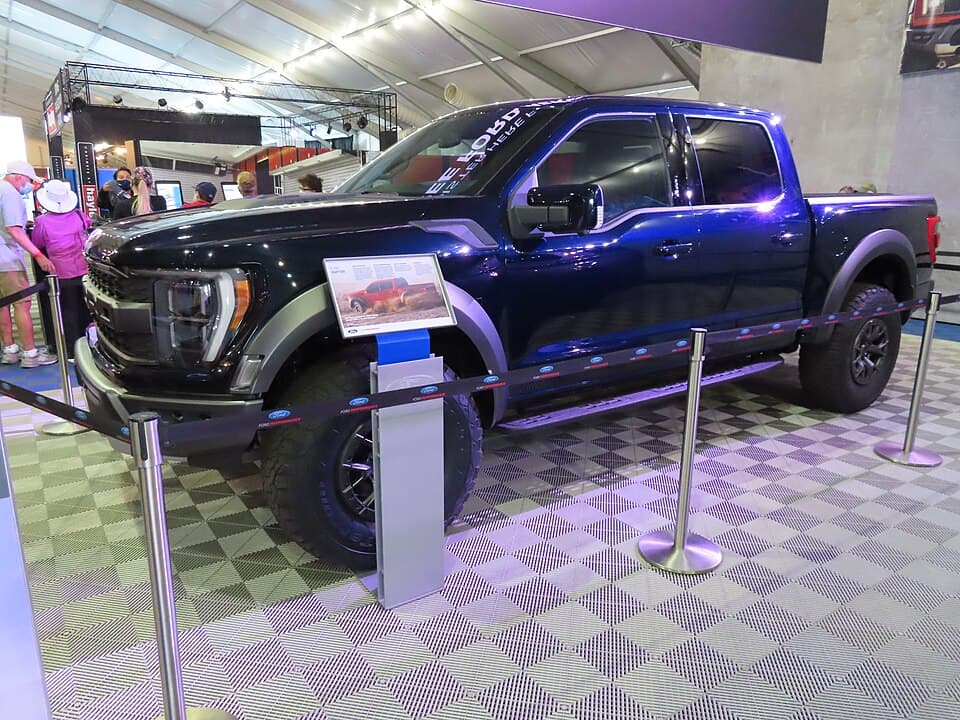
The short answer: if you need to tow a camper, haul real payload, or want a cabin that fits an adult comfortably in the back seat for a road trip, buy the F-150 Raptor. If most of your weekends happen on tight, technical trail rather than open desert, or the F-150 Raptor's price simply does not fit your budget, the Ranger Raptor is the more honest tool for that job, not just a cheaper badge.
They are not the same truck wearing different sheet metal. One is a full-size performance truck that happens to be great off-road. The other is a midsize truck built around trail width and weight, with towing and payload treated as secondary. Picking between them on "which one do I want more" instead of "which one actually does my job" is how people end up disappointed with a truck they otherwise like.
When did the Ranger Raptor actually come to the US?
Ford sold versions of the Ranger Raptor in Australia, Europe, Thailand, and other global markets for years before the truck ever reached a US dealer lot. The Ranger Raptor arrived in North America for the 2024 model year, well after export-market buyers already had it.
That gap matters if you are researching this truck online. A lot of what shows up in a search, especially older reviews, spec sheets, and forum posts, describes the global-spec truck: different engine tunes, different suspension calibration in some cases, sometimes different available cab and bed configurations. Treat any pre-2023 coverage of the Ranger Raptor as a description of a different, related vehicle, not the one sitting on a US lot. When you want a number for the actual US truck, check the current window sticker or Ford's published US specifications for that model year rather than a spec sheet written for the Thai or Australian market.
Engine and drivetrain: not the same fight
The F-150 Raptor has run through three distinct drivetrain eras: the Gen 1 with its naturally aspirated V8s, the Gen 2 and Gen 3 on twin-turbo EcoBoost V6 power, and the Raptor R with a supercharged 5.2L V8 that puts it in a different performance class entirely.
The US-spec Ranger Raptor runs a 3.0L twin-turbo EcoBoost V6, the same engine family Ford uses in the Bronco Raptor, rated at 405 horsepower and 430 lb-ft of torque, paired with a 10-speed automatic. That is a genuinely potent engine for a midsize truck, and it is a different animal from the V6 used in export-market Ranger Raptors sold before the US launch, which ran a smaller-displacement bi-turbo four-cylinder in some markets. Do not assume the global spec sheet you found describes the engine under the hood of a US truck.
We cover the full breakdown of what changed across every F-150 Raptor generation, including the phaser and turbo differences that matter for reliability, in our Ford Raptor engines guide. For the Ranger specifically, including tested 0-60 numbers for the US truck, see the Ranger Raptor specs page.
The drivetrain difference is not just displacement. The F-150 Raptor's 10R80 ten-speed automatic and full-time 4WD system with electronic locking differentials on most trims are tuned around a heavier truck with a wider stance. The Ranger Raptor's running gear is scaled to a narrower, lighter platform, which is exactly why it fits where the F-150 Raptor does not, and exactly why it should not be expected to tow or haul like one.
Payload and towing: this is where the size difference stops being cosmetic
A full-size Raptor exists partly to be a truck first. Depending on generation and cab configuration, the F-150 Raptor carries a payload in the low-to-mid 1,000-lb range and can tow up several thousand pounds more than the Ranger Raptor manages, numbers that shift meaningfully by year and by whether you are looking at the Gen 2, Gen 3, or Raptor R. Rather than round those off here, see the full generation-by-generation breakdown in Ford Raptor towing capacity by generation and what a Raptor can actually carry in payload.
The US Ranger Raptor's published ratings for its 2024 launch year put payload at roughly 1,400 lbs and max towing at roughly 5,500 lbs, figures that can shift slightly by cab and options package, so confirm the sticker on the specific truck you are looking at rather than treating this as a fixed number across every build. The real gap is on the towing side: the Ranger Raptor is not close to what a full-size Raptor pulls, even though its payload rating is closer than most people expect.
One more trap: do not use a global-market Ranger Raptor towing or payload figure and assume it applies to the US truck. Ratings differ by market because of different regulatory testing, different available axle and cooling packages, and sometimes different suspension tuning. If your plan involves a travel trailer, a car hauler, or hauling more than a couple of dirt bikes on a regular basis, that alone should end the comparison in the F-150 Raptor's favor. If your bed load is mostly recovery gear, camping gear, and maybe a UTV on rare occasion, the Ranger Raptor's lower numbers may never actually get tested by how you use the truck.
Size and practicality: the argument that keeps happening
The size question gets litigated endlessly in every Ranger Raptor thread, and we are not going to redo that argument here. Short version: a midsize truck is easier to park, easier to place on a tight trail, and cheaper to feed, but it also means a smaller cabin, less rear-seat room, and less bed. Whether that tradeoff actually works for your life, your garage, and your trail choices is covered in detail in Is the Ranger Raptor Actually Big Enough?, and it is worth reading before you write off either truck on size alone.
What we will say plainly here: if you regularly run trails where a full-size truck's width costs you ground clearance choices or turning radius on switchbacks, the Ranger Raptor's narrower footprint is a real, measurable advantage, not a marketing line. If your trail running is mostly open desert, dunes, or wide fire roads, like Glamis or Johnson Valley, the F-150 Raptor's extra width barely costs you anything and buys you a more planted, higher-speed truck.
Price: what the gap actually buys
Based on this site's live used-market pricing data, the gap between these trucks is not small. Recent F-150 Raptors (the EcoBoost trucks, not the Raptor R) are averaging roughly $69,600 for 2023 models up to roughly $86,000 for 2025 models on the used market. The Raptor R sits well above that, averaging over $102,000 for 2023 models and climbing past $137,000 for 2026 models.
The standard Ranger, which the Raptor trim is built from, is averaging roughly $53,600 for 2024 models up to roughly $61,700 for 2026 models in our own listings data. The Ranger Raptor trim commands a real premium over that base truck, and because the US truck only launched for 2024, there simply is not much used-market history yet to average against. Expect that premium to land well below what a used F-150 Raptor costs, but do not assume it stays cheap forever. Early-production, low-mileage trucks in a new segment tend to hold their sticker price hard for the first couple of years.
For a full current-year MSRP breakdown across every Raptor model, see How Much Is a Ford Raptor? 2026 Prices for Every Model.
The practical read: the Ranger Raptor is priced to undercut the F-150 Raptor by a real margin, not a rounding error, while still costing more than a comparable Ranger without the Raptor package. It targets the buyer who wants Raptor suspension and attitude without Raptor-size payments, not the buyer cross-shopping strictly on capability.
| F-150 Raptor (EcoBoost) | Raptor R | Ranger Raptor | |
|---|---|---|---|
| Platform | Full-size | Full-size | Midsize |
| Engine | Twin-turbo 3.5L V6 | Supercharged 5.2L V8 | Twin-turbo 3.0L V6, 405 hp/430 lb-ft |
| Best at | Towing, payload, high-speed desert | All of the above, plus straight-line speed | Tight trails, lower price of entry |
| Used avg, recent years | roughly $69,600-86,000 (2023-2025) | roughly $102,300-137,900 (2023-2026) | limited history, priced above base Ranger's ~$53,600-61,700 |
What Ford covers on each
Both trucks carry Ford's standard new-vehicle coverage: a 3-year/36,000-mile bumper-to-bumper warranty and a 5-year/60,000-mile powertrain warranty, the same terms whether you are buying a Ranger Raptor or a Raptor R. A recall is a safety fix Ford performs free regardless of warranty status; a technical service bulletin (TSB) is a documented repair procedure for a known issue, not automatically free work, and whether it is covered under warranty or handled as goodwill depends on your truck's age, mileage, and dealer.
Where the two trucks diverge is repair cost once something breaks outside warranty. A blown turbo or a transmission issue on a full-size Raptor, especially a Raptor R with its supercharged V8, tends to cost more in parts and labor than the equivalent failure on a smaller-displacement Ranger Raptor engine, simply because the parts and the shop time are more expensive. If you are weighing whether to add a factory extended service plan on either truck, Ford Raptor Extended Warranty: Worth It, or Self-Insure? walks through that math for the F-150 side, and the same logic (weigh the plan cost against your own repair risk tolerance and how long you keep the truck) applies to the Ranger Raptor once it has enough time on the road for owners to know its failure points.
The use-case verdict
If you tow a trailer, haul real payload, or need a full-size cabin for people and gear on long trips, the F-150 Raptor is the correct truck, and the Raptor R is the correct truck if you also want supercharged straight-line performance to go with it. If your trail diet is tight, technical, low-speed terrain where width costs you clearance choices, or the F-150 Raptor's price is simply outside what you can justify, the Ranger Raptor is not a consolation prize. It is the more honest tool for that specific job.
The short version
- The Ranger Raptor launched in North America for the 2024 model year, years after global markets got it. Do not trust pre-2023 coverage or export-market spec sheets for the US truck.
- The US Ranger Raptor runs a 3.0L twin-turbo V6 making 405 hp and 430 lb-ft, a real engine, but the F-150 Raptor still wins decisively on payload and especially towing. Check the linked generation numbers before you plan a trailer or a load.
- The Ranger Raptor's narrower footprint is a genuine trail advantage on tight terrain, not just a smaller price tag.
- Both trucks carry the same Ford powertrain and bumper-to-bumper warranty terms, but repairs cost more on the full-size trucks once you are outside coverage.
- Price the trucks off current listings, not memory. The used-market gap between them is real and should shape this decision more than any spec sheet.
Deal alert
Shopping for one? Get new listings first
We sweep US dealer inventory and send you new Raptors matching your search — real listings, real asking prices, no spam.