Bronco Raptor vs. Jeep Wrangler Rubicon 392: Which Off-Road Icon Actually Wins
One is a turbo V6 with live-valve suspension, the other a naturally aspirated Hemi V8 on factory coilovers, and both land around six figures used or new. This comparison weighs powertrain character, articulation, and real ownership costs to settle which one actually suits you.
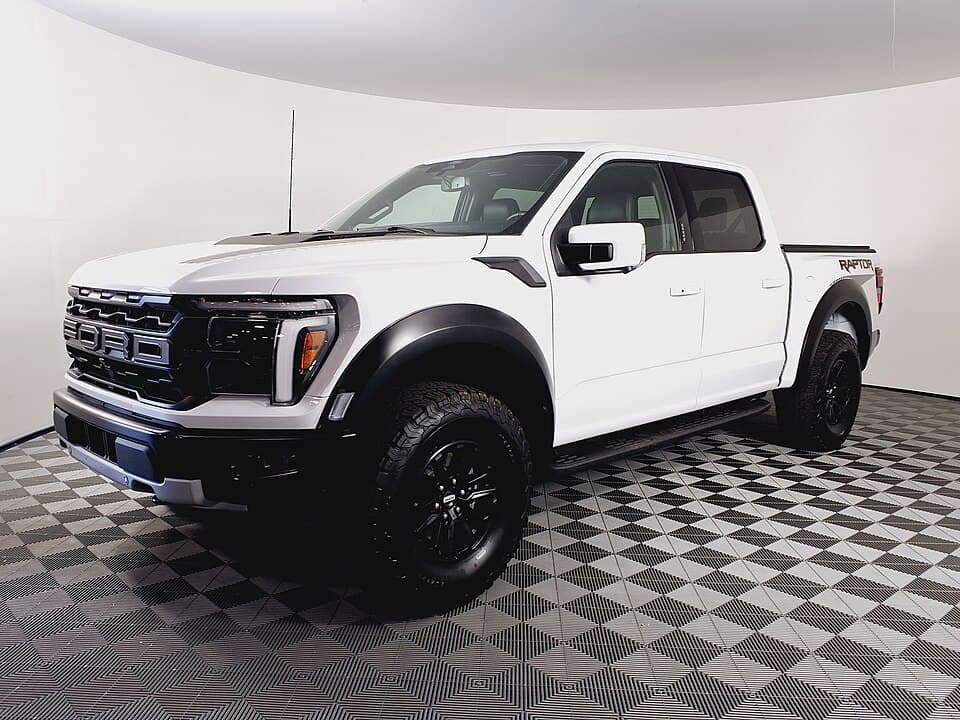
The Bronco Raptor wins for high-speed desert running and daily comfort, thanks to Fox Live Valve suspension that adjusts damping in real time. The Wrangler Rubicon 392 wins for technical rock crawling and for owners who want a naturally aspirated V8 that sounds like one. Neither wins outright, because they were not built to do the same job, and the honest answer depends on which job you actually have.
Pricing math here needs care. A Bronco Raptor is still in current production, so a new one gets ordered through a Ford dealer at MSRP plus whatever the market is doing to allocation in your region; call your dealer for a current build sheet rather than trusting a number here. What we can state with confidence is what the used market is actually paying, because that is our own listing data: 2022 Bronco Raptors are averaging $65,192, 2023 $66,599, 2024 $72,526, 2025 $82,406, and 2026-model trucks already on the used market are running $88,035. That climbing curve, across thousands of live listings, tells you depreciation on this truck has stayed close to flat, and buying used will not save you as much as it would on a regular F-150.
The Rubicon 392 stopped being sold new after a recent model year, so almost every buyer today is shopping used, and you should confirm the exact final production year against Jeep's own records before you commit to a specific truck rather than trust a forum date. We do not carry a comparable used-market average for the Rubicon 392 in our own listing data, and any MSRP-based number you find online is already stale the moment a trim gets discontinued, so treat a quoted price as one seller's snapshot, not a benchmark. That single fact changes the shopping process more than any spec sheet does: one of these trucks you can walk into a dealer and order, the other you are hunting for on the used market against a fixed and shrinking supply.
Powertrain character: turbo torque versus V8 sound
The Bronco Raptor runs a turbocharged 3.0L EcoBoost V6. Rather than restate horsepower and torque numbers from memory, pull them from the Bronco Raptor specs breakdown, which has the current figures straight off Ford's spec sheet. What matters here is the character, not just the number: it is a turbo torque curve, meaning power comes on early and stays flat, which is exactly what you want climbing a dune face or pulling out of a sand wash without a downshift.
The Rubicon 392 runs a naturally aspirated 6.4L Hemi V8, the same basic architecture Chrysler has used in performance trims for years. There is no turbo lag to manage and no boost threshold to wait for, so throttle response is immediate and linear in a way the EcoBoost simply is not built to replicate. It also sounds like a V8 with an exhaust that was tuned to be heard, which for a lot of buyers is not a footnote, it is the reason they bought the truck.
Neither manufacturer has published, and no independent outlet has run, a 0-60 or quarter-mile test recent enough and controlled enough to state a number here with confidence. Skip anyone quoting a precise time for either truck unless they cite a dated test from a real publication.
Suspension: Fox Live Valve versus factory Fox coilovers
This is the comparison's actual center of gravity. The Bronco Raptor runs Fox Live Valve internal-bypass shocks, an electronically controlled damper that reads terrain input dozens of times per second and adjusts compression and rebound on the fly. It is conceptually close to what the Gen 3 Raptor's Live Valve system does on the F-150 side, tuned for the Bronco's shorter wheelbase and portal-style front axle geometry.
The Rubicon 392 runs a factory Fox suspension as well, but it is a passive setup, not electronically adjustable. There is no live-valve behavior; the shocks are tuned once at the factory for a wide range of conditions and stay that way unless you change the internals yourself.
Exact wheel travel and articulation numbers for both trucks have shifted across trim years and neither manufacturer keeps them static, so do not trust a flat spec quoted from an old brochure. Confirm current-year wheel travel and approach/departure angles against each manufacturer's official spec sheet for the specific model year you are looking at before you use those numbers to make a buying decision. What is not in dispute: the Rubicon 392's front and rear locking differentials plus its disconnecting front sway bar give it a genuine rock-crawling advantage that the Bronco Raptor's suspension tuning does not offset. The Bronco Raptor is set up to run whoops and washboard at speed without beating the chassis apart. The Rubicon 392 is set up to place a tire exactly where you want it at 2 mph on a ledge.
If you already own a Raptor and are wondering whether Ford's own lineup makes this comparison redundant, it mostly does not, but there is real overlap worth reading about in Gen 3 F-150 Raptor vs Bronco Raptor: Same Money, Very Different Truck, which covers why Ford sells both trucks at similar price points without one cannibalizing the other.
Ownership costs: what actually changes month to month
| Category | Bronco Raptor | Rubicon 392 |
|---|---|---|
| Fuel | Turbo V6, EcoBoost fuel economy is midpack for the segment | Naturally aspirated 6.4L V8, expect noticeably worse real-world MPG |
| Maintenance complexity | Live Valve electronics add sensors and modules that can fail | Simpler passive suspension, fewer electronic failure points |
| Parts availability | Current production, dealer network wide | Used-only now, parts still available but no new-truck warranty path |
| Insurance | No published data breaks out this trim specifically | Same caveat applies; get quotes for your own profile before assuming either is cheaper |
The EcoBoost V6's fuel economy advantage over the Hemi is real but not dramatic, and neither truck is a commuter's dream. If fuel cost matters to your decision, read Ford Raptor MPG: What Owners Actually Get for what F-150-platform EcoBoosts actually return in mixed use, which gives you a reasonable proxy for the Bronco Raptor's 3.0L.
The bigger cost variable is the Live Valve system itself. It is a complex electronically controlled damper, and when it fails, the diagnosis and parts cost more than a passive shock ever will. The Rubicon 392's simpler suspension is one less system to worry about, though the 6.4L Hemi has its own maintenance and reliability profile that this site does not track. If that matters to your decision, cross-check Jeep-specific sources before you buy used.
Because the Rubicon 392 is discontinued, a used buyer inherits whatever warranty is left on the specific truck, not a fresh factory warranty. Confirm remaining coverage with the VIN before you buy, the same way you would on a used Raptor. A new Bronco Raptor comes with Ford's full new-vehicle and powertrain warranty terms; call your dealer with the trim and build date to get exact coverage, since it can vary by build.
Which buyer actually wants which truck
The rock crawler who runs technical trails at low speed wants the Rubicon 392. Locking diffs front and rear, a disconnecting sway bar, and a shorter wheelbase built for tight lines matter more here than horsepower. If your trail list looks like the Rubicon-adjacent Barrett Lake / Wentworth Springs corridor or technical terrain like Rausch Creek, this is the truck that was actually engineered for that job.
The desert runner who wants speed over whoops and washboard wants the Bronco Raptor. Live Valve damping was built for exactly this: sustained high-speed impact absorption across terrain like Glamis or Silver Lake Sand Dunes, where a passive shock tune has to compromise between comfort and control and a live-valve system does not.
The daily driver who wants one truck for everything leans Bronco Raptor, mostly because it is still in production, meaning warranty support, parts availability, and dealer service are simpler than shopping a discontinued platform. It also rides better on pavement, which matters if the truck spends five days a week in traffic and two days off-road.
The short version
- Buy the Rubicon 392 if you rock crawl, want locking diffs and a disconnecting sway bar, and are fine buying used with no new-vehicle warranty path.
- Buy the Bronco Raptor if you run desert whoops and washboard at speed, want Fox Live Valve's electronic damping, and want current production with full factory warranty support.
- Confirm the Rubicon 392's exact final model year and remaining warranty against Jeep's own records before you buy used; do not rely on a forum date.
- Neither truck's 0-60 time is worth quoting unless it comes from a dated, reputable independent test; treat any number without a source as marketing.
Deal alert
Shopping for one? Get new listings first
We sweep US dealer inventory and send you new Raptors matching your search — real listings, real asking prices, no spam.