Bronco Raptor Cost of Ownership: What Owners Actually Pay
Sticker price is only the start with the Bronco Raptor's tire size, insurance class, and fuel economy. This breaks down the real recurring costs so a buyer can budget before signing.
Gear in this article
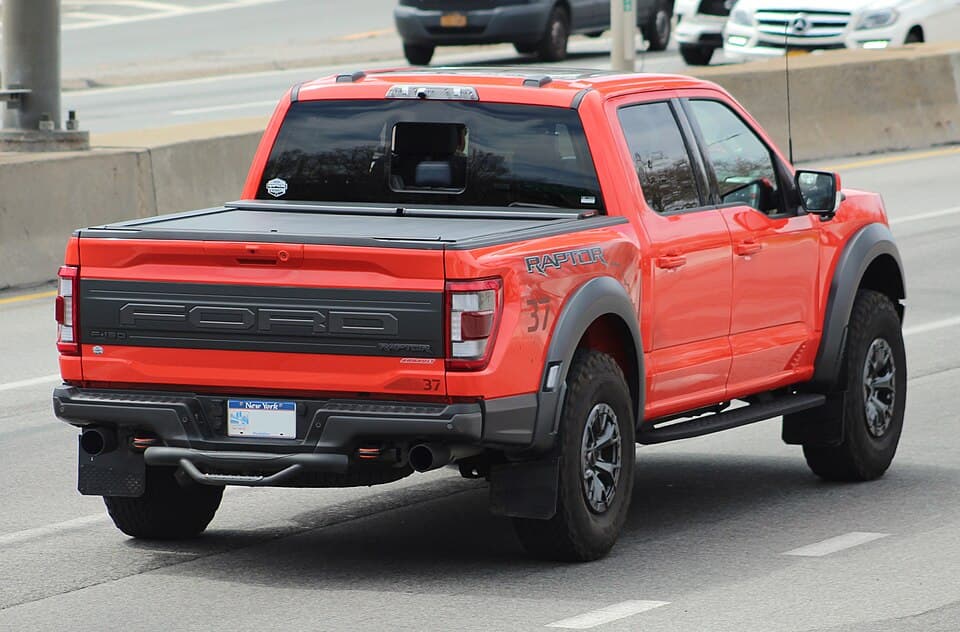
Budget $4,500-7,000 a year in fuel, insurance, tires, and routine maintenance for a Bronco Raptor driven a normal 12,000-15,000 miles annually, on top of whatever you paid for the truck. The two line items that surprise new owners most are insurance (this is a $70,000-plus performance SUV, and carriers price that combination of insured value and performance rating higher than a regular Bronco) and tires, because the stock 37s do not wear like anything else Ford puts on a Bronco. Everything else is closer to what you would expect from a modern turbocharged Ford, but not identical to what we have published for the F-150 Raptor.
Real-world fuel economy versus the EPA sticker
The Bronco Raptor runs a twin-turbo 2.7L EcoBoost V6 rated at 418 horsepower, and the EPA combined figure on the window sticker is in the mid-teens, roughly 15 mpg city and 16 mpg highway on the 2022-2024 trucks (confirm the exact number for your model year on the sticker or fueleconomy.gov, since Ford has made small running changes). Owners running the stock 37-inch tires and driving normally report low-to-mid teens in mixed use, which tracks close to the EPA number. That is unusual: most trucks undershoot their EPA rating once you add real cargo, real elevation, and real traffic.
Where it falls apart is highway speed and tire size. Push sustained 75-80 mph and the aerodynamics of a boxy SUV on 37s catch up fast, some owners report low teens or even single digits on long interstate hauls. Add a roof rack or a rooftop tent and it gets worse before you even touch the tires, which is one reason the roof rack wind noise complaints and mileage complaints tend to show up together. Around town in stop-and-go, figure high teens is optimistic and low-to-mid teens is realistic. None of this is a defect, it is a heavy SUV pushing 37-inch tires and a boxy windshield through the air (curb weight is roughly 5,750-5,800 lbs depending on options, confirm the exact figure on your build sheet), and it will never approach what a base Bronco or a Wildtrak returns.
What drives Bronco Raptor insurance costs
Insurance quotes for a Bronco Raptor run meaningfully higher than for a Bronco Badlands or Wildtrak, and the gap is mostly driven by two things: the higher insured value, and a performance rating that some carriers price closer to a sports vehicle than a family SUV. Owners on forums also report more claims tied to off-road use and aftermarket modification on this trim than on lower Broncos, though nobody has published a real claims-frequency number for the Raptor trim specifically, so treat that as anecdotal rather than data. None of that gets you a specific quote here, because insurance is genuinely local. Your premium depends on your state, your age, your driving record, your credit-based insurance score in states that allow it, and which carrier you call. A 45-year-old with a clean record in a rural state and a 24-year-old in an urban one with the same truck can see premiums that differ by a factor of two or more.
What is worth doing before you buy: call your own carrier with the VIN or the exact trim before you sign anything, not after. Ask specifically whether they rate the Raptor trim differently from the rest of the Bronco lineup, since some carriers lump all Broncos into one rating class and others do not. If you are cross-shopping the platform against other options in this price range, our breakdown of what a Raptor R actually costs to own and the standalone Raptor insurance cost piece both cover the same drivers in more depth, though that second one leans on F-150 Raptor data since the Bronco Raptor is younger and insurers have less claims history to price against.
Routine maintenance: oil, brakes, and where this differs from F-150 Raptor content
The 2.7L EcoBoost takes full synthetic oil (check your owner's manual for the exact viscosity Ford specifies for your model year) and Ford's oil life monitor will often stretch intervals toward 10,000 miles under easy use. Most independent shops and a lot of experienced Raptor owners will tell you not to trust that number on a turbocharged engine that sees hard use, and to change it closer to every 5,000-7,500 miles instead, particularly if you tow, wheel, or run it hard. Budget roughly $120-200 per oil change at a dealer or independent shop depending on region, less if you do it yourself.
This is where the Bronco Raptor maintenance conversation splits from what we have published for the F-150. Our 3.5 EcoBoost problems by year coverage and our spark plug interval piece both apply to the F-150 Raptor's 3.5L, not the Bronco Raptor's 3.0L. They share a turbocharged EcoBoost design philosophy, carbon buildup on the intake valves from direct injection is a real concern on both engines, and our carbon buildup explainer is written broadly enough to apply, but do not carry spark plug intervals, phaser rattle fixes, or turbo failure specifics from the 3.5L over to the 2.7L. They are different engines with different service schedules. Follow the interval in the Bronco Raptor's own owner's manual, not a number written for the F-150.
Brakes wear faster than on a base Bronco because you are stopping more unsprung mass at the corners with the 37s, and the factory brake package on the Raptor trim is sized up from lower trims to compensate. Front-end clunks and looseness are common enough on this platform that they get their own diagnosis, covered in our Bronco Raptor front-end clunk piece, which walks through ball joints and sway bar links, the two most common culprits, and roughly what each fix costs.
Tire replacement cost on the stock 37s
The Bronco Raptor is the only Ford SUV that comes from the factory on 37-inch tires, mounted on 17-inch wheels with a beadlock-capable option. That is the single biggest recurring cost difference between this truck and every other Bronco trim, and it is also different math than the F-150 Raptor conversation, because on the F-150 platform 37s are almost always an aftermarket upgrade from a stock 35 or smaller tire, not factory equipment.
A full set of 37x12.50R17 all-terrain or mud-terrain tires, something like a BFGoodrich KO2 or a comparable mud-terrain, runs roughly $1,600-2,600 for a set of four depending on brand and where you buy, and that is before mounting, balancing, and an alignment. Because they came on the truck stock, there is no separate "37 conversion" labor cost the way there is on an F-150, but replacement is still a bigger bill than a base Bronco owner ever sees, and tread life on an aggressive 37 tends to run shorter than a highway-biased tire in the same size. Our 35s versus 37s tradeoff piece and best tires for a Raptor both go deep on sizing and tread choice, but both were written around the F-150 Raptor's wheel and fender clearance, not the Bronco's, so treat the tire model recommendations as a starting point and confirm fitment against your specific Bronco Raptor wheel and offset before ordering.
Depreciation and resale: still mostly a guess
The Bronco Raptor has only been on sale since the 2022 model year, so there is not yet a mature used market to draw a real depreciation curve from. Our own live listing data shows average asking prices for Bronco trucks overall climbing from roughly $65,000 for 2022-model-year listings to around $73,000 for 2024 and $83,000-88,000 for 2025-2026 listings, but that blends every Bronco trim, not Raptor specifically, and rising MSRPs across the lineup account for a lot of that climb rather than any single trim holding value unusually well.
What we can say with more confidence: demand for the Raptor trim has stayed strong relative to lower trims, and used Bronco Raptors have generally not shown the steep early depreciation you sometimes see on halo trims once the initial dealer markup era faded. Treat any specific resale percentage you read as a guess dressed up as data until this platform has five-plus years of trade-in history behind it. Our Ford Raptor depreciation piece covers the F-150 side of this in more depth, where there is enough history to say something real; the Bronco Raptor section there is intentionally more hedged.
If you are still deciding whether the Raptor trim is worth the jump over other Bronco trims or over a Gen 3 F-150 Raptor at similar money, our comparisons of Gen 3 F-150 Raptor versus Bronco Raptor and the list of Bronco Raptor accessories actually worth buying are the better next reads before you spend on mods that will not move resale.
The short version
- Real-world fuel economy on stock 37s tracks close to the EPA rating in mixed driving, roughly mid-teens mpg, but drops hard at sustained highway speed or with a roof rack.
- Insurance runs noticeably higher than lower Bronco trims; get a quote with your VIN before you buy, since state, age, and record swing it more than the trim does.
- Oil changes and brake wear are manageable costs, but do not carry F-150 3.5 EcoBoost service intervals over to this truck's 2.7L, they are different engines.
- A full set of replacement 37s runs roughly $1,600-2,600, the biggest recurring cost difference from a base Bronco.
- Resale data is still thin. Treat any specific depreciation number for this platform as an estimate, not a fact.
Owner questions
- How much should I budget per year to own a Bronco Raptor?
- Budget $4,500-7,000 a year for fuel, insurance, tires, and routine maintenance if you're driving a normal 12,000-15,000 miles annually, on top of the purchase price. Insurance and tires are the two costs that surprise new owners most, since this is a $70,000-plus performance SUV riding on stock 37-inch tires that wear faster than typical Bronco tires.
- What real-world gas mileage does the Bronco Raptor actually get?
- The EPA combined figure is roughly 15 mpg city and 16 mpg highway for 2022-2024 trucks, and owners on stock 37s driving normally report low-to-mid teens in mixed use, tracking close to that rating. It drops hard at sustained 75-80 mph highway speeds, sometimes to low teens or single digits, and worsens further with a roof rack or rooftop tent.
- Why is insurance so much more expensive on a Bronco Raptor than a Wildtrak or Badlands?
- The gap is driven mainly by two factors: the higher insured value of a $70,000-plus truck, and a performance rating some carriers price closer to a sports vehicle than a family SUV. Premiums also vary heavily by state, age, driving record, and credit-based insurance score, so a 45-year-old rural driver and a 24-year-old urban driver can see quotes differing by a factor of two or more.
- How much does it cost to replace the factory 37-inch tires on a Bronco Raptor?
- A full set of 37x12.50R17 all-terrain or mud-terrain tires, like a BFGoodrich KO2 or comparable mud-terrain, runs roughly $1,600-2,600 for a set of four before mounting, balancing, and alignment. Unlike an F-150 Raptor, there's no separate '37 conversion' labor cost since they're factory equipment, but tread life on aggressive 37s tends to run shorter than highway-biased tires.
- Should I follow the F-150 Raptor's oil change and spark plug intervals for my Bronco Raptor?
- No—the Bronco Raptor uses a 2.7L EcoBoost, a different engine than the F-150 Raptor's 3.5L, so spark plug intervals, phaser rattle fixes, and turbo failure specifics don't carry over. Budget roughly $120-200 per oil change, and many experienced owners change oil every 5,000-7,500 miles rather than trusting the monitor's 10,000-mile stretch, especially under hard use.
Deal alert
Shopping for one? Get new listings first
We sweep US dealer inventory and send you new Raptors matching your search — real listings, real asking prices, no spam.