35s vs 37s on a Raptor: Every Tradeoff, Measured
35s ride the way Ford tuned the truck, cost less at the pump, and never start the regear conversation, while 37s buy measurable clearance and desert stability for a real price in mpg, gearing, and cash. This is the full tradeoff table plus the fender, gearing, and drivetrain-wear math by generation.
Gear in this article
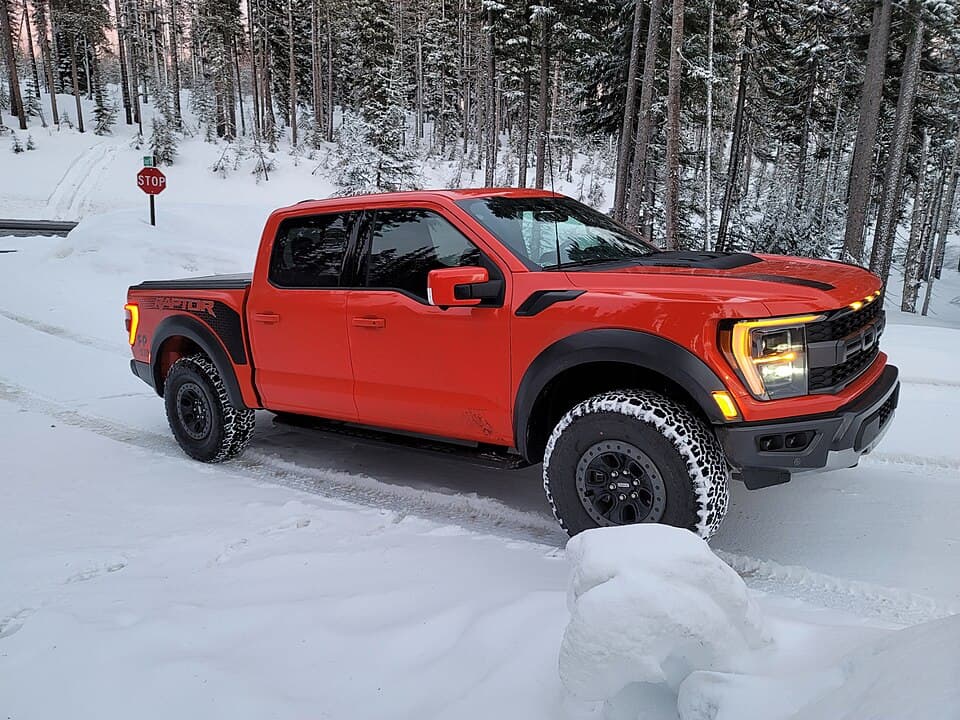
For most Raptor owners, 35s are the right tire. They ride the way the factory tuned the truck to ride, they cost you the least at the pump, they do not put extra load on the drivetrain, and they never start the regear conversation. 37s buy real clearance and better desert stability, and the cost is measurable, not vague: roughly 1-2 mpg, a 5.5-7 percent change in effective gearing that needs a recalibration, and $2,600-16,500 depending on how far you take the fitment. Here are the three numbers that actually decide it, then the table, then the honest case for each.
| Dimension | 35s (stock or replacement) | 37s |
|---|---|---|
| Ride quality | Matched to factory spring and shock tune | Slightly harsher, more unsprung weight per corner |
| MPG hit vs stock 35 | None, this is the baseline | Roughly 1-2 mpg in mixed driving |
| 0-60 / braking effect | None, matches factory calibration | Slightly slower 0-60, longer stopping distance (both estimates, no published test at this size) |
| Clearance gained | Baseline (12.0 in on a Gen 3 with 35s) | About 1 inch more on a Gen 3 (13.1 in with the 37 Package); similar gain on Gen 2 |
| Weight per corner | Lighter, less rotating mass | Heavier, more rotating and unsprung mass |
| Cost, all-in | Often a like-for-like tire swap, $1,200-2,000 for a set | $2,600-16,500 depending on wheels, suspension, and trim |
| Regear / tune need | No | No regear on 4.10s for most owners; recalibration required, power tune optional |
What 35 and 37 actually measure, and why the label lies a little
A "35" or "37" tire is its stated diameter in inches, but that number is the brand's rounded marketing size, not a guaranteed mounted measurement. The stock BFGoodrich KO2 on a Gen 2 Raptor is a 315/70R17 that measures 34.6 inches, close enough to 35 that Ford and everyone else calls it a 35. The Gen 3's standard KO2 carries the same "35-inch" designation from Ford. A 37x12.50R17 from one manufacturer can measure a half inch different from another's at the same claimed size, so if you are chasing a specific clearance number, measure the actual tire mounted and aired to your running pressure, not the sidewall label.
The gearing math: when 4.10s stop being enough
Every current Raptor, Gen 2 and Gen 3 alike, runs 4.10 axle gears. A taller tire changes the effective final drive ratio because the axle is turning the same number of times per mile but covering more ground per revolution, which is functionally the same as running a numerically lower gear.
Going from a Gen 2's stock 34.6-inch tire to a 37 is roughly a 7 percent increase in rolling diameter. Going from a Gen 3's stock 35-inch tire to a 37 is roughly 5.5-6 percent. Neither number is large enough by itself to justify a regear on either generation. Where the math starts to matter is stacking a 37 with a numerically taller optional gear or towing heavy at altitude, where the truck is asking the 3.5 EcoBoost to make torque it used to get from the axle. For the full breakdown of what the tire-size change does to your speedometer, shift points, and whether you need a tune to fix it, see Do You Need a Tune After 37s?
Speedo and odometer correction is not optional
Whatever the exact percentage, the PCM (powertrain control module) still calculates road speed and shift points from the factory tire size, so it undercounts your real speed the moment you go up a size. The error becomes obvious at 37s because it crosses into the range where cruise control, trip mileage, and transmission shift timing are all visibly off. Recalibration is a separate, usually inexpensive step from a power tune, and you need it regardless of which one you get.
Fender and rubbing reality, by generation
The Gen 2 Raptor takes 37s without a lift, but the fitment is tight. The rub point owners report most is the front tire chewing the inner fender liner at full steering lock in reverse, worse on trucks running a wider aftermarket wheel that pushes the tread out toward the fender lip. Keep the stock wheel width and you are almost always trimming plastic liner, not sheet metal. The complete cost breakdown for every fitment level, from liner trim alone up through fender cutting and coilovers, is in Cost to Put 37s on a Gen 2 Raptor.
The Gen 3 Raptor was built around this decision from the factory. Standard rubber is a 35-inch BFGoodrich KO2, and the factory 37 Performance Package puts 37x12.50R17 KO2s on beadlock-capable forged wheels with the fender clearance, steering geometry, and suspension tune already accounting for the taller tire. Owners moving from 35s to 37s on a Gen 3 report the swap needs no lift, just liner trim and a steering stop check depending on wheel width, which is a meaningfully easier fitment than the Gen 2's tighter stock arches.
The Bronco Raptor and Ranger Raptor are different trucks with different stock clearance and factory tire sizes; do not carry a Gen 2 or Gen 3 fitment number across to either without checking wheel sizes and offsets across the lineup first, since backspacing changes the rub point more than the tire diameter does.
Ride, unsprung weight, and what you actually feel
A 37 is heavier and carries more rotating and unsprung mass than the stock 35, and that extra mass works against the factory shock and spring tune on every input, not just big hits. The effect is subtle at low speed and more obvious in the whoops or on washboard, where the added mass changes how quickly the suspension recovers between hits. This is why the mod path for both generations puts tires before shocks: 37s on the stock suspension tune ride slightly harsher and settle slightly slower than 35s on the same truck, and most owners describe it as noticeable, not dramatic, until they add a long-travel kit built around the taller tire's mass.
MPG, honestly
Real-world mileage on a stock Gen 2 or Gen 3 already runs 13-16 mpg mixed against a 15/18 EPA rating, and 37s make that worse. Owners who have made the 35-to-37 swap on a Gen 2 report roughly a 1-2 mpg hit in mixed driving, more if the tune adds boost you are actually using. The full generation-by-generation mileage numbers, including what a Raptor R and a Gen 1 average and why the gap to EPA exists in the first place, are in Ford Raptor MPG: What Owners Actually Get.
Drivetrain wear, honestly
37s do not break anything on their own, but they load the same wear items a stock truck already has, harder. The IWE (integrated wheel end, the vacuum-actuated hub disconnect) actuators and vacuum lines see the same failure schedule regardless of tire size, but a heavier tire spinning more mass on every 4WD engagement is not doing that system any favors over time. Ball joints and the front steering linkage take more load from a taller, heavier tire at the same suspension travel, which shows up as accelerated wear rather than a sudden failure. None of this is a reason to avoid 37s if you actually use the clearance; it is a reason to inspect these parts on the normal service interval instead of stretching it, especially past 60,000 miles.
Who should actually run 37s
The honest short list: owners who regularly run terrain where the extra inch or so of clearance and the wider footprint change what the truck can cross without stopping to think about a rock or a rut, owners on a Gen 3 who ordered or are buying used with the factory 37 Performance Package already paid for and engineered around, and owners planning a long-travel suspension build where 37s are the correct tire for the geometry, not an upsize for its own sake. If you tow often, commute highway miles, or are chasing a stance more than a capability, 35s do the job with none of the tradeoffs above.
The verdict
Stay on 35s unless you have a specific reason to leave them: they match the factory ride tune, they cost less at the pump, they do not add drivetrain wear you have to inspect for, and they never trigger the regear conversation. Go to 37s when the clearance and stability are worth the measurable cost, and budget for all three numbers, not just the tire price: 1-2 mpg, a recalibration every time, and $2,600 on the cheap end up to $16,500 if you are chasing the full fender-and-suspension package. On a Gen 3, the factory 37 Performance Package is the cleanest way to get there, because Ford already paid the engineering cost you would otherwise pay a shop for.
Owner questions
- 35s vs 37s on a Raptor, which is better?
- For most owners, 35s are better: they match the factory spring and shock tune, cost less at the pump, add no drivetrain wear, and never trigger a regear. 37s buy roughly 1 inch more clearance and better stability, costing 1-2 mpg, a 5.5-7 percent gearing change needing recalibration, and $2,600-16,500 depending on fitment.
- How much does it cost to put 37s on a Raptor?
- All-in cost runs $2,600-16,500 depending on wheels, suspension, and trim, compared to $1,200-2,000 for a like-for-like 35-inch tire swap. On a Gen 3, the factory 37 Performance Package already includes beadlock-capable forged wheels and suspension tuning engineered around the taller tire, avoiding much of that added shop cost.
- Do I need to regear a Raptor after installing 37s?
- No regear is needed on the 4.10 axle gears every current Raptor runs, Gen 2 and Gen 3 alike, since going to 37s is only roughly a 5.5-7 percent increase in rolling diameter. Recalibration of the speedometer and shift points is required regardless, and a power tune is optional, not mandatory.
- How much fuel economy do you lose going from 35s to 37s on a Raptor?
- Owners who made the 35-to-37 swap on a Gen 2 report roughly a 1-2 mpg hit in mixed driving, more if the accompanying tune adds boost you actually use. Real-world mileage on a stock Gen 2 or Gen 3 already runs 13-16 mpg mixed against a 15/18 EPA rating.
- What clearance do 37s actually gain over 35s on a Raptor, and does the Gen 3 need a lift?
- On a Gen 3, clearance goes from 12.0 inches with 35s to 13.1 inches with the factory 37 Performance Package, about a 1-inch gain, with a similar gain on Gen 2. The Gen 3 needs no lift for 37s, just liner trim and a steering stop check depending on wheel width.
Deal alert
Shopping for one? Get new listings first
We sweep US dealer inventory and send you new Raptors matching your search — real listings, real asking prices, no spam.