Ford Raptor Insurance Cost: What Owners Actually Pay by Generation
Raptor insurance runs meaningfully above a regular F-150 because the truck costs more to buy, more to fix, and gets stolen more, and a Raptor R compounds all three. Here is what moves the premium and honest ranges by generation, without pretending we can quote yours.
Gear in this article
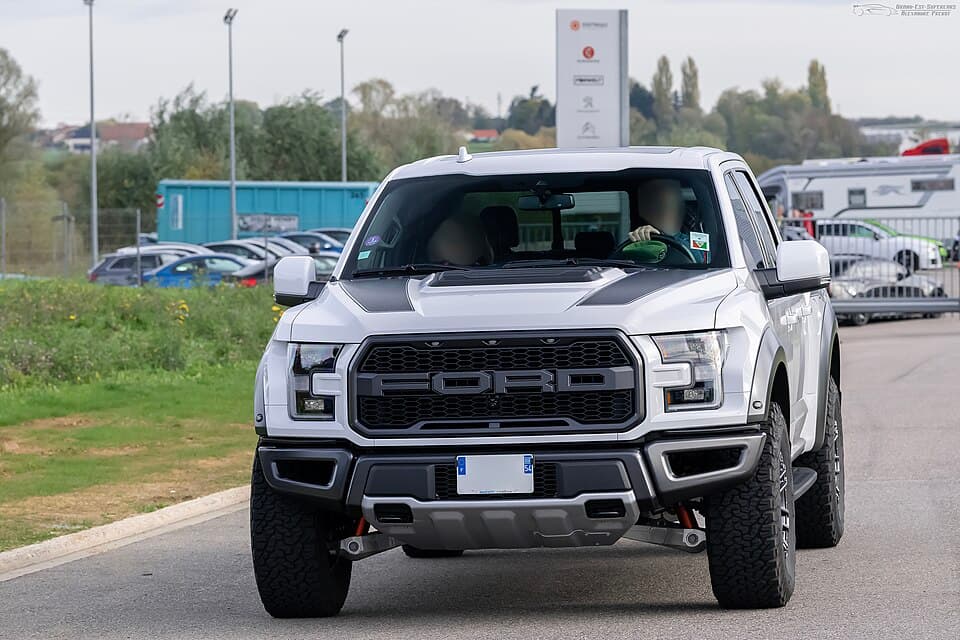
A Raptor typically costs somewhere in the range of 20 to 40 percent more to insure than a comparably aged F-150 XLT or Lariat, and a Raptor R can land well above that band once a carrier prices it as the performance vehicle it is. That range is this site's own estimate built from replacement value, repair cost, and theft risk, because no insurer or research firm publishes a clean Raptor-specific premium dataset. What actually lands on your bill is your state, your driving record, your coverage choices, and the VIN on your specific truck, so the only real quote is the one your own agent runs.
Why a Raptor costs more to insure than an XLT
Insurance is priced on what a claim would cost, and every input runs higher on a Raptor than on a work-truck F-150.
Replacement value is the biggest lever. This site's own live-listings data shows the gap plainly: a 2023 F-150 across all trims averages roughly $69,600, while a 2023 Raptor R averages north of $102,300, a difference that is almost entirely trim content and performance hardware. Comp and collision premiums scale with the number the carrier would have to write a check for, and a Raptor sits well above an XLT of the same year even before you get to the Raptor R gap.
Repair cost compounds it. Gen 2 (2017-2020) and Gen 3 (2021-present) Raptors carry aluminum body panels, wide fender flares, and unique bumpers, and a Raptor R adds a supercharged 5.2L engine bay that costs more to open up than a base 3.5L EcoBoost or 5.0L truck. A fender bender that a shop might quote at roughly $1,500 as a claim on an XLT can run several times that on a Raptor once flare replacement, panel-matched paint, and a specialty labor rate get added in. That gap, not the sticker price alone, is a big part of why collision coverage costs more.
Theft risk is real and documented at the model level, not just the trim. Full-size pickups, F-150s included, rank consistently among the most stolen vehicles in the country, and a Raptor sitting in the same parking lot is a more visible, more valuable target. Higher theft frequency in a given ZIP code shows up directly in comp rates.
Performance rating is the last piece, and it hits hardest on the Raptor R. Insurers weigh horsepower, weight, and acceleration into their pricing, and Ford rates the Raptor R's supercharged 5.2L V8 at 700 horsepower, which gets that truck underwritten more like a performance vehicle than a pickup. For the full picture of what that truck costs beyond the premium, see what a Raptor R actually costs to own.
What Raptor owners actually report paying, by generation
Take every figure here as a directional estimate, not a quote. Coverage limits, deductible choice, your state's requirements, your insurance score where allowed, and your driving record all move these numbers more than the generation does.
Nobody publishes a rate survey broken out by Raptor generation, so the bands below are not observed policy data. They are this site's estimate, built only from the value and risk logic above, and we have widened them on purpose rather than pretend to a precision we do not have.
| Truck | Model years | Rough annual full-coverage estimate* |
|---|---|---|
| Gen 1 SVT Raptor | 2010-2014 | roughly $1,200-2,200/yr |
| Gen 2 Raptor | 2017-2020 | roughly $1,500-2,800/yr |
| Gen 3 Raptor | 2021-present | roughly $2,000-3,500/yr |
| Raptor R | 2023-present | roughly $2,800-5,000/yr |
| Ranger Raptor | 2024-present | roughly $1,400-2,400/yr |
| Bronco Raptor | 2022-present | roughly $1,900-3,200/yr |
*These are this site's estimates built from the value and risk factors above, not a survey of actual policies. A 25-year-old driver in a high-theft metro will see numbers above the top of these ranges. A 45-year-old with a clean record and a garage in a low-theft rural county will see numbers below the bottom, and either could land outside the band entirely depending on their state.
The Gen 1 buying guide covers the used-value side of the equation if you are shopping the oldest trucks specifically, and the Gen 3 buying guide covers what to check on the current truck before you sign.
Why the Raptor R premium is its own conversation
The Raptor R is not a trim bump on a normal F-150 policy, it is a different underwriting category. You are insuring a truck with 700 factory horsepower, priced new well past six figures, and repaired at labor rates that reflect specialized aluminum body and drivetrain work. Some carriers will quote it like a high-trim truck. Others will price the horsepower and the replacement cost the way they would a performance coupe, and the gap between those two quotes on the same truck can be large. Shop it with at least two carriers before you assume the first number is the market. For the rest of what ownership actually costs beyond the premium, including maintenance and tire wear on the wide factory rubber, see what a Raptor R actually costs to own and the Raptor R vs TRX vs RHO comparison if you are cross-shopping.
Theft: what the data says and what you actually do about it
Full-size pickups, the F-150 platform among them, consistently rank near the top of national stolen-vehicle lists, and a Raptor sitting on a dealer lot or in a driveway is not less of a target than a base truck, it is more of one. Wide flares and a hood scoop do not deter a professional theft ring, they identify the truck as worth more to part out.
What actually moves the needle:
- A hidden GPS tracker wired independent of the OBD port, since OBD-port trackers get found and unplugged in minutes by anyone who has done this before.
- A kill switch or fuel-cutoff relay wired into a non-obvious circuit, not a dash-mounted toggle that advertises itself.
- Comp coverage with an appropriate deductible. This does not prevent theft, but it is the only line item on your policy that pays out if the truck is gone.
- Parking choice. A locked garage beats a driveway beats a street space, and insurers price ZIP-code theft rates into your premium whether or not you use one.
None of this is optional-sounding advice for a Raptor the way it might be for an XLT. The theft appeal is part of what you are paying the premium for, so spending a modest amount on a tracker is cheap against a five-figure deductible-plus-gap exposure if the truck disappears.
Mods and your policy: what has to be declared
This is where owners get burned on a claim, not on the monthly premium. A stock policy covers the truck as it left the factory. Add a Whipple supercharger upgrade, a Camburg Race Spec uniball control arm kit, 37s, or an ADD Stealth Fighter front bumper and not tell your carrier, and you have created a gap between what you would pay for the truck and what the policy will actually reimburse after a total loss or a parts claim.
Two things happen if a mod is undeclared:
- The carrier pays out based on the value of a stock truck, not the built one you actually own, on a total loss.
- If the mod contributed to the claim (a tune-related engine failure, for example, or a lift kit changing handling in a rollover), the adjuster has grounds to dispute the claim entirely.
The fix is not complicated: call your agent, tell them what is on the truck, and ask whether it needs an endorsement or a specialty policy rider. Some carriers that write standard auto policies will not cover heavy off-road builds at all, which is why an entire cottage industry of agreed-value off-road and classic-truck policies exists. If you are running the King 3.0 Performance Series Coilover Kit and a full skid package for actual trail use, get quotes from a specialty carrier alongside your standard one before you assume your existing policy has you covered.
How this fits the bigger cost-of-ownership picture
Insurance is one line item in what a Raptor costs to keep on the road. For the full monthly and annual picture, tires, fuel, maintenance intervals, and the insurance range above together, see the site's breakdown of what a Ford Raptor actually costs to own per year.
The short version
- Expect to pay roughly 20-40% more than a comparable F-150 XLT, and meaningfully more on a Raptor R, driven by replacement value, aluminum-panel repair cost, and theft risk. These are this site's estimates, not a survey.
- No real Raptor-specific premium dataset exists anywhere. Every number here, including ours, is a wide range, not a quote. Call your own agent with your VIN and driving record.
- Full-size trucks are heavily represented on theft lists. A hidden tracker and a non-obvious kill switch are cheap insurance against an expensive gap.
- Declare every mod. An undeclared build gets you paid out at stock value or denied outright if the mod contributed to the loss.
Owner questions
- Ford Raptor insurance cost estimate
- A Raptor typically runs 20 to 40 percent more to insure than a comparable F-150 XLT or Lariat, with a Raptor R landing well above that band. By generation, estimates run roughly $1,200-2,200/yr for Gen 1 (2010-2014), $1,500-2,800/yr for Gen 2, $2,000-3,500/yr for Gen 3, and $2,800-5,000/yr for the Raptor R.
- Why does a Raptor R cost so much more to insure than a regular F-150?
- Replacement value is the biggest driver: a 2023 F-150 across all trims averages roughly $69,600, versus north of $102,300 for a 2023 Raptor R. Add Ford's rated 700 horsepower supercharged 5.2L V8, which gets underwritten like a performance vehicle, plus pricier aluminum-panel and specialty-labor repairs, and estimates run roughly $2,800-5,000/yr.
- How does Gen 2 Raptor insurance compare to Gen 3?
- Gen 2 Raptors (2017-2020) run a rough estimate of $1,500-2,800/yr, while Gen 3 Raptors (2021-present) run roughly $2,000-3,500/yr. Both carry aluminum body panels, wide fender flares, and unique bumpers that push repair costs well above what a shop might quote around $1,500 for a comparable XLT fender bender.
- What happens to my claim if I don't declare mods like a Whipple supercharger or 37-inch tires?
- An undeclared mod like a Whipple supercharger upgrade, Camburg Race Spec uniball control arms, 37s, or an ADD Stealth Fighter front bumper means a total loss pays out at stock-truck value, not your built truck's value. If the mod contributed to the claim, such as a tune-related engine failure, the adjuster can dispute the claim entirely.
- How can I protect my Raptor from theft and lower my risk?
- Full-size pickups rank near the top of stolen-vehicle lists, so install a hidden GPS tracker wired independent of the OBD port (OBD trackers get found and unplugged), plus a kill switch or fuel-cutoff relay on a non-obvious circuit. Carry comp coverage with an appropriate deductible, and park in a locked garage rather than a driveway or street.
Deal alert
Shopping for one? Get new listings first
We sweep US dealer inventory and send you new Raptors matching your search — real listings, real asking prices, no spam.