Bronco Raptor Specs: Engine, Horsepower, and 0-60, All the Real Numbers
The Bronco Raptor runs a 418 hp 3.0L EcoBoost with 37s standard from the factory, and here is what those numbers actually mean on a trail. Plus the front-end clunk and fuel bills worth budgeting for before you sign.
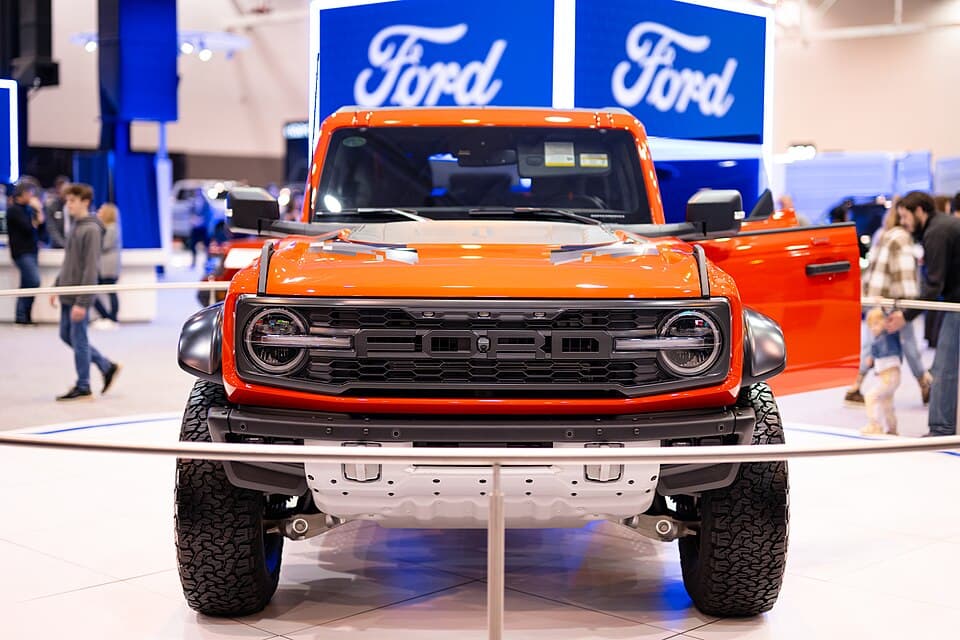
The Bronco Raptor makes 418 hp and 440 lb-ft of torque from its 3.0L twin-turbo EcoBoost V6 on 91-plus octane, and independent testing puts 0-60 mph at roughly 5.6 seconds on a current-generation truck, slower on the earliest 2022 builds some outlets clocked closer to 6.3 seconds. It ships standard with 37-inch tires, front and rear electronic locking differentials, and a real two-speed transfer case, none of which is optional the way it is on other Raptors.
That is the short version. The rest of this is the spec sheet, what each number actually buys you on a trail, and the parts of this truck worth checking before you sign for one.
2024 Ford Bronco Raptor specs at a glance
| Spec | Bronco Raptor (2022-present) |
|---|---|
| Engine | 3.0L EcoBoost twin-turbo V6 |
| Power | 418 hp on 91-plus octane premium |
| Torque | 440 lb-ft on 91-plus octane premium |
| Transmission | 10-speed automatic (10R60) |
| 4x4 system | Advanced 4x4 with two-speed transfer case, low range |
| Differentials | Electronic locking front and rear, standard |
| Suspension | HOSS 4.0, Fox 3.1 Live Valve internal-bypass shocks |
| Suspension travel | 13.0 in front / 14.0 in rear |
| Tires | 37-inch, standard on every trim |
| Ground clearance | Approx. 13.1 in |
| Approach / breakover / departure | 47.2 / 30.8 / 40.5 degrees |
| 0-60 mph | Roughly 5.6-6.3 sec, tested range, varies by model year |
| EPA fuel economy | 15 city / 16 hwy / 15 combined |
| Curb weight | Roughly 5,700 lb |
Treat the 0-60 row and the ground clearance figure as tested and measured ranges, not lab-certified numbers Ford publishes to a decimal. Everything else on this table is the published factory spec.
The 3.0L EcoBoost engine, what it actually is
The Bronco Raptor does not share an engine with the F-150 Raptor. It runs Ford's 3.0L twin-turbo EcoBoost V6, the same basic architecture used in the Ranger Raptor, not a detuned version of the F-150's 3.5L High-Output six. It is smaller in displacement but boosted harder, and it is bolted to a 10R60 ten-speed automatic, a lighter-duty cousin of the 10R80 in the F-150 Raptor built for this truck's size and weight.
Behind the transmission sits Ford's Advanced 4x4 system: a real two-speed transfer case with a low range, something the F-150 Raptor does not offer at any price. Front and rear electronic locking differentials come standard, not as an option group. Between the transfer case and the lockers, the Bronco Raptor is built to crawl terrain the F-150 Raptor has to route around, even though the F-150 makes more power. If you are cross-shopping the two, the full comparison covers where each one actually wins.
Horsepower and torque: what 418 hp means in practice
Ford's headline rating is 418 hp and 440 lb-ft, and that is the number on the window sticker and the number every spec sheet quotes. That figure applies on 91-octane-or-higher premium fuel, which the truck is tuned around and which Ford recommends for best performance.
Run 87-octane regular and the engine's knock-sensing software pulls timing to protect itself, which lowers real output below the 418 hp headline figure. Ford's own EcoBoost literature has historically published a separate, lower horsepower rating for 87 octane on trucks with this engine family, and owners commonly cite a figure in the mid-400s for the Bronco Raptor specifically, though we have not been able to confirm an exact factory-published number for 87 octane on this exact truck, so treat any precise figure below 418 as an estimate, not a verified spec. The practical takeaway matters more than the exact number: fill it with premium if the power output on the sticker is why you bought it.
Bronco Raptor 0-60: what the testing actually shows
There is no single settled 0-60 number for this truck, and that is the honest answer, not an evasion. Car and Driver clocked a current-generation Bronco Raptor at 5.6 seconds to 60 mph. Earlier 2022 model-year trucks tested slower, with some outlets recording times in the 6.3-second range and forum-run Dragy sessions scattered on both sides of that, depending on tire pressure, launch technique, and elevation.
Budget for something in the mid-5s to low-6s depending on which model year you are driving and who ran the stopwatch. None of that is quick for a truck this size and this wide, and it is not supposed to be. The Bronco Raptor was engineered around low-speed crawling capability and high-speed desert running, not a stoplight launch, and the width and the 37s that make it good at both of those jobs are also what keeps the 0-60 number from touching a sports truck's time.
Suspension, tires, and ground clearance: HOSS 4.0
HOSS 4.0 (High-performance Off-road Stability Suspension, Ford's name for the Bronco Raptor's specific chassis tune) runs Fox 3.1 Live Valve shocks with internal bypass zones at all four corners, electronically adjusting damping in real time based on what the accelerometers read off the road. Travel is 13.0 inches up front and 14.0 in the rear, slightly less than the F-150 Raptor's coil-rear setup, traded for the width and geometry that give the Bronco Raptor its far larger approach, breakover, and departure angles.
Every Bronco Raptor rides on 37-inch tires from the factory, standard on every trim, not an option package the way the 37 Performance Package is on the F-150 Raptor. That is a real cost consideration owners underestimate going in: a 37-inch off-road tire runs meaningfully more per tire than what a standard truck wears, wear patterns shift faster under a truck this heavy, and a full set at replacement time is a four-figure bill more often than a three-figure one. Factor that into the ownership math before you assume the sticker price is the number that matters. If you are deciding what else is actually worth adding on top of the factory build, the accessories worth buying for a Bronco Raptor separates what earns its keep from what does not.
Ground clearance runs approximately 13.1 inches, and combined with the 47.2-degree approach angle and 40.5-degree departure angle, the Bronco Raptor clears obstacles a wider-wheelbase truck cannot. The tradeoff is width: at 85.7 inches, it does not fit through every gate or rock garden a standard Bronco walks through, and it ships with no rock sliders standard, worth adding first if you plan to run anything technical.
Fuel economy: budget for worse than the EPA number
EPA rates the Bronco Raptor at 15 mpg city, 16 mpg highway, and 15 mpg combined, among the thirstiest ratings in Ford's lineup. That number comes from a controlled test cycle. Owners running 37s at highway speed, in sand, or at altitude commonly report worse than the combined figure in real-world mixed driving, and a 20-gallon-class tank with a 15 mpg average puts real-world range in the low 300-mile territory before you are hunting for a station, tighter than that off-pavement.
What actually goes wrong: known issues to check
The Bronco Raptor's defining wear item is upper ball joint and control arm wear at the front end, showing up as a clunk over bumps and light off-camber articulation, sometimes as early as 20,000 to 40,000 miles on hard-driven trucks. It is common enough that it has its own diagnosis writeup: see the Bronco Raptor front-end clunk breakdown before you assume a used truck's clunk is something worse, or before you write off a truck you were about to buy over a noise that is a known, correctable issue.
The other complaint owners report consistently is wind noise from the roof rack at highway speed, loud enough on some trucks to be genuinely annoying on a long interstate stretch, not the same as the wind noise you get from a removable roof and doors. The roof rack wind noise fix covers what actually causes it and what has worked to quiet it down.
Beyond those two, the 3.0L EcoBoost's known long-term issue is intake valve carbon buildup past roughly 60,000 miles, the same direct-injection story as the Ranger Raptor's version of this engine, corrected with a walnut blast running a few hundred dollars at a shop that does it. None of these are the kind of failure that should scare a buyer off the truck. They are the specific things to ask about, check on a test drive, and budget around, which is different from a truck that is unreliable.
The bottom line on the numbers
418 hp, 440 lb-ft, mid-5s to low-6s to 60 depending on the year, 37s and locking diffs standard, and real off-road geometry Ford does not offer on the F-150 badge. That is what the money buys. What it costs beyond the sticker is premium fuel, tire replacement bills on 37s, and a front end worth checking on any used example before you assume the clunk you hear is normal. Start at the Bronco Raptor model page for everything else on this truck, from generation history to every known issue in one place.
Owner questions
- How much horsepower does the Bronco Raptor have?
- 418 hp and 440 lb-ft of torque from the 3.0L twin-turbo EcoBoost V6, rated on 91-octane-or-higher premium fuel. On 87 octane the engine pulls timing and makes less.
- What is the Bronco Raptor 0-60 time?
- Roughly 5.6 seconds on a current-generation truck per Car and Driver, with early 2022 builds tested closer to 6.3 seconds. Budget mid-5s to low-6s depending on year, tires, and launch.
- What tires come standard on the Bronco Raptor?
- 37-inch tires are standard, along with front and rear electronic locking differentials and a real two-speed transfer case. None of that is optional the way it is on other Raptors.
- What engine is in the Bronco Raptor?
- A 3.0L twin-turbocharged EcoBoost V6, the same engine family as the Ranger Raptor (405 hp in US spec), not the 3.5L in the F-150 Raptor.
- What goes wrong on a used Bronco Raptor?
- Check the front end for the clunk covered in the known-issues section, budget for premium fuel and 37-inch tire replacement, and expect worse than the EPA fuel number.
Deal alert
Shopping for one? Get new listings first
We sweep US dealer inventory and send you new Raptors matching your search — real listings, real asking prices, no spam.