2026 Ford Raptor: Specs, Changes, and What to Pay
Explore the 2026 Ford Raptor's specs, changes, and used pricing compared to the 2025 model. Find out what's different and what to pay.
Gear in this article
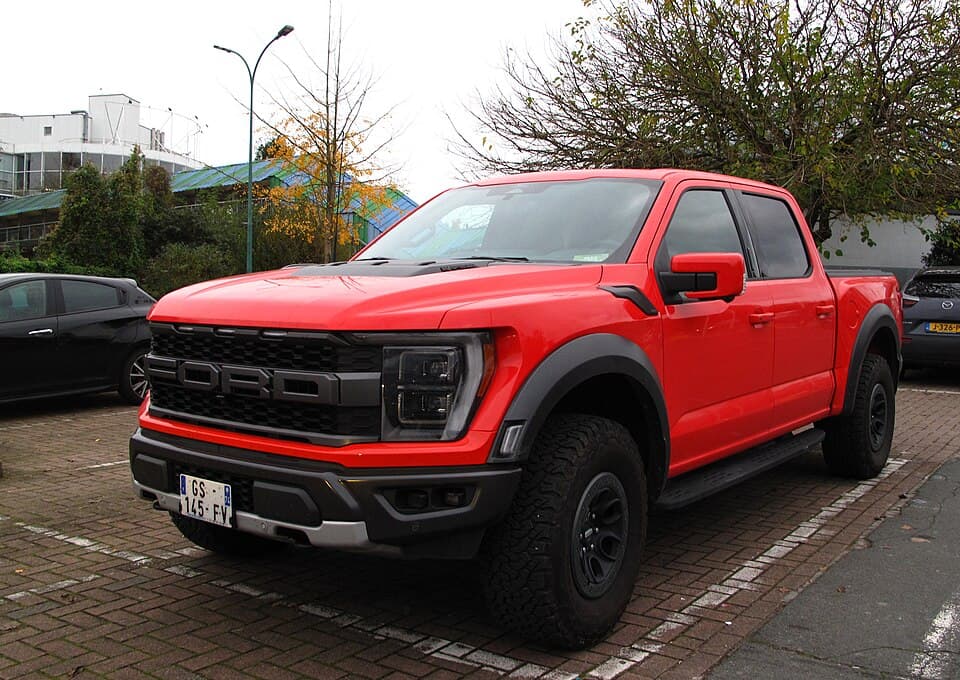
The 2026 Ford Raptor is a carryover of the Gen 3 truck Ford has built since 2021, with the same 3.5L High-Output EcoBoost rated at 450 horsepower and 510 lb-ft of torque, the same 10R80 ten-speed automatic, and the same Live Valve suspension hardware. The changes for 2026 are new paint colors and some equipment shuffling between trims, not anything mechanical. If you are cross-shopping a 2026 against a leftover 2025, the trucks are functionally identical, so the decision comes down to price, color, dealer markup, and how much you value a newer build date.
What actually changed for 2026
Nothing under the skin. Ford's spec sheets for this engine family have shown 450 hp at 5,850 rpm and 510 lb-ft at 3,000 rpm since the Gen 3 launch, and nothing in Ford's current marketing for this model year suggests a revision to those numbers. Treat 2026 output as a carryover figure rather than a confirmed new rating, since Ford has not published a 2026-specific spec sheet as of this writing. The 10R80 transmission, the five-link coil rear with the Watt's link and trailing arms, and the Fox Live Valve dampers all carry over unchanged across the lineup.
If a dealer tells you the 2026 has "updated suspension tuning" or a "refreshed engine," get that in writing before you pay a premium for it. The real refresh for this generation landed with the 2024 model year, covered in detail on the 2024 Ford Raptor specs, problems, and value page. A 2026 is a running-change year, not a refresh year.
2026 Ford Raptor specs
| Spec | 2026 Ford Raptor |
|---|---|
| Engine | 3.5L High-Output twin-turbo EcoBoost V6 |
| Output | 450 hp @ 5,850 rpm, 510 lb-ft @ 3,000 rpm |
| Transmission | 10R80 10-speed automatic |
| Rear suspension | 5-link coil, Watt's link, trailing arms |
| Standard tire | 35-inch BFGoodrich KO2 all-terrain |
| 37 Performance Package | 37-inch tires on beadlock-capable forged wheels |
Those numbers put the standard 2026 Raptor well below the Raptor R's supercharged 5.2L V8, which Ford rates at 720 hp. If you are deciding between the two, the honest framing is in what the extra money actually buys you going from a Raptor to a Raptor R, not the spec sheet alone.
What to pay: MSRP versus the used market
Ford's base MSRP for a 2026 Raptor is reported in the roughly $80,000-85,000 range before options and destination, and that figure moves with trim and package choices. Pull the actual build sheet from your dealer rather than trusting a round number off the internet; a 2026-specific Ford pricing sheet was not available to verify at the time of writing.
A caveat on used pricing: RaptorCentral's live listing data tracks the F-150 lineup as a whole, not the Raptor trim in isolation, so there is no clean "average Raptor asking price" to quote by itself. The blended F-150 (all trims) average across live listings runs $83,306 for model year 2025 and $91,558 for model year 2026. Because that number includes base XLT and Lariat trucks alongside Raptors, the real average for a Raptor-only sample sits meaningfully higher than those figures, treat them as a floor, not a Raptor-specific price. For a pricing breakdown built specifically around Raptor trim levels, see how much a Ford Raptor actually costs across the 2026 lineup.
The Raptor R does have its own clean series in the site's data, since it is tracked as a distinct trim:
| Model year | Raptor R avg asking (live listings) |
|---|---|
| 2023 | $98,526 |
| 2024 | $111,643 |
| 2025 | $125,294 |
| 2026 | $139,782 |
That climb of roughly $14,000-15,000 a model year is steeper than typical F-150 depreciation curves, which tells you the Raptor R market is still thin enough that low supply is propping up asking prices. A deeper look at that trend, including where the real negotiating room is, lives on what a used Raptor R actually costs right now.
For the standard Raptor, the practical move is to get real quotes on both a 2025 and a 2026 from the same dealer group and compare them directly, since no published aggregate isolates Raptor-only pricing cleanly enough to trust a single number. In our experience shopping these, a leftover 2025 typically undercuts an equivalent new 2026 build by a few thousand dollars once incentives are applied, but that gap varies by region and by how badly a dealer wants the 2025 off the lot.
Known problems on the current generation
The Gen 3 platform (2021-2026) runs a different EcoBoost architecture from the Gen 2 trucks, and the Gen 2 cam phaser rattle that plagued 2017-2020 trucks is far less common on the HO engine. It is not unheard of on early Gen 3 trucks, but nobody has published a failure rate worth quoting, so treat any specific percentage you see online as noise. If you are buying a 2026, do not budget for a phaser job, but a cold start and a listen for ticking in the first couple seconds costs you nothing. The full history by engine and model year is in 3.5 EcoBoost problems by year.
Owners across the Gen 3 generation report a handful of recurring issues. Nobody has published failure-rate data on any of these, so read them as patterns owners describe, not statistics:
- Watt's link and trailing arm bushing clunk. A clunk or squeak from under the bed over speed bumps. Usually fixed by retorquing hardware or replacing bushings, budget $150-900 depending on whether it is torque alone or parts.
- Live Valve sensor and module faults. A suspension service message with dampers stuck in one mode. Diagnosis and fix for the ride height sensor or control module typically runs $350-800, as an estimate, since shop labor rates vary. The system itself is explained in how Gen 3 Live Valve suspension actually works.
- SYNC 4 screen freezes or reboot loops. Sometimes resolved free with an over-the-air update, sometimes requiring an APIM (the infotainment control module) replacement that can push into four figures.
- 37 Package tire rub at full lock and full compression. Contact with the front fender liner or lower splash shield on hard articulation. Usually a low-cost fix in the $0-300 range: trim the liner corner, adjust the steering stops.
- Turbo wastegate actuator rattle. A metallic chatter at idle from one or both turbos. Replacing the actuator runs roughly $500-1,100 per side as an estimate, and shops sometimes misdiagnose this as a loose heat shield first.
- Panoramic roof and B-pillar rattles. A creak or tick over washboard surfaces, usually solved by cleaning and lubricating the glass tracks, budget $150-500.
- 12V battery drain and battery management faults. A dead truck after several days parked, or a BMS (battery management system) warning on the cluster. Often resolved with a battery replacement and a BMS reset, budget $250-500.
- Rear coil sag under heavy payload. The rear sits low with a loaded bed or a tongue-heavy trailer. Airbags on the trailing arms run roughly $600-1,400 and are the common fix, not a spring swap.
None of these are recall-level problems as of this writing. If a dealer tells you a repair is covered by a TSB (a published repair procedure, not a free-repair mandate), that only means Ford has a documented fix, not that the work is free outside warranty. Confirm your specific coverage dates and mileage against your VIN with the selling dealer rather than assuming a round number, and remember that any repair offered past your coverage window is goodwill, which Ford extends at its discretion, not an entitlement. Check the Ford Raptor recall history by generation before you assume a quirk is a known safety issue.
Buying used: what to check before you sign
- Verify the 37 Performance Package by the wheels and the tire sidewall, don't take a listing's word for it.
- Drive over a speed bump at walking pace with the windows down and listen for the Watt's link clunk.
- Cycle every drive mode and watch for a suspension service message on the cluster.
- Cold start the truck and listen for ticking in the first couple seconds, more relevant to a Gen 2, but worth the ten seconds on any trim.
- Check the SYNC software version and update history in the settings menu.
- Inspect the front skid plate, valance, and lower A-arms for impact damage a seller did not disclose.
- Ask directly about towing history and look for hitch wear.
- If the seller claims no issues at all, treat that as a prompt to look harder, not a reason to relax. The full walk-through is in the Gen 3 used buying guide and warranty math.
The short version
- The 2026 Ford Raptor is mechanically a carryover of the Gen 3 truck Ford has sold since 2021: 450 hp, 510 lb-ft, 10R80 automatic, same Live Valve suspension hardware.
- Ford's base MSRP lands roughly in the $80,000-85,000 range as an estimate; get the actual build-sheet number from your dealer.
- RaptorCentral's pricing data does not isolate Raptor-only asking prices; the blended F-150 average ($91,558 for 2026 versus $83,306 for 2025) understates true Raptor pricing and should be read as a floor.
- Known issues on this generation are mostly suspension bushings, Live Valve sensors, SYNC glitches, and minor rattles, not the phaser problems that defined Gen 2.
- Confirm Ford's powertrain and bumper-to-bumper warranty dates against your specific VIN with the selling dealer, and treat any dealer talk of a "2026 refresh" with skepticism, since the real refresh happened in 2024.
Deal alert
Shopping for one? Get new listings first
We sweep US dealer inventory and send you new Raptors matching your search — real listings, real asking prices, no spam.