Raptor vs Raptor R: What the Extra Money Actually Buys
The Raptor R costs $28,000-37,000 more than a standard Gen 3 to buy, and the gap keeps widening after the sale. We break down what the supercharged 5.2 actually adds, what stays identical, and who should pay for it.
Gear in this article
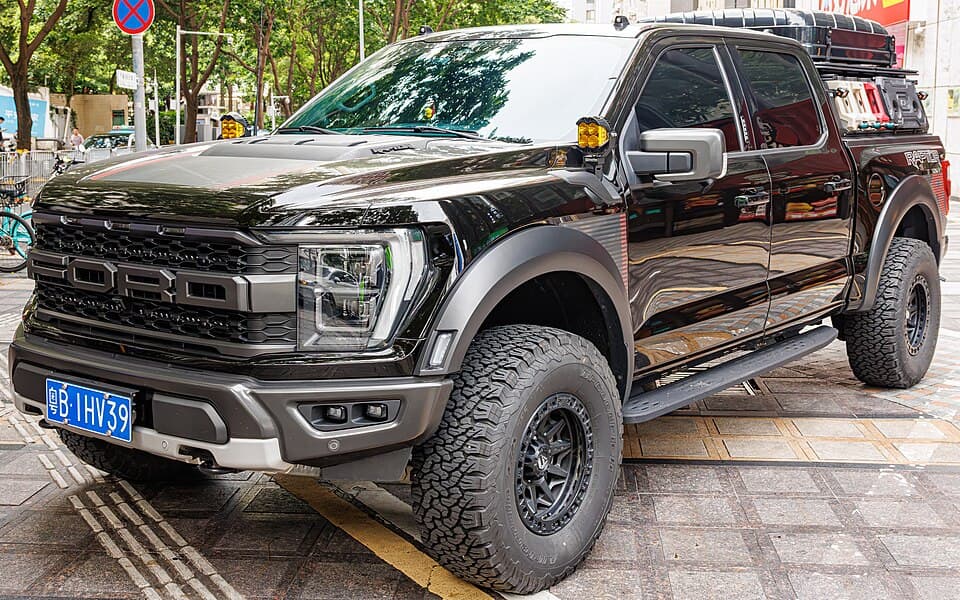
The plain answer: a well-equipped Raptor R runs roughly $28,000 to $37,000 more than a well-equipped Gen 3 Raptor at purchase, and Raptor Central's own ownership model puts another $20,000 to $30,000 on top of that over five years in fuel, tires, and depreciation. The one-sentence verdict: pay the gap if you want a supercharged V8, the sound, and the bragging rights that come with it, and keep your money if payload, towing, and a properly optioned standard truck already cover what you actually do with it.
This is a cross-shop a lot of buyers run in the F-150 Raptor showroom, standing in front of two trucks that share a cab, a bed, and most of a frame, separated by a sticker that is not close. Here is what that extra money is actually paying for, and what it is not.
Where the price gap actually lands
The standard Gen 3 Raptor starts around $81,000 for 2026, and the truck most buyers actually order, on the 37 Performance Package, typically lands at $85,000-89,000. The Raptor R starts around $109,000-115,000, and a comparably optioned truck runs $115,000-122,000. Line those up and the base-to-base gap is roughly $28,000-34,000, and the optioned-to-optioned gap is roughly $26,000-37,000. Call it $28,000-37,000 depending on how each truck is built, and treat both ends as estimates that move with your region and your dealer's markup. See the full breakdown by model in how much is a Ford Raptor: 2026 prices for every model.
That number is the price of admission. It is not the whole bill. Raptor Central's five-year ownership model for these two trucks, covered in full in what a Raptor R actually costs to own, puts an additional $20,000-30,000 gap on running costs and depreciation on top of the purchase price. Add it up and choosing the R is closer to a $50,000-60,000 decision than a $30,000 one once you own it for five years.
The comparison spec table
| Spec | Raptor (Gen 3) | Raptor R |
|---|---|---|
| Engine | 3.5L High-Output EcoBoost twin-turbo V6 | 5.2L supercharged Predator V8 (2.65L Eaton TVS supercharger) |
| Output | 450 hp / 510 lb-ft | 700 hp / 640 lb-ft (2023) or 720 hp / 640 lb-ft (2024 and later) |
| Transmission | 10R80 10-speed automatic | 10R80 10-speed automatic |
| Rear suspension | Five-link coil, 24-inch Watt's link | Five-link coil, 24-inch Watt's link, R-specific tune |
| Shocks | Fox 3.1 Live Valve | Fox 3.1 Live Valve, R-specific tune |
| Standard tire | 35-inch KO2 (37 Package optional: 37x12.50R17 beadlock-capable) | 37x12.50R17 KO2 standard, no smaller option |
| Ground clearance | 13.1 in with the 37 Package | 13.1 in standard |
| EPA combined mpg | 16 | 12 |
| Base MSRP (2026) | ~$81,000 | ~$109,000-115,000 |
| Typical as-configured | $85,000-89,000 | $115,000-122,000 |
What the R actually adds
The engine is the real story, and it is not a mild upgrade. Swapping the 3.5L HO EcoBoost's twin turbos for the 5.2L supercharged Predator V8, the same architecture that powered the last Shelby GT500, is a different powerplant family entirely, not a tune on the same block. The 2.65-liter Eaton TVS supercharger (a roots-type unit that force-feeds air into the engine at all rpm, unlike a turbo that needs exhaust flow to spool) is why the R makes its power everywhere in the rev range instead of waiting on boost.
That engine changes more than the number on the spec sheet. The R gets its own hood with functional vents to pull heat out of the engine bay, an active-valve exhaust tuned specifically for a supercharged V8 rather than a turbo six, and its own tune on the five-link coil rear and the Fox 3.1 Live Valve shocks to manage the extra weight over the front axle. It also ships on 37x12.50R17 KO2s standard, no smaller tire offered, where the base Raptor treats 37s as an option most buyers add themselves. None of that shows up as a separate line item on the window sticker, but it is real hardware, and it is the reason the R is not just a Raptor with a bigger engine bolted in.
What it does not add
Here is the part the sticker does not advertise: the cab is the same cab, the bed is the same bed, and most of the frame underneath both trucks is the same frame. Ford did not stretch the wheelbase, redesign the interior, or give the R a different infotainment stack. Payload and max tow figures land close enough between the two trucks that neither is a reason to pick one over the other; if hauling capacity is your deciding factor, the standard truck's spec sheet already answers the question.
The suspension architecture is also the same idea, just retuned. Both trucks run a five-link coil rear with a 24-inch Watt's link and Fox 3.1 Live Valve shocks. The R's version is calibrated for its extra front weight and its taller standard tire, but it is not a different suspension design, and a well-optioned Gen 3 on the 37 Performance Package rides on hardware that is closer to the R's than the price gap suggests. If you are shopping for the widest approach angle or the most ground clearance, both trucks land at 13.1 inches once the standard Raptor is on 37s, and the R's real edge on trail geometry is modest, not dramatic. For how the R stacks up against its actual competition rather than its own sibling, see Raptor R vs TRX vs RHO: the honest verdict.
The running-cost delta you feel every month
Fuel is where the gap is impossible to ignore. The R is EPA-rated at 12 mpg combined, and owners report 10-13 mpg if you are on it in sand or running errands with a heavy foot, closer to 12-15 if your driving leans highway. The standard Raptor's 3.5 HO EcoBoost is EPA-rated at 16 combined, with owners generally seeing 14-17 in the same mixed conditions. Over five years at 12,000 miles a year, that works out to roughly $19,000-24,000 in fuel for the R against $14,000-17,000 for the standard truck, using premium at an assumed $4.25 a gallon that will move with your local pump price.
Tires tell a similar story. The R's 37s wear in the 20,000-25,000 mile range with disciplined rotation, and a set of five runs $2,000-2,800, which works out to roughly $5,500-7,500 over five years. A stock Gen 3 on base 35s costs less per set and likely stretches further between replacements, closer to $2,000-3,200 over the same five years, though optioning the 37 Package on the standard truck closes much of that gap.
Insurance runs higher on the R too, by roughly $30-60 a month in Raptor Central's owner data, or $1,800-3,600 over five years, reflecting the higher insured value and the truck's performance classification rather than anything about reliability. Maintenance diverges as well: the R's front brake pads commonly need replacement at 18,000-25,000 miles, running $600-1,400 per axle, because a heavier, more powerful truck stops harder and more often. The supercharger belt and idler pulley are a known wear item too, usually a $200-600 fix if you catch the chirp early, and something the standard truck's turbo setup simply does not have. Both trucks share the standard EcoBoost family's turbo wastegate rattle on the 3.5, but that issue is specific to the turbocharged six, not the R's supercharged V8, so do not expect it on the R.
Depreciation: the number nobody actually knows yet
The R launched for the 2023 model year, so nobody has five years of real resale data on it, and used R pricing right now is still close to new, per the full 2026 pricing breakdown. Raptor Central's cost model assumes both trucks retain a similar percentage of their purchase price, which puts the R's dollar depreciation at roughly $8,000-12,000 more than the standard truck over five years simply because the same percentage applied to a higher price is a bigger number. Treat this line as directional, not precise, and revisit it once R trucks actually start turning over on the used market in volume.
Who should pay the gap, and who is buying a soundtrack
If you tow near the standard truck's 8,200 lb rating, haul real payload, or drive mostly pavement between dirt trips, the R's extra power is mostly unused capacity. You are paying $28,000-37,000 up front and another $20,000-30,000 over five years for an engine you will rarely need and a fuel bill you will feel every month. That buyer is better served putting the difference into the 37 Performance Package on the standard truck and calling it done.
If what you actually want is the supercharged V8 sound, the way it pulls through the whole rev range instead of waiting on boost, and the fact that it is the only one of this class of truck still in production with a full warranty and dealer network behind it, the R earns its price. That is not a capability argument in most owner's daily use, it is a want, and there is nothing wrong with paying for one honestly. Just go in knowing you are buying an engine and the character that comes with it, not a materially bigger truck. For how quickly that character shows up in a straight line, see Ford Raptor 0-60 times, every generation tested.
The short version: the cab, the bed, and most of the chassis are the same truck. The $28,000-37,000 gap, and the $20,000-30,000 more it costs to run over five years, buys a different engine, a different sound, and standard 37s. Decide honestly whether that is what you are shopping for before you sign.
Owner questions
- Raptor R hp vs regular Raptor hp
- The standard Gen 3 Raptor's 3.5L High-Output EcoBoost V6 makes 450 hp and 510 lb-ft. The Raptor R's 5.2L supercharged Predator V8, with its 2.65L Eaton TVS supercharger, makes 700 hp and 640 lb-ft for the 2023 model year, rising to 720 hp and 640 lb-ft for 2024 and later.
- Raptor vs Raptor R, is the R worth it?
- It's worth it if you want the supercharged V8, its sound, and bragging rights; a well-equipped R costs $28,000-37,000 more upfront and another $20,000-30,000 over five years in fuel, tires, and depreciation. Keep your money if payload, towing, and a properly optioned standard Raptor already cover what you actually do with the truck.
- How much more does a Raptor R cost than a standard Raptor?
- The base-to-base gap runs roughly $28,000-34,000, since the standard Raptor starts around $81,000 for 2026 while the Raptor R starts around $109,000-115,000. Comparably optioned trucks run $85,000-89,000 versus $115,000-122,000, putting the optioned-to-optioned gap at roughly $26,000-37,000.
- What is the total cost difference between owning a Raptor and a Raptor R over five years?
- Beyond the $28,000-37,000 purchase-price gap, Raptor Central's five-year ownership model adds another $20,000-30,000 in fuel, tires, and depreciation for the R. That makes choosing the R closer to a $50,000-60,000 decision than a $30,000 one once you factor in five years of ownership.
- Do the Raptor and Raptor R have the same suspension and chassis?
- Yes—both run a five-link coil rear suspension with a 24-inch Watt's link and Fox 3.1 Live Valve shocks on the same cab, bed, and mostly the same frame. The R gets an R-specific tune on that suspension for its extra front weight and taller tires, but it's the same design, not a different architecture.
Deal alert
Shopping for one? Get new listings first
We sweep US dealer inventory and send you new Raptors matching your search — real listings, real asking prices, no spam.