2025 Ford Raptor: Specs, Problems, and Value
Explore the 2025 Ford Raptor's specifications, known issues, and value compared to the 2024 model. Understand what to pay for a carryover year.
Gear in this article
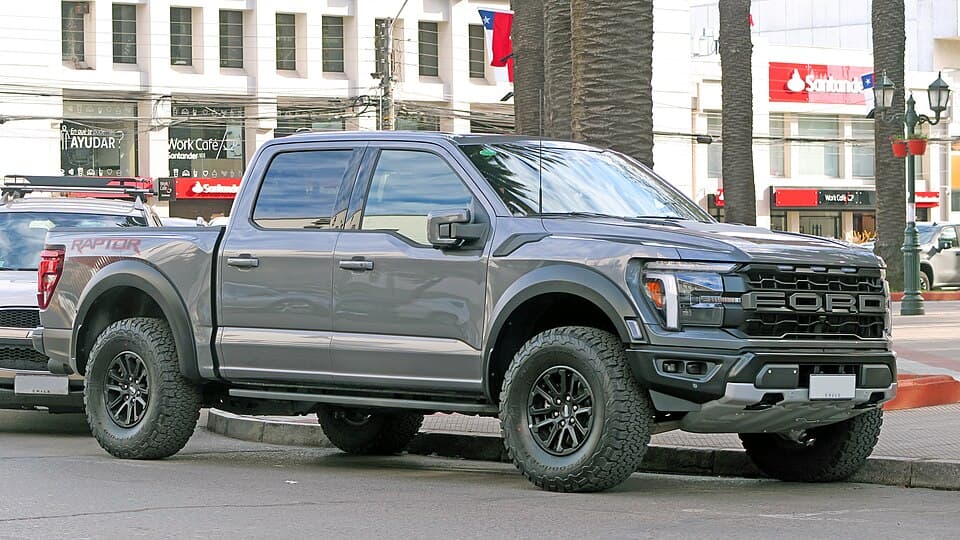
The 2025 F-150 Raptor is a carryover of the refreshed 2024 truck: same 450 hp/510 lb-ft 3.5L High-Output EcoBoost, same 10R80 ten-speed, same chassis and Fox Live Valve tuning. The only changes are paint and option-package shuffling. If you are shopping new, the question is not "what's different" but "am I paying 2025 money for a 2024 truck with different badges," and the answer depends entirely on whether the dealer is pricing the leftover correctly.
What actually changed from 2024 to 2025
Nothing mechanical. The big news happened for 2024: a new front fascia, a 12-inch digital gauge cluster, a 12-inch SYNC 4 touchscreen, and revised tuning on the Fox 3.1 Live Valve shocks that owners generally describe as better on-road manners without giving up off-road travel. That refresh is the dividing line that matters on this truck. A 2023-or-earlier Gen 3 Raptor does not have any of it.
For 2025, Ford carried that package forward with no powertrain or suspension revisions worth noting. New colors, some trim and equipment reshuffling between packages, nothing that changes what you're buying mechanically. If you're cross-shopping a 2024 against a 2025, the only real question is which one is priced better right now, not which one is the "better truck." For a direct year-by-year breakdown of the 2024 truck this was copied from, see the 2024 Ford Raptor specs and value guide.
Specs that matter
| Spec | 2025 F-150 Raptor |
|---|---|
| Engine | 3.5L High-Output EcoBoost twin-turbo V6 |
| Power | 450 hp @ 5,850 rpm |
| Torque | 510 lb-ft @ 3,000 rpm |
| Transmission | 10R80 ten-speed automatic |
| Standard tires | 35-inch BFGoodrich KO2, 315/70R17 |
| 37 Package tires | 37x12.50R17 on beadlock-capable forged wheels |
| Oil capacity | 6 quarts |
Those power and torque figures are the Ford-published numbers for the HO (High Output) 3.5, and they haven't moved since the 2023 Raptor R launch brought the HO engine into the lineup alongside the supercharged 5.2 V8 in the R. If a listing or a dealer sheet quotes something different for a 2025, that's a typo, not a running change.
Ground clearance, approach and departure angles, payload, and towing numbers vary by whether the truck is on the stock 35s or the 37 Performance Package, and by cab/bed configuration. Pull the specific window sticker for the VIN you're looking at rather than trusting a generic spec sheet, because Ford's own published numbers shift slightly by trim and tire package.
For the complete current-generation spec table including suspension travel and differential gearing, the Gen 3 F-150 Raptor hub page has the full breakdown.
Known issues on the 2025 truck
Because it's a carryover, the 2025 inherits the issue list from the 2024 refresh rather than starting fresh. Nothing here is specific to 2025 build dates alone, but these are the complaints owners are actually reporting on refresh-generation trucks.
Cam phaser rattle at cold start. Far less common on the HO 3.5 than it was on the earlier Gen 2 EcoBoost, but owners still report an occasional rattle on startup before oil pressure builds. If you hear it, don't assume it's the same failure mode or fix as the Gen 2 phaser problem; the Gen 2 cam phaser rattle cost breakdown is a different engine and a different part.
Live Valve suspension faults. A suspension-system warning message with the dampers locked into one mode is a sensor or module issue, not a shock failure, in most reported cases. It's an inconvenience and a dealer visit, not a safety problem, but it is not cheap to chase blind.
Watt's link and trailing arm bushing noise. A clunk over speed bumps or washboard, usually fixed by retorquing hardware to the current spec or replacing a bushing. Test drive over bad pavement before you buy; it's cheap to fix but annoying to live with unresolved.
SYNC 4 screen reboots. Infotainment freeze or reboot loops, typically resolved by an over-the-air update or, in persistent cases, a module replacement at the dealer.
37 Package tire rub at full lock. If the truck is on 37s, check for rub marks on the front fender liner at full steering lock, low speed. It's a known clearance issue that's usually solved with a liner trim and steering stop adjustment, not a sign of a bent part, but confirm it wasn't ignored.
None of this rises to a published recall or a documented bulletin number as of this writing, and we're not going to invent one. If you're worried about a specific symptom, check the VIN with your dealer's service department rather than trusting a forum thread that may be describing a different model year's fix.
What Ford's new-vehicle warranty covers
A new 2025 Raptor carries Ford's standard bumper-to-bumper and powertrain warranty terms, which you should confirm against your build sheet since coverage windows and mileage caps occasionally shift between model years. Powertrain coverage is engine, transmission, and drivetrain, full stop. It is not shocks, not infotainment, not trim rattles. Any of those sensor or bushing issues above fall under the shorter bumper-to-bumper window, and anything past that window is a goodwill conversation with your dealer, not an entitlement.
Pricing logic: new vs. leftover 2025 vs. 2026
Live listing data on new and used Raptors puts the 2025 model year averaging around $83,300 across 674 listings at the time this was written, against roughly $91,600 for the 2026 across a much larger sample. That gap, about $8,000, is close to what you'd expect for one model year of depreciation on this truck right now, assuming no mechanical difference between the two years, which there isn't.
That changes the math on a leftover 2025 sitting on a lot once 2026 trucks are flowing. A dealer holding a 2025 should be discounting it toward or below that average, not asking 2026 money for a truck that's functionally identical except for the calendar year on the title. If a leftover 2025 is priced within a couple thousand of a new 2026, walk, because you're paying for a title date with no equipment or spec difference to justify it.
Compare that to the jump from 2024 to 2025, which runs the other direction for a different reason: the 2024 was the refresh year, so early demand kept those prices firmer than a typical one-year step would suggest. By 2025 that premium has mostly normalized out.
If you're deciding between a new 2025 and waiting for 2026 inventory to loosen up, the practical answer is: if you can get the 2025 priced at or near the live average and the dealer will deal on it because they want it off the lot before 2026s arrive in volume, it's the same truck for less money. If they won't move off sticker, there's no reason to pay a premium for the older model year of an unchanged truck.
Buying used: what to check specifically
- Confirm it's genuinely a 2025, not a title-year 2024 being represented as one. The equipment is nearly identical, so this mostly affects resale math, but get the actual build date.
- Verify the 37 Package by wheel and tire, not by badge. Check actual tire size and whether the wheels are the beadlock-capable forged units, since badges get swapped.
- Drive it over broken pavement and listen for Watt's link or trailing arm clunk.
- Check for any active suspension warning messages on the cluster, which points to a Live Valve sensor or module fault.
- Inspect the front skid plate for rock strikes or creased edges, a sign of real off-road use versus a garage queen.
- Ask for SYNC update history if the truck has had infotainment complaints logged at the dealer.
For a longer step-by-step walkthrough built for the current-generation truck specifically, run the Gen 3 Raptor buying guide alongside this, since most of what applies to a used Gen 3 applies here unchanged.
The short version
- The 2025 F-150 Raptor is mechanically identical to the refreshed 2024: 450 hp/510 lb-ft HO EcoBoost, 10R80, Live Valve Fox suspension. Buy it on price, not on feature differences, because there aren't meaningful ones.
- Known issues (phaser rattle, Watt's link clunk, Live Valve faults, SYNC reboots, 37-package rub) are inherited from the refresh platform, not new to this year, and none currently carry a published recall.
- At roughly $83,300 average against the 2026's $91,600, a leftover 2025 only makes sense if the dealer is pricing in that real depreciation gap. If they're not, you're buying a title date, not a better truck.
Deal alert
Shopping for one? Get new listings first
We sweep US dealer inventory and send you new Raptors matching your search — real listings, real asking prices, no spam.