What a Used Raptor R Actually Costs Right Now (And What Drives the Price)
Raptor R asking prices swing by tens of thousands of dollars depending on year, mileage, and leftover dealer markup that may or may not have unwound yet. Here's what the market actually looks like and where the real value sits.
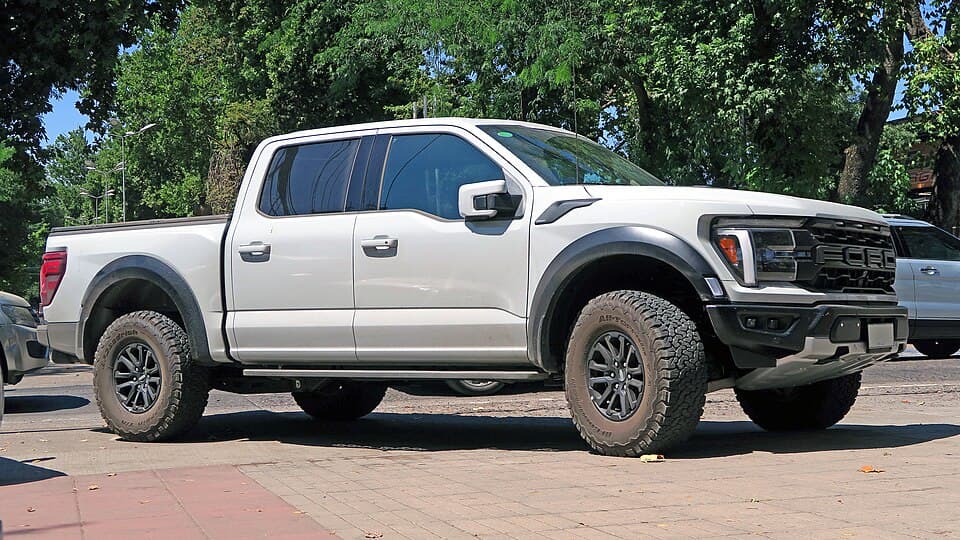
The Raptor R used market right now breaks down roughly like this: 2023 trucks are averaging about $100,300 across live listings, 2024s about $113,000, 2025s about $127,400, and 2026s (still current production, so this average leans heavily on new and near-new dealer stock) about $145,200. Those are broad averages across a wide mileage and condition spread, not a quote for any specific truck, and you should pull current listings before you write a check based on anything printed here, including this article.
What that pattern actually tells you is simpler than it looks: used Raptor R pricing tracks Ford's rising sticker price for each model year plus a mileage discount, not some unusual anti-depreciation curve. The more useful question is whether the dealer markup that defined this truck at launch is still baked into what you'd pay today, and that answer depends on your region and the specific dealer, not on a number anyone can print once and trust for three years.
What Ford charged at launch versus what the market actually paid
Ford's official pricing put the 2023 Raptor R's base sticker at roughly $109,000 with destination. Confirm the exact figure and trim breakdown against Ford's published pricing for that model year before you quote it to anyone, since options and packages shifted the number across the model run, and Ford raised the starting price again for 2024 and 2025.
Allocation was tight at launch. Dealers in a lot of regions added market adjustment stickers on top of that sticker, and owners and dealers describe those add-ons running into five figures in the truck's first year on sale, though nobody has published a real average-markup figure worth quoting here.
Here's the part that should reset your expectations: the site's average for 2023 used listings, about $100,300, is already sitting close to or below that original ~$109,000 base MSRP. That does not mean a clean, low-mileage 2023 R is a bargain today. The average blends high-mileage trucks and rougher condition against low-mileage ones, and a genuinely clean, low-mile 2023 is very likely still priced well above that blended number. What it does mean is that you cannot assume a used Raptor R carries the same launch-era markup premium it did in 2023.
Whether dealer ADM (added dealer markup, the sticker a dealer tapes over the window on top of Ford's price) has fully unwound on new trucks by the time you're reading this is genuinely unverified and swings by dealer group and region, some of whom held ADMs longer than others. Pull current new-Raptor-R listings in your area alongside the used comps before you assume buying used gets you out from under that tax. In some markets it does. In others the new-truck ADM has faded and the used market has simply caught up to it.
What the numbers actually look like by model year
Do not treat any single number below as a quote for your truck. Pull live listings on AutoTrader, Cars.com, CarGurus, and Ford dealer inventory pages before you negotiate, and expect real spread within each year based on mileage, region, and options.
| Model year | Site-tracked average | What moves it within the year |
|---|---|---|
| 2023 | ~$100,300 | Widest mileage spread on the market, first-year builds, some carrying launch-era ADM history |
| 2024 | ~$113,000 | Fewer very-high-mileage examples yet, minor running changes across the year |
| 2025 | ~$127,400 | Lowest mileage of the true "used" years, least ADM baggage |
| 2026 | ~$145,200 | Still current production, so this average leans heavily on new and near-new dealer inventory rather than a resale market |
Within any given model year, mileage does most of the remaining work, and the spread between a low-mileage example and a well-used one is wide enough that the year-average headline will not tell you what your specific truck should cost. A 2023 with 10,000 miles and a 2023 with 40,000 miles are not competing in the same market, and one that spent its life on 37s and a suspension kit is a different animal from one that never left pavement. Check odometer-adjusted comps for the mileage band you're actually shopping, not the average. For the running changes Ford made across the build, see Raptor R Years: 2023 vs 2024 vs 2025, What Actually Changed.
How that compares to the regular Raptor's depreciation curve
The standard Gen 3 F-150 Raptor depreciates the way a normal high-demand truck does: real but moderate value loss over the first two to three years, then a curve that flattens. Whether the Raptor R holds value meaningfully better or worse than that, on a like-for-like age and mileage basis, is not something the averages above settle. The R's average by model year moves mostly with Ford's rising sticker price and shrinking mileage as you go newer, which is normal for any vehicle still in production, not evidence of an unusual curve on its own.
The R's low production volume, a supercharged 5.2L V8 available nowhere else in the lineup, and a buyer pool willing to wait or pay for one specific truck are all real reasons it could depreciate differently than the regular Raptor over a longer horizon. But three model years is a thin sample, and the market has not yet produced the volume of 60,000-plus mile Raptor R's you'd need to know for certain. For the generation-by-generation picture of where the standard Raptor's curve actually bends, see Ford Raptor Depreciation: What It Actually Loses, By Generation.
What actually moves the price within a given Raptor R listing
The 37-inch tires and matching fender clearance were standard equipment on the Raptor R from launch, across all three model years the truck has been built. There is no smaller-tire base Raptor R to compare against, so the "factory 37 package holds value" framing that applies to a regular Raptor's optional 37 Performance Package does not carry over here. Every Raptor R on the used market already has the 37s.
What actually seems to move price within a Raptor R listing is more ordinary: mileage, service history (specifically whether the supercharger and its drive belt have been maintained on schedule), whether the truck has ever run aftermarket tuning or forced-induction changes, cosmetic condition, and region. Owners and dealers talk about certain launch colors or low-production trim combinations selling faster, but nobody has published a real premium-by-option study on the Raptor R, and any specific dollar figure a dealer quotes you for what a color or option "adds" to resale should be treated as a negotiating position, not a fact.
Factory-versus-aftermarket matters most if a truck has been pushed past the stock 37s onto a larger tire with a lift or aftermarket fenders. That's a modification, not a factory package, and it changes the risk profile the way any suspension or drivetrain change does on a used performance truck. If you're pricing what it costs to go bigger than factory 37s on a comparable EcoBoost-based truck for reference, How Much Does It Cost to Put 37s on a Gen 2 Raptor? covers the labor and parts breakdown, though a Raptor R starting from factory 37s is a smaller job than that article's baseline.
What to check before you pay, and what it costs to actually own one
Pricing is only half the decision. Before you commit to a specific truck, run the Used Raptor R Buying Guide inspection checklist, particularly around supercharger service history and any evidence of aftermarket tuning, since a modified Raptor R carries different risk than a modified regular Raptor. And price out the ongoing costs separately from the purchase price. Insurance, tires, and fuel on a supercharged 5.2L V8 are not the same as a 3.5 EcoBoost, and What a Raptor R Actually Costs to Own, Not Just to Buy breaks that out so you're not surprised six months in.
The short version
- Used Raptor R prices are currently averaging about $100,300 for 2023, $113,000 for 2024, $127,400 for 2025, and $145,200 for 2026 (which is still largely new/near-new dealer stock), but pull current live listings before negotiating since these move constantly.
- Ford's 2023 base sticker was roughly $109,000 with destination, and used 2023 averages are now sitting close to or below that figure, which suggests launch-era dealer markup has faded on average, though a clean low-mileage example will still price well above the blended average.
- Whether new-truck ADM has fully disappeared depends on your region and dealer. Check current new-Raptor-R listings near you before assuming used automatically means cheaper.
- The factory 37s are standard on every Raptor R, so they're not a value-adding option to shop for. What actually separates a good used R from a risky one is service history, modification history, and mileage, not tire size.
- If you're paying near new-Raptor-R money for a lightly used one with no real mileage discount, price out a new build instead. And if the gap between a base Raptor and a Raptor R is more than you actually value the supercharged V8's power, the regular Raptor is the better buy for most owners.
Deal alert
Shopping for one? Get new listings first
We sweep US dealer inventory and send you new Raptors matching your search — real listings, real asking prices, no spam.