Ranger Raptor Cost of Ownership: What Owners Are Actually Paying
The Ranger Raptor brings Baja-truck hardware to a mid-size price point, but insurance, fuel, and maintenance don't scale down the same way. Here's what the real numbers look like so far, with honest caveats about how new this truck still is.
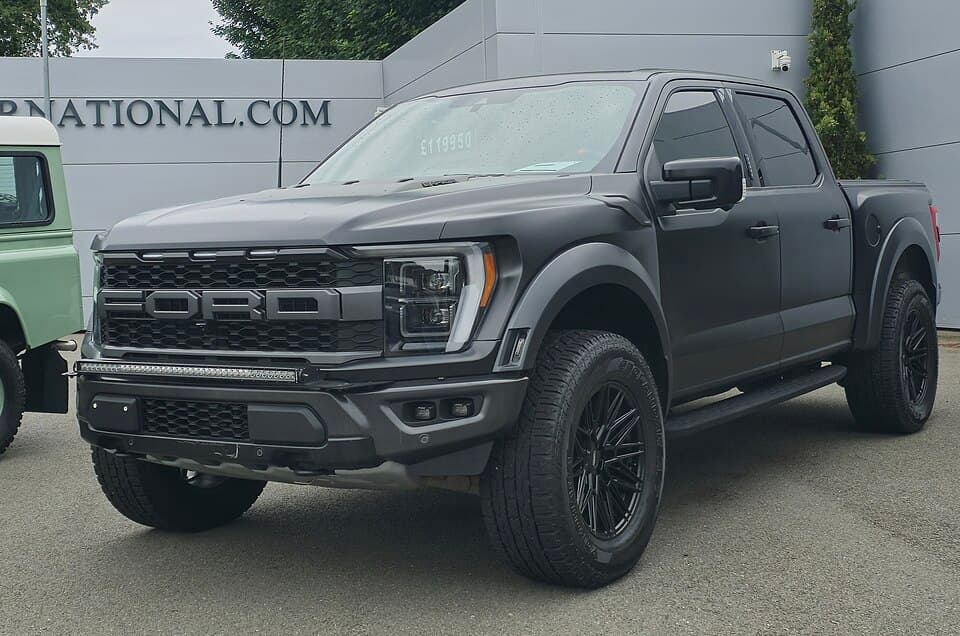
The short answer: a Ranger Raptor costs less to insure and fuel than a full-size F-150 Raptor, likely $150-300 a year less on insurance and $400-700 a year less on gas depending on how many miles you drive, though those ranges are early estimates rather than settled numbers, and scheduled maintenance and parts pricing land close to full-size Raptor money once you're outside the free maintenance window. And nobody, including Ford, has real depreciation data on this truck yet, because it has only been on sale in the US since model year 2024.
That last point matters more than any number below. Every cost-of-ownership article on a truck this new is partly an estimate. We'll flag which numbers are early owner reports, which are Ranger-platform numbers carried over from the regular Ranger, and which are outright projections. Anyone telling you they have three years of hard depreciation data on a Ranger Raptor is guessing, same as we are.
If you haven't already, read the Ranger Raptor specs and 0-60 breakdown first. The cost picture below only makes sense once you know what you're actually running: a 3.0L twin-turbo EcoBoost V6, a 10-speed automatic, and a curb weight meaningfully lighter than a Gen 3 F-150 Raptor, confirm the exact figure against your build's window sticker rather than a forum number. That weight difference is why almost every number in this article is smaller than the full-size truck's, but not proportionally smaller.
What insurance actually runs
Insurance on a Ranger Raptor tracks closer to a loaded midsize truck with a performance flag on the file than to a true performance vehicle. Expect roughly $150-300 a year less than a comparable F-150 Raptor, and we are labeling that a projection built from the same rating factors insurers apply to any Ranger (replacement cost, horsepower, safety ratings) rather than a number pulled from a large sample of Ranger Raptor policies, since there is not yet a large enough pool of US quotes for anyone to publish a reliable average.
The catch is that smaller pool. Insurers price new trims conservatively until they have claims data, and a turbocharged, off-road-package midsize truck with limited slip and heavy skid plating does not have an actuarial history yet. Some owners report quotes barely lower than what they were paying on a Gen 2 or Gen 3 full-size Raptor, especially in states where collision and theft rates run high generally, or if the truck carries a lot of aftermarket lighting or a winch bumper that raises replacement value. Get a real quote with your ZIP code and driving record before you assume the discount; do not budget off a number in this article or anywhere else.
Fuel economy, and why it does not scale the way you would expect
The 3.0L EcoBoost V6 in the Ranger Raptor is lighter and smaller-displacement than the Gen 2 or Gen 3's 3.5L, and the truck is meaningfully lighter overall, so real-world fuel economy comes in better than a full-size Raptor but not dramatically better. Early owner reports put combined mileage in the high teens, with plenty of trucks landing worse than that once heavy throttle and 4-Low come into play, which on this truck happens often given how it is marketed and driven. That figure comes from posts owners have made on forums and social media rather than an EPA-style study, so treat it as a direction, not a fact.
Against a Gen 2 or Gen 3 F-150 Raptor, which owners report averaging in the low-to-mid teens combined (see the full breakdown of Raptor MPG by generation), that gap is real but it is not the 30-40 percent you would expect from the weight and displacement difference alone. Turbo boost and a tall final gear for off-road grip both work against economy on the small engine just like they do on the big one. Budget for an estimated $400-700 a year less in fuel than a full-size Raptor at typical mileage, more if you tow or run wide-open a lot, less if most of your driving is highway commuting. That range is our own math off current gas prices and reported mileage, not a published study, and it will move with fuel prices in your area.
Scheduled maintenance intervals and what they cost
Ford's maintenance schedule for the Ranger Raptor mirrors the standard Ranger's intervals since it shares the platform and much of the powertrain architecture, adjusted for the EcoBoost's turbo oil and cooling demands. The exact oil change interval and oil spec vary by how the truck is used (towing and sustained off-road running shorten it), so confirm the number against the maintenance schedule in your owner's manual or the current Ford workshop manual for your build rather than trust a mileage figure from this or any other article.
Where the Ranger Raptor stops being cheap is the same place every EcoBoost stops being cheap: spark plugs and carbon buildup. The 3.0L is a direct-injected turbo engine, and direct injection engines accumulate intake valve carbon over time the same way the 3.5L in the full-size Raptor does, just on a newer engine with less accumulated data on interval. If you want the mechanism explained properly, the site's carbon buildup writeup covers what actually happens and why a catch can or periodic walnut-blasting matters more than owners think in year one.
Because this engine and the Ranger platform underneath it are new to the US market, we do not yet have a published spark plug interval or a documented turbo failure pattern specific to the Ranger Raptor worth quoting as fact. The Ranger Raptor has sold in global markets, including Australia, for several years before it reached the US, and owners there have some track record with this drivetrain. But US emissions tuning, fuel quality, and duty cycles differ enough that we would not port those global numbers over as gospel for a US truck.
A rough early-ownership maintenance budget, labeled clearly as an estimate built from Ranger-platform service pricing rather than Ranger Raptor-specific data: $150-300 a year for routine service (oil, filters, rotation) in the first three years, assuming no turbo, injector, or carbon-cleaning work, and shop labor rates in your area will move that number either direction. That climbs fast once you're past 60,000 miles and into plug and possible carbon-cleaning territory, same as it does on the full-size trucks. We just don't have owner data yet on when that clock starts for this engine.
What Ford actually covers
The Ranger Raptor carries Ford's standard new-vehicle coverage: a 5-year/60,000-mile powertrain warranty covering the engine, transmission, and drivetrain, and a separate 3-year/36,000-mile basic bumper-to-bumper warranty covering most everything else. Those are the same terms Ford applies across its current lineup, but confirm the exact language against your window sticker since Ford has adjusted coverage details before. A TSB (technical service bulletin), if one gets issued for this engine or transmission, is a documented repair procedure for dealers to follow, not free work on its own. Coverage still depends on whether the truck is inside its warranty window when the issue shows up. Goodwill repair assistance past that window is always discretionary and depends on your dealer, your service history, and how Ford's regional office is feeling that month. Do not go into a dealer assuming an out-of-warranty repair is owed to you; call with your VIN and ask what your specific build date carries.
The truck has one model year of US sales behind it as of this writing, which is not enough time for us to responsibly say whether recalls or TSBs exist or don't. Rather than claim a clean sheet we can't fully verify, our advice is to run your VIN on Ford's own recall lookup and check back here, since anything published this early is likely to be incomplete within a year.
Depreciation: the honest "we do not know"
This is the section where we cannot give you what the headline promises, because the data does not exist yet. A Ranger Raptor needs two to three years of trade-in and private-sale transactions before anyone can responsibly publish a depreciation curve. Our own live listing average for the Ranger sits at roughly $53,100 across model year 2024 trucks and $57,300 for 2025, but those are asking prices on a truck still inside its first ownership cycle, not resale data on used units changing hands multiple times.
What we can say: midsize trucks generally hold value better than full-size trucks percentage-wise, because there are fewer trim tiers to depreciate through and a smaller supply glut at the top end. The Ranger Raptor also benefits from being the flagship of its lineup rather than one step below a Raptor R, the way the Gen 3 F-150 Raptor sits below the Raptor R now. Compare that to the Raptor R's own depreciation, where 2023 trucks are already averaging around $100,300 against an MSRP well above that. Whether the Ranger Raptor holds a similar percentage or does better because of low supply is not knowable yet. Anyone quoting you a specific percentage figure for Ranger Raptor depreciation right now is making it up.
How this stacks up against the full-size Raptor
| Category | Ranger Raptor (early estimate) | F-150 Raptor (established) |
|---|---|---|
| Insurance | Estimate: $150-300/yr less | Baseline figure, see Raptor insurance by generation |
| Fuel economy | High teens combined, estimated from owner reports | Low-to-mid teens combined, established, see MPG by generation |
| Routine maintenance | Estimate: $150-300/yr, years 1-3 | Established figures, see full-size cost of ownership |
| Depreciation | Unknown, insufficient data | Documented, see Raptor depreciation by generation |
The pattern across every row is the same: the Ranger Raptor costs less to run, but not by the margin the smaller badge and price tag suggest. You are still running a turbocharged, off-road-tuned performance truck, and that hardware costs what it costs regardless of what platform it sits on.
Who this actually makes sense for
None of this happens in a vacuum. If you're cross-shopping size and whether the Ranger Raptor's bed and cab actually work for your life, read whether the Ranger Raptor is actually big enough before the cost math matters at all. And if you're genuinely undecided between this and the full-size F-150 Raptor, the direct Ranger Raptor versus F-150 Raptor comparison covers the practicality tradeoffs that the ownership-cost numbers alone will not settle for you.
The short version
- Insurance and fuel both run cheaper than a full-size F-150 Raptor, an estimated $150-300 and $400-700 a year respectively, but the gap is smaller than the price and size difference would suggest, and these are early projections, not settled averages.
- Routine maintenance costs land close to full-size Raptor territory once you're past the free-maintenance window, because it is still a turbo, direct-injected, off-road-tuned drivetrain.
- Depreciation data does not exist yet. The Ranger Raptor only reached the US for model year 2024, and anyone quoting you a specific resale percentage is guessing.
- Ford's warranty terms are standard: 5-year/60,000-mile powertrain, 3-year/36,000-mile basic bumper-to-bumper. Confirm your build date's coverage and any open recalls with the dealer or Ford's own lookup tool before assuming anything past that is owed to you.
Deal alert
Shopping for one? Get new listings first
We sweep US dealer inventory and send you new Raptors matching your search — real listings, real asking prices, no spam.