Ford Raptor MPG: What Owners Actually Get
EPA ratings look nothing like what owners actually see, and the gap gets worse with 35s versus 37s, a lift, or a heavy right foot. We break down real mixed and off-road mpg by generation, plus the annual fuel-cost gap against a regular F-150.
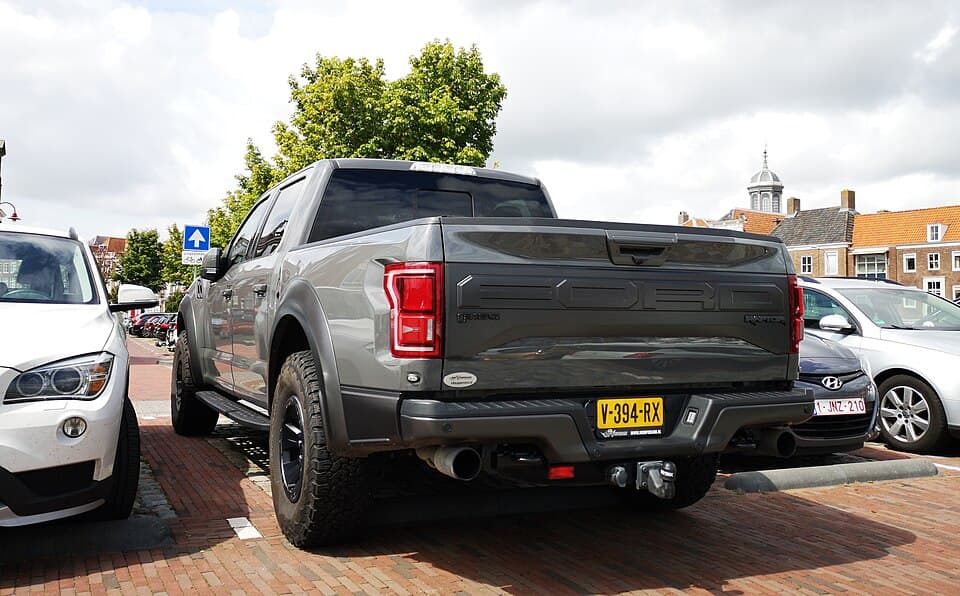
Real-world mileage on a Ford Raptor runs well under the window sticker, and it varies hard by generation. A stock Gen 2 or Gen 3 3.5L EcoBoost averages 13-16 mpg in mixed driving. A Raptor R's supercharged 5.2 averages 10-13. A Gen 1 6.2L V8 lands at 11-13. All three numbers sit below EPA, and the gap has real causes, not just a bad driver.
Here is the comparison, then why the gap exists and what makes it worse.
| Model | EPA city/hwy (combined) | Real-world mixed | Real-world towing/off-road |
|---|---|---|---|
| Gen 1 (2010-2014), 6.2L V8 | 11/16 (13) | 11-13 | 6-9 |
| Gen 2 (2017-2020), 3.5L EcoBoost | 15/18 (16) | 13-16 | 8-11 |
| Gen 3 (2021-present), 3.5L HO EcoBoost | 15/18 (16) | 13-16 | 8-11 |
| Raptor R (2023-present), supercharged 5.2L | 10/14 (12) | 10-13 | 6-9 |
EPA numbers come from the window-sticker rating for each engine at launch; confirm the exact figure for your model year at fueleconomy.gov, since running changes and option packages can shift it slightly. The real-world ranges come from owner-reported fuel logs across forums and our own driving, not a lab.
Why every Raptor underperforms its EPA number
The EPA city/highway cycle is run on a dyno, in a climate-controlled cell, at a pace no Raptor owner drives. Four things specific to this truck widen the gap further than a normal pickup:
The tires. Every Raptor since Gen 2 rides on 35s standard, and the 37 Performance Package or an aftermarket 37 setup is common across the fleet. A taller, heavier, more aggressive all-terrain tire adds rolling resistance the EPA test tire never sees. Gen 1 doesn't escape this either, its 35" BFGoodrich All-Terrains are already wider and heavier than anything on a regular F-150.
The shape. A Raptor is not aerodynamic. The wide fender flares, the tall ride height, and the flat front end push a lot of air compared to a regular F-150, and that penalty gets worse the faster you drive, which is exactly where EPA highway numbers look their best and real-world highway numbers look their worst.
The gearing. These trucks run 4.10 axle gears across every generation, tuned for low-speed torque and crawling ability, not for loping along at low rpm on the interstate. That's the right call for what a Raptor is built to do, and it costs mileage every time you're cruising rather than working.
The right foot. A 450-720 hp truck invites a heavier throttle than a base F-150, and the EPA cycle assumes gentle, steady inputs. Every owner who's romped on a Raptor's throttle at a stoplight knows this isn't a truck that rewards restraint, and the fuel log reflects it.
What tanks it further
Stock numbers are the best case. Several common mods make real-world mileage worse, sometimes by a lot:
37s. Moving from 35s to 37s adds diameter, weight, and frontal area all at once. Owners who've made this swap on a Gen 2 report mileage dropping by roughly 1-2 mpg in mixed driving, more if the tune isn't adjusted for the new tire size. If you're pricing this mod, the full cost breakdown for putting 37s on a Gen 2 covers the tire cost and the labor, not just the mileage hit.
Lift kits. A lift by itself does less to mileage than a tire swap, but most lift installs happen alongside a bigger tire, and the combined aerodynamic and rolling-resistance penalty stacks.
Tunes. A tune that adds boost and horsepower does not usually help highway cruise mileage, and it actively hurts mileage if it encourages the driver to use the extra power, which it usually does. Budget for a small hit here, and expect it to vary more by driving style than by the tune itself.
[Roof racks](/mods/prinsu-roof-rack) and chase racks. Anything mounted up top or off the back adds drag at highway speed specifically, the same spot where a Raptor is already worst against its EPA rating. A loaded chase rack on a desert trip will cost you noticeably more than the same truck running clean.
None of this means don't do these mods. It means budget the mileage hit into your fuel plan before you do them, the same way you'd budget the labor.
Fuel type: what the truck actually needs and what it costs you to cheap out
The Gen 1 6.2L V8 is a naturally aspirated engine with no boost to manage, and it runs fine on 87 octane regular. There's no performance or mileage penalty for skipping premium here.
The Gen 2 and Gen 3 3.5L EcoBoost is different. Ford lists 87 as the minimum acceptable fuel, but the engine's knock-sensing computer pulls timing and reduces boost on regular to protect the engine, which costs both power and some economy under load. Ford recommends 91 octane for the truck to make its rated output and tow rating. Running 87 day to day for commuting is fine and won't hurt anything; towing or working the truck hard on 87 is where you feel it.
The Raptor R's supercharged 5.2 (the Predator engine, shared with the last Shelby GT500) is not a "recommended" situation, it is a premium-fuel engine. The factory spec calls for 91 octane, and the higher static compression and constant boost make regular fuel a real risk for sustained knock over time, not just a mileage inconvenience. Confirm the exact octane requirement in your owner's manual before you assume a tank of 87 is a one-time shortcut.
Tank size and what range actually looks like
Every Raptor from Gen 2 forward runs a 36-gallon fuel tank, the largest tank Ford offers on an F-150. Gen 1 also carries a 36-gallon tank. That's the good news, since it partly offsets the mileage penalty.
Do the math on real range: a Gen 2 or Gen 3 averaging 13-16 mpg mixed gets roughly 470-575 miles on a full tank. A Raptor R averaging 10-13 gets roughly 360-470 miles. A Gen 1 averaging 11-13 gets roughly 395-470 miles. Push any of these off-road or into towing territory and the range drops to 260-400 miles, depending on the truck, so plan fuel stops on a remote trip like the tank is smaller than it is.
Cost per year, and how it compares to a regular F-150
Assume 12,000 miles a year, mixed driving, and current fuel around $3.60 a gallon for regular and $4.25 for premium. These prices move constantly by state, so treat the dollar figures as directional, not exact.
A Gen 2 or Gen 3 Raptor averaging 14.5 mpg on premium burns roughly 827 gallons a year, about $3,500 annually. A Raptor R averaging 11.5 mpg on premium burns roughly 1,043 gallons, about $4,430 annually. A regular F-150 with the base 3.5L EcoBoost, not the Raptor, averages closer to 19 mpg real-world and mostly tolerates regular fuel, burning roughly 632 gallons, about $2,275 annually.
That puts a Gen 2 or Gen 3 Raptor at roughly $1,200 a year more than a regular F-150 to fuel, and a Raptor R at roughly $2,150 a year more. Over a five-year ownership window, that's the fuel line in our full Raptor R cost-of-ownership breakdown, and it's the single biggest recurring cost gap in that model.
When MPG should actually change your decision
If you're commuting 25,000-plus highway miles a year and fuel cost is a real budget line, not an afterthought, mileage should weigh heavily in which Raptor you buy, or whether you buy a regular F-150 instead. The gap between a stock Gen 2 and a Raptor R on 37s is not small once you run the annual number.
If you're buying a Raptor to run it the way it's built to be run, trail miles, desert runs, tow the toy hauler, then mileage is a fact to plan around, not a reason to walk away. Nobody cross-shopping a 720 hp supercharged truck against a Camry is going to be shocked that it drinks fuel.
Where mileage should genuinely move your decision is the mod stack. If you're already stretching the budget to buy the truck, adding 37s, a lift, and a tune on top of a Raptor R's stock 10-13 mpg is a real, ongoing cost, not a one-time upgrade fee. Price the annual fuel difference the same way you'd price the parts and labor before you commit to the build.
Owner questions
- Ford Raptor gas mileage real world
- Real-world mixed mpg varies by generation: Gen 2/Gen 3 3.5L EcoBoost averages 13-16 mpg, the Raptor R's supercharged 5.2L averages 10-13 mpg, and the Gen 1 6.2L V8 lands at 11-13 mpg. Towing or off-road use drops these further to roughly 6-11 mpg depending on model, all below EPA ratings.
- Ford Raptor MPG city and highway
- EPA combined ratings are: Gen 1 6.2L V8 at 11 city/16 highway (13 combined), Gen 2 and Gen 3 3.5L EcoBoost at 15/18 (16 combined), and the Raptor R's supercharged 5.2L at 10/14 (12 combined). Real-world mixed driving runs below all of these window-sticker numbers.
- What fuel does the Ford Raptor need?
- The Gen 1 6.2L V8 runs fine on 87 octane regular with no penalty. The Gen 2/Gen 3 3.5L EcoBoost lists 87 as minimum but Ford recommends 91 octane for rated output and towing. The Raptor R's supercharged 5.2L Predator engine requires 91 octane per factory spec, since regular fuel risks sustained knock.
- How much does it cost per year to fuel a Ford Raptor?
- At 12,000 miles a year and $4.25/gallon premium, a Gen 2 or Gen 3 Raptor averaging 14.5 mpg costs about $3,500 annually, while a Raptor R averaging 11.5 mpg costs about $4,430 annually. A regular F-150 EcoBoost on regular fuel costs about $2,275, making the Raptor $1,200-$2,150 more per year.
- What is the Ford Raptor's fuel tank size and driving range?
- Every Raptor from Gen 2 forward, plus Gen 1, runs a 36-gallon fuel tank, the largest Ford offers on an F-150. A Gen 2/Gen 3 gets roughly 470-575 miles per tank, a Raptor R gets 360-470 miles, and Gen 1 gets 395-470 miles, dropping to 260-400 miles off-road or towing.
Deal alert
Shopping for one? Get new listings first
We sweep US dealer inventory and send you new Raptors matching your search — real listings, real asking prices, no spam.