Bronco Raptor Common Problems: What Actually Breaks
Discover the common issues affecting the Bronco Raptor, from ball joint wear to wind noise. Get practical advice on fixes and costs.
Gear in this article
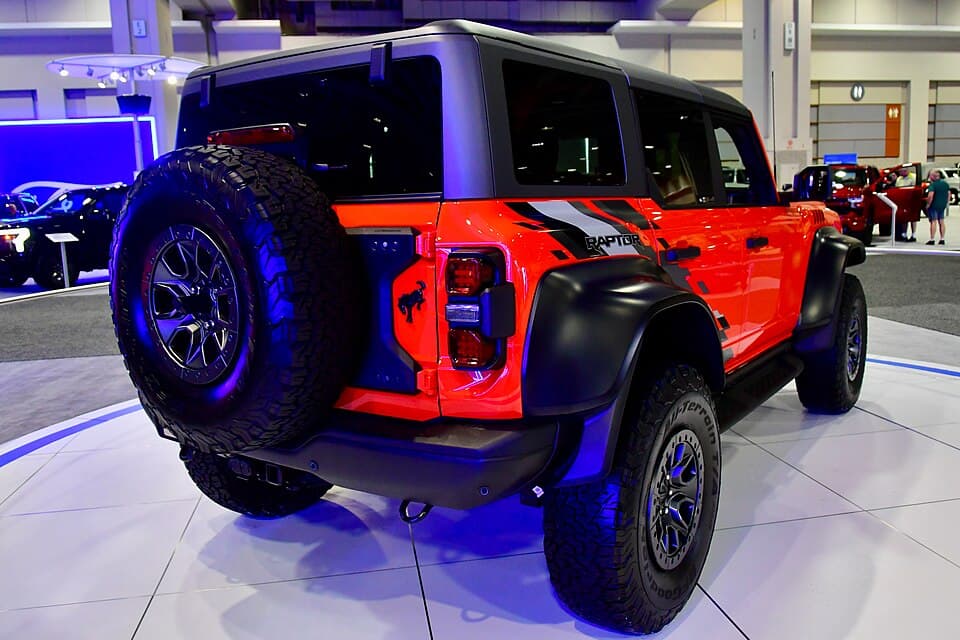
The short answer: on a 2022-2025 Bronco Raptor, the problems that actually cost money are front upper control arm and ball joint wear, intake valve carbon buildup on the twin-turbo 3.0, wastegate actuator rattle, and water intrusion or wind noise around the removable roof. None of these are mysteries, none of them are covered forever, and none of them should surprise you if you are buying used.
This is a reference list, not a scare piece. Every Bronco Raptor has a version of at least one of these. Here is what actually breaks, what it costs, and what is just noise.
Front-end clunk: ball joints and upper control arms
What you hear: A clunk or knock over bumps and expansion joints, sometimes paired with steering that feels looser than it should. Owners report this starting well under 50,000 miles on trucks that see hard off-road use, though nobody has published a failure-rate number worth quoting, and plenty of Bronco Raptors go much longer without it.
What it is: Wear in the front ball joints and upper control arm bushings. The Bronco Raptor's front suspension sees more cycling than a street Bronco because of the wider track and the long-travel geometry, and the factory joints are not built as a rebuildable, serviceable design, so wear shows up as play rather than something you can grease out.
The fix: Replace the upper control arms as complete assemblies rather than trying to press new ball joints into the factory arms. Aftermarket arms like the Camburg Race Spec uniball upper control arms use a serviceable uniball or a greaseable ball joint instead, which is the point of upgrading rather than just replacing with OE. Budget $700-1,800, and that range swings on whether you go OE replacement parts at a dealer labor rate or a shop installs aftermarket arms and handles the alignment after.
The Bronco Raptor front-end clunk guide covers the diagnosis in more detail, including how to tell a ball joint clunk from a sway bar end link or a bad trackbar bushing. Worth reading before you let a shop sell you a full suspension rebuild for what might be a $150 end link.
Wind noise and water leaks from the removable roof
What you hear: Wind roar that gets worse above 60 mph, or water showing up at the header seal above the windshield or in the rear corners after a wash or a rainstorm.
What it is: The Bronco Raptor's removable hardtop uses the same latch and seal architecture as the regular Bronco, and on any modular roof there is a tolerance stack between panels, latches, and body seals that can let air and water through if a panel is not seated exactly right, or if a seal has taken a compression set.
The fix path, cheapest first:
- Re-latch and reseat the panels. Loosen, reset, and retorque the latch mechanisms. This is free and fixes a surprising share of noise complaints.
- Check and clean the seals, since debris or a misaligned gasket is a common cause of both noise and leaks.
- Replace the seals if cleaning and reseating does not solve it. Budget $300-700 for parts and labor depending on which seal (header, pillar, or rear) is failing.
A roof rack changes this equation. Adding a rack on top of the hardtop introduces new wind noise sources that have nothing to do with the factory seals, and that noise gets blamed on the roof when it is actually the rack. The Bronco Raptor roof rack wind noise article breaks down what actually fixes it versus what just muffles it, worth reading before you pull a perfectly good seal apart chasing a rack-induced whistle. If you are shopping racks, the Prinsu Roof Rack is a common lower-profile option that generates less turbulence than a full-size cargo basket.
Intake valve carbon buildup on the 3.0 EcoBoost
What you feel: A rough cold idle and an eventual misfire code, usually showing up past 60,000 miles.
Why it happens: The Bronco Raptor's twin-turbo 3.0 is a direct-injection engine, which means fuel never washes over the back of the intake valves the way it does on a port-injected engine. Oil vapor from the PCV (positive crankcase ventilation) system bakes onto the valves over time and builds up as carbon, the same mechanism as the 3.5 EcoBoost in the F-150 Raptor, covered in more depth in the EcoBoost carbon buildup article.
The fix: A walnut blast cleaning, where a shop pulls the intake and media-blasts the valves clean. There is no fluid or additive that reverses it once it has built up. Budget $500-900 for the service. A catch can intercepts some of the oil vapor before it reaches the intake and slows the rate of buildup, but it does not eliminate it, and it is maintenance you have to remember to empty.
Front tire feathering on the 37s
What you feel: A humming noise from the front tires that sounds exactly like a wheel bearing going bad, plus visible feathering (a sawtooth wear pattern across the tread blocks) on the inner or outer shoulder.
Why it happens: This is alignment and rotation discipline, not a defect. The factory 37s and the wide front track put more lateral load through the front end than a standard Bronco, and small alignment errors show up faster as feathering on a 37 than they would on a smaller tire.
The fix: Rotate every 5,000 miles and get an actual four-wheel alignment, not a quick toe-only adjustment. Check alignment again after any control arm or ball joint work, since that resets the geometry. Budget $150-400 per alignment, and treat tire rotation as non-negotiable maintenance, not an upsell.
Windshield cracks and ADAS recalibration
The Bronco Raptor's windshield is large, raked, and sits directly behind 37s that throw rocks at highway speed. Chip-to-crack propagation is common. Repair a chip the day it happens, before it spreads: budget around $120 for a repair, and that number moves with glass shop pricing in your area. A full replacement runs roughly $700-1,500 once you include the ADAS (advanced driver assistance systems, the cameras and radar that run lane keeping and automatic braking) recalibration that a new windshield requires on this truck.
Locker actuator faults
What you see: A locker warning light on the cluster, or the rear locker engages and will not release until you cycle the ignition.
Why it happens: Water and mud intrusion at the axle-mounted actuator or its wiring connector is the usual cause on a truck that actually goes through water crossings, which is the whole point of owning one. Check the Raptor water crossings guide before you assume a Bronco Raptor is impervious to this.
The fix: Actuator or wiring harness replacement at the axle. Shops we have seen quote this in the rough range of $400-1,100, but there is no large repair-order dataset behind that number, so treat it as a starting point and get an actual quote from a Ford dealer or axle specialist for your truck.
Wastegate actuator rattle
A metallic chatter at idle that tracks with turbo speed rather than engine rpm, distinct from a loose heat shield rattle, points to the wastegate actuator rather than anything internal to the turbo itself. Shops commonly replace both sides at once since the failure mode is the same part on both turbos. Expect somewhere around $500-1,100 per side as a rough estimate, it swings with whether the shop does both sides in one labor sitting and with regional labor rates, and that range is not backed by published repair-order data, so confirm with a written quote before you commit.
Short range from a small tank
Real-world fuel economy on the 3.0 twin-turbo runs an estimated 13-15 mpg in mixed driving against a fuel tank that is small relative to the truck's size. Do the math on that and you land somewhere around 250-300 miles of real range depending on how you drive it, with the low end showing up in deep sand where the engine works harder, but that is an extrapolation from mpg and tank size, not a measured figure, so treat it as a planning estimate rather than a guarantee. There is no fix for this beyond carrying extra fuel on long trail days, something to plan around before a trip to Glamis or St. Anthony Sand Dunes rather than something a shop can repair.
Hardtop panel rattles and trail width
Roof panel ticks and a B-pillar creak over washboard are usually solved by reseating the panels and retorquing the latches, often free. The Bronco Raptor is also noticeably wider than a standard Sasquatch-package Bronco, Ford's spec sheet puts it a few inches wider across the fenders, and that extra width is worth checking against the exact gate or rock garden line you are planning, not just assuming the Bronco Raptor fits because a Sasquatch Bronco does. Rock sliders help protect the rockers when you misjudge a line; budget $1,100-2,200 for a quality set.
What Ford's warranty actually covers
The Bronco Raptor carries Ford's standard 3-year/36,000-mile bumper-to-bumper and 5-year/60,000-mile powertrain warranty. Ball joints and control arm wear from normal use, tire feathering from alignment neglect, and roof seal wear are generally treated as maintenance or wear items, not warranty repairs, once a truck is out of the bumper-to-bumper window. A locker actuator failure or a wastegate actuator failure inside the powertrain warranty period is a stronger case for warranty coverage, but call your dealer with the VIN, since coverage depends on build date and whether a service bulletin exists for your specific symptom. A TSB (technical service bulletin) is a documented repair procedure Ford issues to dealers, not a recall and not free work by itself, though it can make a warranty claim easier to get approved if your symptom matches it exactly.
The short version
- The Bronco Raptor's real recurring costs are front-end clunk ($700-1,800), carbon buildup on the 3.0 ($500-900 every 60,000+ miles), and roof seal or wastegate actuator issues ($300-1,100, wider at the high end and unverified against hard repair-order data).
- Wind noise and tire feathering are usually maintenance and installation issues, not defects, and both are cheap to fix if you catch them early.
- None of this is unique to the Bronco Raptor among modern turbocharged trucks, but the 37s, the removable roof, and the extra width do shape which problems show up first.
- Before buying used, read the used Bronco Raptor buying guide and budget for an alignment and a front-end inspection regardless of what the seller tells you about recent service.
Deal alert
Shopping for one? Get new listings first
We sweep US dealer inventory and send you new Raptors matching your search — real listings, real asking prices, no spam.