2021 Ford Raptor: Specs, Problems, and What to Pay
The 2021 Raptor is the Gen 3 launch year: first with the five-link coil rear and Fox 3.1 Live Valve, same 450 hp EcoBoost, and the launch-year software and cam phaser gripes that go with being first. Here is what a used one costs in 2026 and what to check before you buy.
Gear in this article
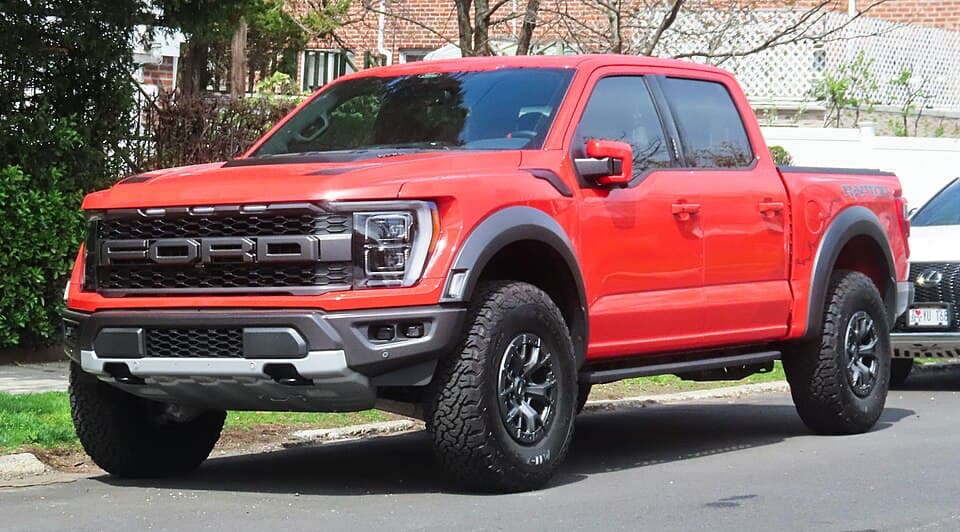
The 2021 F-150 Raptor is the first year of the Gen 3 truck: same 450 hp, 510 lb-ft 3.5L High-Output EcoBoost and 10R80 ten-speed as the last Gen 2 trucks, but bolted to an all-new five-link coil rear suspension with a Watt's link, replacing the leaf springs every prior Raptor ran since 2010. It also introduced the Fox 3.1 Live Valve shock, a single-valve electronically adjustable damper. Expect to pay roughly $55,000-65,000 for a clean used 2021 in 2026, with our own listings data averaging $60,387 across 207 live trucks. That number moves a lot based on mileage, the 37 Performance Package, and documented service history.
What changed for 2021 and why it matters used
Every Raptor from the 2010 SVT truck through the 2020 Gen 2 ran a leaf-spring rear end. For 2021, Ford switched the Gen 3 F-150 Raptor to a five-link coil setup with a Watt's link, matching what the independent geometry needed to keep the axle located under high-speed compression instead of letting a leaf pack do that job. Rear wheel travel grew to 15.0 inches (14.0 up front), and ride quality on washboard and whoops improved noticeably over the leaf-sprung Gen 2.
The tradeoff: it is a first-year design. There is no long-term failure data on this rear end the way there is on the Gen 2 leaf pack, simply because it has not been in the field as long. Nothing has surfaced as a systemic weak point industry-wide, but a buyer comparing a 2020 Gen 2 to a 2021 Gen 3 should know they are comparing a decade-proven leaf setup to a suspension with five model years of real-world mileage behind it as of 2026.
The damper itself is the Fox 3.1 Live Valve, a single-valve electronically adjustable shock that reads road and body motion and adjusts damping in real time. It replaced the Fox 3.0 internal bypass shocks Ford ran on the Gen 2 (2017-2020) trucks. Where the Gen 2 shock relied on fixed internal bypass tuning for its damping curve, the Live Valve unit adjusts electronically on the fly, which is the bigger functional jump between the two generations, not just a name change. Ford has continued to update this system in later Gen 3 model years; confirm with the dealer or window sticker exactly what shock hardware and software any specific truck you are looking at actually has, rather than assuming based on model year alone. The 37 Performance Package was optional in 2021 and swaps in 37-inch tires with revised fender flares, gaining ground clearance in exchange for a slightly firmer stock ride on the street.
Same engine, same transmission: what's known and what isn't
The 2021 uses the identical 3.5L High-Output EcoBoost and 10R80 ten-speed automatic found in the last Gen 2 trucks and carried into later Gen 3 years. Horsepower and torque numbers did not move.
Cam phaser rattle (a metallic rattle on cold start that clears within a few seconds as oil pressure builds) is a well-documented issue on Gen 2 3.5 EcoBoost trucks, covered in detail in our Gen 2 cam phaser rattle fix guide. Owners of early Gen 3 trucks, including 2021-2022 models, report the same cold-start rattle on forums and in shop visits, but nobody has published a failure rate for the Gen 3 High-Output engine specifically, and Ford has not confirmed a design change to the phasers between the two generations that we can point to with confidence. Treat it as a real possibility worth checking for, not a confirmed cluster with a known failure rate.
Practically, that means: if you are shopping a 2021, start the truck cold yourself, ideally after it has sat overnight, and listen for that rattle before you look at anything else. The repair paths in our Gen 2 guide (phaser replacement, one side versus both, whether the shop pulls the front cover) apply to the same core engine architecture, but get a shop to actually diagnose the specific truck rather than assuming a Gen 2 price quote transfers directly.
Ford's new-vehicle powertrain warranty runs 5 years/60,000 miles from the original in-service date; confirm the exact terms and remaining coverage for a specific truck with the dealer using its VIN. If your truck is still inside that window, a documented phaser rattle is a warranty repair, not a goodwill negotiation. If it is out, get quotes from an independent shop as well as the dealer before committing.
Launch-year software and early-build issues
Being the first model year of a new platform means the 2021 also carries typical launch-year friction: SYNC infotainment updates, occasional software-related quirks with the Live Valve system's ride modes, and a pattern of early-build service fixes that Ford addressed through dealer service updates over the truck's first year or two on sale. None of this is unusual for a first-year redesign, and it does not mean the truck is unreliable, but a 2021 built early in the model year (check the door jamb build date) is more likely to have had at least one open service action worked than a 2022 built after Ford had a year of field data to draw on.
A TSB (technical service bulletin) is a documented repair procedure Ford issues to dealers, not a recall and not free work by default. If a 2021 you are looking at has service records showing dealer software or service-bulletin work performed, that is a good sign: someone kept up with maintenance and the dealer already worked through the early kinks. A truck with zero service history past the initial sale is a bigger unknown, not necessarily a red flag, but worth asking about directly.
Why some buyers skip 2021-2022 and wait for the Raptor R
There was no Raptor R in 2021. Ford did not introduce the supercharged 5.2L V8 Raptor R until the 2023 model year, so if the appeal of a modern Raptor for you is that engine and not the EcoBoost, a 2021 is not that truck at any price. Our Raptor vs Raptor R comparison breaks down what the extra money actually buys if you are cross-shopping the two.
Some buyers also simply wait out launch years on principle: let the first couple of model years work through their service bulletins and field issues, then buy year three or four once the truck is a known quantity. That is a reasonable strategy for a five-link coil rear and a Live Valve shock system with a shorter track record than the leaf-sprung Gen 2. It is a weaker argument against the engine and transmission specifically, since the 3.5L EcoBoost and 10R80 combination in the 2021 has been in production since 2017 with a much longer field history to judge it by.
What to check before you buy one
- Cold start listen. Rattle on startup that clears in a few seconds points toward possible cam phaser wear. Insist on doing this yourself, ideally on a truck that sat overnight, not taking the seller's word for it.
- Service history for dealer work. Ask specifically whether any software updates or service bulletins were performed at a Ford dealer.
- Live Valve function. Cycle through the drive modes and confirm the ride noticeably firms up in Baja/off-road modes versus Normal. A shock system stuck in one damping state is a diagnostic flag, not a death sentence, but budget for a shop visit to sort it out.
- Rear suspension inspection. Look at the Watt's link bushings and coil perches for anything obviously worn or leaking; this is still a newer design with less aftermarket and forum diagnostic history than the old leaf setup.
- Tire package and payload math. A 37 Performance Package truck rides differently and tows/hauls slightly less than a 35-inch stock truck; make sure the one you are looking at matches what you actually need.
- Remaining powertrain warranty. Get the in-service date, not just the model year, and calculate what is left of the 5-year/60,000-mile coverage. Call the dealer with the VIN to confirm exact status.
For a full walkthrough of the whole Gen 3 platform and how these launch-year issues compare with 2022 and later trucks, see our used Gen 3 Raptor buying guide.
The short version
- A 2021 Raptor is the first coil-rear, Live Valve Gen 3 truck, with the same 450 hp/510 lb-ft 3.5L EcoBoost and 10R80 as every other modern Raptor.
- Budget $55,000-65,000 used in 2026, consistent with the site average of $60,387 across 207 live listings; price swings on the 37 Performance Package, mileage, and documented service history.
- Cold-start cam phaser rattle is well documented on Gen 2 trucks and reported anecdotally on early Gen 3 trucks too, but there is no published failure rate for the Gen 3 High-Output engine. Check for it yourself before you buy, do not assume it is confirmed or absent.
- No Raptor R existed yet in 2021; if the V8 is the point, you are shopping the wrong year entirely.
- Launch-year software and early service-bulletin patterns are normal for a first-year platform and not, by themselves, a reason to walk away from an otherwise clean truck.
Deal alert
Shopping for one? Get new listings first
We sweep US dealer inventory and send you new Raptors matching your search — real listings, real asking prices, no spam.