2018 Ford Raptor: Specs, Problems, and What to Pay
The 2018 F-150 Raptor is mechanically identical to the 2017 launch truck without the first-year premium, which makes it the value pick of the whole Gen 2 run. Here is what a good one costs in 2026 and the two checks, cam phasers and the water pump, that actually set the price.
Gear in this article
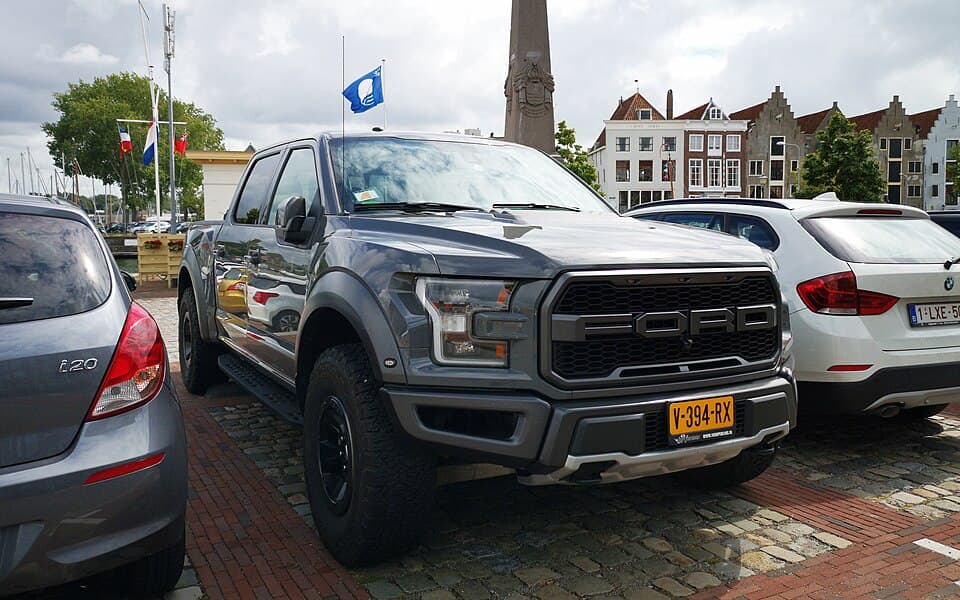
The 2018 F-150 Raptor is the value pick of the whole Raptor line, and it is not close. It is mechanically identical to the 2017 launch truck, without the first-year premium sellers still try to charge. The checks that matter are the cam phaser rattle and the internal water pump, both known issues on this generation, both priced into the market once you know what you are listening and looking for. A clean, documented 2018 runs $36,000-52,000 in 2026, with the spread almost entirely explained by whether that work is already done.
2018 F-150 Raptor specs
| Spec | 2018 F-150 Raptor |
|---|---|
| Engine | 3.5L High-Output EcoBoost V6, twin-turbo, port and direct injection |
| Power | 450 hp @ 5,000 rpm |
| Torque | 510 lb-ft @ 3,500 rpm |
| Transmission | 10R80 ten-speed automatic |
| Shocks | Fox 3.0 internal bypass (non-Live Valve) |
| Suspension travel | 13.0 in front / 13.9 in rear |
| Rear suspension | Leaf spring, staggered outboard shocks |
| Differentials | Torsen front limited-slip, electronic locking rear, 4.10 gears |
| Cab configs | SuperCab and SuperCrew, aluminum body |
| Payload / towing | ~1,200 lb / 8,000 lb |
| Curb weight | ~5,700 lb (SuperCrew) |
| EPA mileage | 15 city / 18 hwy / 16 combined |
That EPA combined number is the sticker figure, not what most owners actually see day to day. If mileage factors into your budget, read what Raptor owners actually get in mpg before you assume the sticker holds.
What actually changed from 2017 to 2018
Almost nothing, and that is the whole story. Ford shuffled equipment groups and added a couple of colors. The 2018 shares its 3.5L HO EcoBoost, its 10R80 ten-speed, its Fox 3.0 shocks, and its leaf-sprung rear end with the 2017 truck bolt for bolt. There is no running change to the engine, the transmission, or the suspension between the two years.
That matters because launch-year trucks carry a premium in almost every market: first year of a redesign, first year people wanted one, first year the badge was new again after Ford killed the SVT Raptor's Gen 1 run in 2014. Buyers pay for "first" without asking whether "first" bought them anything mechanically. On this truck it didn't. A 2018 gives you the identical drivetrain and suspension as a 2017 for less money, purely because it is one model year further from launch-year hype.
Why the site calls the 2018 the value pick
Our best year to buy across every Raptor generation lands on the same truck for the same reason: it is the cheapest way into a Gen 2 Raptor that is not already tired. That guide ranks the 2018 above the 2019-2020 refresh years and above every Gen 1 model for buyers who want the most capable truck per dollar, not the newest tech per dollar. This page exists to go deep on that one verdict: the specs, the two failure modes that set the price, and what a real 2026 buyer should pay.
The full Gen 2 generation page covers 2017-2020 as a whole if you are cross-shopping years. This page is just the 2018.
Cam phasers: the number one thing to check in 2026
The cam phaser rattle is the defining issue on Gen 2, and it is worst on 2017-2018 trucks specifically. A cam phaser (the variable valve timing unit bolted to the front of each camshaft) wears until it can no longer hold oil pressure fast enough on a cold start, and the result is a loud metallic rattle for the first several seconds after you turn the key, engine cold, overnight sit.
By 2026 every surviving 2018 Raptor has had eight model years and, on an average-mileage truck, somewhere around 60,000-100,000 miles to develop this. That splits the market into two real price tiers:
- Phasers done (updated phasers, tensioners, chains, guides, plus a PCM reflash): this truck should be priced at or near the top of the range, because the four-figure repair is behind it. Ask for the invoice, not just a verbal "yeah we did that."
- Phasers not done, or unknown: this truck should be priced $2,400-4,800 below a documented one, because that is what the dealer-level repair costs. Anything less than the full parts list is a temporary fix that rattles again.
Cold start it yourself before you talk price. Do not let a seller start it for you an hour before you arrive. For the complete cost breakdown by repair path, from the reflash-only band-aid up through the full parts replacement, read the Gen 2 cam phaser rattle guide before you make an offer.
Water pump: the second check that matters
The other four-figure item on this generation is an internal water pump failure, typically showing up past 80,000 miles. The pump is chain-driven inside the front timing cover on this engine, so when its seal fails, coolant does not puddle under the truck the way it would on a conventional external pump. It goes into the oil instead.
Pull the dipstick before you sign anything. Milky, coffee-with-cream oil, or any oil that looks aerated and pale, is the tell. A coolant top-off history with no corresponding leak on the ground is the other one. Budget $1,900-3,200 for the repair, more if it ran long enough on contaminated oil that the bearings need attention too.
Neither of these checks takes more than a few minutes at a PPI, and together they explain most of the price spread you will see across 2018 listings this year.
The tune and mod market: what a modded 2018 is actually worth
A lot of 2018 Raptors on the used market have been tuned, and pretending otherwise does not help you price one. A tune by itself is not automatically a problem: a reputable calibrator's tune on a truck with clean maintenance records can be a non-issue, and some tunes actually address driveability complaints rather than just chasing power.
What should change your offer is the combination of an undocumented tune with no service history to go with it. A truck that has been tuned, raced, or towed hard by someone who never touched the maintenance side is a different risk than a documented tune on a truck with full records. Ask directly whether it has ever been tuned, and get a scan with your own reader before you talk price, not the seller's reader. A tune can also mask or delay a phaser rattle at idle depending on the calibration, so do not let "it sounds fine" on a modded truck substitute for actually listening cold.
Aftermarket wheels and tires, a leveling kit, or a cat-back exhaust are cosmetic and reversible; price them as neutral to a small discount unless you specifically want them. A built engine, a transmission tune pushed well past stock torque, or missing OEM parts (skid plates, factory bumper) are the ones that should move the number, because they point at how the truck has actually been used and what may need reversing.
What a 2018 Raptor costs in 2026
Clean, non-modified 2018 Raptors with documented phaser and water pump work run $40,000-52,000 depending on mileage, cab configuration, and options. Trucks with the work still outstanding, or with no records either way, trade $36,000-44,000, and that gap is the negotiating room a PPI buys you. These ranges move by region and season, so confirm against live listings before you make an offer. If you want a full walkthrough of what to inspect on any Gen 2 before you hand over a deposit, the used Gen 2 Raptor buying guide covers the whole checklist, not just the two items above.
2018 vs 2019: when the newer truck is worth the extra money
The 2019 model year added Fox 3.0 Live Valve electronically controlled shocks, Trail Control, Recaro seats, and a mild interior and lighting refresh. Live Valve reads the road and adjusts damping in real time, and it is a genuine improvement on washboard, at highway speed, and transitioning on and off pavement. The non-Live-Valve 2018 Fox 3.0s are still good shocks by any normal truck's standard, they just do not adapt.
Paying up for a 2019 makes sense if you drive enough real dirt, at enough speed, that the adaptive damping earns its keep, or if Trail Control specifically solves a problem you have (crawling technical terrain without modulating your own throttle and brake). It does not make sense if your driving is mostly pavement with the occasional gravel road and a comfortable ride matters more than adaptive damping, because the 2018 delivers most of that for less money. The cam phaser and water pump risks carry over to 2019-2020 unchanged, so you are not buying your way out of either issue by stepping up a year.
Who the 2018 is for
The 2018 F-150 Raptor is for the buyer who wants the full Gen 2 experience, the 450 hp EcoBoost, the 10R80, the Fox 3.0 travel, and the standard off-road hardware, without paying for either 2017 launch-year hype or the 2019-2020 electronic-shock premium. Get the cold start and the dipstick check done before you agree on price, get a scan on your own reader if the truck has been tuned, and you are buying the same truck the rest of the Gen 2 range is priced against.
Owner questions
- How much horsepower does a 2018 Ford Raptor have?
- 450 hp at 5,000 rpm and 510 lb-ft at 3,500 rpm from the 3.5L High-Output EcoBoost V6, paired with the 10R80 ten-speed automatic. It is mechanically identical to the 2017 launch truck.
- How much is a 2018 Ford Raptor worth in 2026?
- A clean, documented 2018 runs roughly $36,000-52,000. The live market block on this page shows the current listing count, median, and typical price band. The spread is mostly explained by whether the cam phaser work is already done.
- What are the known problems with the 2018 Raptor?
- Two four-figure items: the Gen 2 cam phaser rattle on cold start (worst on 2017-2018 trucks, $2,400-4,800 for the full dealer-level fix) and the internal, chain-driven water pump that can put coolant into the oil past about 80,000 miles ($1,900-3,200).
- Is the 2018 Raptor better than the 2017?
- Same truck bolt for bolt: same engine, transmission, Fox 3.0 shocks, and leaf-sprung rear. The 2018 is usually cheaper because it is one model year further from launch-year pricing, which is why it is the value pick of Gen 2.
- What does a 2018 Raptor tow and carry?
- About 8,000 lb towing and roughly 1,200 lb payload. EPA mileage is 15 city / 18 highway / 16 combined, and most owners see less than the sticker.
Deal alert
Shopping for one? Get new listings first
We sweep US dealer inventory and send you new Raptors matching your search — real listings, real asking prices, no spam.