2019 Ford Raptor: Specs, Problems, and What to Pay
The 2019 Raptor brought Fox Live Valve shocks and Trail Control to Gen 2, and a clean one runs $44,000-58,000 today. We cover what the electronics actually change, the phaser question at this mileage, and whether the premium over a 2017-2018 is worth paying.
Gear in this article
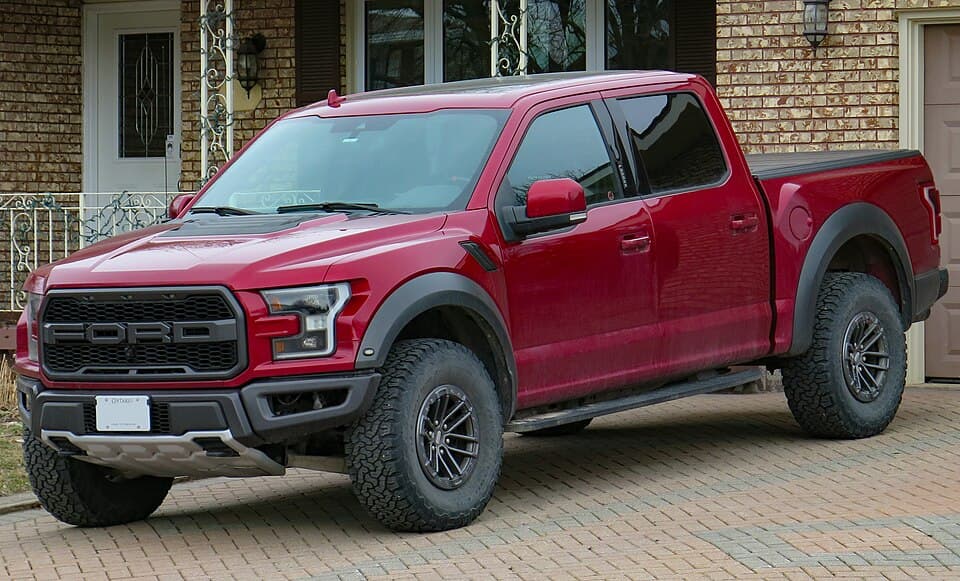
The 2019 F-150 Raptor is the first Gen 2 model year with Fox Live Valve, electronically adjustable shocks that read the road and change damping in real time instead of running one fixed valving all the time. That upgrade, plus standard Trail Control and an optional Recaro seat package, is why a clean 2019 runs $44,000-58,000 in 2026, above the 2017 launch truck's $38,000-48,000 band and at the top of what any Gen 2 commands. The engine and transmission did not change: same 450 hp 3.5L High-Output EcoBoost, same 10R80 ten-speed, same phaser design under the valve covers as the truck it replaced.
Here are the numbers, then the reasoning.
| Spec | 2019 F-150 Raptor |
|---|---|
| Engine | 3.5L High-Output EcoBoost V6, twin-turbo, port and direct injection |
| Power | 450 hp @ 5,000 rpm |
| Torque | 510 lb-ft @ 3,500 rpm |
| Transmission | 10R80 ten-speed automatic |
| Shocks | Fox 3.0 Live Valve, electronically adjustable (new for 2019) |
| Suspension travel | 13.0 in front / 13.9 in rear |
| Off-road driving aid | Trail Control (new for 2019) |
| Seating | Cloth or leather standard; Recaro performance buckets optional |
| Cab configs | SuperCab (2-door, rear-hinged half doors) and SuperCrew (4-door) |
| Payload / towing | ~1,200 lb / 8,000 lb |
| Curb weight | ~5,700 lb (SuperCrew) |
| EPA fuel economy | 15 city / 18 hwy / 16 combined |
| 0-60 mph | ~5.1 sec |
What actually changed for 2019
2017 and 2018 are the same truck twice, but 2019 is a real mid-cycle update. Ford kept the drivetrain untouched and spent the changes on the suspension and the cabin: Fox 3.0 Live Valve shocks, Trail Control, an optional Recaro performance seat package, and a mild refresh to the interior trim and lighting. Nothing about the frame, the engine, or the 10R80 moved. If you are cross-shopping years on paper, the best Ford Raptor year to buy in 2026 puts this update in context against every other model year Ford has sold.
Fox Live Valve: what the electronic shocks actually do, and what fails
The 2017-2018 Fox 3.0 shocks are internal bypass dampers with one fixed valving, good shocks, but the same tune whether you are crawling a rock ledge or holding 70 on the highway. Live Valve adds accelerometers and ride-height sensors feeding an electronic control module that adjusts damping at each corner several times a second, softer over washboard, firmer under hard cornering or braking. It is a genuine improvement, not a badge, and it is the single biggest reason to pay more for a 2019 over a 2018.
It is also a part that can fail in a way the older shocks cannot. A faulted ride-height sensor throws a suspension warning on the cluster and drops the dampers into one fixed setting until it is fixed, a $300-700 repair depending on which sensor and how much labor to reach it. Cycle through every drive mode on the test drive and watch the dash for that warning before you agree on a price. It is not a dealbreaker on its own, but it is a feature you are paying a premium for, and you should confirm it actually works before you pay for it.
Trail Control: off-road cruise control, worth it or not
Trail Control lets you set a speed and steer while the truck manages throttle and braking at each wheel over technical terrain, rock ledges, sand, loose climbs, the kind of ground where modulating your own pedal inputs while also picking a line is the hard part. It is genuinely useful there. It does nothing for you at highway speed or on a fast desert run, where you are back to driving the truck yourself.
Whether it is worth paying for comes down to what you actually do with the truck. If technical, low-speed terrain is a regular part of your driving, Trail Control solves a real problem. If your off-road time is mostly high-speed desert and whoops, Live Valve is doing the work that matters and Trail Control is a feature you will rarely touch.
The cam phaser question on a 2019: less common, not gone
A cam phaser (the variable valve timing unit bolted to the front of each camshaft) is the part behind the rattle that defines this generation, and the honest answer for 2019 is that the same design carries over from 2017-2018. Ford did not issue a redesigned phaser, tensioner, or timing chain set alongside the Live Valve suspension change; the 2019 got a new dash and new shocks, not a new front timing cover.
What is genuinely different is how often it shows up. 2019-2020 trucks report the cold-start rattle less frequently and, when it does appear, later in the mileage curve than on 2017-2018 trucks. Whether that reflects an unannounced running change in supplier tolerances, or simply that fewer 2019-2020 trucks have hit the mileage and age where the wear accumulates, is genuinely disputed among owners and independent shops, and nobody outside Ford's supplier chain can say for certain which it is. Do not treat "2019" as a reason to skip the test. Cold start every 2019 you look at yourself, engine off overnight, and listen for a rattle in the first five to ten seconds that clears as oil pressure builds. Budget $2,400-4,800 at a dealer for the full fix if you hear one: updated phasers, tensioners, chains, guides, and a PCM reflash. For the complete cost breakdown by repair path, read the Gen 2 cam phaser rattle guide before you make an offer.
10R80 and the water pump: the issues that don't care what year it is
Two more failure modes carry across the whole Gen 2 run unchanged, 2019 included. The 10R80 can show a harsh 1-2 shift and a light torque converter shudder around 40-50 mph on light, steady throttle. A TSB reflash solves a real share of these complaints at no cost under warranty; when the reflash doesn't hold, the next step is a valve body or solenoid body, running $1,400-2,400. Drive any 2019 at that speed window for a couple of minutes before you buy it, not just around the block. The full breakdown of which recalibrations stick and which trucks needed hardware anyway is in 10R80 harsh 1-2 shift and torque converter shudder.
Separately, the water pump on the 3.5 EcoBoost is chain-driven inside the front timing cover, and past roughly 80,000 miles the internal seal can fail and put coolant straight into the oil with no puddle on the driveway to warn you. Pull the dipstick and check the oil cap for milky, coffee-with-cream residue before you sign anything. Budget $1,900-3,200 for the repair. Neither issue is specific to 2019, both are Gen 2-wide, and both are worth checking regardless of which model year is sitting in front of you. The used Gen 2 buying guide walks the full pre-purchase checklist if you want the whole list in one place, IWE grinding and tune history included.
What a 2019 actually costs in 2026
Clean 2019 Raptors run $44,000-58,000 in 2026, sitting above both 2017 and 2018 and at the top of the wider Gen 2 price band. That premium is almost entirely Live Valve and Trail Control, not scarcity: Ford sold plenty of 2019s, and the truck is not meaningfully rarer than a 2018. A documented truck, phaser work done or a clean cold-start test, water pump checked, Live Valve sensors fault-free, supports the top of that range. An undocumented 2019 with an unconfirmed rattle or a suspension warning on the cluster should price several thousand below it, the same discount logic that applies to any Gen 2 regardless of year. These ranges move by region and season, so confirm against live listings before you make an offer.
2019 vs 2018 vs 2020: is the Live Valve premium worth it
A 2018 gets you the identical drivetrain for less money and simpler shocks with nothing electronic to fault. A 2019 gets you Live Valve, Trail Control, and the option of Recaro seats, for real money more, and the cam phaser and water pump risks do not go away in exchange for it. A 2020 is mechanically the same truck as a 2019, one model year newer, typically lower mileage for the same asking price, and worth the modest extra if it is on the lot next to a comparable 2019.
Pay up for the 2019 if you drive enough real dirt, at enough speed or over rough enough terrain, that adaptive damping earns its keep, or if Trail Control solves a specific problem you already have. Buy the 2018 instead if your driving is mostly pavement with the occasional gravel road and a comfortable ride matters more than a system you may rarely need. Either way, the phaser cold-start test and the dipstick check are not optional just because the shocks got smarter.
Who should buy a 2019 today
A 2019 makes sense for a buyer who actually uses Live Valve and Trail Control, wants the newer cabin and optional Recaro seats, and can find one with the phaser and water pump work documented or a clean personal inspection to back it up. It is a worse buy if you are paying the Live Valve premium purely for badge appeal on a truck that will spend its life on pavement, where a 2018 does the same job for meaningfully less money. Cold start it, pull the dipstick, cycle the drive modes and watch for a suspension warning, and let what you actually find set the number, not the extra features on the window sticker.
Deal alert
Shopping for one? Get new listings first
We sweep US dealer inventory and send you new Raptors matching your search — real listings, real asking prices, no spam.