2023 Ford Raptor: Specs, Problems, and What to Pay
The last pre-refresh Gen 3 Raptor runs the same 450 hp EcoBoost and single-valve Fox 3.1 shocks as 2021-2022, while the 700 hp Raptor R joins the lineup above it for the first time. Used 2023 base Raptors run roughly $57,000-79,000 in 2026, with a used Raptor R averaging closer to $102,000.
Gear in this article
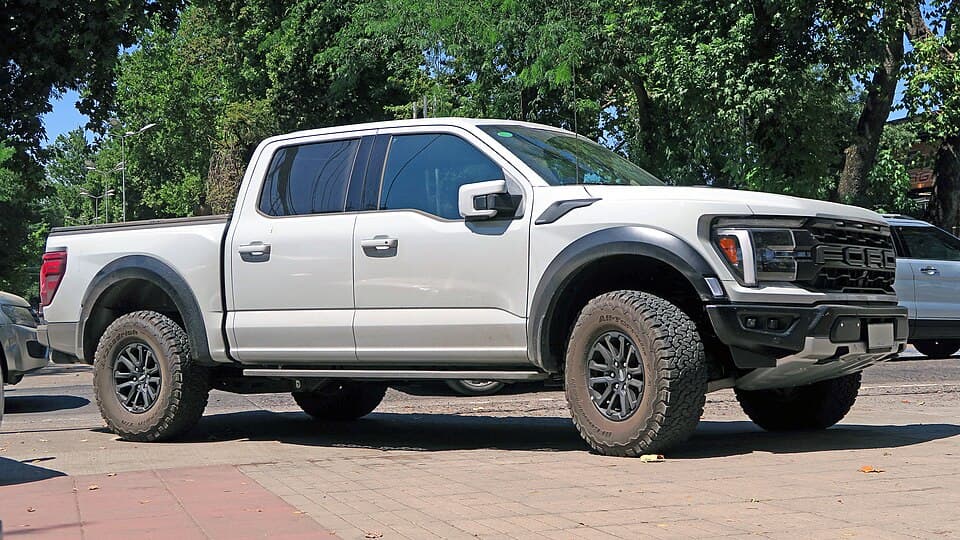
The 2023 F-150 Raptor is the last pre-refresh Gen 3 model year: the same 450 hp 3.5L High-Output EcoBoost, 10R80 ten-speed, and five-link coil rear the truck launched with in 2021, running single-valve Fox 3.1 Live Valve shocks a year before the Dual Live Valve update arrived for 2024. It is also the launch year for the Raptor R, a 700 hp supercharged 5.2L V8 truck sold alongside the base Raptor, not a trim level of it. Used 2023 base Raptors average roughly $69,500 in 2026, with real listings running $57,000-79,000 depending on mileage and whether the truck carries the 37 Performance Package, while a used 2023 Raptor R averages closer to $102,000.
Here are the numbers, then the reasoning.
| Spec | 2023 F-150 Raptor |
|---|---|
| Engine | 3.5L High-Output EcoBoost V6, twin-turbo, port and direct injection |
| Power | 450 hp @ 5,000 rpm |
| Torque | 510 lb-ft @ 3,500 rpm |
| Transmission | 10R80 ten-speed automatic |
| Shocks | Fox 3.1 Live Valve, single-valve (Dual Live Valve arrives for 2024) |
| Rear suspension | Five-link coil, 24-in Watt's link |
| Suspension travel | 14.0 in front / 15.0 in rear |
| 37 Performance Package | 37x12.50R17 BFGoodrich KO2 on beadlock-capable forged wheels, 13.1 in ground clearance |
| Payload / towing | Roughly 1,400 lb / 8,200 lb, less payload with the 37 Package |
| EPA fuel economy | 15 city / 18 hwy / 16 combined |
| 0-60 mph | approx. 5.2-5.6 sec (tested range) |
What actually changed for 2023, and what did not
2021, 2022, and 2023 are the same truck three years running. Ford spent those years on paint options, 37 Package allocation, and trim shuffling, not on the engine, the transmission, or the suspension architecture. If you are cross-shopping a 2022 against a 2023 on drivetrain alone, they are identical trucks. The one real change for 2023 is not to the base Raptor at all: it is the Raptor R joining the lineup above it. The full year-by-year breakdown of what changed across Gen 3 covers where 2023 sits against 2021, 2022, and the 2024 refresh in one place.
That makes 2023 the last chance to buy the pre-refresh truck new, before 2024 brought a new front end, bigger screens, and Dual Live Valve shocks. Nothing wrong with that pre-refresh spec, it is simply different from what Ford sells starting with 2024.
Base 2023 Raptor versus 2023 Raptor R: two different trucks, not two trims
This is the question a lot of 2023 shoppers get wrong. The Raptor R is not an option package on the base Raptor; it is a separate model built around a different engine entirely. The base 2023 Raptor runs the 450 hp 3.5L EcoBoost V6 described above. The 2023 Raptor R swaps that for a 700 hp, 640 lb-ft supercharged 5.2L V8, the same Predator architecture that powered the last Shelby GT500, backed by the same 10R80 transmission tuned for the extra torque.
The R also ships on 37x12.50R17 KO2s standard, no smaller tire offered, where the base Raptor treats 37s as an option most buyers add themselves. It carries its own hood with functional heat-extractor vents, an active-valve exhaust tuned for a supercharged V8, and R-specific tuning on the same five-link coil rear and Fox 3.1 Live Valve shocks as the base truck. None of that is a trim badge; it is a different engine bay, a different weight distribution, and a different price tier. The full breakdown of what the extra money actually buys walks the base-versus-R comparison spec by spec if you are still deciding which one to shop.
One number worth knowing before you negotiate: Ford bumped the Raptor R from 700 hp to 720 hp for the 2024 model year through calibration and intake changes, not new hardware. A 2023 Raptor R is the 700 hp truck. The badge and the shape look identical to a 2024, so confirm the model year against the door sticker or build sheet before you pay 2024 money for a 2023 engine.
Fox 3.1 Live Valve on a 2023: the shocks before the upgrade
Every Gen 3 Raptor from 2021 through 2023, base and R alike, runs Fox 3.1 Live Valve dampers: a single internal valve reading the road through accelerometers and adjusting damping electronically in real time. It is a genuine improvement over a fixed-valving shock, softening over washboard and firming up under hard cornering or braking without driver input.
Starting with the 2024 refresh, Ford replaced that single-valve design with Dual Live Valve, adding a second valve so compression and rebound can be controlled more independently instead of one valve compromising between the two. A 2023 does not have that second valve. Owners who have driven both back to back describe the later Dual Live Valve trucks as calmer at speed over rough ground, though that is a subjective read, not an instrumented comparison, so do not assume the 2023 shocks are a problem. They are the same architecture Ford sold across the entire Gen 3 launch, and most owners never ask for more from them.
What has gone wrong on 2023 trucks
Gen 3 is still young enough that it has not produced the long-tail failure pattern that defines a Gen 2 truck at this age, and the cam phaser rattle that made Gen 2's reputation has been reported far less on Gen 3, clustering mostly on early 2021-2022 build trucks when it shows up at all. Do not treat "2023" as a reason to skip the cold-start test anyway. Listen for a metallic rattle in the first five to ten seconds after a cold start, before oil pressure builds. If you hear it, that is a dealer visit, not something to write off as normal for the platform.
On the recall side, the 2023 model year F-150 lineup, which the Raptor shares a platform with, carries a couple of NHTSA campaigns worth checking by VIN: a moonroof wind deflector clip issue on 2021-2023 trucks that can let the deflector detach at speed, and a rear axle hub bolt fatigue recall covering certain 2023-2025 F-150s built with the Trailer Tow Max Duty Package, a package the Raptor typically does not carry. Whether either one applies to a specific 2023 Raptor depends on how that truck was built, so pull the VIN at nhtsa.gov/recalls before you buy, and again before you sell, since a recall can be issued after you already own the truck. We are not aware of a Raptor-specific TSB or recall unique to 2023 as of this writing; treat that as the current picture, not a guarantee, and verify against your own VIN.
The 10R80 and the EcoBoost's internal water pump are the two failure modes that do not care what Gen 3 model year is in front of you. A harsh 1-2 shift or a light torque converter shudder around 40-50 mph on steady throttle is worth a test drive at that exact speed window before you buy. A milky film on the oil cap or dipstick is the tell for a failing internal water pump letting coolant into the oil. Neither is 2023-specific; both are worth checking on any Gen 3, and the 10R80 harsh shift and shudder guide has the full cost breakdown if you find one.
What a 2023 Raptor costs in 2026
Used 2023 base Raptors average roughly $69,500 in 2026, with the real spread running $57,000-79,000 depending on mileage, condition, and whether the truck carries the 37 Performance Package. A base-package truck with miles on it sits toward the bottom of that range; a low-mile 37 Package truck with clean documentation lands closer to the top. That range sits just below what a 2024 or later refresh truck commands, per the used Gen 3 buying guide, since 2023 is still the pre-refresh spec even though it is only a year older.
A used 2023 Raptor R averages closer to $102,000, reflecting both its higher new price and the fact that demand for the R has stayed ahead of supply since launch. What a Raptor R actually costs to own covers the fuel, tire, and depreciation gap on top of that purchase price if you are weighing the R against a base truck on total cost rather than sticker price alone. These ranges move by region and season, so confirm against live listings before you make an offer.
2023 versus 2022 versus 2024: buy on the shocks, not the badge
A 2022 gets you the identical drivetrain and suspension as a 2023 for less money, since the only meaningful difference between the two is the Raptor R sitting on the lot next to them. If a 2022 with better documented maintenance and lower miles is priced close to a comparable 2023, the maintenance record should decide it.
A 2024 gets you Dual Live Valve shocks, a refreshed front end, and bigger screens, for real money more. If those specific upgrades matter to you, buy the 2024 and confirm all three are actually present, since a detailed 2023 can be made to look close in listing photos. If they do not, a 2023 with a clean cold-start test and documented service is the better dollar-for-dollar buy inside the Gen 3 range.
Who should buy a 2023
A base 2023 makes sense for a buyer who wants Gen 3's five-link coil rear and Live Valve shocks at pre-refresh pricing and does not need Dual Live Valve or the bigger screens badly enough to pay 2024-and-later money for them. A 2023 Raptor R makes sense for a buyer who specifically wants the supercharged V8 and can live with 700 hp instead of the 720 hp later trucks make, in exchange for a lower price than a 2024 or 2025 R commands. Confirm which truck you are actually looking at against the door sticker, cold start it and listen for a phaser rattle, pull the VIN against NHTSA's recall list, and let what you find set the number, not the year alone.
Deal alert
Shopping for one? Get new listings first
We sweep US dealer inventory and send you new Raptors matching your search — real listings, real asking prices, no spam.