2017 Ford Raptor: Specs, Problems, and What to Pay
The 2017 Raptor launched Gen 2 with the first EcoBoost engine, a 10-speed automatic, and an all-new aluminum body, and a clean one runs $38,000-48,000 today. The cam phaser rattle is the issue that decides the price, so we cover the specs, the two-tier used market, and who should actually buy one.
Gear in this article
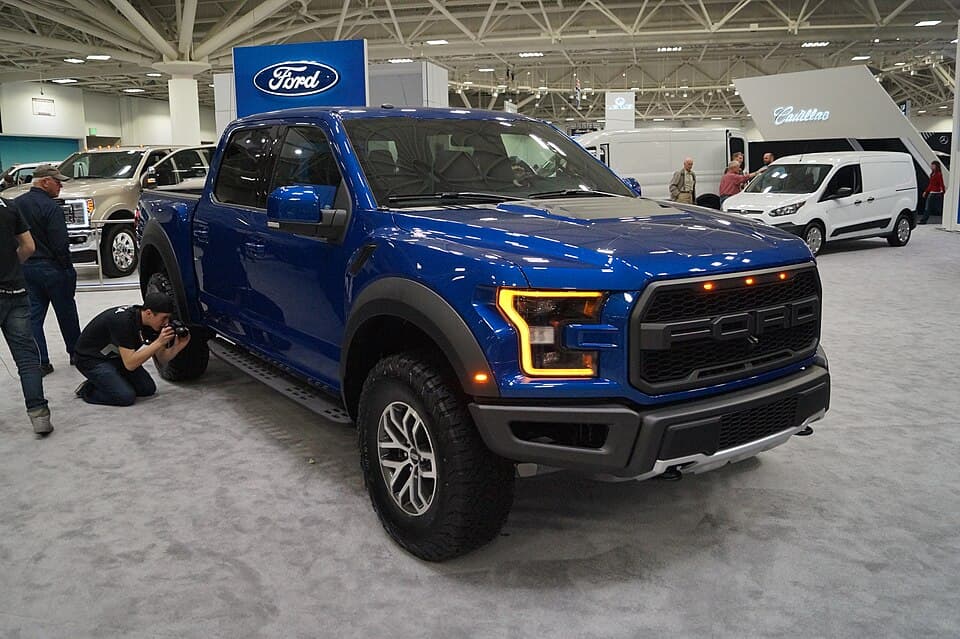
The 2017 F-150 Raptor is the launch year of Gen 2: the first EcoBoost Raptor, replacing the Gen 1's 6.2L V8 with a 450 hp 3.5L twin-turbo and a 10-speed automatic in an all-new aluminum body. A clean one runs roughly $38,000-48,000 in 2026. The defining issue is the cam phaser rattle at cold start, worst on 2017-2018, and at this age most 2017s have either had it fixed already or still need it, which splits the used market into two very different price tiers on trucks that otherwise look identical.
Here are the numbers, then the reasoning.
| Spec | 2017 F-150 Raptor |
|---|---|
| Engine | 3.5L High-Output EcoBoost V6, twin-turbo |
| Power | 450 hp @ 5,000 rpm |
| Torque | 510 lb-ft @ 3,500 rpm |
| Transmission | 10R80 ten-speed automatic |
| Shocks | Fox 3.0 internal bypass (not Live Valve, that starts in 2019) |
| Suspension travel | 13.0 in front / 13.9 in rear |
| Cab configs | SuperCab (2-door, rear-hinged half doors) and SuperCrew (4-door) |
| Payload / towing | ~1,200 lb / 8,000 lb |
| Curb weight | ~5,700 lb (SuperCrew); SuperCab is lighter by a couple hundred pounds |
| EPA fuel economy | 15 city / 18 hwy / 16 combined |
| 0-60 mph | ~5.1 sec |
What was actually new in 2017
Gen 1 died after 2014 and the Raptor sat out for two years. When it came back for 2017 it was a different truck almost everywhere you'd touch it. The 6.2L V8 and six-speed automatic are gone, replaced by the 450 hp 3.5L High-Output EcoBoost (the direct-injected, twin-turbo V6 also found in lower states of tune in other F-150s, tuned harder here) paired to Ford's new 10R80 ten-speed. The body went from steel to aluminum, which is a big part of why a Gen 2 runs roughly 500 lb lighter than a Gen 1 despite being a bigger, more capable truck. Suspension travel grew to 13.0 inches front and 13.9 rear on Fox 3.0 internal bypass shocks, and Terrain Management arrived with six drive modes.
None of that is subtle. Owners have argued about the trade ever since: more torque, more travel, a quicker truck, and an engine that sounds like two turbos strapped to a V6 instead of a naturally aspirated V8. If you're cross-shopping generations on paper rather than by ear, the 0-60 numbers across every Raptor generation lay out how much quicker this truck is than the one it replaced.
SuperCab or SuperCrew, and why most people searching this mean the 4-door
A lot of the search traffic on "2017 Ford Raptor" is people trying to figure out if it comes as a 4-door, and the answer is yes: Ford built the 2017 Raptor in both SuperCab (a 2-door body with rear-hinged half doors for back-seat access) and SuperCrew (a true 4-door with full-size rear doors and a back seat adults can actually ride in). The SuperCrew is the one most buyers want and the one that dominates used listings; the SuperCab is smaller in back, has a shorter bed, and shows up less often because Ford sold fewer of them.
The SuperCrew carries roughly a couple hundred pounds more curb weight, which nudges payload the other direction on the smaller cab. If your use case is real rear-seat passengers, not just occasional cargo, buy the SuperCrew; the resale gap when you go to sell will likely cost you more than what you saved skipping it.
The cam phaser rattle: the issue that defines this model year
The single most-discussed problem on any Gen 2 Raptor is a cam phaser rattle (the variable valve timing unit bolted to the front of each camshaft, and on this engine, the part most likely to wear loose enough to clatter) at cold start, and it is worst specifically on 2017 and 2018 trucks. It shows up as a loud metallic rattle for the first several seconds after a stone-cold start, then quiets down once oil pressure builds. The proper fix is updated phasers, tensioners, chains, guides and a PCM reflash, and a dealer will quote $2,400-4,800 for it.
Here's the part that matters for a 2017 specifically, nine model years old as of 2026: this repair has had a long time to either happen or not happen. Most 2017s on the market fall into one of two buckets. The first is a truck where the phaser work is already done, documented, with receipts, priced accordingly, often near the top of the range for its mileage. The second is a truck where it hasn't been done, where the seller either doesn't know what they're listening for or hopes you don't, and that truck should price several thousand dollars below the first one even at identical mileage. Cold start every 2017 you look at yourself, before you talk price, and ask directly whether the phaser work has been done. For the full cost breakdown by repair path, read the Gen 2 cam phaser rattle guide before you make an offer.
The phaser rattle isn't the only thing to check at this age. The 10R80 on 2017-2019 trucks can show harsh 1-2 shifts and a light converter shudder around 40-50 mph on light throttle, usually solved by a TSB reflash before it needs a valve body. An internal water pump failure past 80,000 miles puts coolant into the oil with no visible external leak, so pull the dipstick before you sign anything. IWE actuator grinding on 4WD engagement and axle wrap under hard throttle on the leaf-sprung rear are both present across the whole Gen 2 run, 2017 included, and neither is a dealbreaker at the price a Gen 2 already trades for, but both are real negotiating points.
What an unmolested 2017 looks like versus a modded one
At this age, a genuinely stock 2017 is getting harder to find, and that's worth knowing either direction. For a clean, unmolested truck, look for a rippled bed floor and hourglassed bump stops (signs it's been jumped), check tire date codes against the odometer (a fresh cheap tire set on a Raptor usually means the seller spent the last of their money making it presentable), and ask directly whether it has ever been tuned. Flash counters in the PCM do not reset, so a scan with your own reader before you talk price will tell you what the seller's story doesn't.
For a modded 2017, the honest version already has the two upgrades that matter most on this generation: a Deaver or Icon rear leaf pack to kill the axle squat, and a properly recalibrated speedometer if it's on 37s. A build sheet with real parts and a shop invoice is worth more than a truck that looks aggressive with no documentation, because the undocumented one is the one hiding the tune question above.
What a 2017 actually costs in 2026
Clean 2017 Raptors run $38,000-48,000 today, and that number sits toward the lower half of the wider Gen 2 price band, since 2017 is both the oldest model year in the generation and the one carrying the most phaser risk if the work hasn't been done. A documented, phaser-fixed 2017 with clean maintenance records can land closer to the top of that range; an undocumented one with an unconfirmed cold-start rattle should be priced several thousand below it, and that's a legitimate opening position in a negotiation, not a lowball. These ranges move by region and season, so confirm against live listings before you make an offer, and for the fuller shopping process across the whole generation, the Gen 2 buying guide walks through the inspection in more detail than fits here.
2017 versus 2018: buy on condition, not year
Ford didn't change anything mechanical between 2017 and 2018. Same 450 hp 3.5 HO, same 10R80, same Fox 3.0 internal bypass shocks, same body. The only differences are equipment group shuffles and paint colors. Some sellers still price a 2017 at a small premium for being "the first one," but there's no engineering reason to pay it, since the phaser risk and every other known issue tracks identically across both years. If a 2018 with better documentation and lower miles is sitting next to a 2017 asking the same money, take the 2018. If the 2017 has the stronger paper trail, take the 2017. The best year to buy across every Raptor generation actually lands on 2018 for exactly this reason, mechanically identical to 2017 without a launch-year premium attached to it.
Who should buy a 2017 today
A 2017 makes sense if you find one with the phaser work already done and documented, priced at a real discount to a 2019-2020 Gen 2, and you don't need Live Valve shocks or Trail Control badly enough to pay the premium those model years carry. It's a worse buy if the seller can't confirm the phaser status and won't come down enough in price to cover the risk, or if you're set on the SuperCrew and keep getting shown SuperCab trucks because that's what's actually on the lot. Cold start it, pull the dipstick, ask about the tune, and let the answers set the number, not the year on the title.
Deal alert
Shopping for one? Get new listings first
We sweep US dealer inventory and send you new Raptors matching your search — real listings, real asking prices, no spam.