Raptor vs a Regular F-150: Is the Premium Actually Worth It?
For the price gap between a loaded F-150 and a Raptor you could buy a lot of truck, or a lot of parts. The honest answer depends on where you actually drive, not on what the badge is worth.
Gear in this article
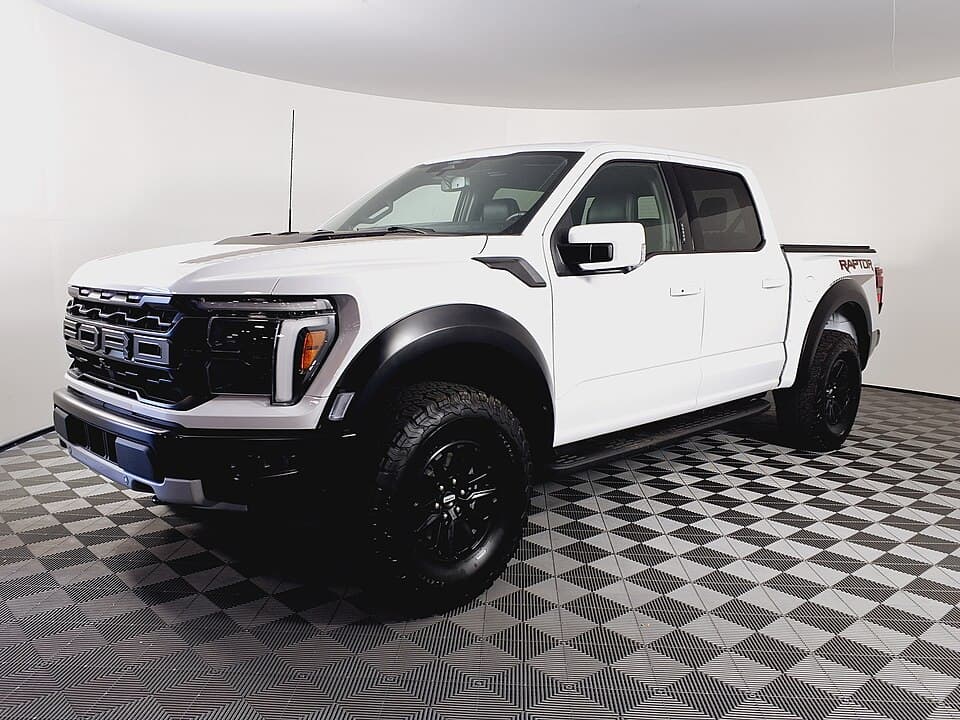
The short version first: a Raptor and a well-optioned F-150 are not the same tool, and the gap in price buys you a different chassis, not a nicer badge. If you spend most of your miles on pavement hauling a family and occasional gear, a loaded F-150 with a good aftermarket suspension will out-tow, out-carry, and out-fuel-economy a Raptor for less money. If you spend real time at speed on rough dirt or in the dunes, nothing you bolt onto a regular F-150 replicates what Ford builds into the Raptor from the frame up, and trying will cost you most of the price difference anyway.
What the Raptor premium actually buys
The Raptor is not an F-150 with a suspension package. It is a different frame with different geometry, wider control arms, and a track width several inches wider than a standard F-150 to give the Fox 3.0 internal bypass shocks room to work through their full travel. Gen 2 and Gen 3 trucks run 35-inch tires as stock rubber, factory fender flares to cover them, and factory skid protection under the transfer case and oil pan.
None of that is a trim level. Ford does not sell a "Raptor suspension" option on a regular F-150 XLT or Lariat because the frame and control arms are physically different parts, not the same parts tuned softer or stiffer. You cannot option your way into a Raptor chassis. You have to buy the truck that comes with it, or you have to fabricate your way there, which is a much longer and more expensive road than it looks on a build thread.
What you get for that architecture is a truck that can run rough desert roads and whooped-out trail sections at speeds that would beat a stock F-150's suspension and frame apart in a few hundred miles. That is a real, measurable difference. It is not a difference that matters if your rough road is a gravel driveway and your trail is a Costco parking lot on a Saturday.
Generation matters here too. The Gen 1 SVT Raptor (2010-2014) launched with a 5.4-liter V8 standard for 2010, with the 6.2-liter V8 arriving partway through that model year as the stronger option; from 2011 through 2014, the 6.2 was the only engine offered. The Gen 2 (2017-2020) switched to a twin-turbo 3.5-liter EcoBoost and a 10-speed automatic, which is a different ownership experience than the Gen 1's V8 and 6-speed, both in maintenance and in how the truck drives. Gen 3 (2021+) adds available Fox Live Valve electronically adjustable dampers, which change ride quality on pavement more than anything before it. If you are cross-shopping years, read the best Raptor year to buy before you fixate on one generation.
What the Raptor costs you every day
This is the part buyers skip past and then complain about at 40,000 miles.
Fuel. A Raptor on 35s pushing a wider, boxier frame through the air does not return F-150 EcoBoost numbers. Real-world owner reporting runs consistently below EPA stickers on both trucks, but the gap between a Raptor and a comparable F-150 4x4 is real and worth checking against the actual Raptor MPG numbers owners report before you budget fuel costs.
Tires. 35-inch all-terrains cost more than the 33s or smaller a standard F-150 wears, and you burn through them faster if you actually use the truck off-road. Running BFGoodrich KO2 37x12.50R17s or similar after an upsize only makes this worse. Budget meaningfully more per tire and expect to replace them more often than a commuter truck's rubber.
Width and parking. The Raptor's wider track means a wider overall vehicle. It does not always fit garages, older parking structures, or narrow driveways sized for a standard-width truck the way an F-150 does. Measure your garage door and your daily parking situation before you assume it fits. This sounds trivial until you own the truck and discover it is not.
Payload, the one that actually bites people. This is the tradeoff nobody selling you the truck volunteers: Raptor payload is notably lower than a comparable F-150, not higher. The heavier frame, suspension, and unsprung weight of the wider axles and 35s eat into the number on the door sticker. If you tow a trailer regularly or haul a bed full of gear for work, run the actual numbers before you assume the more expensive, more capable-looking truck also carries more. It does not. The full breakdown, generation by generation, is in what a Raptor can actually carry, and it should be required reading before anyone signs paperwork.
The case for a regular F-150 plus aftermarket suspension
There is a real argument here, and it is not a bad one for a specific kind of owner.
A well-optioned F-150 4x4, whether XLT FX4 or a Lariat, sits well below a comparable-year Raptor on price. Based on the site's own market averages, a 2023 F-150 averages roughly $69,600, and a 2023 Raptor R averages roughly $102,300. Our data does not track a standard non-R Raptor as a separate line at every model year, so treat that as the top of the range rather than the number itself; a standard 2023 Raptor lands somewhere between those two figures. Either way, the gap over a comparably optioned F-150 is real and it buys a lot of aftermarket parts.
Put a King 2.5 remote reservoir coilover kit or an ICON 2.5 VS coilover kit under a standard F-150, add a Deaver add-a-leaf pack out back, upsize to a 35 like the Toyo Open Country A/T III, and you have a truck that rides better and handles moderate trail work better than it did stock, for a fraction of the Raptor premium.
Where this falls apart is the frame and control arm geometry. An aftermarket coilover bolted into a standard F-150's stock control arms and stock-width frame does not get the wheel travel or the track width the Raptor's dedicated chassis provides. You can buy Camburg uniball upper control arms to open that up somewhat, but you're now spending real fabrication and alignment money chasing a geometry Ford already built and warrantied on the Raptor. Do the math on what 37s actually cost to install on a Raptor platform and you'll see the labor and parts add up fast even when you start from the right chassis. Starting from the wrong one costs more, not less, once you're honest about it.
The other thing a built F-150 never gets is the factory warranty and engineering validation behind the Raptor's specific parts combination. Ford tested that frame, that shock valving, and those control arms together, for years, at speed, in the desert. An aftermarket kit on a standard frame is a good compromise, not a substitute.
Who each truck actually fits
Buy a regular F-150, optioned well, plus a moderate suspension upgrade if you tow regularly, need real payload for work, drive mostly pavement and light gravel, and want to bank the price difference. This is the right call for most buyers, and there is no shame in it. Read the honest Raptor cost of ownership numbers before you decide the premium is worth it, because the gap does not stop at the purchase price.
Buy the Raptor if you actually run rough terrain at speed on a regular basis, whether that is a desert lease, Sand Hollow, or Johnson Valley, and the truck's daily job includes surviving that abuse without your suspension shop on speed dial. The Raptor's chassis is built for that specific use case in a way no bolt-on kit fully replicates.
Do not buy the Raptor because it looks the part in the school parking lot and you plan to run it stock on pavement for five years. You paid for a desert truck's chassis to do a mall truck's job, and the payload penalty, fuel penalty, and width penalty are all real costs for capability you never use.
If you're weighing the step up further, past the standard Raptor into supercharged V8 territory, that's a separate decision covered in Raptor vs Raptor R: what the extra money actually buys, and it carries its own version of this same question, just with a bigger number attached.
The short version
- The Raptor premium buys a genuinely different frame, wider track, Fox internal-bypass suspension, and factory 35s. No trim package or bolt-on kit fully replicates that combination on a standard F-150.
- Daily costs are real: worse fuel economy, pricier and faster-wearing tires, a wider truck that may not fit your garage, and lower payload than a comparable F-150, not higher.
- A built F-150 (coilovers, add-a-leaf, upsized tires) is a legitimate and cheaper path for pavement-heavy owners who tow or haul for work.
- Buy the Raptor if you actually run rough terrain at speed. Buy the F-150 if you mostly do not. Do not buy the badge and expect it to justify itself on a commute.
Owner questions
- Is the Ford Raptor worth the price premium?
- It depends on use: the premium buys a genuinely different frame, wider track, Fox 3.0 internal bypass shocks, and factory 35-inch tires that no bolt-on kit replicates. If you run rough terrain at speed regularly, it's worth it. If you mostly drive pavement and light gravel, a well-optioned F-150 with aftermarket suspension out-tows, out-carries, and out-economizes it for less money.
- Does the Ford Raptor have more payload than a regular F-150?
- No. Raptor payload is notably lower than a comparable F-150, not higher. The heavier frame, suspension, and unsprung weight from the wider axles and 35-inch tires eat into the door sticker number, which the article calls the tradeoff nobody selling you the truck volunteers, and something to check before assuming the pricier truck also hauls more.
- How much more does a Raptor cost than a regular F-150?
- Based on the site's market averages, a 2023 F-150 averages roughly $69,600, while a 2023 Raptor R averages roughly $102,300. A standard non-R Raptor isn't tracked separately at every model year, so a standard 2023 Raptor lands somewhere between those two figures, but the gap over a comparably optioned F-150 is real.
- Can I just add a lift kit or coilovers to a regular F-150 to match a Raptor?
- Not fully. Installing a King 2.5 remote reservoir coilover kit or ICON 2.5 VS coilover kit plus a Deaver add-a-leaf pack and 35-inch tires like the Toyo Open Country A/T III improves ride and trail handling, but stock control arms and stock-width frame can't match the Raptor's dedicated wheel travel and track width, even adding Camburg uniball upper control arms.
- What are the everyday downsides of owning a Ford Raptor?
- Real-world fuel economy runs below a comparable F-150 4x4 due to the wider, boxier frame on 35s; tires cost more and wear faster, especially upsized options like BFGoodrich KO2 37x12.50R17s; the wider track may not fit garages or narrow driveways; and payload is lower than a comparable F-150, not higher, despite looking more capable.
Deal alert
Shopping for one? Get new listings first
We sweep US dealer inventory and send you new Raptors matching your search — real listings, real asking prices, no spam.