Raptor vs F-150 Tremor: Which One You Should Actually Buy
The Tremor is the closest thing Ford sells to a cheaper Raptor, and for a lot of buyers it is the smarter truck. The split comes down to speed versus payload.
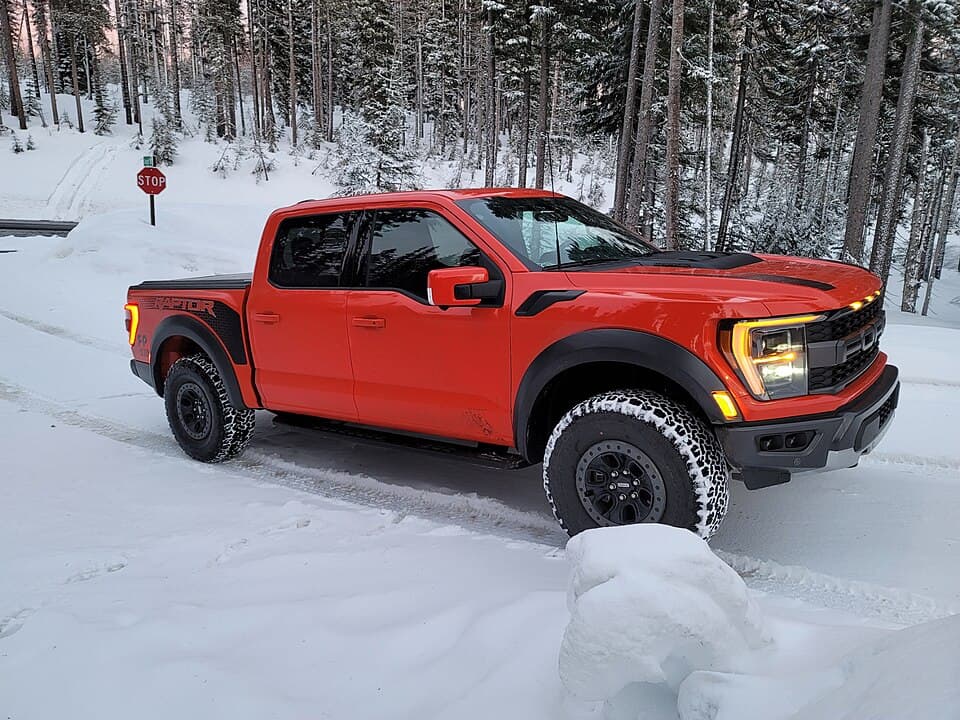
The Tremor is a suspension and off-road package bolted onto a regular F-150. The Raptor is a different truck built around a wider frame, longer-travel shocks, and 35-inch tires. If you tow, haul, or need real payload, buy the Tremor. If you run at speed over rough ground and can live with reduced payload and a bigger check, buy the Raptor. Nobody who cross-shops these two is choosing between similar trucks with a different sticker; they are choosing between two different jobs a truck can do.
What the Tremor actually is (and is not)
The F-150 Tremor is an off-road package, not a standalone model. Since it launched for the 2021 model year, Ford has built it primarily on the XLT and Lariat trims, mostly in SuperCrew configuration, but trim availability has shifted from year to year and is not something to assume carries over. Confirm what your specific model year offers before you shop.
Engine choices have also moved around across the Tremor's run rather than holding steady. The 3.5-liter EcoBoost V6 and the 3.5-liter PowerBoost hybrid V6 have both been offered with the package at different points, and Ford has not offered the Tremor with the base 2.7-liter EcoBoost or the 5.0-liter V8. Diesel availability on the F-150 more broadly has changed over the truck's production run as well. Rather than lean on a remembered year-by-year breakdown, pull the actual build sheet for the model year you are shopping, because Ford has not kept this list static.
What you get for the Tremor money: a factory suspension lift over a standard F-150, off-road tuned monotube shocks (not remote-reservoir, not the Live Valve system on later Raptors), skid plates, an electronic-locking rear differential, Trail Control (Ford's low-speed off-road cruise control), an off-road-tuned front bumper for a better approach angle, and a 33-inch all-terrain tire as the stock fitment. Ford has changed the exact tire brand and tread across the truck's run, so check the window sticker or build sheet for your specific year rather than assuming it matches another one.
What you do not get: any change to the truck's width, track, or frame. A Tremor is a taller, better-shod, locked-rear-diff version of a regular F-150. It is not wide-body, and its shocks are tuned for washboard and moderate trail work, not for landing jumps at speed.
The capability split: speed versus payload and towing
This is the actual decision, and it is not close once you frame it correctly.
The Raptor (Gen 2 and Gen 3) exists to run fast over rough terrain without beating the truck or the driver to death. That means a widened front and rear track, front suspension travel that lands somewhere around 13 inches depending on the model year (confirm the current figure for your specific truck against the Ford spec sheet rather than trusting a forum number, including this one), and a 35-inch tire as the stock fitment. All of that hardware, plus the reinforced frame and wider fenders it requires, adds weight the truck has to carry within a GVWR (gross vehicle weight rating) that is not dramatically higher than a lighter F-150's. The result is a payload number that disappoints a lot of first-time buyers; see the full breakdown at Ford Raptor payload: what it can actually carry.
The Tremor keeps the standard F-150's basic proportions, which means it keeps most of a standard F-150's payload and towing capacity. It will carry a truck bed full of gear, tow a travel trailer or job-site trailer, and do it without the Raptor's wide-body parking problems or the Raptor's suspension tune fighting a loaded bed. For the full generational towing picture on the Raptor side, see Ford Raptor towing capacity: every generation, real numbers and towing with a Raptor: what it does well and what it does badly.
If your off-road use is mostly forest roads, moderate trails, and the occasional wash, the Tremor's suspension is not a liability, it is simply tuned for a different speed. If your off-road use is desert whoops, high-speed dirt roads, or anything where you want to keep the throttle down over rough ground, the Tremor's shocks will tell you to slow down long before the Raptor's do.
Width, tires, and suspension travel: the concrete differences
| F-150 Tremor | Raptor (Gen 2 / Gen 3) | |
|---|---|---|
| Width | Same as standard F-150, no flare widening | Noticeably wider, several inches more across the fenders than a stock F-150 |
| Stock tire | 33-inch all-terrain tire; exact brand and tread has varied by model year, check your build sheet | 35-inch all-terrain tire; the exact tire and tread have also changed across model years, check the build sheet for your specific truck rather than assuming it matches another year |
| Front suspension | Off-road tuned monotube shocks, modest lift over stock | Long-travel shocks (internal-bypass units on Gen 2, Live Valve on later trucks), roughly 13 inches of front travel as an estimate, confirm the exact figure for your model year |
| Locking diffs | Electronic-locking rear standard on the package | Electronic-locking rear standard, plus a dedicated off-road drive mode set |
The width difference matters more than most buyers expect. A Raptor's flares mean it does not fit in a lot of standard-width garage stalls or narrow parking spots the way a Tremor does. The travel difference is a big part of why the Raptor costs what it costs: that much stroke, at that duty cycle, needs a heavier, wider chassis under it, and that is the same weight that eats into payload.
What the price gap actually buys
The live used-market averages we track at raptorcentral.com show the whole F-150 lineup, blended across every trim from work trucks to Raptor R, averaging $76,259 across 601 live 2024-model listings and $86,008 across 917 live 2025-model listings. That blended figure does not isolate the Tremor or the standard Raptor specifically, so treat it as a floor-to-ceiling range rather than a price for either truck.
Raptor R, the supercharged 5.2-liter version some buyers cross-shop once they price out a loaded Tremor next to a base Raptor, averaged $102,321 across 180 listings for 2023 models and $137,925 across 712 listings for 2026 models. That is a different truck entirely from either a Tremor or a standard EcoBoost Raptor, both in what it costs and in what it is for. The full case for and against it is covered in Raptor R vs RAM TRX vs Ram 1500 RHO: the honest verdict and Raptor vs Raptor R: what the extra money actually buys.
New, a well-optioned Tremor typically stickers meaningfully below a base Raptor once you match cab and bed configuration. The exact spread moves every model year, depends heavily on the options list on both trucks, and is affected by incentives that change monthly. Do not trust a specific figure here or anywhere else without pulling a current build sheet from a dealer. For the deeper argument on whether the Raptor premium is worth paying at all, see Raptor vs a regular F-150: is the premium actually worth it?
The verdict by use case
- You tow a trailer regularly, or you need real payload for a camper, equipment, or job-site loads: buy the Tremor. It keeps the capability a half-ton truck is supposed to have, and the Raptor's payload number will frustrate you the first time you load it.
- You run washboard roads, moderate trails, or want a locked rear diff and better tires without the wide-body hassle: buy the Tremor. It is the more livable daily truck and the easier truck to park.
- You run whoops, open desert, or anything at speed over rough ground, and you can live with reduced payload: buy the Raptor. The Tremor's shocks are not built for that duty cycle and will not hold up to it the way the Raptor's will.
- You want both speed and towing and have the budget: look at the Raptor R or step up to a heavier-duty platform, and read what that ownership actually costs in what a Raptor R actually costs to own, not just to buy before you commit.
The short version
- The Tremor is an off-road package on a standard-width F-150; the Raptor is a wider, longer-travel truck built for speed over rough terrain.
- The Tremor keeps far more payload and towing capacity than the Raptor; the Raptor trades that capacity for suspension travel and a stock 35-inch tire.
- Our live pricing data does not isolate Tremor values on their own, but it shows the base Raptor and especially the Raptor R sitting well above where a comparably equipped Tremor lands. Confirm the actual gap with a current build sheet rather than a remembered number.
- Buy the Tremor if you tow, haul, or want the easier daily truck. Buy the Raptor if desert speed is the actual use case and you can live with what it costs, both at the dealer and in your bed's weight limit.
Owner questions
- What's the fundamental difference between the F-150 Tremor and the Raptor?
- The Tremor is a suspension and off-road package bolted onto a regular F-150, keeping standard width and most of its payload. The Raptor is a different truck built around a wider frame, front suspension travel around 13 inches, and a 35-inch stock tire versus the Tremor's 33-inch tire. Buy the Tremor for towing/payload, the Raptor for speed over rough ground.
- Which trims and engines does the Tremor package actually come on?
- Since launching for the 2021 model year, Ford has built the Tremor primarily on XLT and Lariat trims, mostly in SuperCrew configuration, though availability has shifted yearly. The 3.5-liter EcoBoost V6 and 3.5-liter PowerBoost hybrid V6 have both been offered, but Ford has never offered the Tremor with the base 2.7-liter EcoBoost or the 5.0-liter V8.
- What does the whole F-150 lineup, including Raptor, actually average in price right now?
- Live used-market data blended across every trim from work trucks to Raptor R averages $76,259 across 601 listings for 2024 models and $86,008 across 917 listings for 2025 models. That figure doesn't isolate the Tremor or standard Raptor specifically, so it functions as a floor-to-ceiling range rather than a price for either truck.
- How much more does a Raptor R cost compared to a loaded Tremor?
- The Raptor R, the supercharged 5.2-liter version some buyers cross-shop against a loaded Tremor, averaged $102,321 across 180 listings for 2023 models and $137,925 across 712 listings for 2026 models. A well-optioned Tremor typically stickers meaningfully below a base Raptor, though the exact spread shifts yearly with options and incentives.
- Can the Tremor's suspension handle desert whoops like a Raptor's can?
- No. The Tremor's off-road tuned monotube shocks are built for washboard and moderate trail work, not landing jumps at speed, unlike the Raptor's internal-bypass or Live Valve shocks with roughly 13 inches of front travel. For desert whoops or high-speed dirt roads, the Tremor's shocks "will tell you to slow down long before the Raptor's do."
Deal alert
Shopping for one? Get new listings first
We sweep US dealer inventory and send you new Raptors matching your search — real listings, real asking prices, no spam.