Supercharger Kits for a Non-R Ford Raptor: What They Cost, What They Void
Whipple, ProCharger, and other kits promise big power gains for the standard EcoBoost Raptor, but bolting a supercharger onto an already-turbocharged engine and a stressed 10-speed isn't a simple weekend mod. Here's what these kits actually change, what they void, and whether the factory Raptor R route makes more sense.
Gear in this article
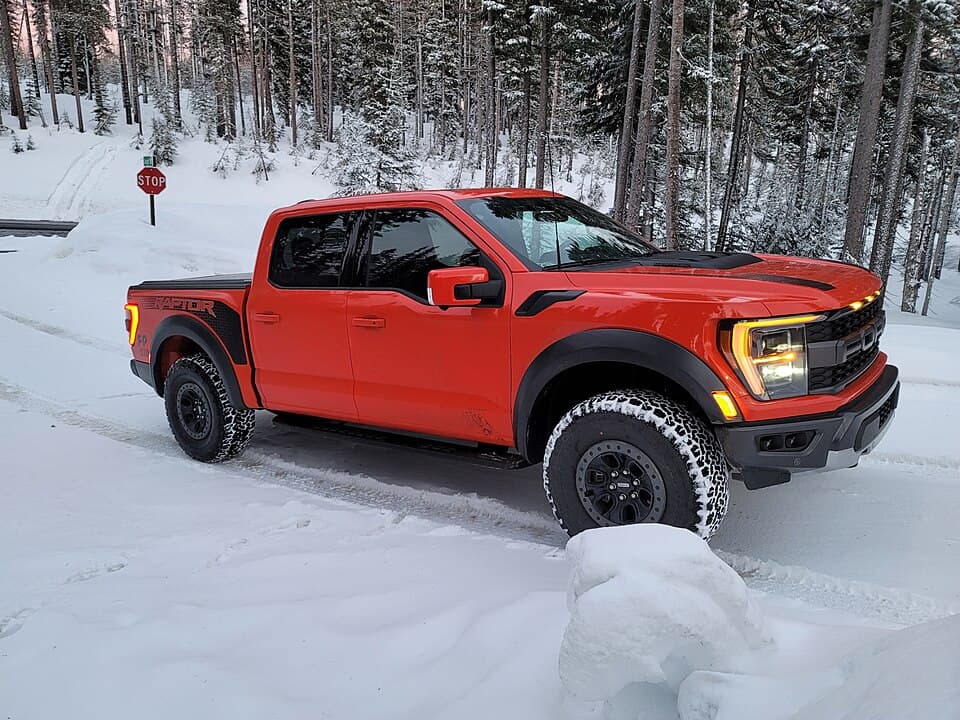
The honest answer: a supercharger kit on a non-R Raptor's 3.5L EcoBoost (Gen 2, 2017-2020, or Gen 3, 2021-present) will cost more than most owners expect once you add labor, supporting mods, and the fuel system work, and it puts real stress on a 10R80 transmission that Ford never engineered for this power level. Ford cannot void your entire factory warranty just because you installed one, but it can and will deny a claim on anything the kit touched or stressed. For most owners cross-shopping this against a factory Raptor R, the math does not favor the supercharger kit.
What these kits actually change
The 3.5L EcoBoost in every non-R Raptor is already twin-turbocharged. A supercharger kit does not replace that setup, it adds a belt-driven, engine-mounted supercharger on top of the factory turbos, which makes this a compound forced-induction system rather than a simple bolt-on blower like you would run on a naturally aspirated V8. That is mechanically more complicated than it sounds. Different vendors manage combined boost differently, some lean on the factory turbos less once the supercharger spools in, others run both systems more aggressively through the full range. Before you hand anyone a deposit, get a straight answer on how their specific kit manages boost from both systems together, not just a headline horsepower number.
A handful of companies, Whipple and ProCharger among them, along with smaller shops like Hellion that build turbo upgrade kits rather than superchargers, have marketed forced-induction packages for the EcoBoost F-150 platform over the years. Their claimed power gains and kit prices change from year to year and are manufacturer marketing figures, not numbers this site has independently verified on a dyno. Treat any specific horsepower or torque claim you see online as a claim to confirm directly with the manufacturer before you buy, not a number to build a budget around.
This article covers the F-150 Raptor, Gen 2 and Gen 3, with the 3.5L EcoBoost. The Ranger Raptor runs a 3.0L EcoBoost V6 and the Bronco Raptor runs its own twin-turbo 3.0L, neither of which has the same aftermarket forced-induction support as the full-size truck's 3.5L, so none of this applies to those platforms. The Raptor R's supercharged 5.2L V8 is a different engine built from the factory for that power level. If you want to understand what Ford did there, read our breakdown of the Raptor R's supercharged 5.2L V8.
What it actually costs, kit plus install
Kit pricing from the manufacturers named above has moved around significantly over the past several years and published figures are not reliable enough to repeat here as fact. What is reliable: these are not weekend installs. Expect a shop to quote somewhere in the range of a full day to several days of labor depending on whether the kit requires fuel system upgrades, intercooler plumbing changes, and a custom tune, and whether your engine bay needs any fabrication to clear the factory hood and intake routing. Budget the labor alone in the four figures at most independent performance shops, on top of whatever the kit itself costs, and call the installer with your specific year and trim before you commit to a number, because EcoBoost generations are not all plumbed the same way under the hood.
Fuel requirements: octane, E85, and what runs out of spec
Every forced-induction kit for this engine is going to push cylinder pressures and intake temps higher than stock, which means the factory's 91-octane recommendation is no longer enough margin. Most kits in this category are tuned around 93 octane at minimum, and several vendors offer or require an E85-capable tune for their higher power levels, since E85's higher octane rating and cooling effect from the added ethanol buys back detonation margin that pump gas cannot. If you are not near a station that reliably sells true E85, factor that into whether the kit's top-end power claim is even something you can run day to day. A flex-fuel setup also means your actual power output swings with whatever blend is in the tank that week, which matters if you are chasing a number for a drag strip pass versus just wanting more grunt on the trail.
Does it need a supporting mod package, or does it bolt straight on
None of the credible kits in this category are a true bolt-on. At minimum you are looking at:
- A custom tune calibrated to the specific kit and your fuel plan, not a generic flash. This is a different animal from the tunes Raptor owners run for NA power and shift feel, which work within the factory turbos' boost ceiling. A supercharger kit's tune has to manage an entirely different airflow and boost curve.
- Upgraded fuel injectors or a supporting fuel pump in many cases, since the factory injectors are sized for stock boost.
- Additional cooling, an upgraded intercooler or charge-air cooler at minimum, since compound boost raises intake air temps well beyond what the factory setup was designed to shed.
- In some installs, an upgraded cold air intake and catted downpipe to remove the stock restriction on the exhaust side, since the factory turbos and catalytic converters were never sized for this much total airflow.
Skip any of that and you are not running the kit at its advertised numbers, you are running an undersized fuel and cooling system at higher boost than stock, which is a direct path to detonation damage.
The transmission is the part nobody budgets for
Every non-R Raptor built since 2017 runs the 10R80 10-speed automatic. It is a capable transmission at stock power, but it was not developed with a compound-boosted EcoBoost in mind, and it is already a documented source of complaints at stock power levels, including harsh 1-2 shifts and torque converter shudder that show up on plenty of unmodified trucks. Add real torque beyond what the engine was calibrated to send through it and you shorten the clock on clutch pack wear and converter life, full stop. A tune written for a supercharger kit should include a transmission calibration that manages shift firmness and torque converter lockup to protect the hardware, and you should ask any installer directly whether their package touches trans tuning at all. If it does not, that is a kit tuned for the engine and ignoring the part of the drivetrain most likely to fail first.
The turbos themselves are also already a known wear item on this platform. Turbo failure symptoms and replacement costs on a stock 3.5 EcoBoost are worth reading before you add a supercharger stacked on top of them, and carbon buildup on the intake valves does not go away just because you added boost, it is a direct-injection engine issue that exists independent of forced induction and gets no better with more airflow demand on the intake side.
What Ford's warranty actually covers after you install one
This is where owners get the story wrong in both directions. Ford dealers cannot legally void your entire factory warranty just because you installed a supercharger kit. That is the Magnuson-Moss Warranty Act, a federal law that says a manufacturer can only deny a warranty claim if it can show the aftermarket part actually caused the failure. Your air conditioning compressor failing is still covered even with a blower under the hood.
What Ford can do, and will do, is deny any claim connected to the parts your kit affected. If your supercharged EcoBoost throws a rod, cracks a piston, or fries the transmission under the extra torque, and the dealer's diagnosis points to the modification as the cause, you are paying for that repair yourself, and proving otherwise after the fact is an uphill argument you are unlikely to win. In practice, most dealers see a supercharger kit under the hood and treat the whole powertrain as suspect going forward, whether that is strictly correct under the law or not. Budget for this as if you have fully self-insured the drivetrain the day you install the kit, because that is the reality most owners end up living with even if it is not the letter of the law.
Why some owners just buy the Raptor R instead
A factory Raptor R comes with its supercharged 5.2L V8 under full factory warranty, a transmission and cooling system engineered around that power level from day one, and none of the DIY risk of a compound-boosted EcoBoost. It also costs real money to step up to. Used Raptor R pricing across current live listings runs roughly $98,500 average for 2023 models up to roughly $125,000 average for 2025 models, and new ones price well above that.
A non-R Gen 3 Raptor is a premium trim sitting well above a base F-150's transaction price, so do not anchor your comparison on a generic F-150 average, pull current listings for your exact model year instead. The gap between a built-out non-R truck and a factory R varies with how much you have already spent on the non-R truck and what Raptor R listings look like in your market that week, but once you stack a supercharger kit, supporting fuel and cooling work, and the labor to install it, the delta shrinks a lot faster than most owners expect. Our pages on current Raptor R market pricing and what a Raptor R actually costs to own walk through that math with real listing data, and our Raptor vs Raptor R comparison is worth reading before you spend five figures chasing EcoBoost power on a truck that was not built for it.
The short version
- A supercharger kit on a non-R Raptor's 3.5L EcoBoost is compound forced induction stacked on the factory twin turbos, not a simple bolt-on, and claimed power and price figures from Whipple, ProCharger, and similar vendors are manufacturer marketing numbers you need to verify yourself before buying.
- Budget for the kit, a custom tune, likely injector and cooling upgrades, and several days of shop labor, and expect to run 93 octane or E85 depending on the kit's tune.
- Ford cannot void your whole warranty for the mod under Magnuson-Moss, but it can and will deny claims tied to the engine, turbos, and especially the 10R80 transmission once you add this kind of power.
- If what you actually want is a factory-engineered answer with full warranty backing, the Raptor R's supercharged 5.2L is the more honest path, even once you price it against current listings rather than a sticker number.
Deal alert
Shopping for one? Get new listings first
We sweep US dealer inventory and send you new Raptors matching your search — real listings, real asking prices, no spam.